
October 11, 2026 · 9 min read
Amsterdam Anne Frank Walking Tour
From the Hollandsche Schouwburg through the old Jewish Quarter, past the Dockworker and the Dam, to the Anne Frank House on the Prinsengracht.
589

October 9, 2026 · 12 min read

 Friends walk free
Every tour also runs as a scheduled group walk you can join in the app.
More audio tours in Granada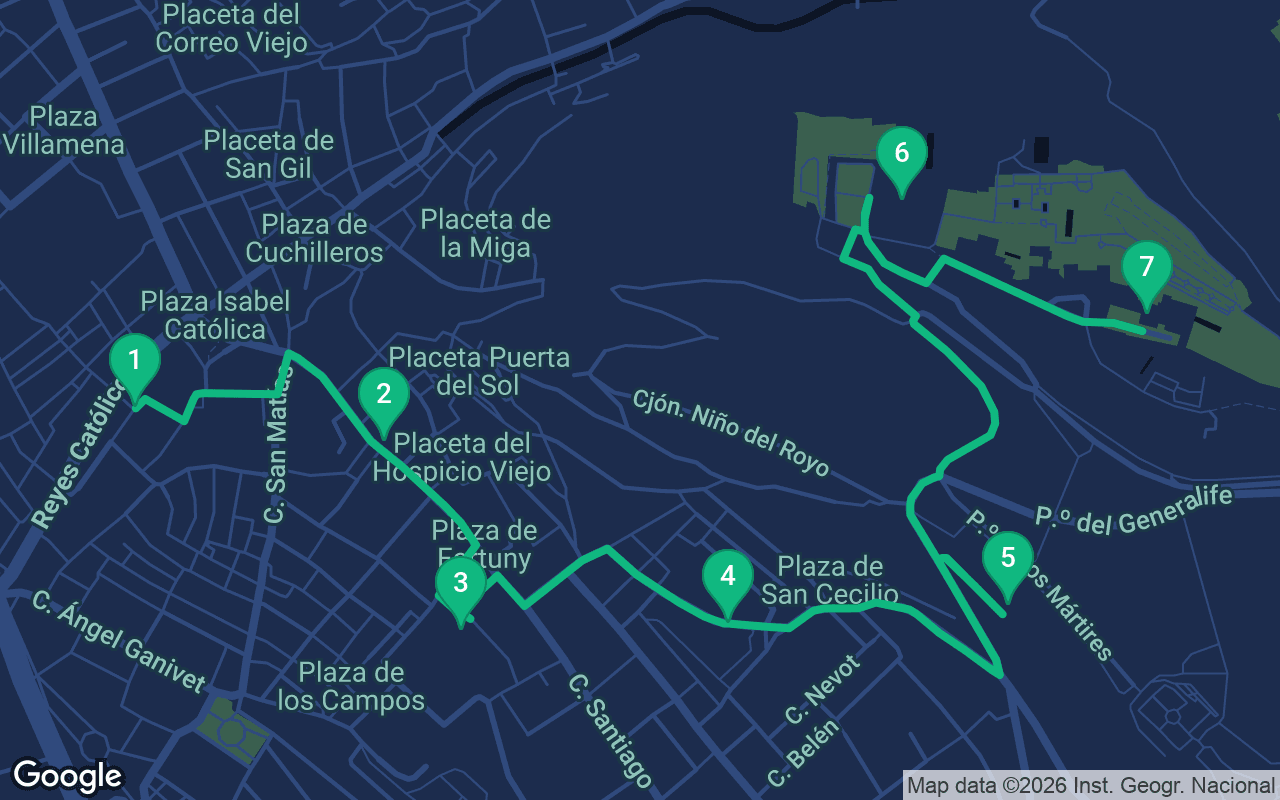
About 2.3 km, roughly 36 minutes at an easy pace.
This tour is narrated
Press play on the first 3 stops for a 30-second demo of the narration. In the app, the intro and those 3 stops play in full for free, each one chiming as you arrive. The whole narrated tour is yours for $7.99, a one-time purchase you keep for good.
Works with Garmin, Komoot, Strava, OS Maps and any GPX app.
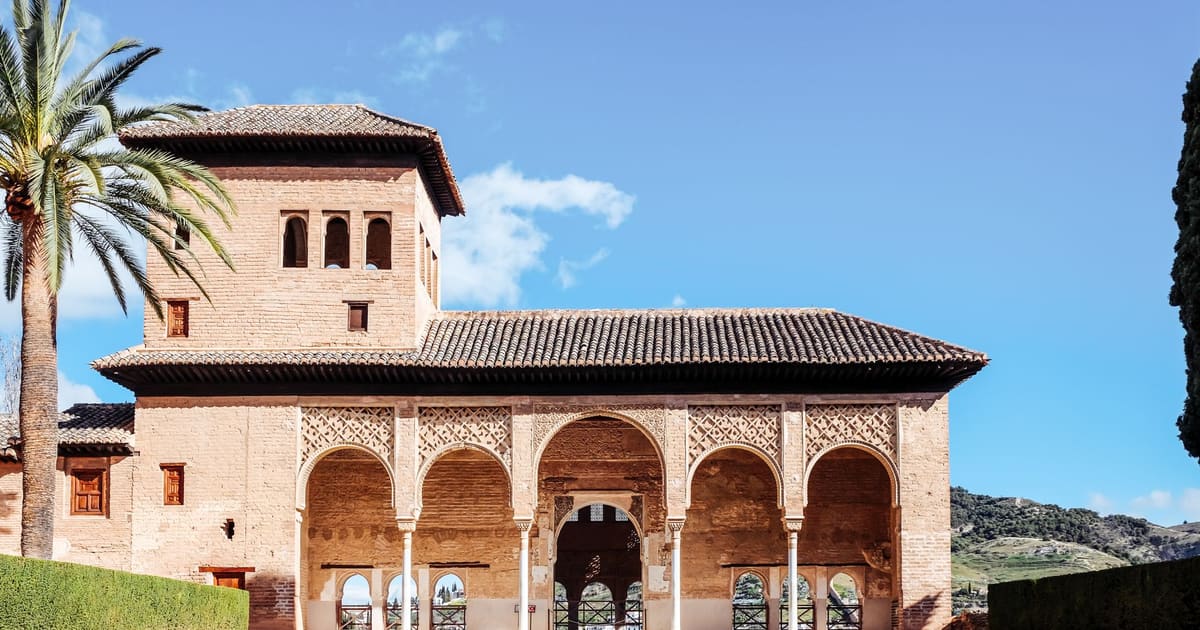
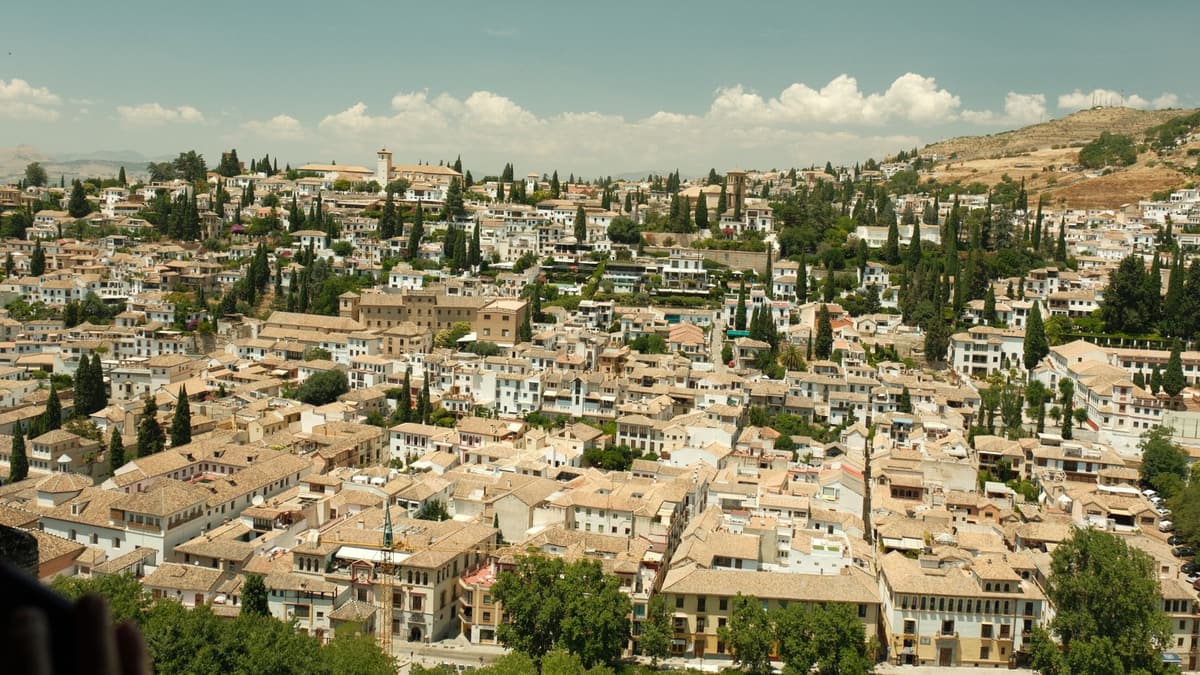
Most visitors climb to the Alhambra the front way, straight up from Plaza Nueva. This walk takes the back stairs. It starts at a Moorish merchants' inn in the busy lower town, crosses into the Realejo, the quarter where Granada's Jews lived until 1492, and then climbs the quiet southern slope of the Alhambra hill, past the house of the composer Manuel de Falla, to the Renaissance palace of Charles V. It finishes a few minutes further on, at the old convent where Isabella and Ferdinand were first laid to rest. It is about two and a half kilometers, uphill most of the way, and one of the most rewarding self-guided walking tours you can do in Granada, with the payoff saved for the top.
The walking alone takes around forty-five minutes, but allow two and a half to three hours to look inside a few places and stop for a drink in the Realejo, where a tapa still arrives with most drinks. The first half is flat or gently rising. From Falla's house onward the route climbs steadily to the top of the Alhambra hill, roughly a hundred meters above where you started, on steep lanes and cobbles, so wear shoes with grip and take it slowly. Granada sits high and inland, which means hot, dry summers and cold winter mornings. In July and August the middle of the day is brutal, so walk early in the morning or in the last hours before sunset, and carry water. The upper part of the route runs under the elms of the Alhambra woods, which is the shadiest stretch. One thing to plan ahead: the walk ends inside the Alhambra's outer precinct, but visiting the Nasrid Palaces themselves needs a timed ticket, and those often sell out well in advance, so book ahead if you want to go in. The Palacio de Carlos V is usually free to enter, but access rules and hours change, so check before you go.
You are standing in front of the only merchants' inn left from Moorish Granada, and the best preserved of its kind anywhere in Spain. Look up at the doorway: a tall horseshoe arch framed by a lacework of carved plaster, with an Arabic inscription running around it and a little honeycomb vault inside the porch. Walk through and you come into a square courtyard with a stone water basin in the middle and three stories of plain galleries around it. It was built in the fourteenth century, in the time of the Nasrid sultans, as a funduq: a place where traveling merchants could stable their animals, store their goods on the ground floor and sleep in the rooms upstairs, a few steps from the city's silk market and its great mosque. The building has had several lives since. After the Christian conquest the charcoal sellers used it, which is where the name, the corral of charcoal, comes from. In the sixteenth century it became one of the city's open air theaters, with the audience watching from those galleries, and later still it was split into cheap lodgings. Stand in the courtyard for a moment and picture it full of mules, bales and voices in Arabic. Then come back out, cross the busy Calle Reyes Católicos, and follow Calle Pavaneras east for about four minutes to a stern stone house with figures on its front.
 Stop across the street and look at the facade. This is the Casa de los Tiros, a sixteenth-century town palace built more like a fortress than a home, with a blank, heavy front and a crest of battlements on top. Its name, the house of the shots, is usually explained by the gun barrels that once poked out from those battlements. Below them stand five stone warriors in classical armor, heroes of the ancient world, looking down at the street as if daring anyone to try the door. The family who built it, the Granada Venegas, had a story that sums up the city in the years around 1492. They descended from a Nasrid nobleman who went over to the Castilian side during the war, was baptized and received lands and honors from the new rulers. For centuries afterward his heirs were the keepers of the Generalife, the sultans' summer garden on the hill above you. To some in Granada that made them traitors, to others survivors who read the end of the war earlier than most. Look for the sword on the facade with a heart and the motto El corazón manda, the heart commands. Inside, the house is now a museum of the city's history, with a remarkable carved wooden ceiling upstairs, so check before you go if you want to see it. From here, follow Calle Santa Escolástica south, about three minutes, to a church square on your left.
In front of you is the Iglesia de Santo Domingo, the church of the Dominican convent founded by Ferdinand and Isabella in the years right after the conquest. Its porch is the thing to look at. Three arches stand in front of the main door, and in the stonework you can find the personal badges of the two monarchs: a yoke and a bundle of arrows. The pairing was a private joke of sorts. The yoke, yugo in Spanish, begins with the letter of Ysabel, as her name was often spelled then, and it was Ferdinand's badge. The arrows, flechas, begin with F, and they were hers. Each wore the initial of the other. The convent was given to the Dominicans, the order of preachers that also supplied many of the Spanish Inquisition's early leaders, and this was a church meant to announce that Granada was now a Catholic city. It was built on land that had belonged to the Nasrid court, and a short way behind it survives the Cuarto Real de Santo Domingo, a Nasrid pavilion with tiled walls that is older than most of the palaces on the Alhambra hill. The square around the church is calm and pleasant, with benches in the shade of the trees. When you are ready, head east through the narrow streets, gently uphill, about four minutes, to the big open square at the heart of the Realejo.
What's included
Our tours are made to be meditative and immersive: you keep moving and simply listen. They're always better together, and the app plays the narration in sync, so you, your partner and your friends hear every stop at the same moment.
This long, tree-lined square is the Campo del Príncipe, the living room of the Realejo, with bars and terraces along its sides and a stone crucifix raised on a tall pedestal. The prince in its name is Juan, the only son of Ferdinand and Isabella.
The rest of this stop is in the full audio tour.
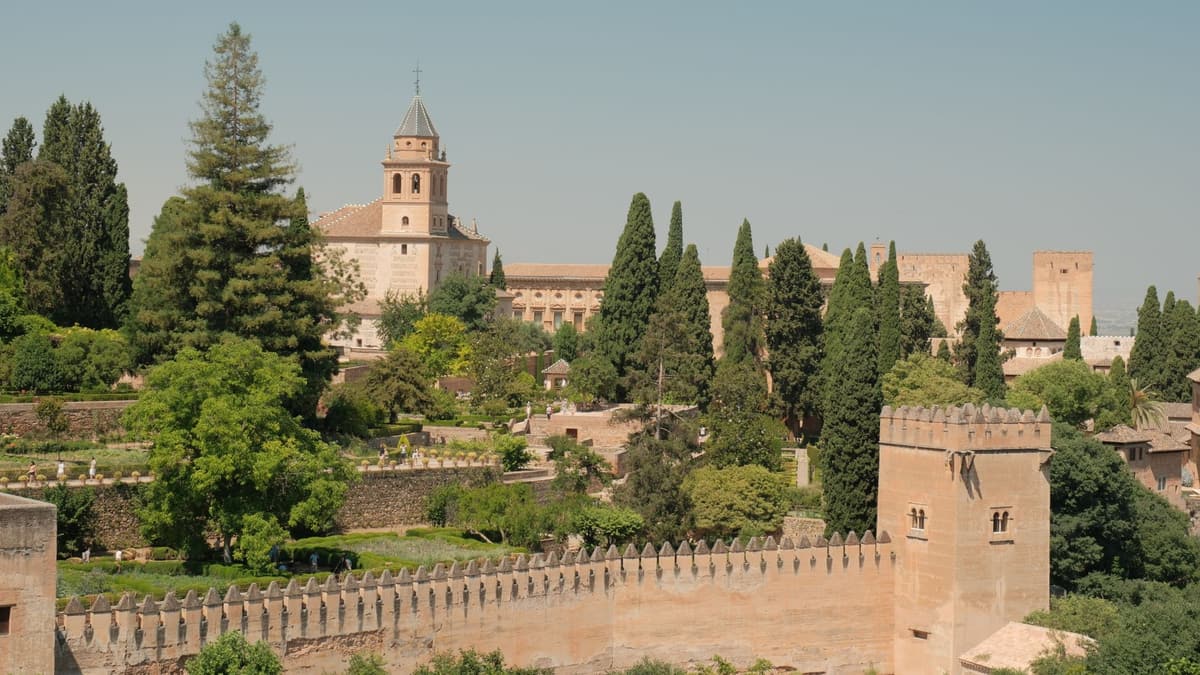
Catch your breath outside the small white house with the garden behind its wall.
The rest of this stop is in the full audio tour.
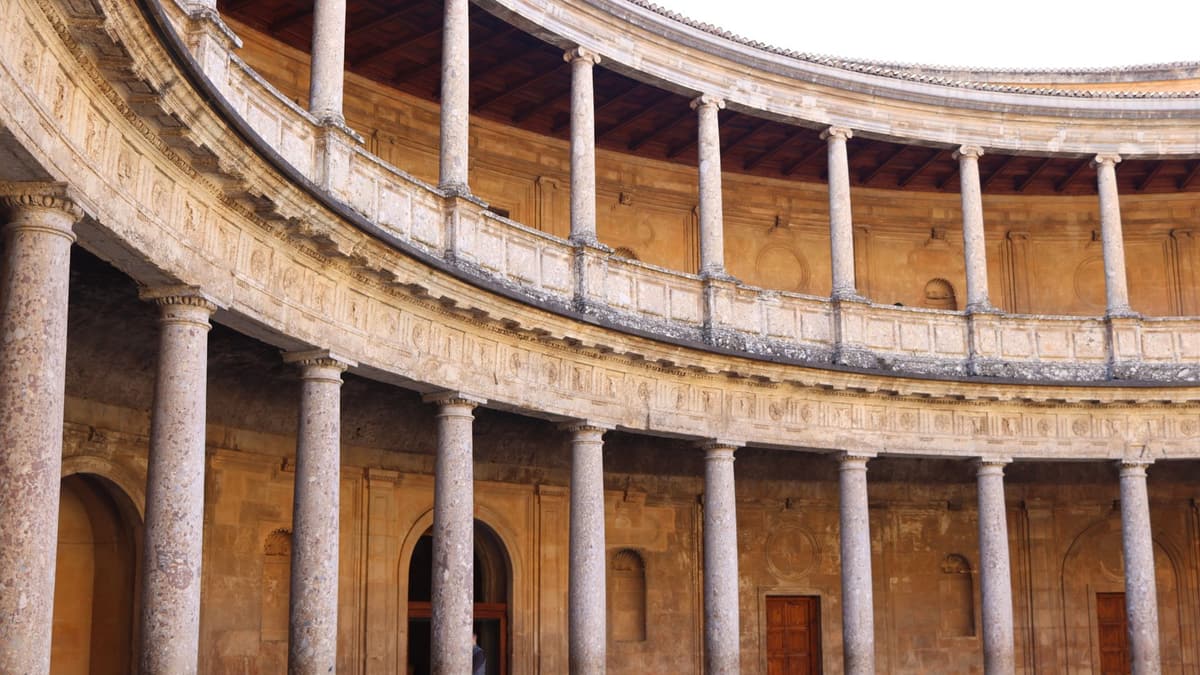
You have reached the top of the hill, and the building in front of you looks as if it took a wrong turn in Italy.
The rest of this stop is in the full audio tour.
The walk ends at the Parador de Granada, a hotel in the old convent of San Francisco at the eastern end of the Alhambra's main street.
The rest of this stop is in the full audio tour.
Do this walk with other people on the next scheduled tour.
About 2.3 km, roughly 36 minutes at an easy pace · 7 stops
Friends walk freeOctober 11, 2026 · 9 min read
From the Hollandsche Schouwburg through the old Jewish Quarter, past the Dockworker and the Dam, to the Anne Frank House on the Prinsengracht.
October 11, 2026 · 11 min read
From Van Houten's street by the Vondelpark past Leidseplein, the Rijksmuseum passage and the famous canal bench to the Anne Frank House.

October 11, 2026 · 10 min read
Follow the last days of April and May 1945 from the Anhalter Bahnhof ruin past the Gestapo site and Brandenburg Gate to the Moltke Bridge and the Reichstag.
