
October 11, 2026 · 9 min read
Amsterdam Anne Frank Walking Tour
From the Hollandsche Schouwburg through the old Jewish Quarter, past the Dockworker and the Dam, to the Anne Frank House on the Prinsengracht.
589

October 9, 2026 · 10 min read

 Přátelé chodí zdarma
Každá prohlídka funguje také jako naplánovaná skupinová procházka, ke které se můžete v aplikaci připojit.
Další audio prohlídky v Dubai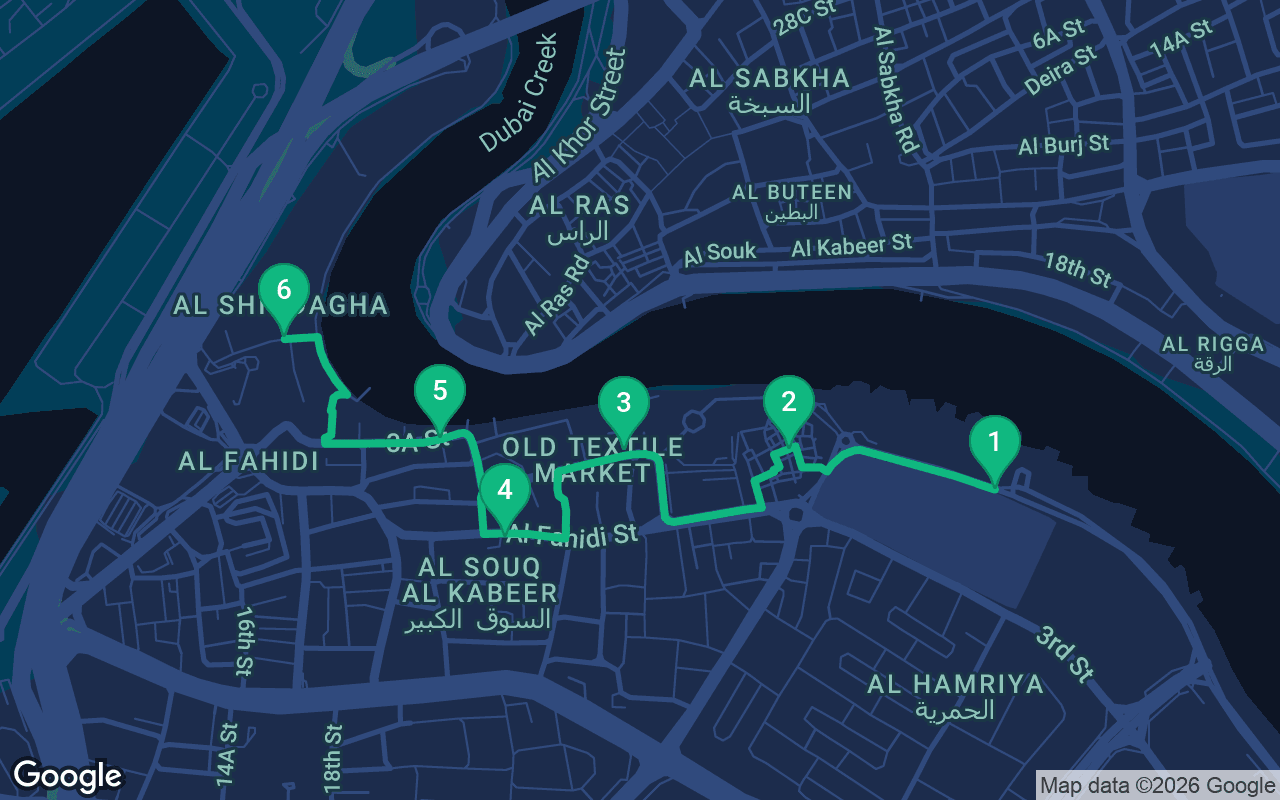
Zhruba 2,5 km, přibližně 34 minut pohodovým tempem.
Tato prohlídka je namluvená
Stisknutím tlačítka přehrávání u prvních 3 zastávek si poslechnete 30sekundovou ukázku vyprávění. V aplikaci si úvod a tyto zastávky přehrajete celé zdarma a každá se ozve zvukovým signálem, jakmile dorazíte na místo. Celá komentovaná prohlídka může být vaše za jednorázový poplatek $7.99, který vám zůstane napořád.
Funguje s aplikacemi Garmin, Komoot, Strava, OS Maps a jakýmkoli GPX programem.
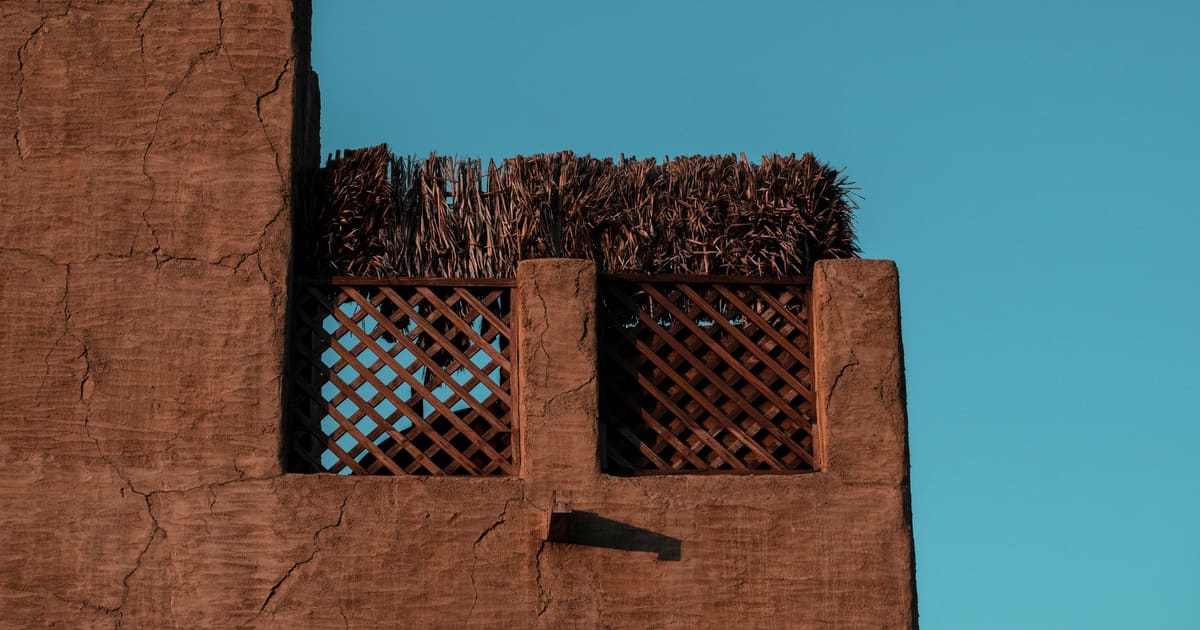
Long before the towers, Dubai was a town of coral-stone houses and wind towers strung along a saltwater creek, and the oldest part of it still stands on the Bur Dubai bank. This walk starts on the waterfront at Al Seef, winds through the shaded lanes of the Al Fahidi Historical Neighbourhood, passes the Grand Mosque and the covered Textile Souk, stops at the abra station where wooden boats cross the water, and ends at Al Shindagha, where the city's ruling family first settled. It is about two kilometers, a little over a mile, flat and close to the water, and among self-guided walking tours in the Gulf it is the one that shows you the town Dubai used to be.
The walking itself takes only half an hour or so, but give it two to three hours, because the lanes of Al Fahidi, the souk and the museum at the end all reward lingering, and you may want to ride an abra across the Creek and back. The route is flat, on promenades, paved lanes and a covered market. Timing matters more than anything else. Walk it between November and March if you can, in the early morning or after about four in the afternoon, when the light turns golden over the water. In October and April go early or late. From May to September the midday heat climbs past 40 degrees Celsius, over 104 Fahrenheit, and this walk is not walkable at midday; in summer, keep to the first hour after sunrise or the late evening. Carry water and wear a hat. Dress modestly, with shoulders and knees covered, which is expected in the souk and near the mosque. The Grand Mosque is a working place of worship, and access for non-Muslim visitors varies, so check before you go. Museums and shops keep their own hours, many close for Friday midday prayers, and some smaller shops shut for a break in the afternoon, so check before you go there too. Keep some small coins for the abra.
Start on the promenade at Al Seef with the Creek in front of you. Across the water lies Deira, the other half of old Dubai, and on the water itself you will see wooden abras puttering between the banks and, now and then, a big wooden dhow. Al Seef means "the shore," and this stretch of waterfront was rebuilt and opened as a new quarter in 2017. Look around at the low sand-colored houses, the wind towers, the shades of woven palm fronds and the narrow lanes between them. Much of it is new, built to look like the Dubai of a century ago, while further along the promenade the design turns modern, and the mix is deliberate: old forms, new cafes and shops. The real heritage here is the Creek itself. On a coast with few safe harbors, this saltwater inlet gave boats shelter from the open Gulf, and the town grew up on both its banks because of it. In the late 1950s the ruler, Sheikh Rashid bin Saeed Al Maktoum, began dredging the Creek so that larger ships could come in and unload, a costly gamble that helped turn a small trading town into a port city. Stand at the rail for a minute and watch the traffic on the water, which has never really stopped. When you are ready, walk west along the promenade toward the older, lower rooftops, then cross the road inland into the lanes of Al Fahidi. About seven minutes.
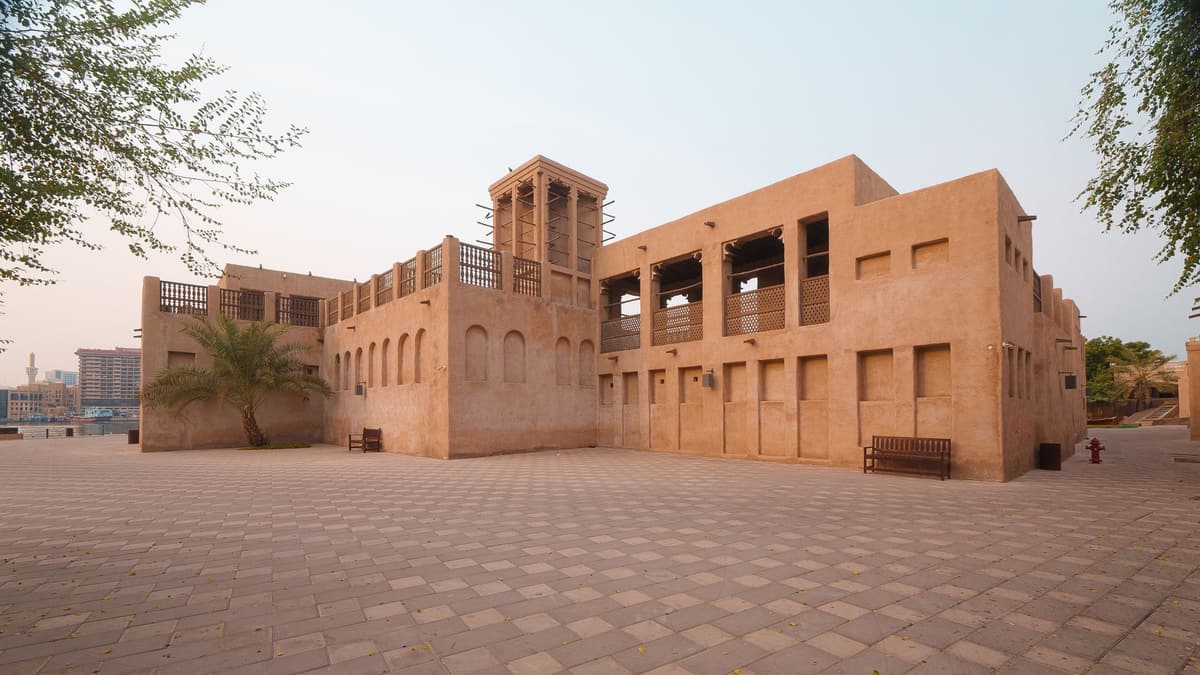
 Step into the narrow lanes and the temperature drops. You are in the Al Fahidi Historical Neighbourhood, one of the oldest surviving quarters of Dubai, a maze of alleys, called sikkas, between tall sand-colored walls. Look up at the square towers rising above the rooftops. These are wind towers, or barjeel, and they are old Gulf air conditioning: open on all four sides at the top, they catch the breeze from any direction and push it down into the rooms below, while warm air rises and escapes. The quarter was long known as Bastakiya, after Bastak, a district in southern Persia. In the early 1900s Dubai's ruler Sheikh Maktoum bin Hasher Al Maktoum made the town more welcoming to traders with lower duties, while customs across the water were growing heavier, and merchant families from that coast moved here and built these houses. The walls are made of coral stone and gypsum, with roofs laid on poles of mangrove wood. In the 1980s part of the quarter was knocked down, and the rest was saved and later restored. Today the courtyard houses hold galleries, small museums, cafes and guest rooms. The Sheikh Mohammed Centre for Cultural Understanding is here too, under the motto "Open Doors. Open Minds," and it hosts traditional meals and talks where you can ask anything about Emirati life and faith. Wander a little, then leave the lanes on their western side and walk west a few minutes, past the squat walls of Al Fahidi Fort, toward the tall minaret ahead. About five minutes.
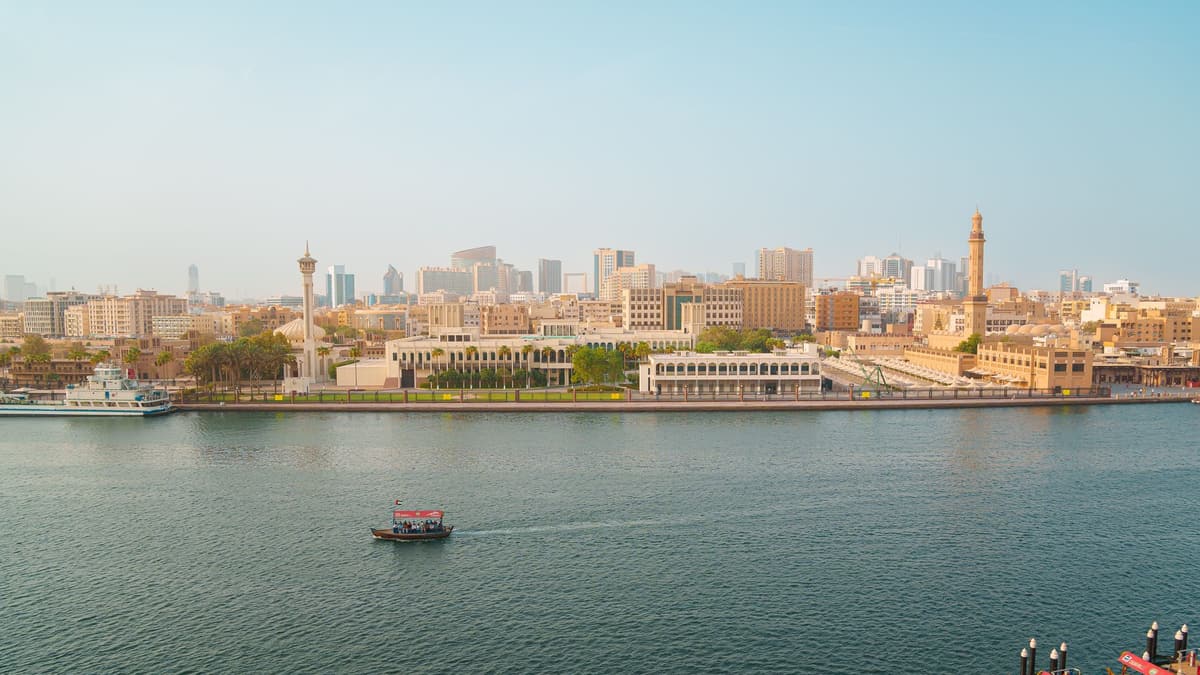
On your way you passed Al Fahidi Fort, built around 1787 and the oldest standing building in Dubai, which has housed the Dubai Museum since 1971; check before you go whether it is open. Now stand back from the Grand Mosque far enough to take in its shape: sand-colored walls, a cluster of domes and, rising above everything, one slim minaret, long counted the tallest in the city. A mosque has stood on this spot since around 1900, and it has long been the center of religious life on this side of the Creek. The building has been rebuilt more than once, and the one in front of you is a modern rebuild, designed to blend with the old quarter around it rather than stand apart from it. Listen if you are here at prayer time. The call to prayer rings out five times a day from this minaret and from the smaller mosques around it, and the lanes fill briefly with men heading in, then empty again. This is a working mosque, and access for non-Muslim visitors is limited, so admire it from the outside unless you have checked otherwise. Be quiet near the entrance, never photograph people at prayer, and avoid blocking the doors at Friday midday, when the crowds overflow into the street. If you would like to see inside a mosque, the cultural center you just passed can tell you which ones welcome visitors. From the mosque, head southwest through the short side streets into the covered lanes of the souk. About four minutes.
Co je v ceně
Naše prohlídky jsou zamýšlené jako meditativní a pohlcující: jdete a prostě posloucháte. Vždy jsou lepší ve společnosti a aplikace přehrává vyprávění synchronizovaně, takže vy, váš partner i vaši přátelé slyšíte každou zastávku ve stejnou chvíli.
You are now under the wooden roof of the Bur Dubai Textile Souk.
Zbytek této zastávky najdete v celé audioprohlídce.
Here at the Bur Dubai Abra Station, wooden water taxis nose into the landing, take on passengers and push off across the Creek to Deira. Watch for a minute before you climb aboard.
Zbytek této zastávky najdete v celé audioprohlídce.
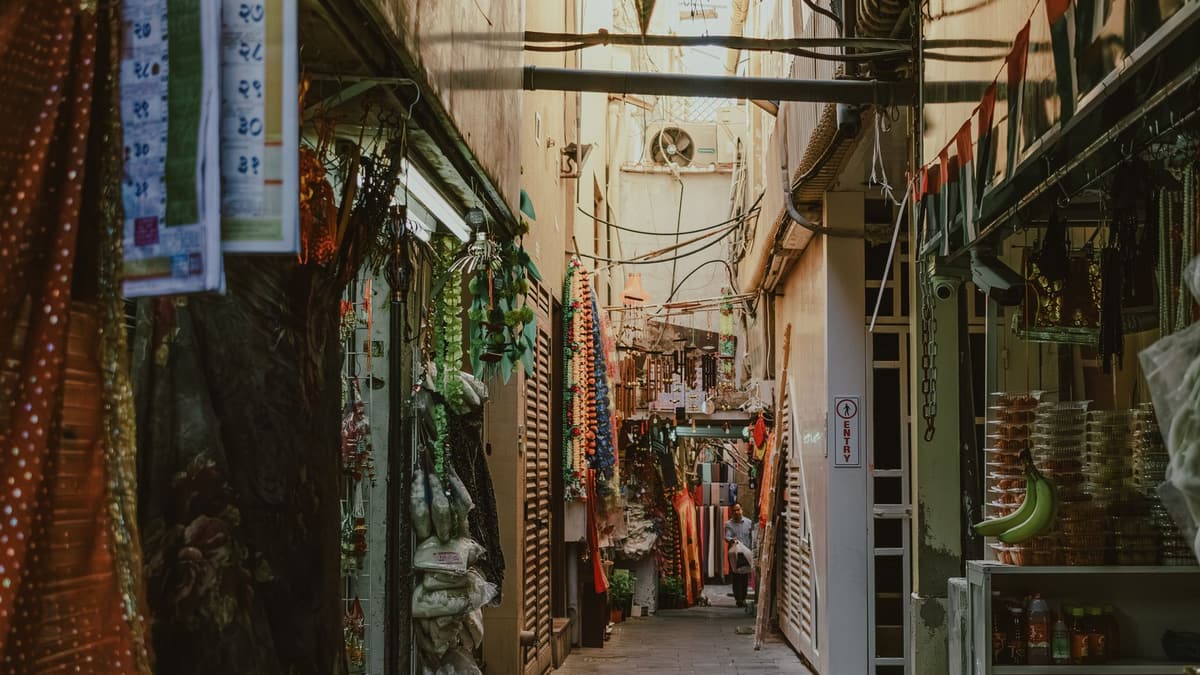
The walk ends at Al Shindagha, the strip of land at the old mouth of the Creek, where restored houses of coral stone and wind towers line the water. This is where modern Dubai began.
Zbytek této zastávky najdete v celé audioprohlídce.
Absolvuj tuto procházku s ostatními v rámci příští naplánované trasy.
Asi 2,5 km, zhruba 34 minut volným tempem · 6 zastávek
Přátelé chodí zdarmaOctober 11, 2026 · 9 min read
From the Hollandsche Schouwburg through the old Jewish Quarter, past the Dockworker and the Dam, to the Anne Frank House on the Prinsengracht.
October 11, 2026 · 11 min read
From Van Houten's street by the Vondelpark past Leidseplein, the Rijksmuseum passage and the famous canal bench to the Anne Frank House.

October 11, 2026 · 10 min read
Follow the last days of April and May 1945 from the Anhalter Bahnhof ruin past the Gestapo site and Brandenburg Gate to the Moltke Bridge and the Reichstag.
