
October 11, 2026 · 9 min read
Amsterdam Anne Frank Walking Tour
From the Hollandsche Schouwburg through the old Jewish Quarter, past the Dockworker and the Dam, to the Anne Frank House on the Prinsengracht.
589

October 9, 2026 · 11 min read

 Přátelé chodí zdarma
Každá prohlídka funguje také jako naplánovaná skupinová procházka, ke které se můžete v aplikaci připojit.
Další audio prohlídky v Kyoto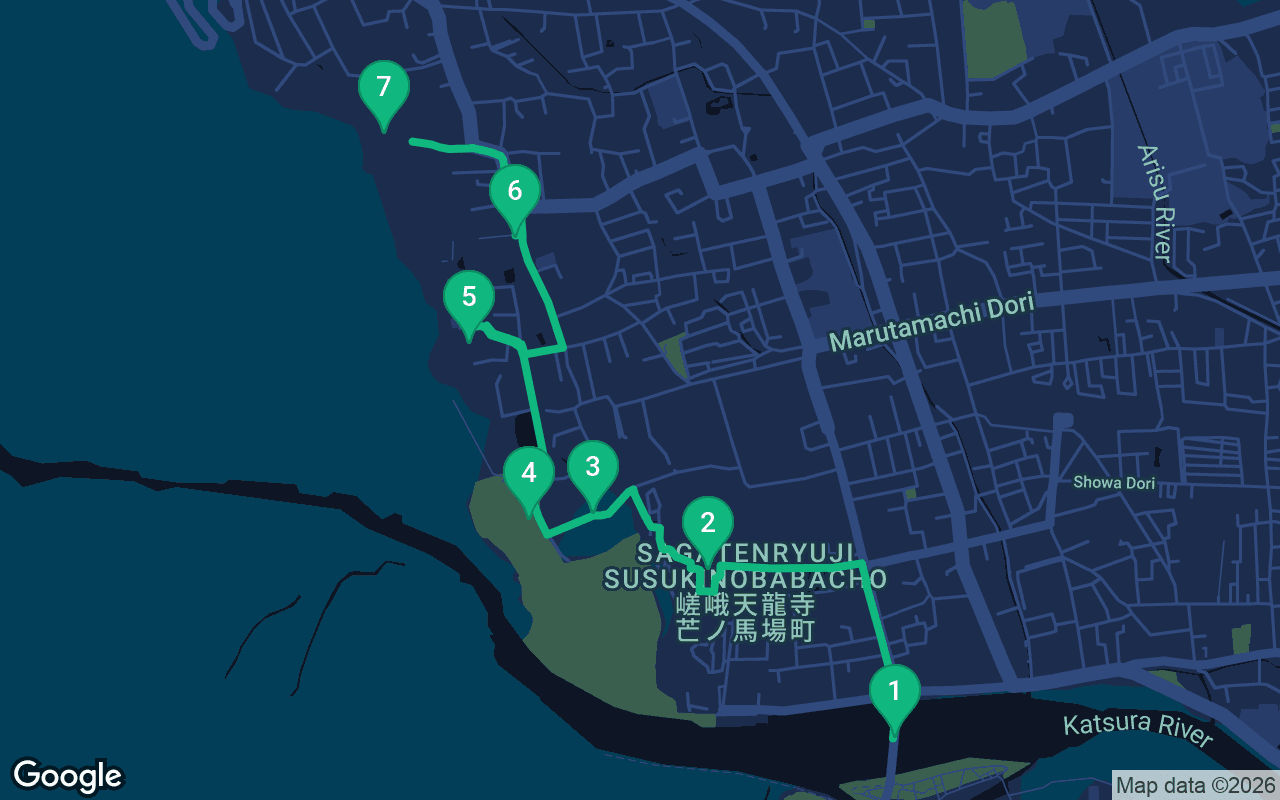
Zhruba 2,6 km, přibližně 38 minut pohodovým tempem.
Tato prohlídka je namluvená
Stisknutím tlačítka přehrávání u prvních 3 zastávek si poslechnete 30sekundovou ukázku vyprávění. V aplikaci si úvod a tyto zastávky přehrajete celé zdarma a každá se ozve zvukovým signálem, jakmile dorazíte na místo. Celá komentovaná prohlídka může být vaše za jednorázový poplatek $7.99, který vám zůstane napořád.
Funguje s aplikacemi Garmin, Komoot, Strava, OS Maps a jakýmkoli GPX programem.
On the western edge of Kyoto, where the city runs out and the wooded hills begin, lies Arashiyama, a place the emperors and nobles of the old capital came to for boating, moon viewing and escape. This walk starts on the long wooden-railed bridge over the river, passes through one of the great Zen gardens of Japan and the famous bamboo grove, then leaves the crowds behind and heads north through Sagano, a quiet district of farmhouses and hillside temples, each smaller, mossier and more peaceful than the last. It finishes at a tiny thatched nunnery with a story straight out of Japan's great medieval war epic. The route is about two and a half kilometers, and it is one of the loveliest self-guided walking tours in Kyoto, a gentle progression from the busy riverside to silence.
The walking takes well under an hour, but allow at least half a day if you plan to go inside the temples and gardens, which is where most of the beauty is. Tenryu-ji, Okochi Sanso, Jojakko-ji, Nison-in and Gio-ji all charge for entry and keep their own hours, so check before you go. The route is flat along the river, then climbs gently through the bamboo grove and along the foot of the hills, with stone steps at several temples, some uneven and slippery when wet. Wear shoes that slip on and off easily, because you will remove them to enter temple halls. Start as early as you can: the bamboo grove fills with people soon after the early morning, and by midday it can be shoulder to shoulder. Arashiyama is at its most famous in late autumn, when the maples turn red, and in cherry blossom season in spring, and both are very crowded. Summer is hot and humid, though the hillside temples are shady. Temple etiquette is simple: keep your voice low, never step on the moss, stay on the paths, follow the photography signs in each hall, and do not touch statues or buildings. The nearest stations are on the south side of the river and in central Arashiyama, a short walk from the bridge.
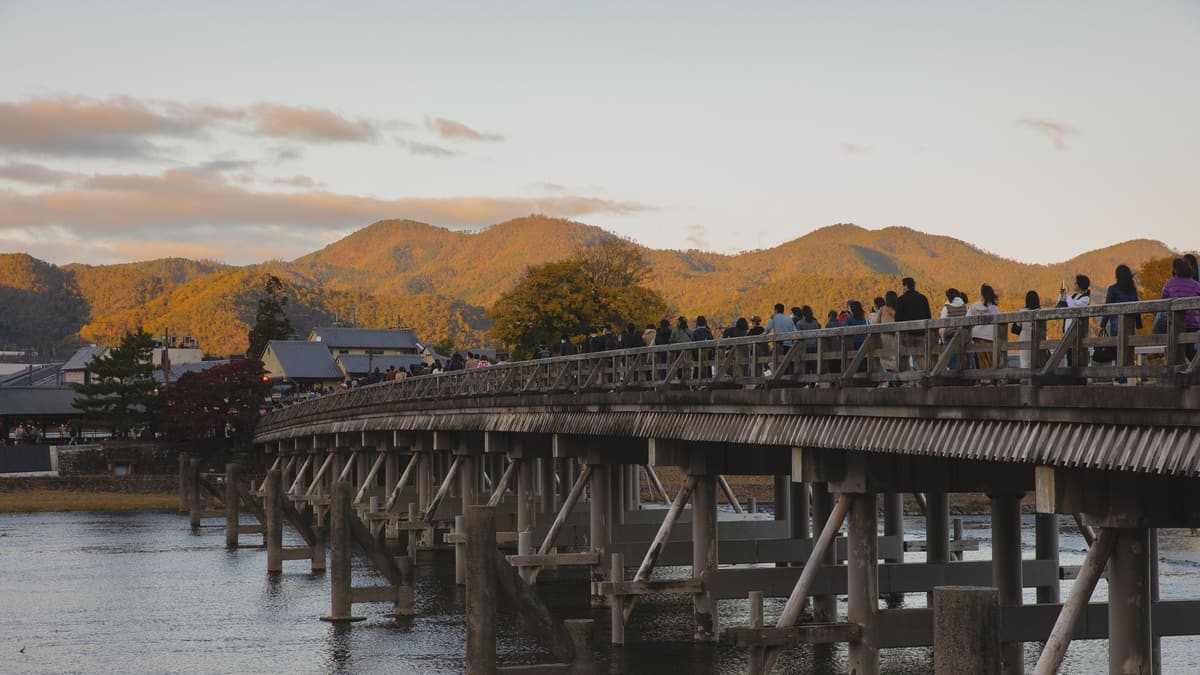
You are on Togetsukyo, the Moon Crossing Bridge, the symbol of Arashiyama. Walk out to the middle, lean on the wooden railing and look upstream. The forested hill rising from the water on your left is Arashiyama itself, Storm Mountain, which gave the whole district its name, its slopes pink with cherry blossom in spring and red with maples in autumn. The name of the bridge is said to come from a thirteenth century emperor, Kameyama, who watched the moon moving across the sky on a clear night and remarked that it looked as if it were crossing the bridge. A bridge has stood near here for more than a thousand years. The present one dates from the 1930s, and although it is built of concrete, its railings were made in wood to keep its old look, which is why it blends so beautifully into the scenery. There is a lovely tradition here. Kyoto children who turn thirteen visit Horin-ji, a temple on the south bank, to receive wisdom, and on the way home they must not look back while crossing this bridge, or the wisdom will slip away. Look at the river, too; in summer, on some evenings, fishermen still practice the old art of fishing with trained cormorants by torchlight. To go on, walk off the bridge to the north bank and continue straight up the main street for about five minutes, to the entrance of Tenryu-ji on your left.
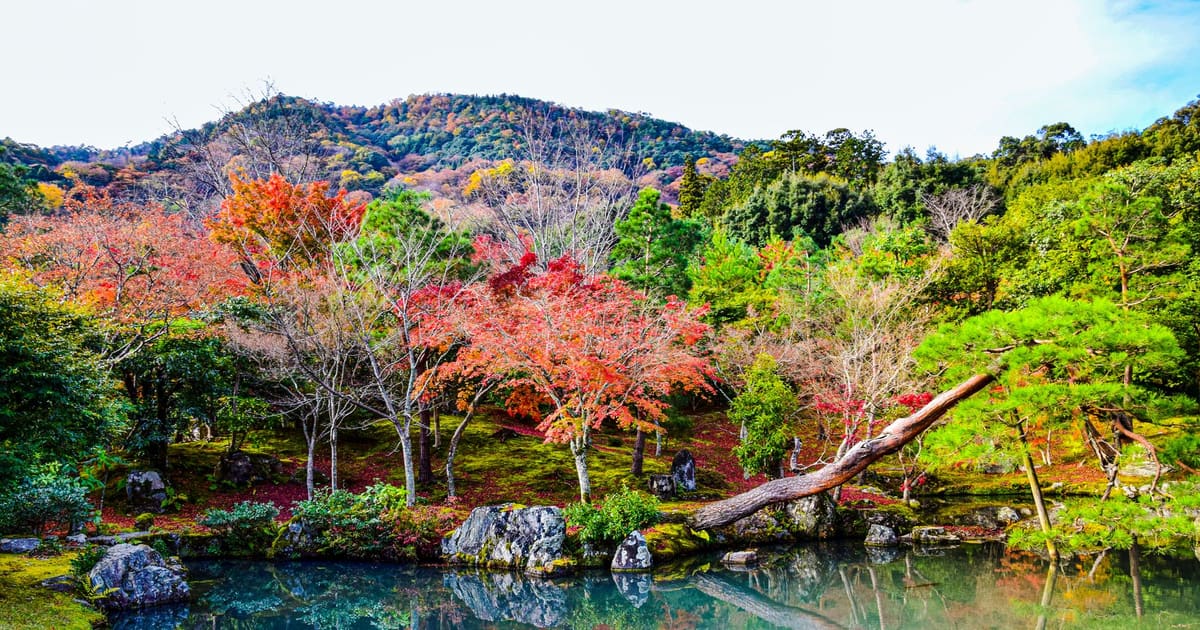
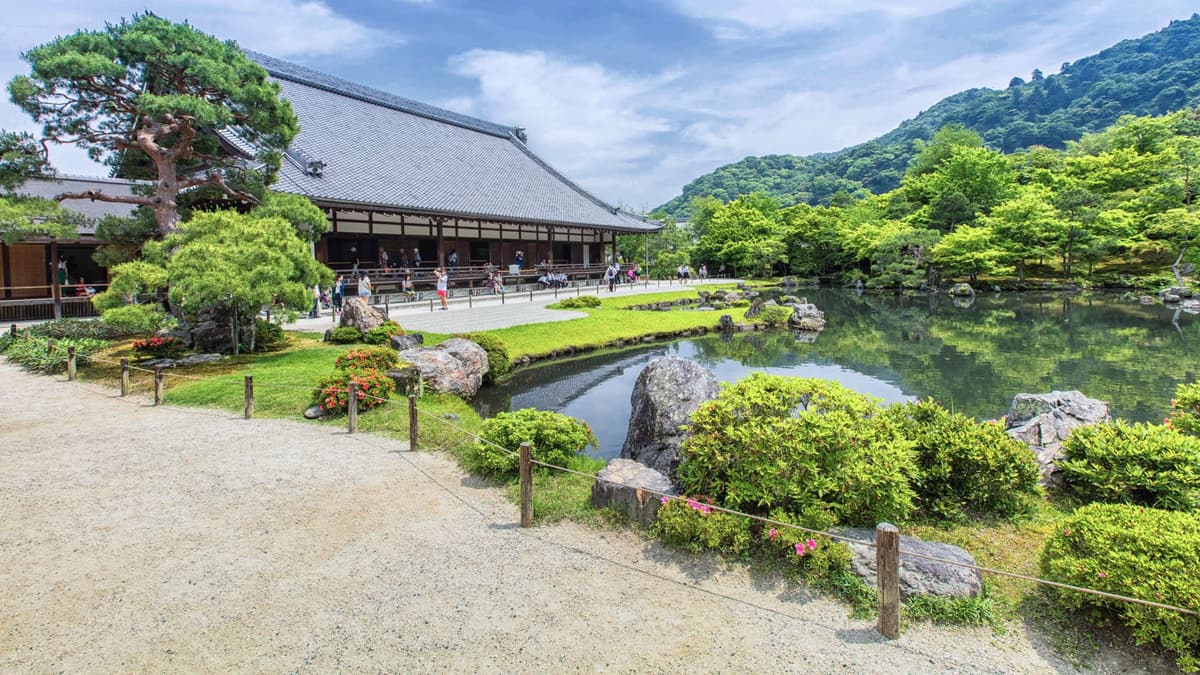
 You are at Tenryu-ji, the Temple of the Heavenly Dragon, the most important Zen temple in Arashiyama and part of the Historic Monuments of Ancient Kyoto World Heritage Site. Its story begins with a guilty conscience. In 1339 the warlord Ashikaga Takauji, who had fought against the emperor Go-Daigo and driven him from Kyoto, founded this temple to console the late emperor's spirit after his death. The name comes from a dream in which a golden dragon rose from the nearby river. The first abbot was Muso Soseki, a Zen master and one of the greatest garden designers in Japanese history, and his garden is the reason to come. Most of the temple's buildings have burned and been rebuilt many times, so the halls you see are mostly from the late nineteenth and twentieth centuries, but the garden has kept much of its original form for nearly seven centuries. Walk through to the veranda of the main hall and sit down facing it. A pond curves in front of you, edged by rocks and pines, with a cluster of stones on the far side arranged like a waterfall. Behind it, the hills of Arashiyama rise as if they were part of the design. This technique is called shakkei, borrowed scenery. Remove your shoes for the halls, and keep off the moss. Leave the garden by its north gate, which opens straight onto the bamboo grove, about two minutes; if you skipped the garden, go back to the main street and follow the signs north to the grove instead.
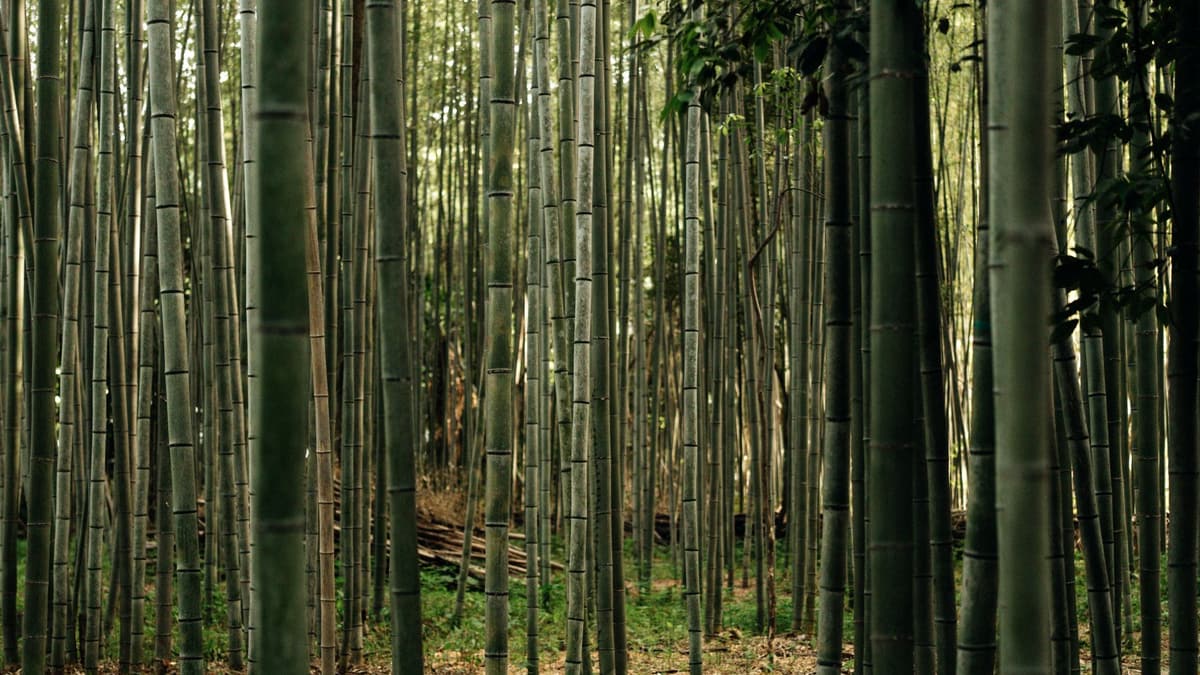
You are in the Arashiyama Bamboo Grove, and for a moment, if you are early enough, it will feel like the most peaceful place on earth. Look up. Thousands of tall green stems rise on either side of the path, so dense and so high that they close overhead, and the light comes through them in a soft, green glow. These are moso bamboo, a giant species that can grow astonishingly fast. Stand still and listen. When the wind blows, the stems sway and knock gently against each other with a hollow, creaking sound, and the leaves hiss high above you; Japan's environment ministry once named this sound one of the country's hundred most treasured soundscapes. The grove has long been tended by local families, and bamboo has been a part of daily life here for centuries, used for fences, baskets, tea whisks and countless other everyday things. A few things matter here. Stay on the path and behind the fences, never carve into or bend the bamboo, which harms the plants, and keep moving rather than stopping in the narrowest stretches. If you turn east along the path, you will find Nonomiya Shrine, a small shrine with a rough black torii gate, mentioned in The Tale of Genji. To continue, follow the bamboo path west and slightly uphill to its end, where the gate of Okochi Sanso stands at the top of the slope, about three minutes.
Co je v ceně
Naše prohlídky jsou zamýšlené jako meditativní a pohlcující: jdete a prostě posloucháte. Vždy jsou lepší ve společnosti a aplikace přehrává vyprávění synchronizovaně, takže vy, váš partner i vaši přátelé slyšíte každou zastávku ve stejnou chvíli.
You are at the gate of Okochi Sanso, the mountain villa of Denjiro Okochi, one of the great stars of Japanese cinema in the early twentieth century.
Zbytek této zastávky najdete v celé audioprohlídce.
You are at the foot of Jojakko-ji, a temple built into the slope of Mount Ogura, and as you climb its stone steps, the moss and the maples close around you.
Zbytek této zastávky najdete v celé audioprohlídce.
You are at the gate of Nison-in, and ahead of you stretches one of the most beautiful temple approaches in Kyoto.
Zbytek této zastávky najdete v celé audioprohlídce.
The walk ends at Gio-ji, a tiny temple hidden in a grove of maples and bamboo, with a thatched hall sitting on a carpet of moss so thick and green it looks like velvet.
Zbytek této zastávky najdete v celé audioprohlídce.
Absolvuj tuto procházku s ostatními v rámci příští naplánované trasy.
Asi 2,6 km, zhruba 38 minut volným tempem · 7 zastávek
Přátelé chodí zdarmaOctober 11, 2026 · 9 min read
From the Hollandsche Schouwburg through the old Jewish Quarter, past the Dockworker and the Dam, to the Anne Frank House on the Prinsengracht.
October 11, 2026 · 11 min read
From Van Houten's street by the Vondelpark past Leidseplein, the Rijksmuseum passage and the famous canal bench to the Anne Frank House.

October 11, 2026 · 10 min read
Follow the last days of April and May 1945 from the Anhalter Bahnhof ruin past the Gestapo site and Brandenburg Gate to the Moltke Bridge and the Reichstag.
