
October 11, 2026 · 9 min read
Amsterdam Anne Frank Walking Tour
From the Hollandsche Schouwburg through the old Jewish Quarter, past the Dockworker and the Dam, to the Anne Frank House on the Prinsengracht.
589

October 9, 2026 · 9 min read

 Přátelé chodí zdarma
Každá prohlídka funguje také jako naplánovaná skupinová procházka, ke které se můžete v aplikaci připojit.
Další audio prohlídky v San Miguel de Allende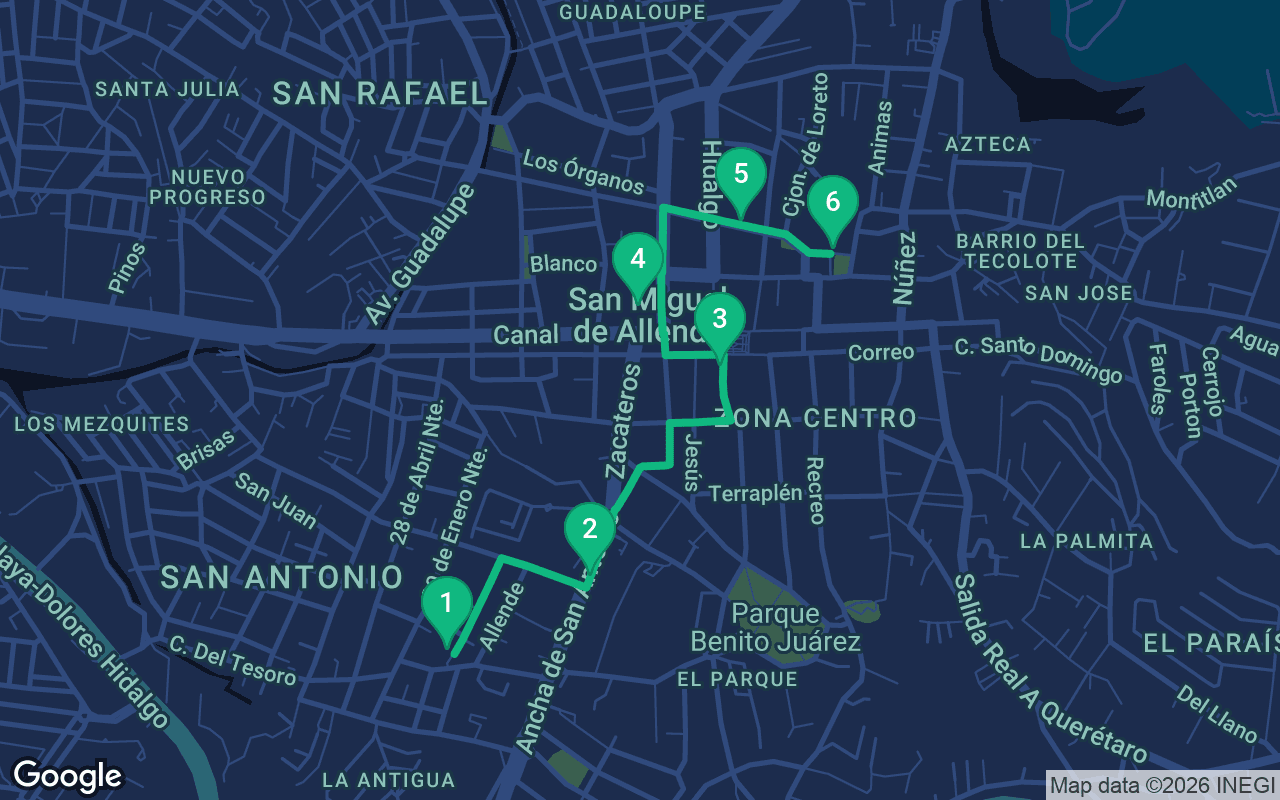
Zhruba 2 km, přibližně 30 minut pohodovým tempem.
Tato prohlídka je namluvená
Stisknutím tlačítka přehrávání u prvních 3 zastávek si poslechnete 30sekundovou ukázku vyprávění. V aplikaci si úvod a tyto zastávky přehrajete celé zdarma a každá se ozve zvukovým signálem, jakmile dorazíte na místo. Celá komentovaná prohlídka může být vaše za jednorázový poplatek $7.99, který vám zůstane napořád.
Funguje s aplikacemi Garmin, Komoot, Strava, OS Maps a jakýmkoli GPX programem.
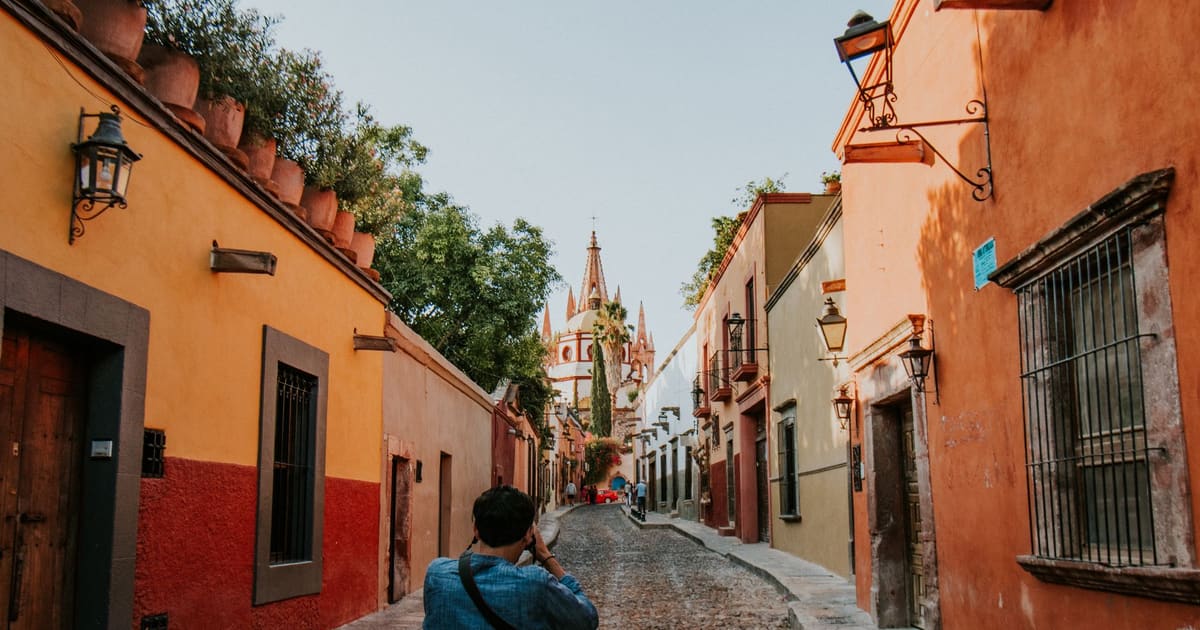
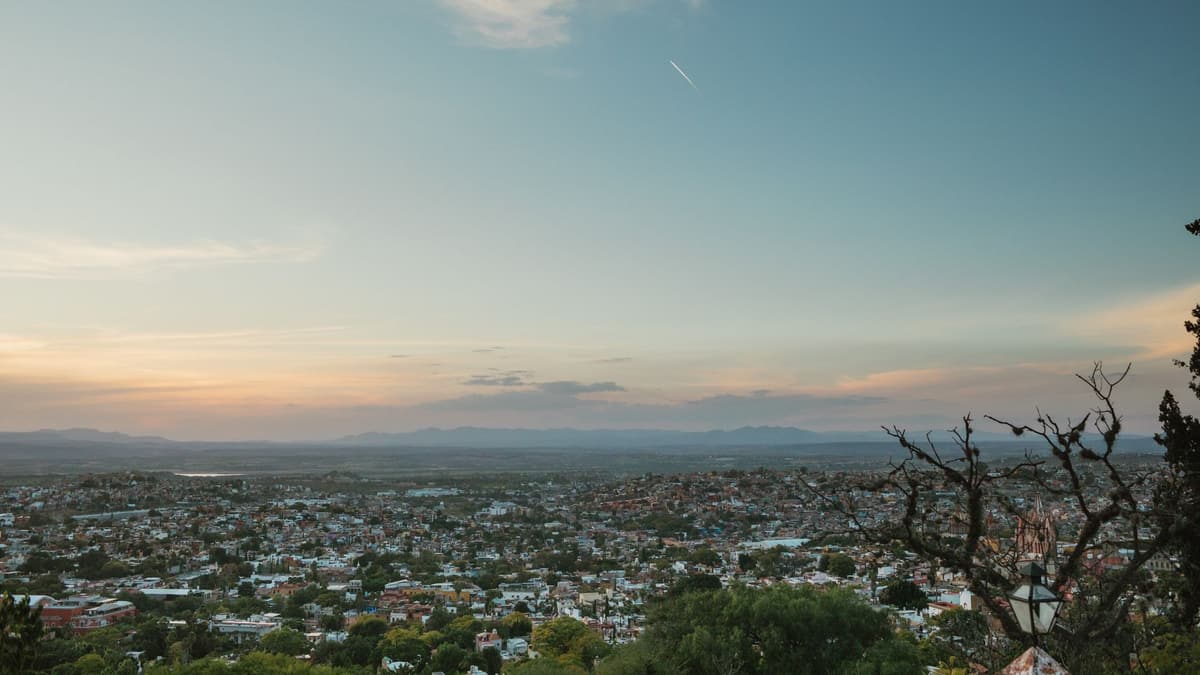
San Miguel de Allende has been reinvented more than once. It was a frontier town on the silver road, then a wealthy colonial town, then the cradle of Mexico's war of independence, and in the twentieth century it became an artists' town, drawing painters and students from Mexico, the United States and beyond. This walk follows those last two lives. It starts in the old barrio of San Antonio, passes the art school that brought American veterans here after the Second World War, visits the house where the independence hero Ignacio Allende was born, and goes on to an art school in an old convent, a library founded by a foreign resident and a church on the square where Allende rides in bronze. It is about 2 kilometers, a little over a mile, and one of the more thoughtful self-guided walking tours you can take in town.
Allow about an hour and a quarter at a stroll, and up to half a day if you stop at the Casa de Allende museum and linger in the art school courtyards. San Miguel sits at about 1,900 meters, over 6,200 feet, so walk at an easy pace and drink plenty of water, especially on the gentle climb from San Antonio toward the center. The cobblestones are uneven and the sidewalks narrow, so wear shoes with good grip and keep an eye on the curbs. The sun is strong all year at this altitude, and the barrio streets at the start have little shade, so bring a hat and sunscreen. Mornings are quiet and cool. From June to September, short heavy storms are common in the afternoon. The museum, the art school and the library all keep their own hours, so check before you go, and remember that the library is a working library, so keep your voice down. In mid-June the Locos parade fills the streets near the start, and around September 16 the whole town celebrates independence, so expect crowds and road closures at those times.
Start in front of the church of San Antonio, the parish church of a residential barrio south-west of the center. This is a part of San Miguel where most people are locals, kids walk home from school, and the corner shops sell more tortillas than souvenirs. The church and the small garden in front of it are the barrio's gathering place, and once a year they become the starting point of one of the strangest and most joyful parties in Mexico. Every June, around the feast of Saint Anthony, the Desfile de los Locos, the parade of the crazies, sets off from this neighborhood. Hundreds of people in homemade costumes and masks dance through the streets to blaring music, dressed as monsters, cartoon characters, politicians and anyone else worth teasing, many of them men in outrageous drag, and they throw handfuls of candy into the crowd. It is loud, sweaty, irreverent and devout all at once, because it is also a celebration in honor of the saint. Take a moment to look at the church and the barrio around it, and imagine the noise. When you are ready, make your way north-east to Calle Ancha de San Antonio, the broad avenue, and follow it to the arched gateway of the Instituto Allende, about six minutes.
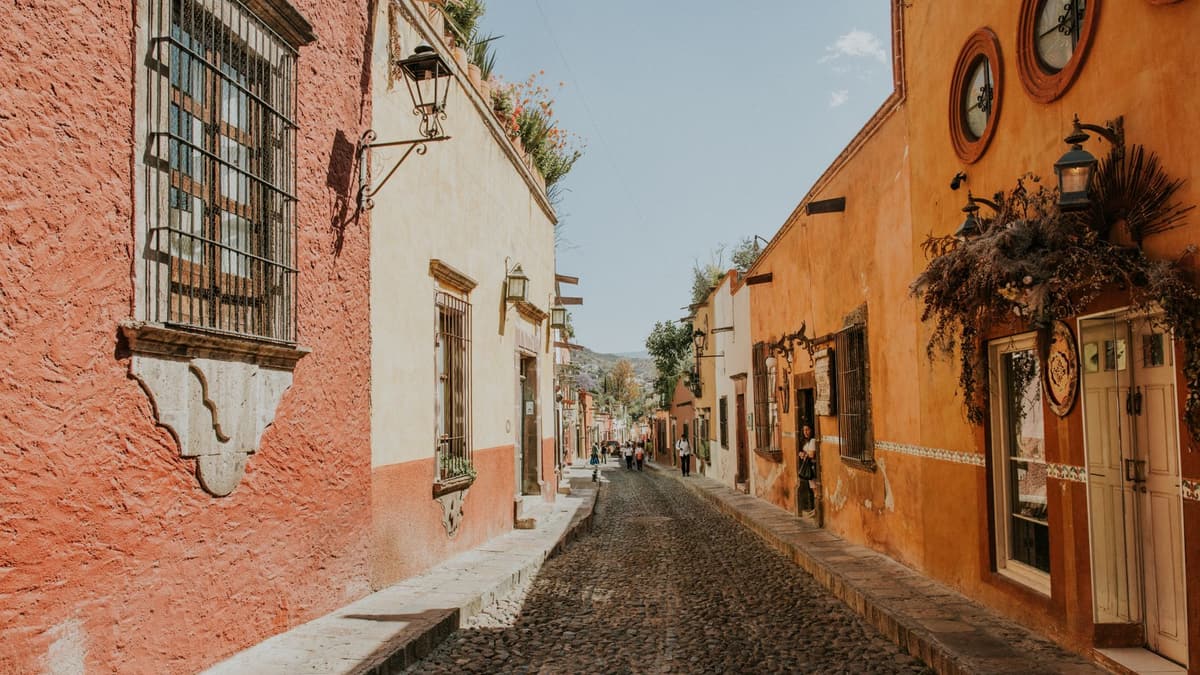 Behind the arched gateway lies a grand eighteenth-century estate, built as a country house for one of San Miguel's richest families, with courtyards and gardens. Since the middle of the twentieth century it has been an art school, and it is one of the main reasons San Miguel became the town it is today. The story starts with Stirling Dickinson, a young man from Chicago who arrived in San Miguel in the 1930s and stayed for the rest of his life. He helped found an art school in town in the late 1930s, and after the Second World War, he and his colleagues made a discovery that changed everything: the GI Bill would pay for American veterans to study art here. Hundreds came, ex-soldiers with paintbrushes, and in a town that had grown sleepy since its colonial heyday they rented rooms, filled the cafés and painted the streets. After a split in the art scene around 1950, the Instituto opened here, and for decades it drew students from the United States and Canada for courses in painting, sculpture, weaving, silverwork and Spanish. Many stayed or came back to retire, and the foreign community of San Miguel grew from there. Wander into the courtyards if the gates are open. Then head north along the avenue and bear right, uphill, toward the pink spires of the Parroquia. The last stretch is Calle Cuna de Allende, and the museum stands beside the church, about ten minutes in all.
The handsome house on the corner of the main square is where Ignacio Allende was born in 1769. His father was a wealthy Spanish-born merchant, and young Allende became a captain in the Queen's Dragoons, a cavalry regiment, a dashing officer and a well-known horseman. But like many American-born Spaniards of his generation, he resented a system that kept the best posts for people born in Spain, and he joined a group of conspirators who met in nearby Querétaro to plot a break with Spain. Among them were the priest Miguel Hidalgo and Juan Aldama, another officer from San Miguel. In September 1810 the plot was discovered. Rather than wait to be arrested, Hidalgo rang the church bell in the town of Dolores and called the people to rise, and Allende rode with him at the head of a growing army that swept through San Miguel and on to Guanajuato. The rebellion was larger and bloodier than its leaders had planned. Within a year Allende, Hidalgo and Aldama had been captured in the north and executed, and their heads were hung in iron cages from the corners of the granary in Guanajuato, where they stayed for ten years, until independence was won. In 1826 this town was renamed San Miguel de Allende in his honor. The museum inside tells the story of the town and the war, so check before you go. From the front door, walk one block west along the street beside the square and turn right up Calle Hernández Macías, about four minutes.
Co je v ceně
Naše prohlídky jsou zamýšlené jako meditativní a pohlcující: jdete a prostě posloucháte. Vždy jsou lepší ve společnosti a aplikace přehrává vyprávění synchronizovaně, takže vy, váš partner i vaši přátelé slyšíte každou zastávku ve stejnou chvíli.
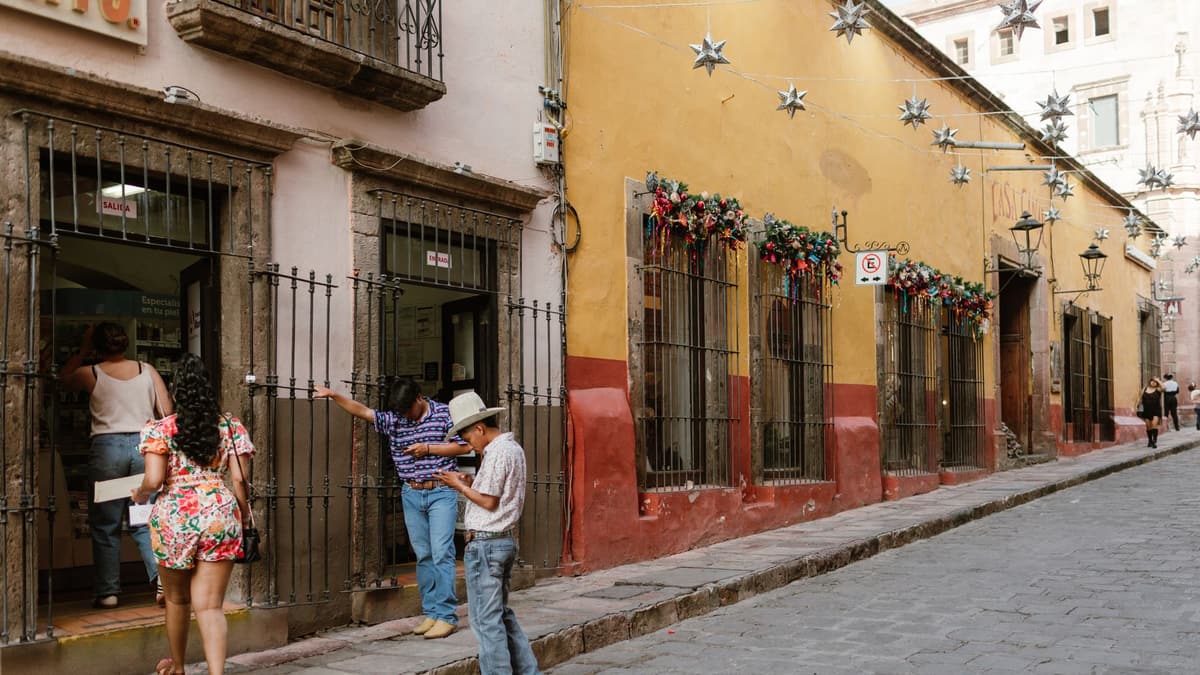
Step through the doorway into the great cloister of a former convent, built in the eighteenth century for nuns of the Conception, with two stories of arches around a garden and a fountain.
Zbytek této zastávky najdete v celé audioprohlídce.
From the outside this looks like another colonial building, but inside it is one of the busiest places in town. The Biblioteca Pública is a public library founded in the 1950s by Helen Wale, a Canadian who had settled in San Miguel.
Zbytek této zastávky najdete v celé audioprohlídce.
Look up at the doorway. Above it spreads an enormous carved scallop shell, framing the entrance like a great stone fan, and around it the facade is crowded with the extravagant carving of the late Mexican baroque.
Zbytek této zastávky najdete v celé audioprohlídce.
Absolvuj tuto procházku s ostatními v rámci příští naplánované trasy.
Asi 2 km, zhruba 30 minut volným tempem · 6 zastávek
Přátelé chodí zdarmaOctober 11, 2026 · 9 min read
From the Hollandsche Schouwburg through the old Jewish Quarter, past the Dockworker and the Dam, to the Anne Frank House on the Prinsengracht.
October 11, 2026 · 11 min read
From Van Houten's street by the Vondelpark past Leidseplein, the Rijksmuseum passage and the famous canal bench to the Anne Frank House.

October 11, 2026 · 10 min read
Follow the last days of April and May 1945 from the Anhalter Bahnhof ruin past the Gestapo site and Brandenburg Gate to the Moltke Bridge and the Reichstag.
