
October 11, 2026 · 9 min read
Amsterdam Anne Frank Walking Tour
From the Hollandsche Schouwburg through the old Jewish Quarter, past the Dockworker and the Dam, to the Anne Frank House on the Prinsengracht.
589

October 9, 2026 · 12 min read

 Přátelé chodí zdarma
Každá prohlídka funguje také jako naplánovaná skupinová procházka, ke které se můžete v aplikaci připojit.
Další audio prohlídky v Taipei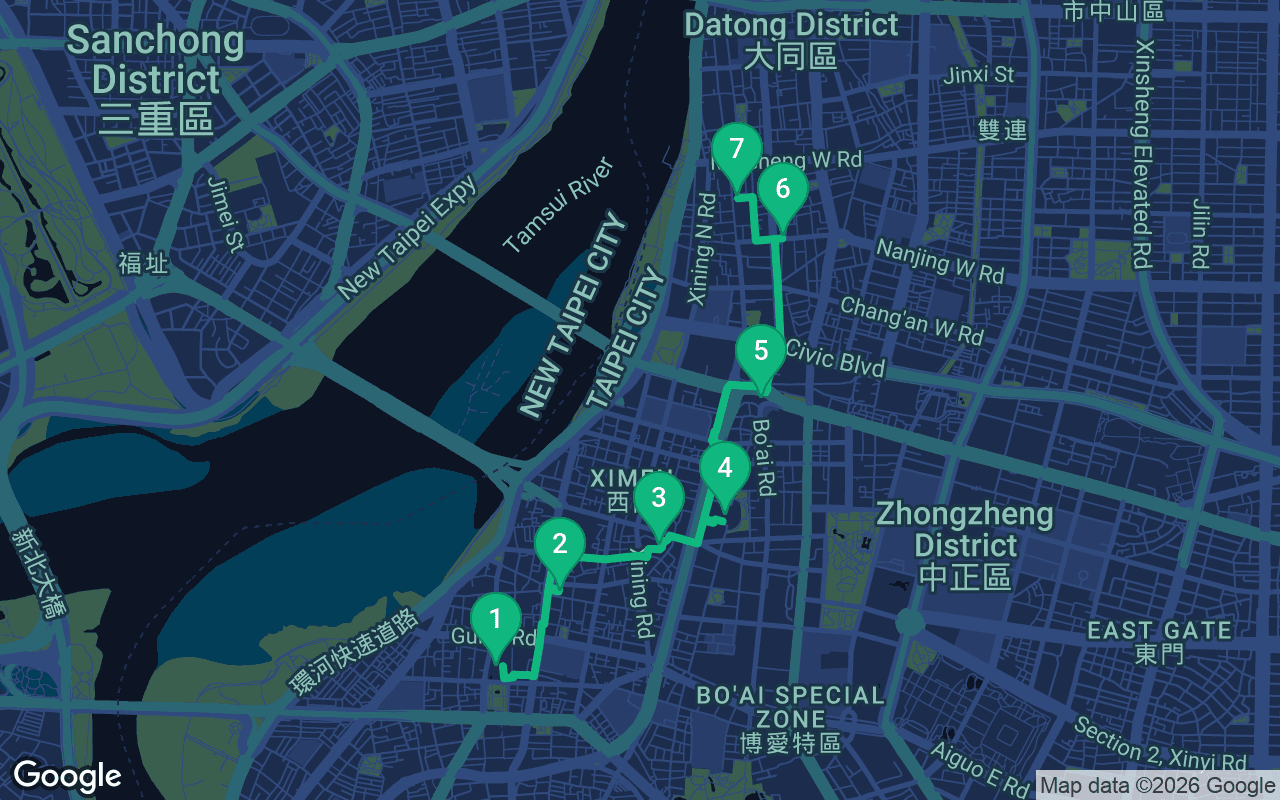
Zhruba 3,8 km, přibližně 58 minut pohodovým tempem.
Tato prohlídka je namluvená
Stisknutím tlačítka přehrávání u prvních 3 zastávek si poslechnete 30sekundovou ukázku vyprávění. V aplikaci si úvod a tyto zastávky přehrajete celé zdarma a každá se ozve zvukovým signálem, jakmile dorazíte na místo. Celá komentovaná prohlídka může být vaše za jednorázový poplatek $9.99, který vám zůstane napořád.
Funguje s aplikacemi Garmin, Komoot, Strava, OS Maps a jakýmkoli GPX programem.
Long before Taipei had skyscrapers, or even a city wall, it was two busy river towns on the Tamsui River: Bangka in the south and Dadaocheng to the north. This walk links them. It starts at Lungshan Temple, the great incense-filled heart of old Bangka, passes a quieter temple full of Qing-era carving, crosses Ximending by its red brick market hall, and visits the hall where Japanese rule over Taiwan ended. From there it heads north through the North Gate to the street corner where the 228 Incident began, and finishes at a tiny, much-loved temple on Dihua Street, the old merchant road of Dadaocheng. It is just under four kilometers, flat all the way, and one of the most rewarding self-guided walking tours in the city if you want to feel Taipei's older, slower rhythm.
Allow around an hour of walking and two and a half to three hours in all, with time inside the temples and a snack or two along the way. The route is flat and paved, though sidewalks in the older districts can be narrow, broken up by parked scooters and shop displays, so you will sometimes step around things. Taipei is hot and sticky from about May to October, with short, heavy afternoon showers, so carry water and an umbrella and duck into the arcades, the covered walkways along shopfronts, for shade. Mornings are the best time at the temples, when worshippers arrive and you may hear chanting. A few customs are worth knowing. Enter a temple through the door on your right and leave by the one on your left, and step over the raised wooden thresholds rather than on them. Photography is generally fine in courtyards, but be discreet, and do not photograph people's faces up close while they pray. Dress modestly, keep your voice low, and if you hold incense, hold it upright and keep clear of other people's faces. The walk starts at Longshan Temple metro station on the blue line and ends a few minutes from Dadaocheng Wharf on the river.
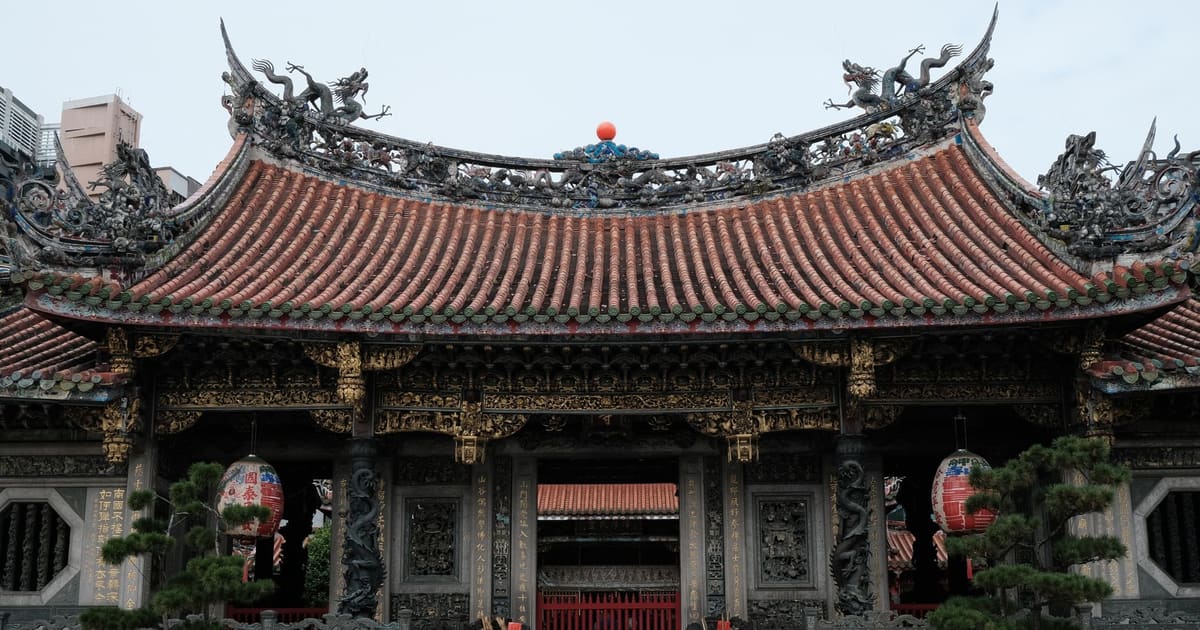
Stand in the forecourt, by the waterfall and pond, and look at the front of the temple: a swooping roofline crowded with dragons, phoenixes and tiny porcelain figures, all built from colorful cut ceramic pieces. Settlers from three counties around Quanzhou in Fujian founded this temple in 1738, bringing incense from the Longshan temple in their home region and dedicating it to Guanyin, the bodhisattva of compassion. In those days Bangka was the busiest port in northern Taiwan. Its name is thought to come from an Indigenous word for the canoes that once paddled goods to trade here, and people used to rank the island's great towns with a saying: first Tainan, second Lukang, third Bangka. The temple was the town's meeting hall, its court of disputes and its social center as well as its place of worship. It has been rebuilt several times after earthquakes, termites and war. An air raid in 1945 badly damaged the main hall, and local people still tell how the statue of Guanyin came through unharmed. Inside, look for the bronze dragon columns at the front hall, a rare sight in Taiwan. In the rear halls you will find Mazu, goddess of the sea, Guan Yu, and Wenchang, the god of literature, where students leave offerings before exams. Watch for worshippers dropping two red crescent-shaped wooden blocks on the floor, asking the gods a yes or no question. Like many temples in Taiwan, Lungshan has cut back on burning incense in recent years. When you leave, walk out to Guangzhou Street in front of the temple, turn left and follow it east a short way, then turn left onto Kangding Road and walk north for about six minutes. The next temple sits just off Kangding Road near Guiyang Street.
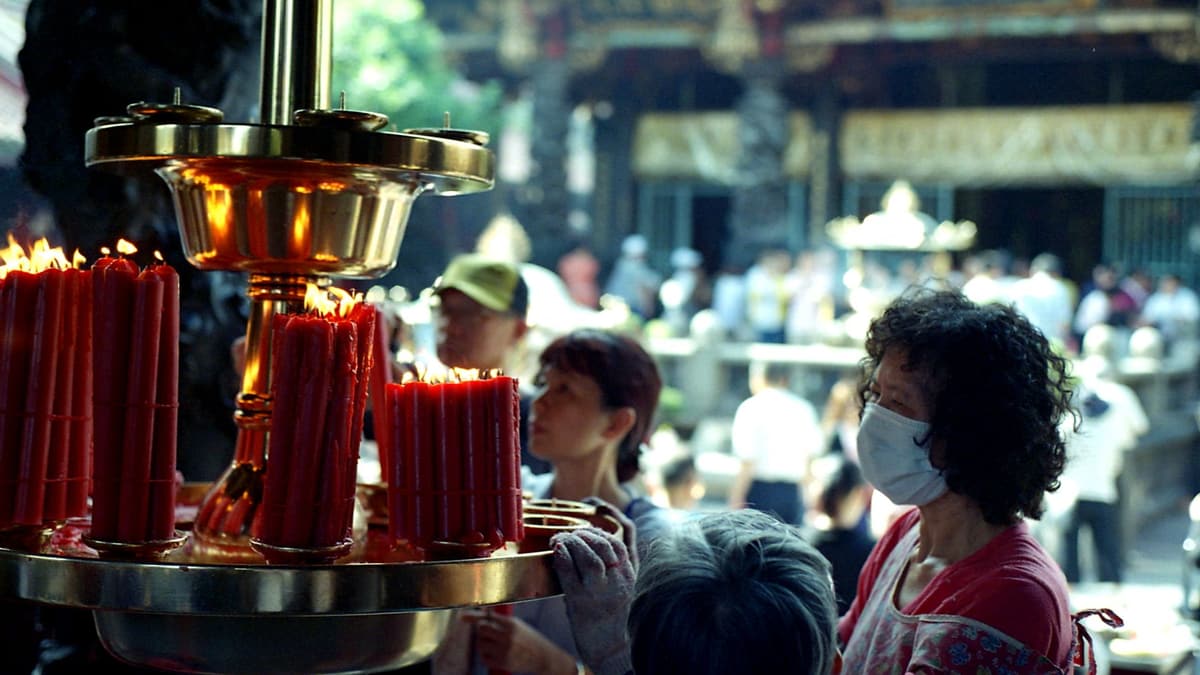 After the crowds at Lungshan, this temple feels like a deep breath. It was founded in 1787 by settlers from Anxi county in Fujian, who dedicated it to Qingshui Zushi, the Patriarch of Clear Water, a Buddhist monk of the Song dynasty revered for ending a drought in his home region and for many miracles after. His statues usually show him with a dark face, so look for that on the main altar. Many experts consider this one of the finest examples of mid-Qing temple architecture in Taiwan, so take your time with the details: the carved stone columns, the patterned brick, the wooden brackets under the eaves, worn smooth by more than two centuries of humid air and incense. The temple also carries a scar from the most violent episode in old Bangka's history. In 1853, rivalry between settler groups turned into open fighting. The Quanzhou families whose temple you just left fought the people from Tong'an, another Fujian county, and this temple, which stood in the way, was burned. It was rebuilt over the following years and finished in the 1870s. The losers of that fight, the Tong'an people, fled north with their most precious possession, and you will meet it again at the end of this walk. From the temple, go back to Kangding Road, walk north for a block, then turn right onto Neijiang Street and follow it east until it meets Chengdu Road. The red brick octagon is just ahead, about eight minutes in all.
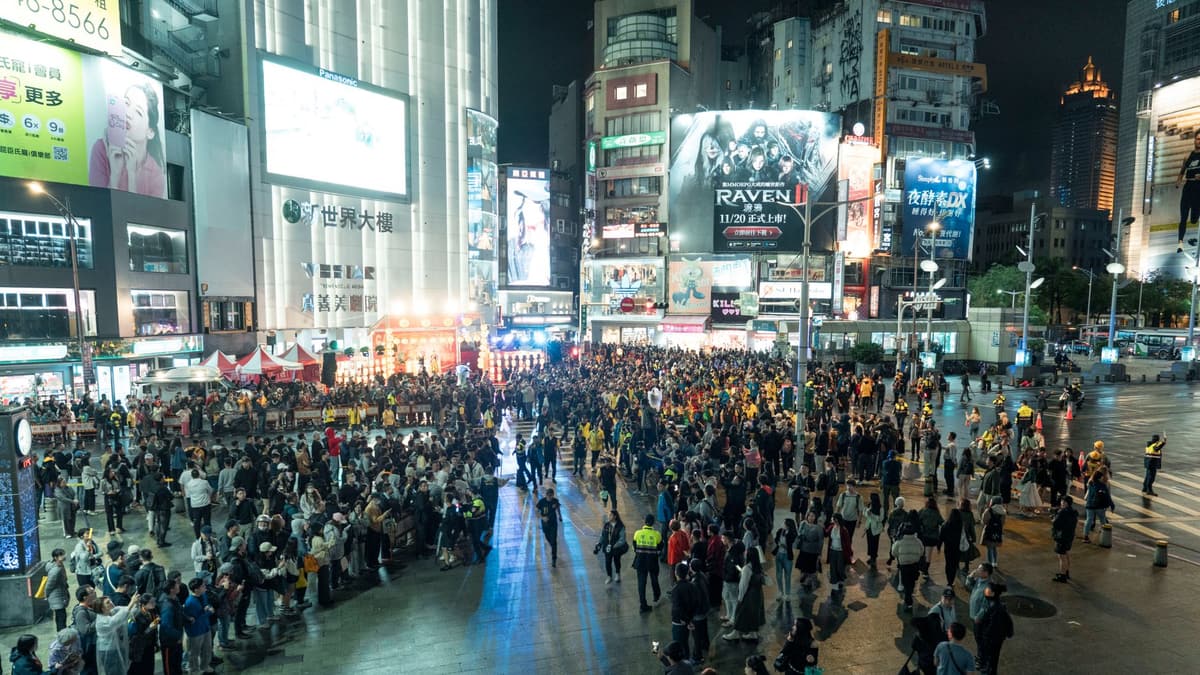
This red brick building with its eight-sided entrance hall was built in 1908 by the Japanese colonial government as a public market, one of the first in Taipei, designed by the architect Kondo Juro. Behind the octagon stretches a long cross-shaped hall where stallholders once sold produce and goods. It stood just outside the West Gate of the walled city, and when the Japanese demolished that gate in 1905, the open land here became Seimoncho, the West Gate quarter, which they turned into an entertainment district full of theaters and cafes. That is the origin of Ximending, the busy pedestrian district around you, still Taipei's favorite playground for teenagers, street performers, cinema fans and anyone hunting for cheap clothes and snacks. After the war the Red House became a theater, showing Chinese opera and films, before falling into decline. Today it is a cultural center with small design shops, a stage and exhibition space. Walk around to the back, where the outdoor terraces and bars form the heart of Taipei's LGBTQ nightlife. Taiwan became the first place in Asia to legalize same-sex marriage, in 2019, and on weekend evenings this square is cheerful, crowded and relaxed. Stand at the front for a moment and look back at the octagon, one of the most photographed buildings in the city. Then walk east along Chengdu Road, cross the wide Zhonghua Road, and continue a short block; the pale tiled hall stands just ahead, about five minutes away.
Co je v ceně
Naše prohlídky jsou zamýšlené jako meditativní a pohlcující: jdete a prostě posloucháte. Vždy jsou lepší ve společnosti a aplikace přehrává vyprávění synchronizovaně, takže vy, váš partner i vaši přátelé slyšíte každou zastávku ve stejnou chvíli.
This solid four-story hall, faced with pale green tiles and lit by tall arched windows, was built between 1932 and 1936 as the Taipei Public Hall, to mark the enthronement of the Showa emperor in Japan.
Zbytek této zastávky najdete v celé audioprohlídce.
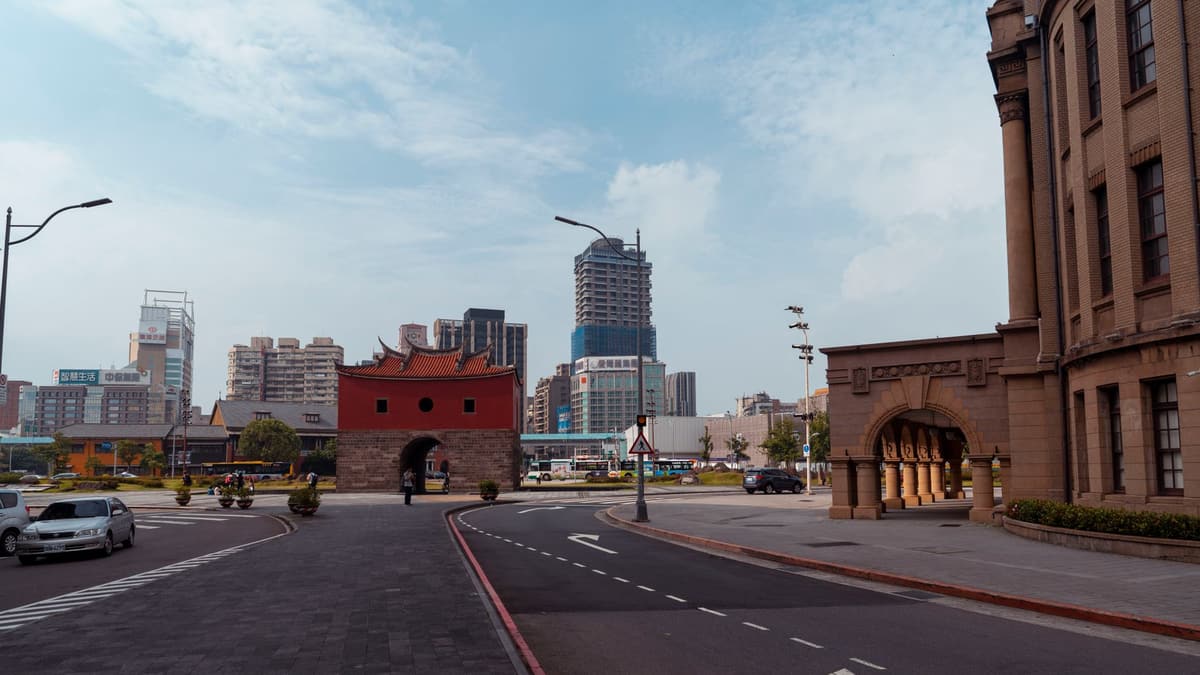
You are standing before the only gate of Taipei's Qing city wall that still looks exactly as it did when it was finished in 1884. Its name, Chengen, means receiving grace, a reference to the emperor's favor, and it faced north, toward the river town…
Zbytek této zastávky najdete v celé audioprohlídce.
This ordinary city corner, full of scooters and shop signs, is where one of the most painful chapters in Taiwan's modern history began. Look for the memorial marker near the junction.
Zbytek této zastávky najdete v celé audioprohlídce.
This tiny temple, its front glowing red and gold and usually wrapped in incense smoke, is one of the most visited in Taipei, and it holds the treasure that the Tong'an people carried away from Bangka.
Zbytek této zastávky najdete v celé audioprohlídce.
Absolvuj tuto procházku s ostatními v rámci příští naplánované trasy.
Asi 3,8 km, zhruba 58 minut volným tempem · 7 zastávek
Přátelé chodí zdarmaOctober 11, 2026 · 9 min read
From the Hollandsche Schouwburg through the old Jewish Quarter, past the Dockworker and the Dam, to the Anne Frank House on the Prinsengracht.
October 11, 2026 · 11 min read
From Van Houten's street by the Vondelpark past Leidseplein, the Rijksmuseum passage and the famous canal bench to the Anne Frank House.

October 11, 2026 · 10 min read
Follow the last days of April and May 1945 from the Anhalter Bahnhof ruin past the Gestapo site and Brandenburg Gate to the Moltke Bridge and the Reichstag.
