
October 11, 2026 · 9 min read
Amsterdam Anne Frank Walking Tour
From the Hollandsche Schouwburg through the old Jewish Quarter, past the Dockworker and the Dam, to the Anne Frank House on the Prinsengracht.
589

October 11, 2026 · 12 min read

 Teman jalan gratis
Setiap tur juga berjalan sebagai jalan kaki kelompok terjadwal yang dapat Anda ikuti di aplikasi.
Tur audio lainnya di Istanbul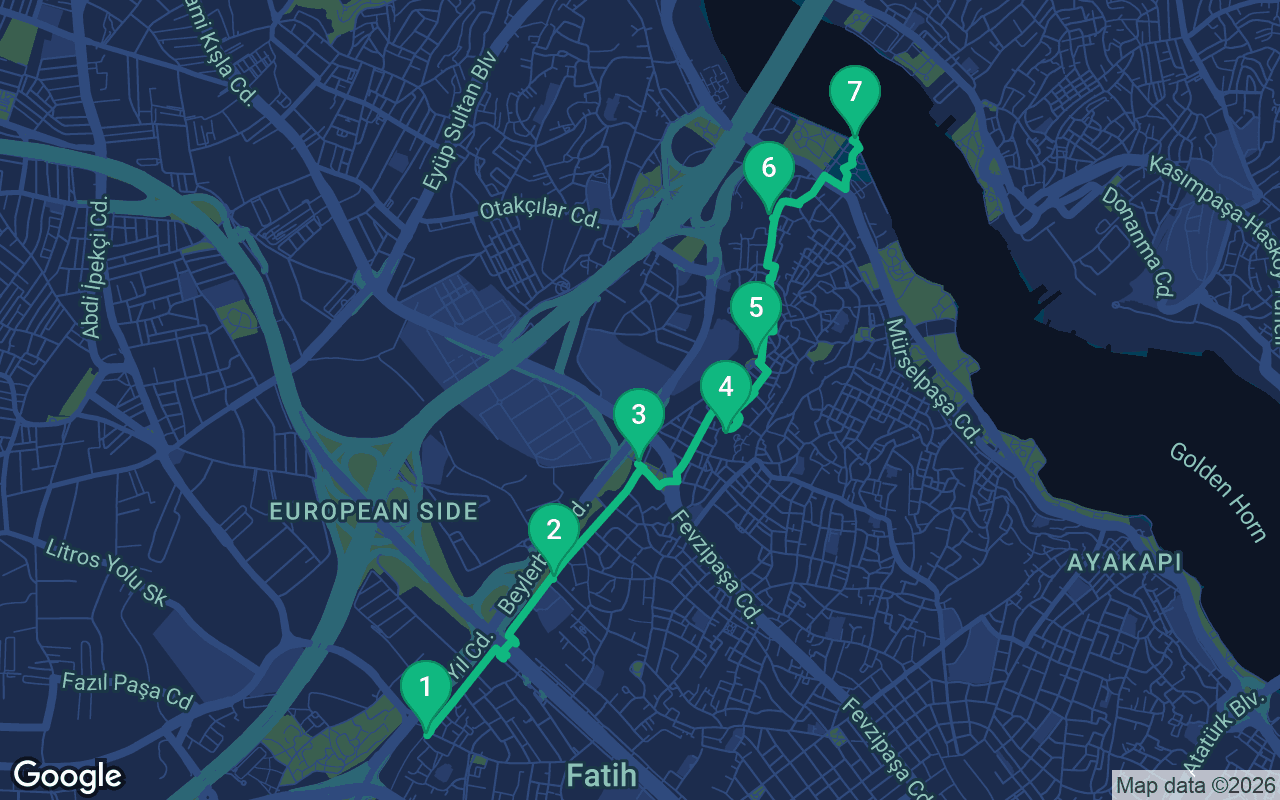
Sekitar 3,6 km, kira-kira 52 menit dengan ritme santai.
Tur ini dilengkapi narasi suara
Tekan putar pada 3 pemberhentian pertama untuk mendengarkan demo narasi 30 detik di sini. Di aplikasi, pengantar dan pemberhentian-pemberhentian ini bisa Anda dengarkan secara lengkap dan gratis, dan setiap pemberhentian membunyikan nada pemberitahuan saat Anda tiba. Seluruh tur berpemandu ini bisa Anda miliki selamanya hanya dengan $15.99, sekali beli untuk seterusnya.
Berfungsi dengan Garmin, Komoot, Strava, OS Maps, dan aplikasi GPX apa pun.
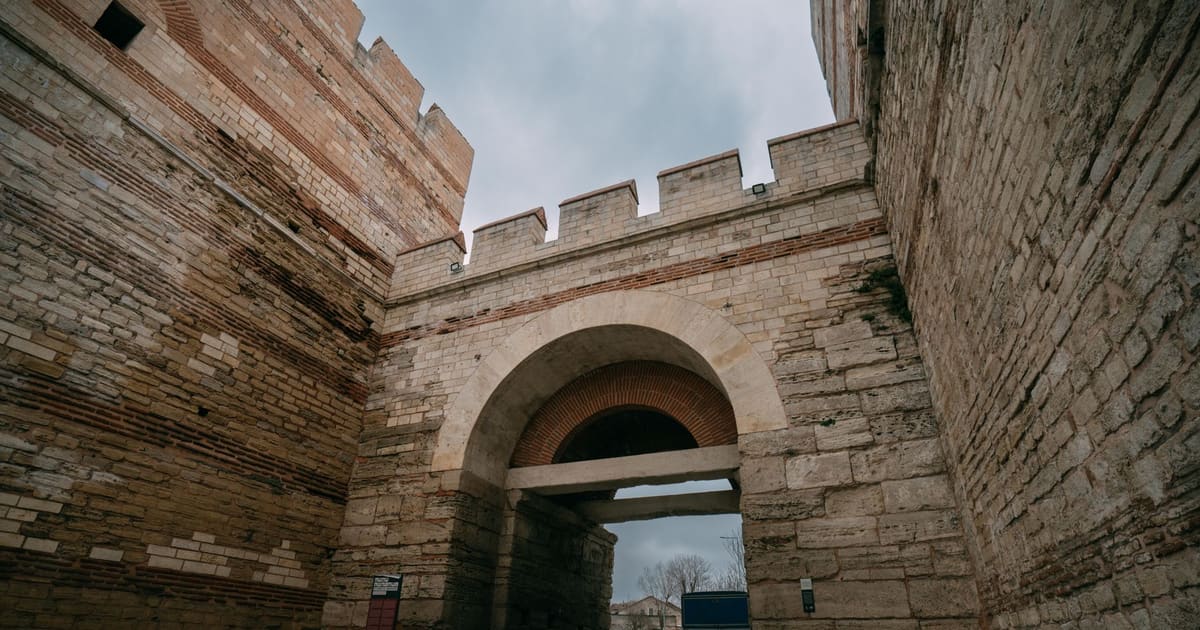
In the spring of 1453, the young Ottoman sultan Mehmed II brought his army and the largest guns of the age to the land walls of Constantinople. Those walls had guarded the city for about a thousand years. The siege formally began on 6 April. It ended on 29 May, after about 53 days, with the death of the last Byzantine emperor and the end of an empire. This walk follows the story along the walls where it was decided: the cannon gate, the stretch where the defense broke, the gate where the sultan rode in, the church whose holy icon was lost, the old palace quarter, and finally the Golden Horn, where his fleet appeared behind the great harbor chain. It runs about three and a half kilometers. Among our self-guided walking tours, this one is told with respect for both sides. In Turkey this is the conquest, still celebrated every 29 May. For Greek Orthodox Christians it is the fall, a catastrophe. Where the sources part ways with the legends, you'll hear which is which.
The walking takes a little under an hour. With the stories, allow about two hours. The nearest tram stop to the gate is Fetihkapı on the T4 line, a two-minute walk away. On the T1, get off at Pazartekke and walk about five minutes west to the walls. Don't get off at the stop called Topkapı, which is outside the walls. The walk ends at Ayvansaray on the Golden Horn, where there is a stop on the T5 tram and a ferry pier. You walk along the inner side of the walls, mostly on neighborhood streets, with an uphill stretch to Edirnekapı and a long, gentle descent to the water at the end. There is little shade, so carry water in summer and wear good shoes. The Chora is a working mosque again, and the walk works fully from outside. If you'd like to go in, visiting rules for tourists, including prayer times and any fee, change, so check before you go. The Tekfur Palace is a museum; check its hours too. Please be respectful around the mosques, and dress modestly if you step inside.
First, so there's no confusion: this Topkapı is a gate in the city walls. It is not the Topkapı Palace, the Ottoman palace across town in Sultanahmet. You're standing at the old Gate of St Romanus, a large restored gateway beside a busy junction and a park. Its Turkish name, Topkapı, means "Cannon Gate."
Look at the walls on either side. They were finished around the year 413, and they were built as three lines of defense. First came a moat. Then an outer wall. Then a terrace, and behind it the great inner wall, about twelve meters high.
Mehmed's army arrived in early April 1453. Later Western writers claimed it numbered up to 300,000. Historians who have studied the Ottoman registers think it was far smaller than that. And he brought guns. The biggest was a giant bronze cannon cast by a founder called Urban, born in Hungary. Here is the bitter twist: Urban had first offered his skills to the emperor. The Byzantine historian Doukas says the gun was hauled from Edirne by thirty carts and sixty buffalo. Ottoman sources also name a master gunner of their own, called Saruca. The gate's name is said to remember the great cannon placed in front of it.
Mehmed pitched his headquarters in front of this middle stretch of walls, "very close to the walls, but outside the range of fire," in the words of the Greek historian Kritovoulos. Inside, the emperor, Constantine the Eleventh, took command of the sector between this gate and the Gate of Charisius, Edirnekapı, further north. Beside him stood a Genoese commander, Giustiniani, with 700 men, 400 of them from Genoa.
Keep the walls on your left and follow them north, about ten minutes, down into a shallow valley to a smaller gate.
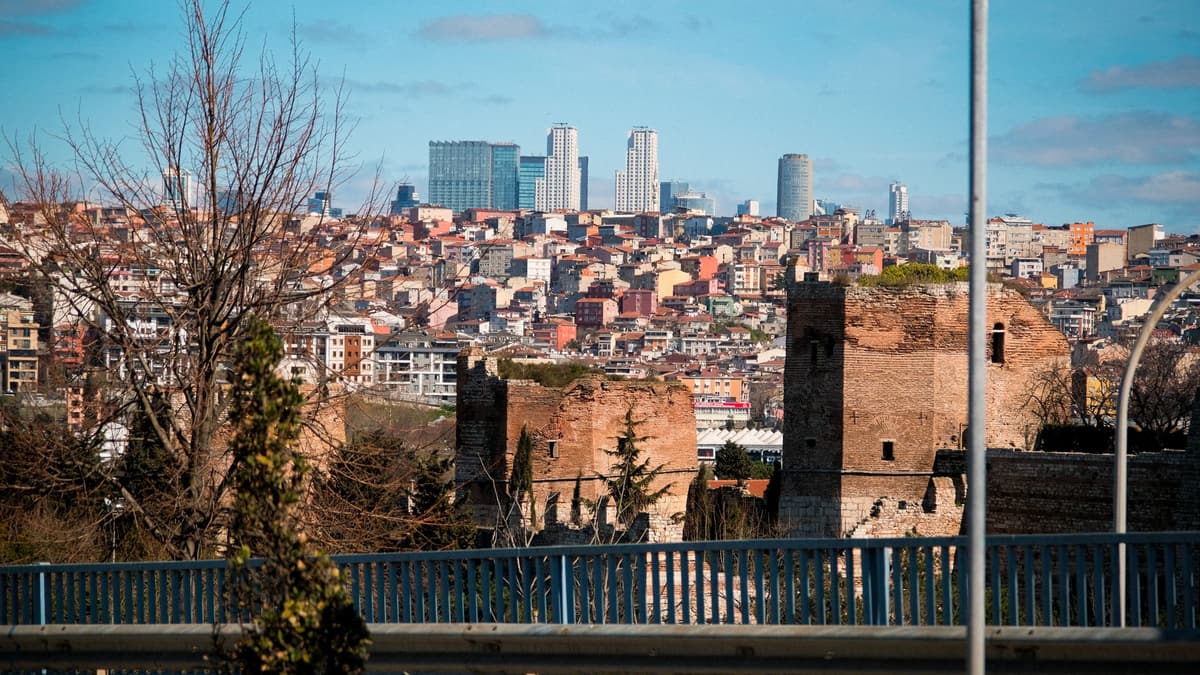
You're at the Fifth Military Gate, a smaller opening where the walls dip into the valley of a stream the Byzantines called the Lycus. Its Turkish names are Sulukule Kapısı and Hücum Kapısı. The second one means "Assault Gate."
This stretch was called the Mesoteichion, the middle wall, and it was the weakest point of the whole line. This is where the attacks were concentrated. For seven weeks the guns pounded this middle stretch, and every night the defenders filled the breaches with earth and timber. There were general assaults on 18 and 19 April and again on 7 May. Each time the walls held.
Then came 29 May. Just before sunrise, the final attack began. It came in waves, one after another, with the Janissaries, the sultan's own troops, coming last. Giustiniani's post was somewhere between this gate and the Gate of St Romanus. There he was hit. The sources disagree on how: one says a bullet from a light gun, another an arrow. He was carried back to his ship. His men began to flee, and the defense broke.
Ottoman soldiers crossed the walls at several points. One leading account puts the main entry at the Topkapı breach you just left. Some scholars put the decisive breakthrough here, at the Assault Gate. Sources still disagree.
And somewhere in this fighting, the emperor died. Every source agrees that Constantine the Eleventh fell fighting. But nobody at the time had clear knowledge of how he died. Doukas gives him a last cry and a death at a soldier's hands. Ottoman sources say he fell beneath his horse. A third account, by Nestor-Iskander, tells it yet another way. Some scholars place his death near this gate. Reports of his head or body being identified are uncertain, and nobody knows where he is buried.
Keep the walls on your left and follow them north and uphill, about seven minutes, to a large gate on the crest of the hill.
You're at Edirnekapı, the old Gate of Charisius. It sits on top of the sixth hill, the highest point of the old city. Look for the commemorative plaque on the gate.
Up here, the Ottoman historian Tacizade describes a handful of soldiers, five to ten of them, climbing the wall at a breach near this gate and raising a flag. You may also hear the name Ulubatlı Hasan, honored in Turkey as the first man on the walls. He's a beloved folk hero, but his story appears only in a chronicle written in the sixteenth century, not in the original accounts of the siege.
That afternoon, Mehmed entered the conquered city, with about 200 guards around him. By tradition, he rode in through this gate, and the plaque here marks the conquest. It's a strong tradition, but Istanbul's historical encyclopedia, in its account of the siege, doesn't name the gate he used.
What happened in the streets that day is the hardest part of this story, and the sources tell it very differently. The next stop is where we'll face it.
Turn away from the walls and walk east into the neighborhood, downhill a few streets, about five minutes, to the old church of the Chora.
Yang termasuk
Tur kami dirancang agar terasa meditatif dan imersif: Anda terus bergerak dan cukup mendengarkan. Tur selalu lebih seru dinikmati bersama, dan aplikasi memutar narasi secara sinkron, sehingga Anda, pasangan, dan teman-teman mendengar setiap pemberhentian pada saat yang sama.
In front of you is the Chora, now the Kariye Mosque, a Byzantine church famous for its fourteenth-century mosaics and frescoes.
Lanjutan pemberhentian ini ada di tur audio lengkap.
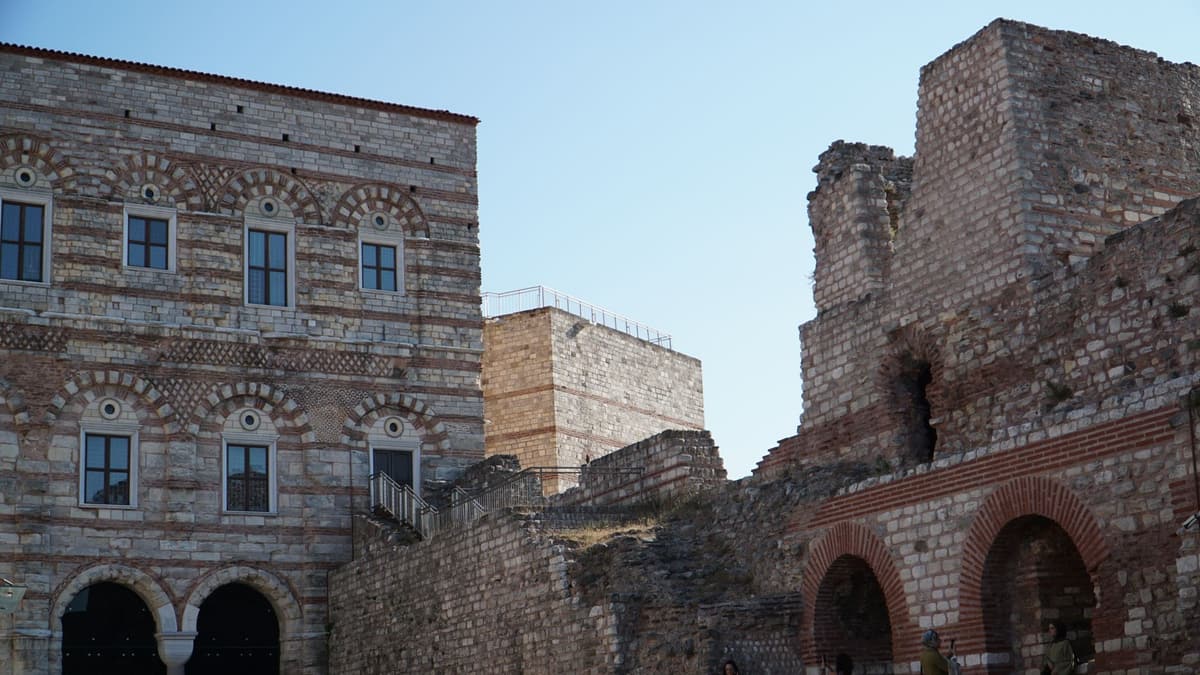
You're at the Tekfur Palace, the Palace of the Porphyrogenitus. Look up at its three-story front, built into the walls at the angle where they turn.
Lanjutan pemberhentian ini ada di tur audio lengkap.
You're below the Ivaz Efendi Mosque, beside massive walls and towers from the twelfth century. They protected Blachernae, the palace quarter where the emperors lived in the city's last years.
Lanjutan pemberhentian ini ada di tur audio lengkap.
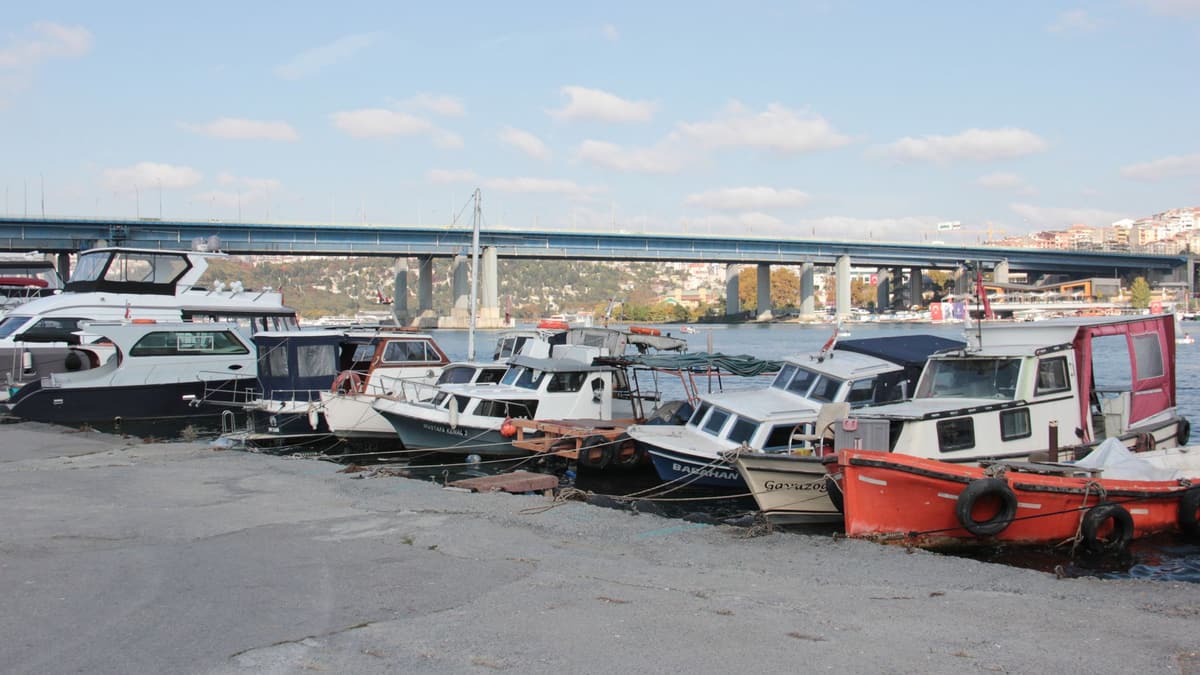
You're at the water, where the land walls end at the Golden Horn. Across from you is Hasköy, on the far shore.
Lanjutan pemberhentian ini ada di tur audio lengkap.
Lakukan jalan-jalan ini bersama orang lain pada tur terjadwal berikutnya.
Sekitar 3,6 km, kira-kira 52 menit dengan ritme santai · 7 titik henti
Teman jalan gratisOctober 11, 2026 · 9 min read
From the Hollandsche Schouwburg through the old Jewish Quarter, past the Dockworker and the Dam, to the Anne Frank House on the Prinsengracht.
October 11, 2026 · 11 min read
From Van Houten's street by the Vondelpark past Leidseplein, the Rijksmuseum passage and the famous canal bench to the Anne Frank House.

October 11, 2026 · 10 min read
Follow the last days of April and May 1945 from the Anhalter Bahnhof ruin past the Gestapo site and Brandenburg Gate to the Moltke Bridge and the Reichstag.
