
October 11, 2026 · 9 min read
Amsterdam Anne Frank Walking Tour
From the Hollandsche Schouwburg through the old Jewish Quarter, past the Dockworker and the Dam, to the Anne Frank House on the Prinsengracht.
589

October 9, 2026 · 10 min read

 Gli amici camminano gratis
Ogni tour funziona anche come camminata di gruppo programmata a cui puoi unirti nell'app.
Altri tour audio a Gdansk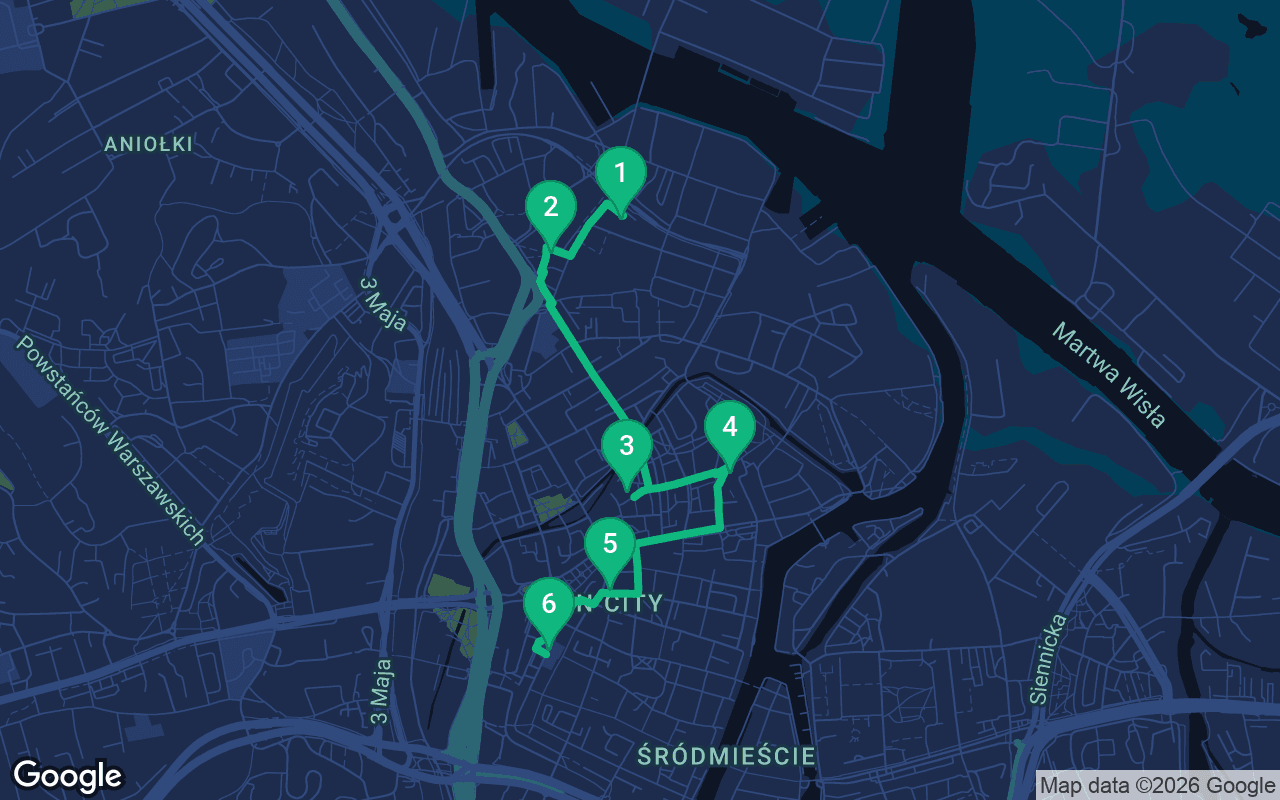
Circa 2,4 km, più o meno 33 minuti a passo tranquillo.
Questo tour è narrato
Premi play sulle prime 3 tappe per ascoltare una demo di 30 secondi della narrazione. Nell'app, l'introduzione e queste 3 tappe sono gratis e complete, e ogni tappa ti avvisa con un segnale acustico al tuo arrivo. L'intero tour narrato sarà tuo a $7.99, un acquisto unico che conservi per sempre.
Funziona con Garmin, Komoot, Strava, OS Maps e qualsiasi app GPX.
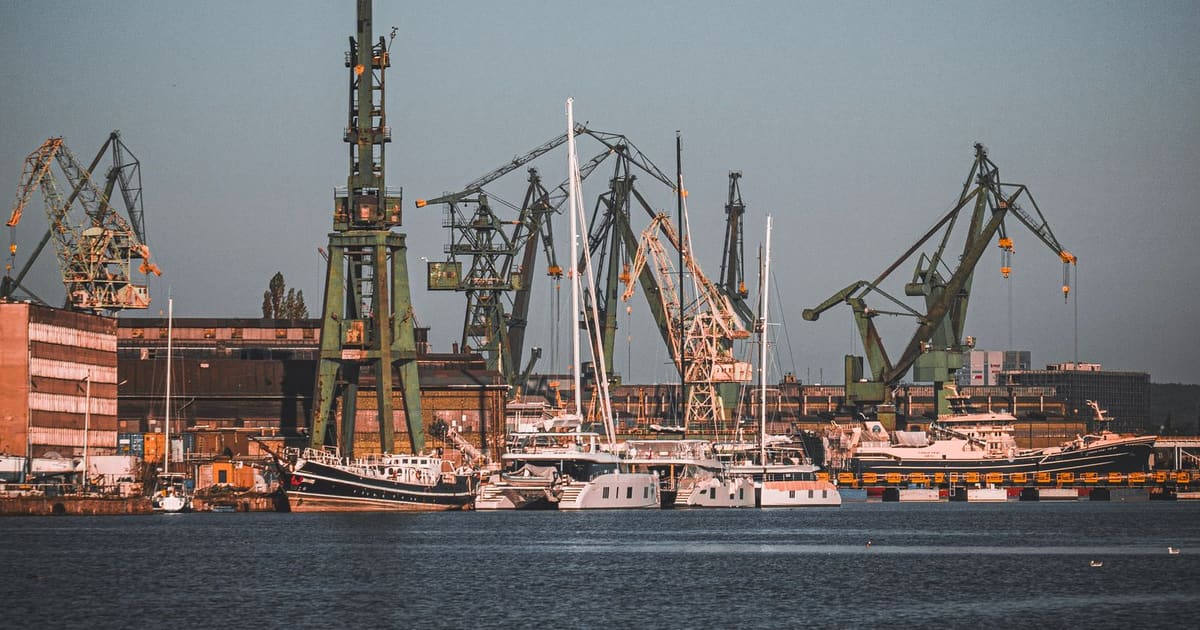
Two of the biggest stories of twentieth century Europe started within a short walk of each other in Gdansk. On the first morning of World War II, a few dozen Polish postal workers fought from their post office in what was then the Free City of Danzig. Forty-one years later, striking workers at the shipyard just to the north forced a communist government to accept the first independent trade union in the Soviet bloc, and the long road to 1989 began. This walk links the two. It starts in the shipyard hall where the August 1980 agreement was signed, crosses Solidarity Square, visits the church that sheltered the movement and the post office where the war began here, and ends among the merchant houses of the Main Town at the city's grand old arsenal. It is about 2.4 kilometers, a mile and a half, and one of the most meaningful self-guided walking tours in Poland.
The walking takes little more than half an hour, but give yourself three hours, and a whole morning if you want to see the European Solidarity Centre properly, because its exhibition alone can fill two. The route is flat throughout, on pavements and some cobbles in the old streets, so ordinary comfortable shoes are fine. Gdansk sits on the Baltic, and the wind off the sea can make even a sunny day feel cool, so carry a layer at any time of year and a waterproof for the showers that blow through. Mornings are quietest at the shipyard end, and finishing at lunchtime puts you right in the middle of the Main Town's cafes. The European Solidarity Centre, the museum at the Polish Post Office and the BHP Hall all keep their own hours and ticket rules, and St. Bridget's and St. Nicholas are working churches, so check before you go and dress for a church visit. The shipyard area is partly a building site as it is redeveloped, so follow the signed walkways.
Stand in front of the low brick building on Doki, the shipyard road, with the cranes rising behind it. The letters BHP stand for the Polish words for workplace health and safety, and this plain hall was where shipyard workers once sat through their safety training. In August 1980 it became the most important room in Poland. The strike here began on August 14, when the shipyard workers walked out over pay and the firing of Anna Walentynowicz, a crane operator and activist sacked a few months before her retirement. An unemployed electrician named Lech Walesa, himself fired from the yard years earlier, climbed over the fence to join them and was soon leading the strike. Factories across the coast joined in, and a committee representing them all moved into this hall to negotiate with a delegation from the government. The talks were relayed over loudspeakers to the crowds outside so that nobody could claim a secret deal. On August 31, 1980, Walesa signed the agreement here with a huge souvenir pen bearing a picture of the Polish pope, John Paul II. Its first promise was a free, self-governing trade union. That union, Solidarity, soon had around ten million members. Decades on, Poles still argue over who deserves the credit and how to judge Walesa himself, but nobody disputes what was won in this room. When you are ready, walk back southwest along Doki toward the three tall steel crosses. About five minutes.
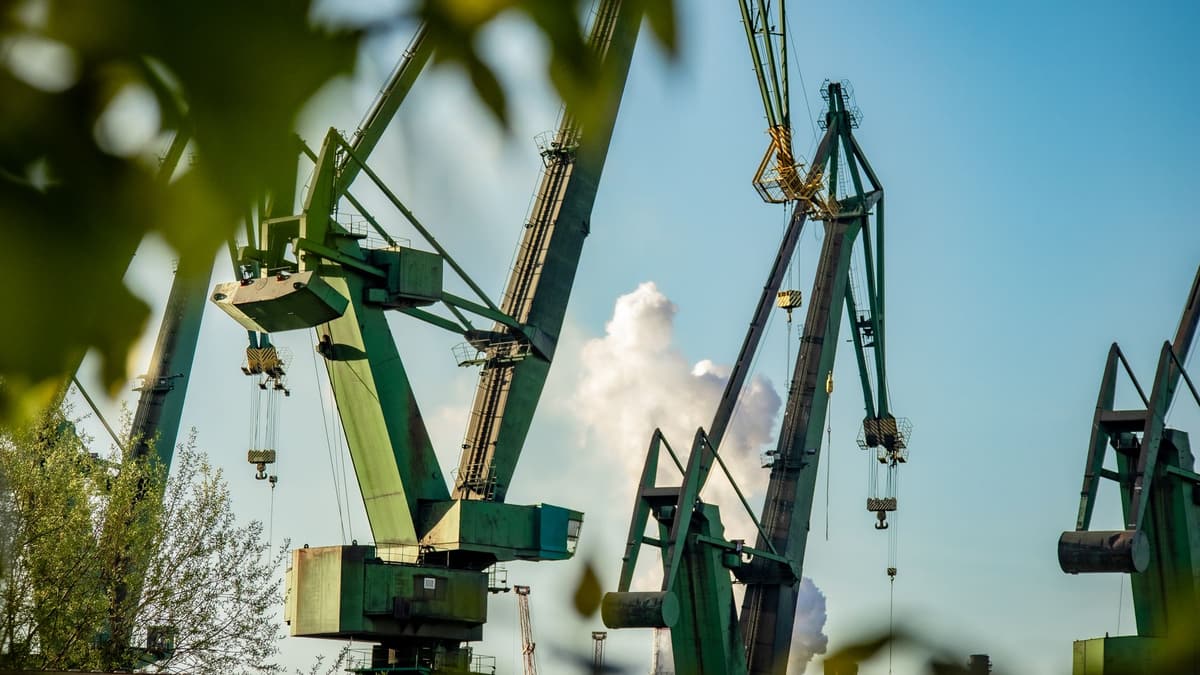 This square holds three things worth turning slowly to see. The first is Gate No. 2 of the shipyard, a modest entrance that the strike made famous. In August 1980 it was hung with flowers, a portrait of John Paul II and an image of the Virgin Mary, and the strikers' 21 demands were written on two wooden boards and fixed to it for everyone to read. Those boards are now listed by UNESCO in its Memory of the World register. Next to it, the three steel crosses with anchors hanging from them are the Monument to the Fallen Shipyard Workers. In December 1970, after the government raised food prices just before Christmas, workers here went on strike, and troops and police opened fire on them outside this gate. More than forty people were killed along the Baltic coast that winter. Putting up a memorial to them was one of the strikers' demands in 1980, and it was unveiled that December, on the tenth anniversary, before an enormous crowd. It is often described as the first monument to victims of a communist government to stand in a communist country. Among the inscriptions, look for lines by the poet Czeslaw Milosz. The third is the rust-colored building clad in steel like a ship's hull, the European Solidarity Centre, opened in 2014, with an exhibition on the movement and a roof terrace that looks over the yard. From here, walk south along Wały Piastowskie, the wide road leading away from the shipyard, and keep going south toward the old town. St. Bridget's comes up on your right after about ten minutes.
In front of you is a big, plain brick church with a tall, square tower. It is old: it began as the church of a convent of Bridgettine nuns, and the body of Saint Bridget of Sweden is said to have rested here in 1374 on its long journey home from Rome. Like most of Gdansk it was badly burned in 1945 and was only fully restored decades later. In the 1980s it became known as Solidarity's church. Shipyard workers came to Mass here, union activists met here, and after martial law was declared in December 1981, when Solidarity was banned and thousands of its members were interned, Walesa among them, the parish became a place of refuge and quiet support. Inside you will find plaques and memorials to the movement and the people it lost. The other thing to look for is amber. Gdansk sits on the amber coast of the Baltic, and the church has been building an altar out of it, a vast golden structure that has been growing for years and is still a work in progress. Even unfinished, it glows. There is a harder part of the story too. The church's long-serving priest in those years, Henryk Jankowski, was a close ally of Walesa. He was later the subject of a criminal investigation, and in 2019 the statue of him that stood outside was taken down. To continue, leave the church and walk east along the street at its side for about five minutes. The Post Office stands on a small square ahead.
Cosa è incluso
I nostri tour sono pensati per essere meditativi e immersivi: ti muovi e semplicemente ascolti. Sono sempre più belli in compagnia, e l'app riproduce la narrazione in sincronia, così tu, il tuo partner e i tuoi amici sentite ogni tappa nello stesso momento.
In front of you is a solid brick building that still works as a post office, with a tall steel monument on the square before it showing a fallen defender and a winged figure of Victory above him.
Il resto di questa tappa è nel tour audio completo.
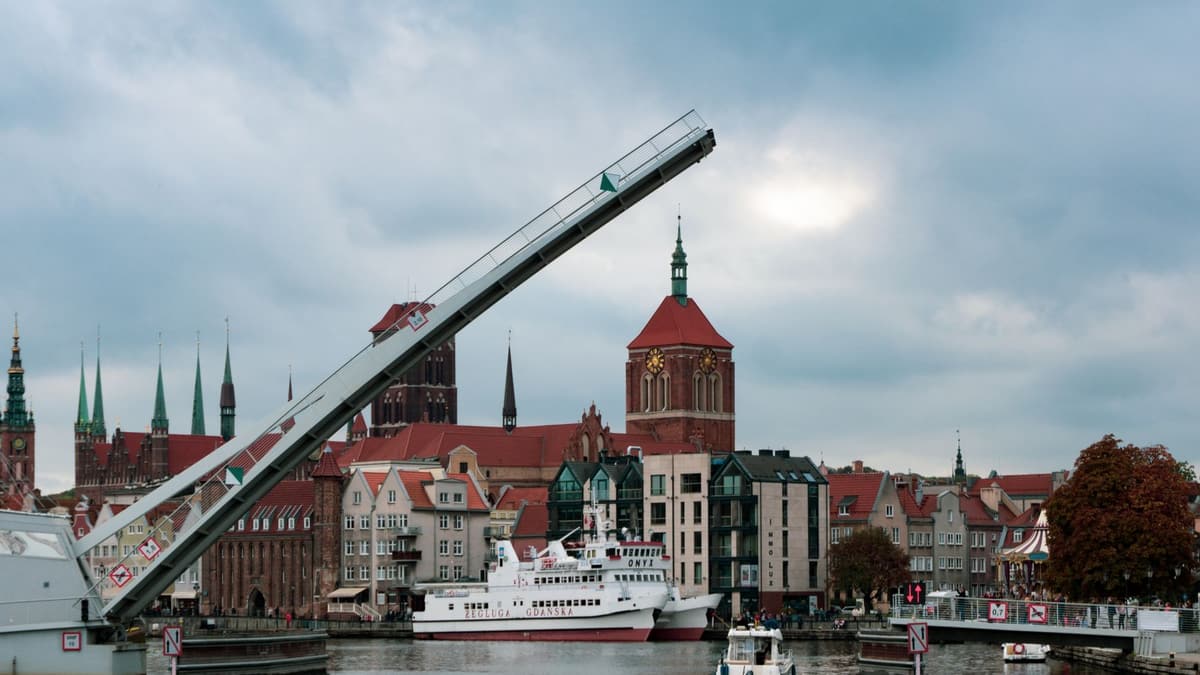
You are standing at the edge of the Main Town, by the market hall, looking at a tall Gothic brick church.
Il resto di questa tappa è nel tour audio completo.
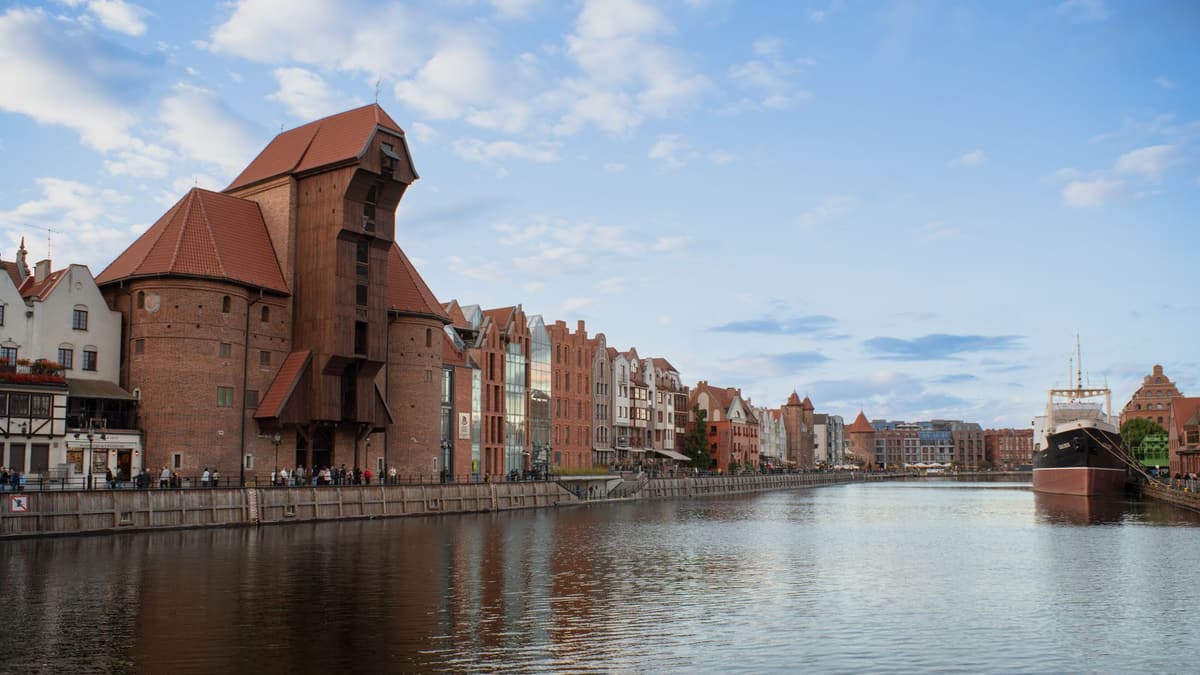
Find a spot facing the eastern front of the Great Armoury, the side that closes the end of Piwna street, with St. Mary's Church behind you.
Il resto di questa tappa è nel tour audio completo.
Fai questa camminata in compagnia alla prossima uscita in programma.
Circa 2,4 km, circa 33 minuti a passo lento · 6 tappe
Gli amici camminano gratisOctober 11, 2026 · 9 min read
From the Hollandsche Schouwburg through the old Jewish Quarter, past the Dockworker and the Dam, to the Anne Frank House on the Prinsengracht.
October 11, 2026 · 11 min read
From Van Houten's street by the Vondelpark past Leidseplein, the Rijksmuseum passage and the famous canal bench to the Anne Frank House.

October 11, 2026 · 10 min read
Follow the last days of April and May 1945 from the Anhalter Bahnhof ruin past the Gestapo site and Brandenburg Gate to the Moltke Bridge and the Reichstag.
