
October 11, 2026 · 9 min read
Amsterdam Anne Frank Walking Tour
From the Hollandsche Schouwburg through the old Jewish Quarter, past the Dockworker and the Dam, to the Anne Frank House on the Prinsengracht.
589

October 11, 2026 · 14 min read

 友達は無料で歩けます
すべてのツアーは、アプリから参加できるスケジュール済みのグループウォークとしても開催されています。
Edinburghのオーディオツアーをもっと見る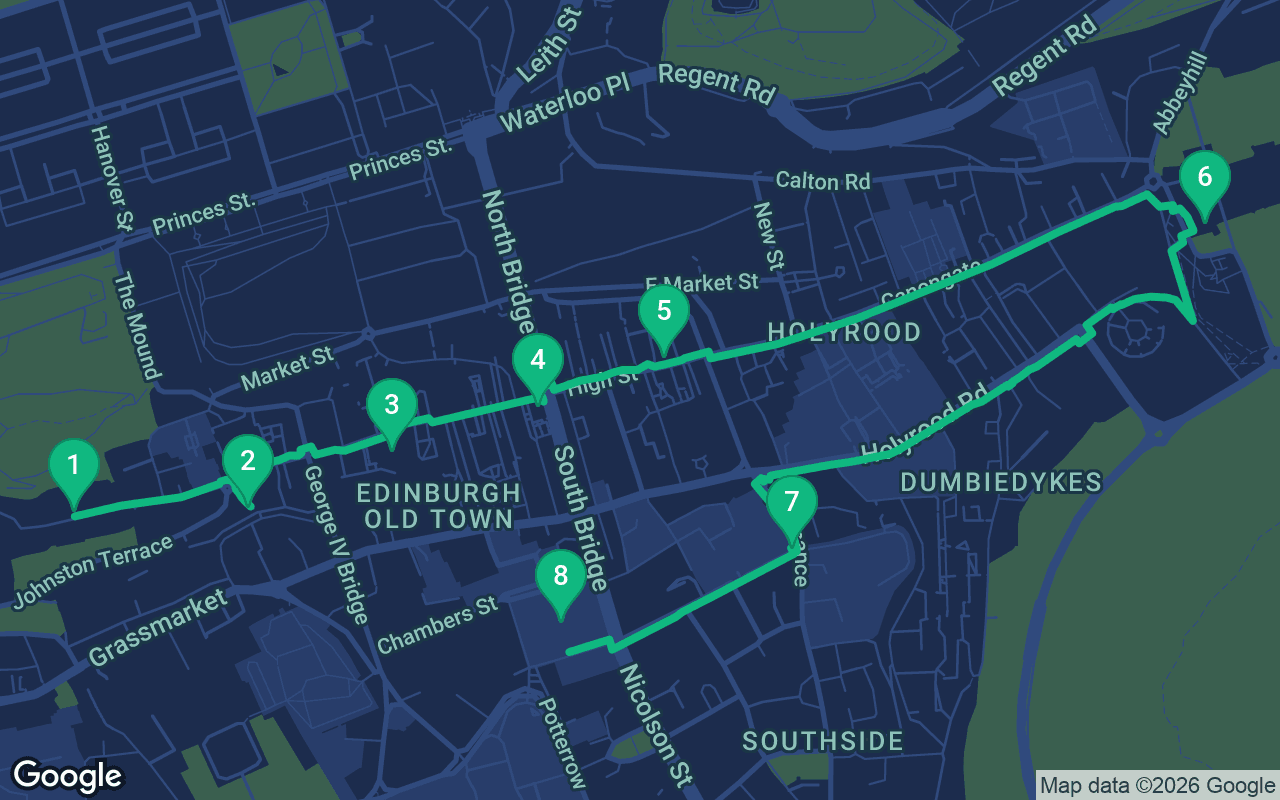
約2.9 km、ゆったりしたペースで約41分。
音声ガイド付きツアー
最初の 3 か所のスポットで再生ボタンを押すと、ナレーションの30秒デモをここで聴くことができます。アプリでは、イントロとこれらのスポットを無料で最後まで聴くことができ、各スポットに到着すると通知音でお知らせします。ツアー全体の音声ガイドは $14.99 で購入でき、一度購入すればいつでもずっとご利用いただけます。
Garmin、Komoot、Strava、OS Maps、その他あらゆるGPXアプリに対応しています。
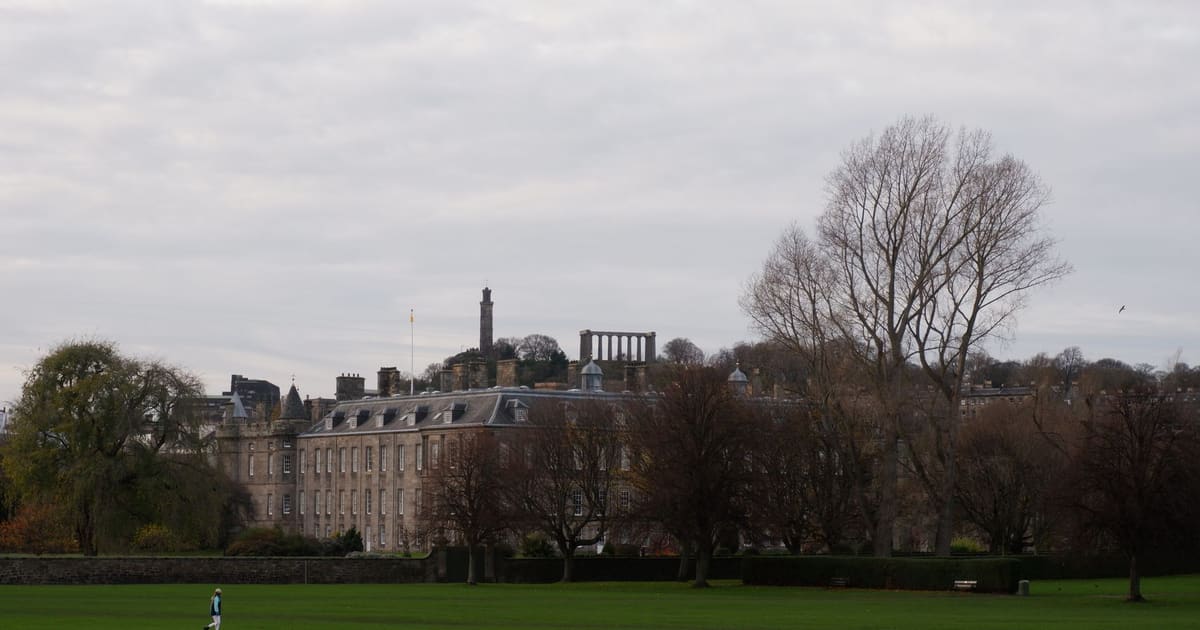
On the morning of 19 August 1561, a young queen came ashore at Leith, the port of Edinburgh, with two galleys and a train of no more than sixty people. Mary, Queen of Scots, was eighteen, a Catholic widow coming home to rule a kingdom that had just turned Protestant. Six years later she would spend her last night in this city as a prisoner, with people shouting at her from the windows. This walk tells what happened in between, in order. You start on the Castle Esplanade, follow the Royal Mile down to Holyroodhouse, then climb south to finish at the university's Old College, on the ground where her husband died. It is 2.9 kilometers, about forty minutes of walking, and one of the most dramatic of our self-guided walking tours. Where historians still argue, you will hear both sides.
Allow an hour and a half or more with the stories. The first half runs downhill along the Royal Mile on cobbles and stone setts, so wear shoes with a good grip, especially after rain. The one real climb comes after Holyrood, up the Pleasance. The start is about ten minutes uphill from Waverley station by way of The Mound, and the finish is about ten minutes back to Waverley along South Bridge and North Bridge. Edinburgh weather turns quickly, so bring a layer. The castle, John Knox House and the Palace of Holyroodhouse charge for entry, and the palace sometimes closes for royal visits, so check before you go.
You're on the Esplanade, the open parade ground in front of Edinburgh Castle. Face the gatehouse. Deep inside the fortress stands the Royal Palace, and above one of its doors are gilded initials: M, A, H. Mary and Henry. Henry is Lord Darnley, the husband still four years in her future when this story begins. Remember those letters.
On 2 September 1561, two weeks after she landed, Mary rode up here from her palace of Holyroodhouse, at the far end of the street below you. She dined in the castle's Great Hall. An English agent at her court named Randolph, reporting home to Queen Elizabeth's minister Cecil, put it plainly: "She dined in the Castle." Then a gun salute sounded, and the queen rode out of the castle and down the hill to begin her formal entry into her capital.
The burgh had set up pageants along her route, and this newly Protestant town meant to use them to tell its Catholic queen something. You'll see what at the next stop.
One more thing as you leave. Five years from now, Mary will come back up this hill, not for a banquet but for safety. Behind that door with the initials, in June 1566, she will give birth to a son. Why a queen would need a fortress to have her baby is a story for the bottom of the Royal Mile.
Walk downhill, east, along Castlehill, the first stretch of the Royal Mile. In about three minutes the street opens out at the top of the Lawnmarket, beside the tall dark spire of the Hub.
You're at the top of the Lawnmarket, near the Hub and the narrow lane called the Upper Bow. The old West Bow wound down from this corner toward the Grassmarket. Near here stood the Butter Tron, the town's weigh-house. It is long gone, so you'll have to imagine it.
Imagine it decorated. Burgh records place the first stage of Mary's welcome here, and Randolph described it as the first sight she met after leaving the castle. In his words, "a boy of six years of age, that came as it were from heaven out of a round globe" came down to meet the queen. The child handed her the keys of the town gates, a Bible and a Psalter.
The keys were a courtesy. The books, offered by a Protestant town to a Catholic queen, were a message: this is the faith of this city now. John Knox, the town's fierce Protestant minister, later claimed that Mary simply passed the Bible to one of her attendants. That is his account, and he was hardly a neutral witness.
The pageants along the rest of the route were blunter. Randolph reported a scene in which figures of Korah, Dathan and Abiram, Old Testament rebels destroyed for offering false worship, were burned. The organizers had also planned to show a priest burned at his altar. The Earl of Huntly, one of her nobles, stopped that one. Mary's first ride through her capital was a celebration and a warning at once.
Continue east along the Lawnmarket. Cross the junction with George IV Bridge and Bank Street, and St Giles' Cathedral rises on your right, with its crown-shaped spire. It's about three minutes.
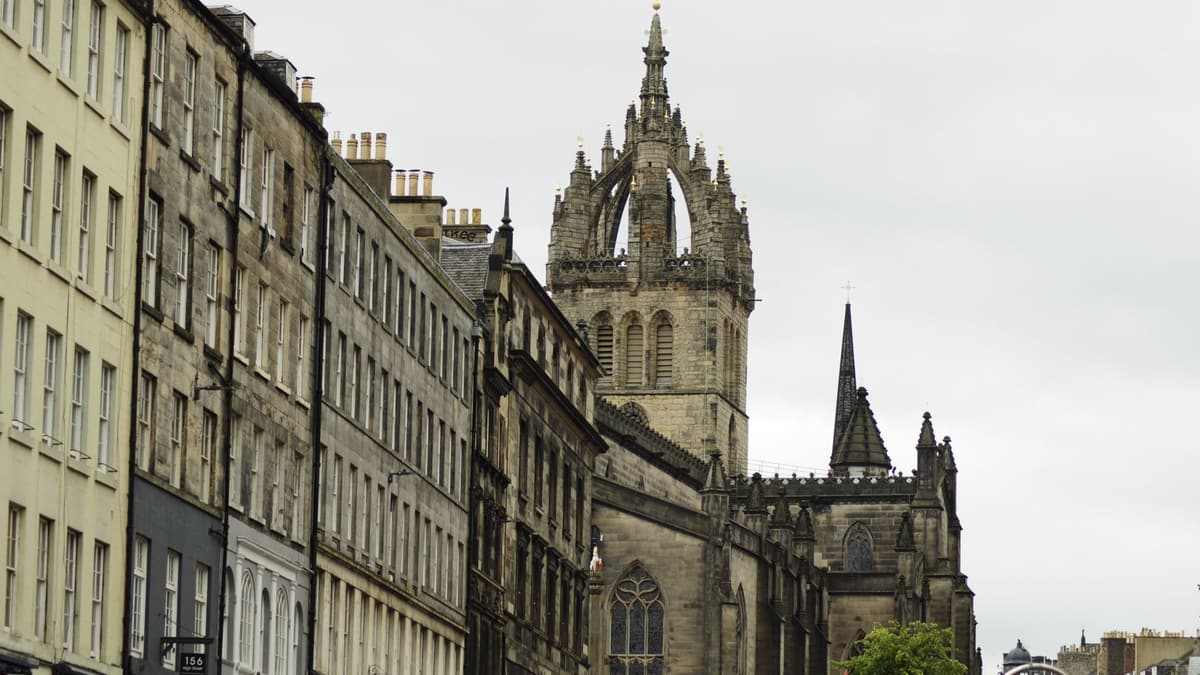 You're beside St Giles' Cathedral. Look up at the spire, built in the shape of an open crown. Step inside if you can. It's free, and Knox's pulpit stood at the south-east end.
John Knox was elected minister here in 1559 or 1560. The town council stripped out the altars and statues and put in seating, because Knox preached for an hour at a time and people needed somewhere to sit. When the Catholic queen came home, he preached vigorously against her. Many Scots still see him as a hero, a man who spoke his conscience to power.
So she summoned him. Knox was called to Holyroodhouse to answer to her face, and the two had several heated exchanges in her Outer Chamber, a room in her own apartments. Remember that room. It will see much worse than an argument.
Knox died on 24 November 1572 and was buried in the kirkyard here, which now lies under Parliament Square, behind the church. No memorial marked the grave. Much later a stone carved "IK 1572" was set where people presumed it lay. That stone was moved inside around 1970, and a small marker in parking space 23 stands in for it. He lies somewhere close, but nobody knows exactly where.
Now walk east, downhill, along the High Street for about four minutes, to the crossroads with North Bridge and South Bridge. The church with the tall spire on your right is the Tron Kirk.
含まれるもの
私たちのツアーは、瞑想的で没入感のある体験を目指しています。歩きながら、ただ耳を傾けてください。誰かと一緒ならもっと楽しく、アプリがナレーションを同期再生するので、あなたもパートナーも友人も、各スポットを同じ瞬間に聴けます。
You're at the crossroads where the High Street meets North Bridge and South Bridge, beside the Tron Kirk.
このスポットの続きは音声ツアー全編でお聴きいただけます。
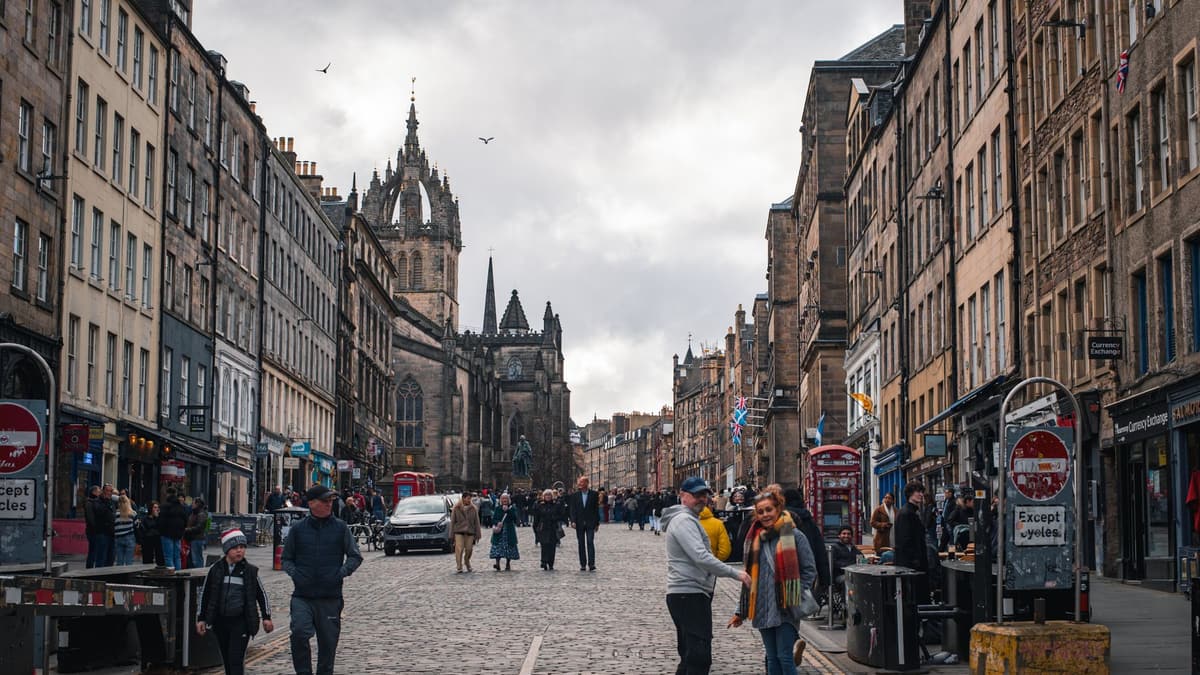
You're in front of one of the oldest houses on the Royal Mile, built in the 1400s and 1500s and now part of the Scottish…
このスポットの続きは音声ツアー全編でお聴きいただけます。
You're at the forecourt gates of the Palace of Holyroodhouse.Face the palace.
このスポットの続きは音声ツアー全編でお聴きいただけます。
You're at the corner of Drummond Street and the Pleasance.
このスポットの続きは音声ツアー全編でお聴きいただけます。
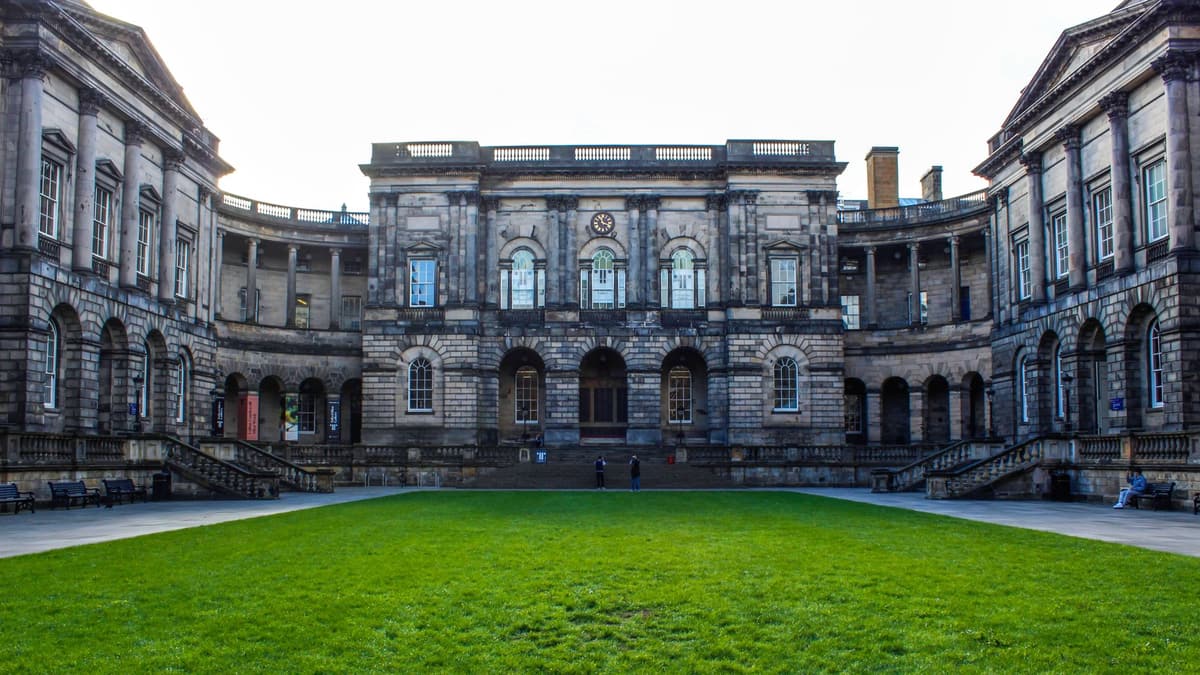
You're in the quadrangle of Old College, Robert Adam's design of 1789 for the University of Edinburgh, founded in 1583.
このスポットの続きは音声ツアー全編でお聴きいただけます。
次回予定されているツアーで、他の人と一緒にこのウォークをしましょう。
約2.9 km、ゆったりしたペースで約41分 · 8停留所
友達は無料で歩けますOctober 11, 2026 · 9 min read
From the Hollandsche Schouwburg through the old Jewish Quarter, past the Dockworker and the Dam, to the Anne Frank House on the Prinsengracht.
October 11, 2026 · 11 min read
From Van Houten's street by the Vondelpark past Leidseplein, the Rijksmuseum passage and the famous canal bench to the Anne Frank House.

October 11, 2026 · 10 min read
Follow the last days of April and May 1945 from the Anhalter Bahnhof ruin past the Gestapo site and Brandenburg Gate to the Moltke Bridge and the Reichstag.
