
October 11, 2026 · 9 min read
Amsterdam Anne Frank Walking Tour
From the Hollandsche Schouwburg through the old Jewish Quarter, past the Dockworker and the Dam, to the Anne Frank House on the Prinsengracht.
589

October 11, 2026 · 13 min read

 友達は無料で歩けます
すべてのツアーは、アプリから参加できるスケジュール済みのグループウォークとしても開催されています。
Parisのオーディオツアーをもっと見る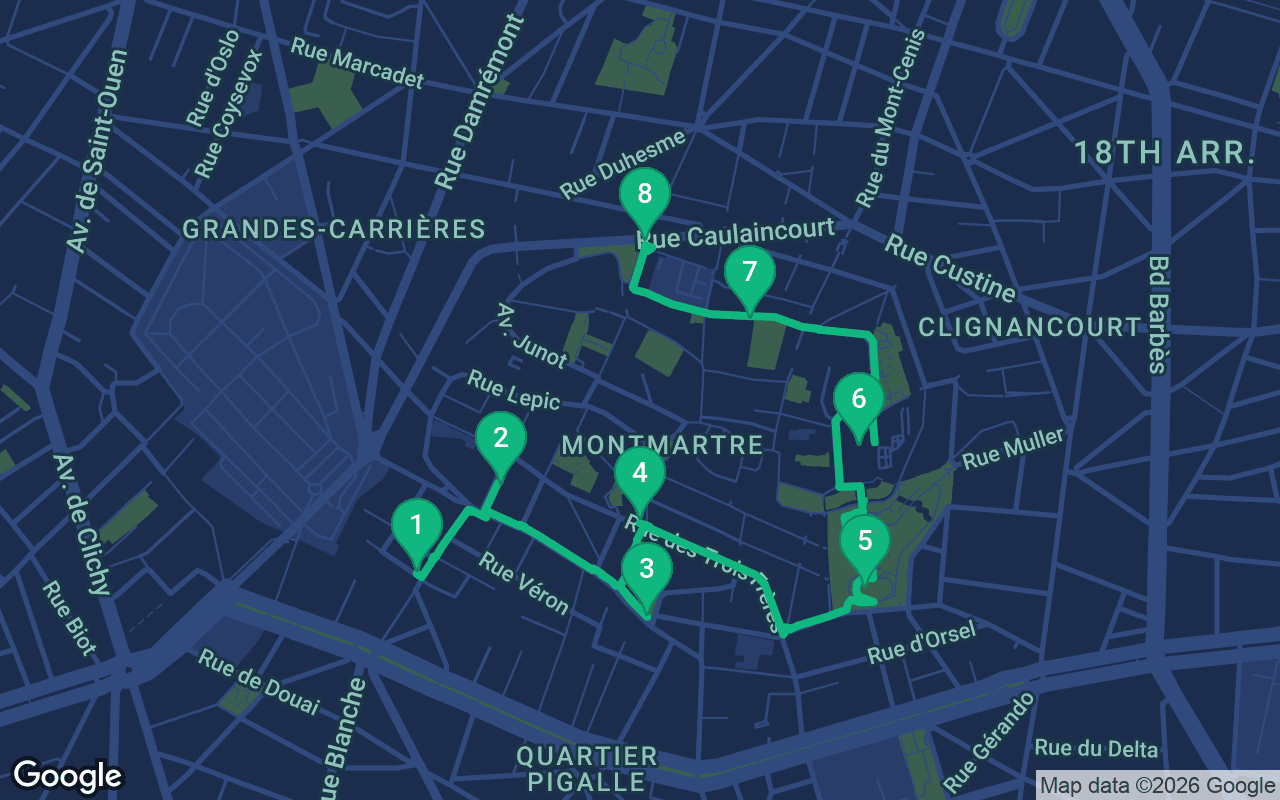
約2.4 km、ゆったりしたペースで約34分。
音声ガイド付きツアー
最初の 3 か所のスポットで再生ボタンを押すと、ナレーションの30秒デモをここで聴くことができます。アプリでは、イントロとこれらのスポットを無料で最後まで聴くことができ、各スポットに到着すると通知音でお知らせします。ツアー全体の音声ガイドは $14.99 で購入でき、一度購入すればいつでもずっとご利用いただけます。
Garmin、Komoot、Strava、OS Maps、その他あらゆるGPXアプリに対応しています。
A shy waitress with a wild imagination decides, quietly and in secret, to make other people happy. That's Amélie, or in French, Le Fabuleux Destin d'Amélie Poulain, the 2001 film directed by Jean-Pierre Jeunet and written by Jeunet and Guillaume Laurant, with Audrey Tautou as Amélie and Mathieu Kassovitz as Nino. Amélie lives and works in Montmartre, and the film turned these steep little streets into a fairy tale. This walk takes you to the real places: her café, her Friday cinema, her grocer, the gardens of the treasure hunt she sets for Nino, and the street where the film begins. Montmartre sets the order, so you'll reach the happy ending early, at her front door, and then go back for the treasure hunt, the film's very first image, and one of its kindest scenes. This is an unofficial walk, not made with or endorsed by the filmmakers or the studio. It's one of our self-guided walking tours, about 2.4 kilometers from the Café des Deux Moulins to Lamarck-Caulaincourt Metro.
The walking takes a little over half an hour, about 34 minutes for 2.4 kilometers. With stops, a coffee and the view from the top, allow an hour and a half. The nearest Metro to the start is Blanche, on Line 2, about 200 meters away. You end at Lamarck-Caulaincourt station, on Line 12. Montmartre is a hill, so expect real climbs and plenty of steps, especially through the gardens below the Sacré-Cœur, and wear comfortable shoes. Mornings are calmer; by the afternoon the area around the basilica is crowded.
A few courtesies. The café and the grocer on this walk are working businesses, so if you go in, buy something, and keep their doorways clear for customers. Much of the route runs through residential streets, so keep the volume down. And the film was made in the year 2000, so some of its props have vanished. You'll hear where.
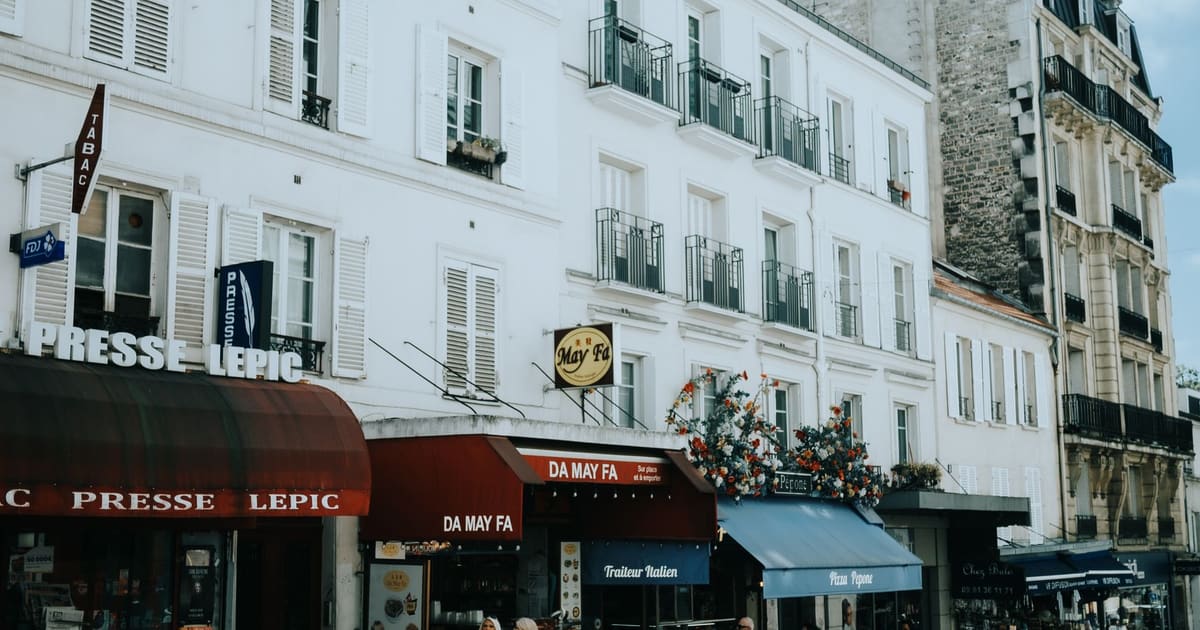
You're on rue Lepic, outside the Café des Deux Moulins, at number 15. Look down the hill to the bottom of the street. Those red sails belong to the Moulin Rouge. The café's name means the two mills, after Montmartre's two most famous windmills, the Moulin Rouge and the Moulin de la Galette.
This is where Amélie works. She's a waitress here, lonely and dreamy, with an inner world far richer than her outer one. Both the inside and the outside of the café were filmed here, and the British Film Institute says it's almost exactly as it was. The facade, the zinc bar and the red booths still draw visitors. The café openly welcomes film fans, with an Amélie menu that includes a crème brûlée and a cabinet of memorabilia in the toilet area. If you go in, order something and enjoy it.
Here's how her story starts. On the night of the 31st of August, 1997, the night Princess Diana died, Amélie finds something hidden behind a tile in her bathroom: a little tin box full of a boy's childhood treasures, tucked away decades earlier. She decides to find the boy, now a middle-aged man named Bretodeau, and give the box back without him ever knowing who did it. When she sees his joy, she makes a decision. From now on, she'll secretly arrange small kindnesses for the people around her.
One piece of film magic before we move on. That bathroom, and the rest of Amélie's flat, was never in Paris. The apartment interiors were built as studio sets in Cologne, in Germany. The film was shot between the 2nd of March and the 7th of July, 2000, in Paris, in Arcueil, and in that Cologne studio.
Now to the place where Amélie spends her Friday nights. Walk up rue Lepic, away from the Moulin Rouge, to the junction with rue des Abbesses, and look for rue Tholozé climbing uphill. Studio 28 is a short way up it, at number 10. About three minutes.
You're on rue Tholozé, outside Studio 28. It's a small, working art-house cinema with 172 seats.
In the film, this is where Amélie goes on Friday nights. But she doesn't watch the screen the way everyone else does. She turns around in her seat and watches the faces of the audience in the dark. It tells you everything about her. She's more interested in other people's feelings than her own, and she'd rather observe life than step into it. Hold on to that idea. The rest of the film is about her learning to stop watching and start living.
The cinema's real history is wilder than anything in the film. Jean-Placide Mauclaire opened Studio 28 in 1928 as an avant-garde cinema, a home for experimental films. In 1930, at a screening of Luis Buñuel's L'Âge d'or, a fierce fight broke out in the cinema, and the film was banned. Twenty years later, in 1950, Jean Cocteau, the cinema's patron, designed its chandeliers. If you buy a ticket and step inside, look up.
So the cinema where Amélie sits quietly watching faces once hosted a real brawl. And Amélie, in her own gentle way, is about to start breaking a few rules.
Amélie's Metro station is just down the road, and that's where she first sees Nino. Walk back down rue Tholozé to rue des Abbesses, turn left, and follow it east to Place des Abbesses, a small square with a Metro entrance under a glass canopy. About five minutes.
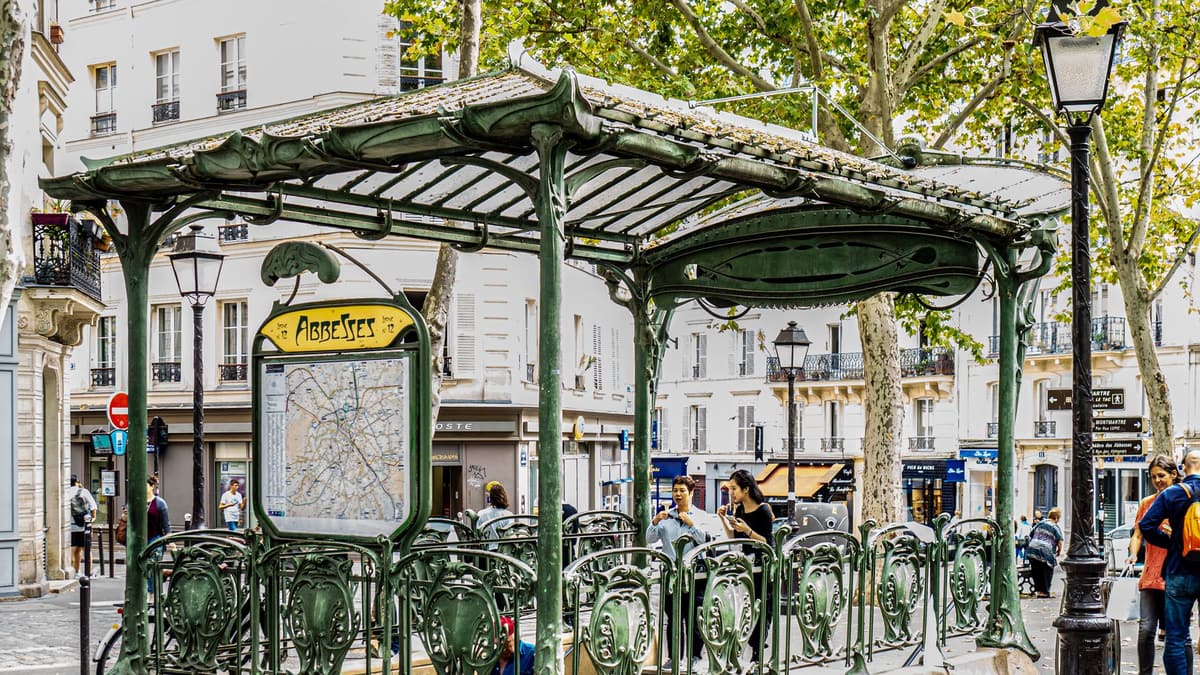
You're in Place des Abbesses, beside the entrance to Abbesses station, on Line 12. Look at that entrance, with its glass canopy on curving ironwork.
In the story, this is Amélie's station, and down below is where she first sets eyes on Nino. He's a shy young man with a strange hobby. He collects the torn-up photos people throw away under photo booths, and he's fishing them out from beneath a booth when Amélie sees him. She's smitten, though she'd never say so.
But here's a secret. Although the scenes are set at Abbesses, they weren't filmed here. They were shot at a disused platform at Porte des Lilas, which is kept for filming. So if you go down the stairs looking for Nino's photo booth, you won't find it.
The entrance itself has a story of its own. It was designed by Hector Guimard in 1900, but not for this station. It first stood at Hôtel de Ville station, on rue Lobau. In 1972 it was taken down to make way for an underground car park, and in 1974 it was rebuilt here. Guimard never designed entrances for this line, so the one you're looking at is a beautiful transplant.
Amélie and Nino keep missing each other for a while yet. Now let's go to her street, where her secret mission takes a mischievous turn. From the square, walk a few steps back west along rue des Abbesses and take the stepped lane, Passage des Abbesses, climbing uphill on your right. It brings you out at the corner of rue des Trois-Frères and rue Androuet. About three minutes.
含まれるもの
私たちのツアーは、瞑想的で没入感のある体験を目指しています。歩きながら、ただ耳を傾けてください。誰かと一緒ならもっと楽しく、アプリがナレーションを同期再生するので、あなたもパートナーも友人も、各スポットを同じ瞬間に聴けます。
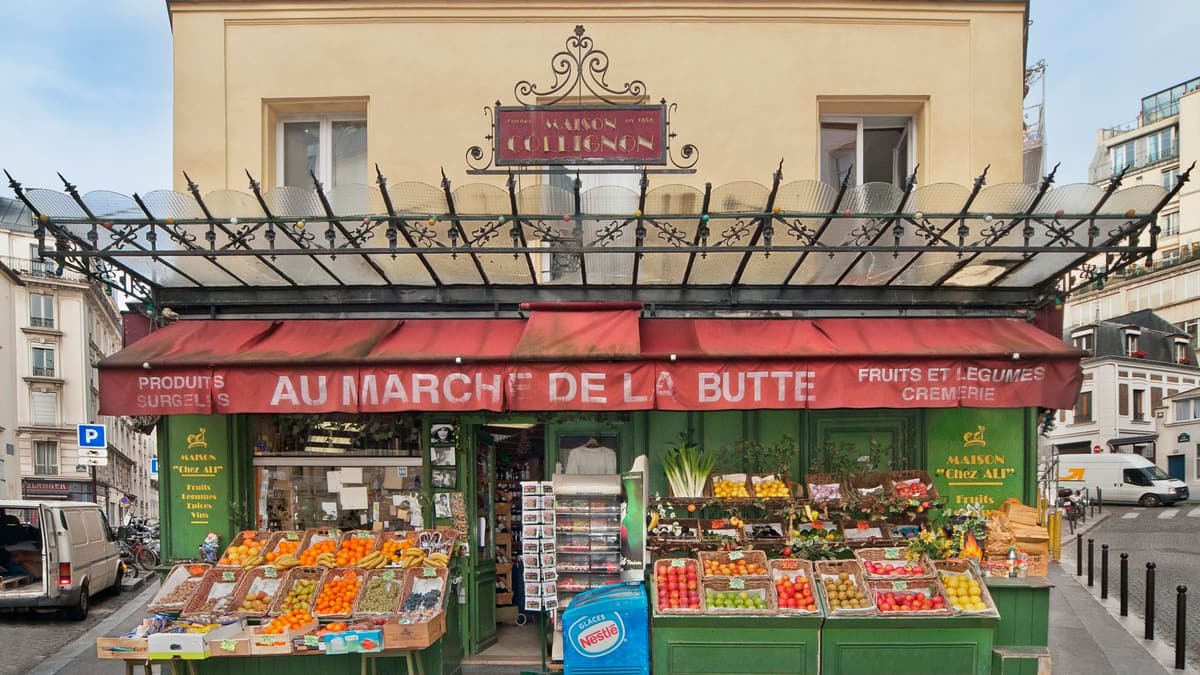
You're at the corner of rue des Trois-Frères and rue Androuet, outside number 56.
このスポットの続きは音声ツアー全編でお聴きいただけます。
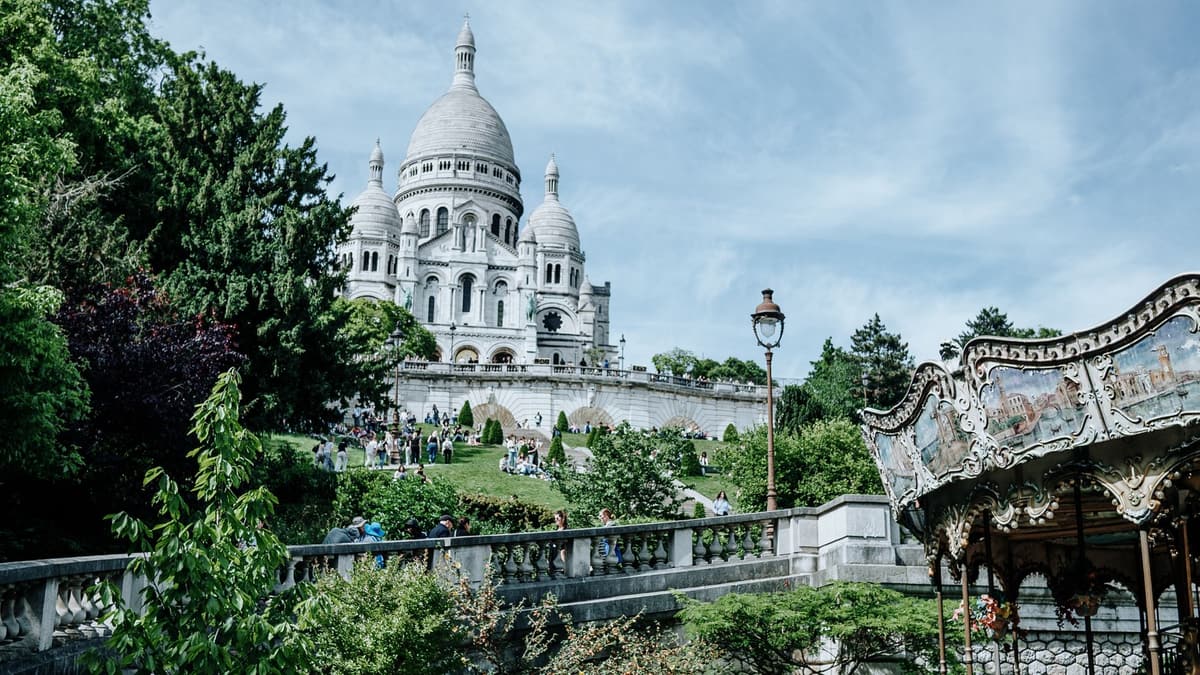
You're at the foot of the gardens below the Sacré-Cœur, beside the carousel.Look up the slope.
このスポットの続きは音声ツアー全編でお聴きいただけます。
You're on the forecourt of the Sacré-Cœur, at the top of the hill.Turn around and look out.
このスポットの続きは音声ツアー全編でお聴きいただけます。
You're on rue Saint-Vincent, a narrow cobbled street on the north side of Montmartre, far quieter than the crowds at the…
このスポットの続きは音声ツアー全編でお聴きいただけます。
You're on rue Lamarck, in front of Lamarck-Caulaincourt station.
このスポットの続きは音声ツアー全編でお聴きいただけます。
次回予定されているツアーで、他の人と一緒にこのウォークをしましょう。
約2.4 km、ゆったりしたペースで約34分 · 8停留所
友達は無料で歩けますOctober 11, 2026 · 9 min read
From the Hollandsche Schouwburg through the old Jewish Quarter, past the Dockworker and the Dam, to the Anne Frank House on the Prinsengracht.
October 11, 2026 · 11 min read
From Van Houten's street by the Vondelpark past Leidseplein, the Rijksmuseum passage and the famous canal bench to the Anne Frank House.

October 11, 2026 · 10 min read
Follow the last days of April and May 1945 from the Anhalter Bahnhof ruin past the Gestapo site and Brandenburg Gate to the Moltke Bridge and the Reichstag.
