
October 11, 2026 · 9 min read
Amsterdam Anne Frank Walking Tour
From the Hollandsche Schouwburg through the old Jewish Quarter, past the Dockworker and the Dam, to the Anne Frank House on the Prinsengracht.
589

October 10, 2026 · 10 min read

 友達は無料で歩けます
すべてのツアーは、アプリから参加できるスケジュール済みのグループウォークとしても開催されています。
Romeのオーディオツアーをもっと見る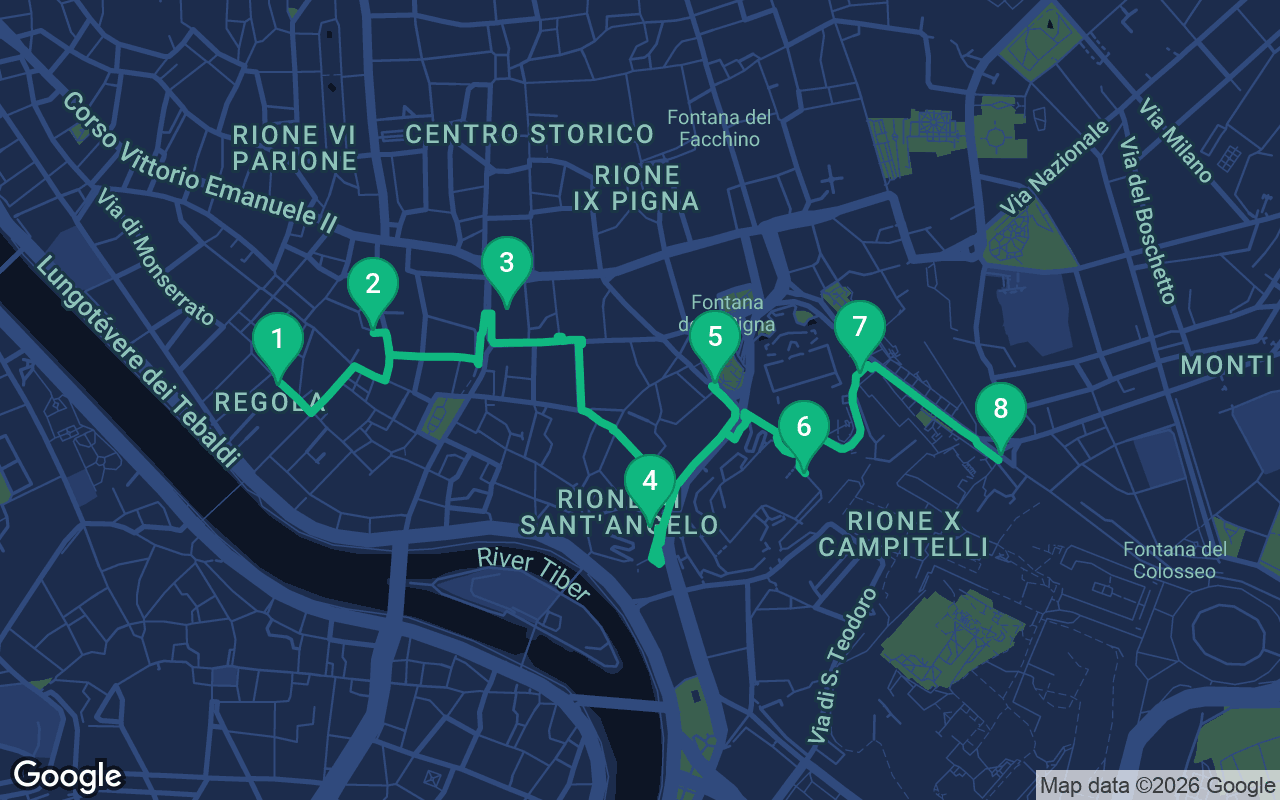
約2.8 km、ゆったりしたペースで約40分。
音声ガイド付きツアー
最初の 3 か所のスポットで再生ボタンを押すと、ナレーションの30秒デモをここで聴くことができます。アプリでは、イントロとこれらのスポットを無料で最後まで聴くことができ、各スポットに到着すると通知音でお知らせします。ツアー全体の音声ガイドは $14.99 で購入でき、一度購入すればいつでもずっとご利用いただけます。
Garmin、Komoot、Strava、OS Maps、その他あらゆるGPXアプリに対応しています。
On the fifteenth of March, 44 BC, the Ides of March, Julius Caesar walked into a Senate meeting and never walked out. This walk follows that day, and the days after it, in the order they happened. You start at Palazzo Spada with the shadow of Pompey, Caesar's dead rival, pass the ruins where he fell, follow the assassins to the Capitol and the body to the Forum, and end looking toward the spot where the crowd burned him. It is under three kilometers, one of the shortest of our self-guided walking tours. Everything comes from the ancient writers, Nicolaus of Damascus, Plutarch, Suetonius, Appian and Cassius Dio, all writing decades or generations later. Where they disagree, you will hear both sides.
The walking takes about forty minutes; with the stories, allow an hour and a half. The one real climb is Michelangelo's ramp up the Capitoline Hill. Palazzo Spada is a short walk from Largo di Torre Argentina, where many buses stop, and from tram 8 on Via Arenula. The walk ends on Via dei Fori Imperiali, about ten minutes from Colosseo metro. The walkways inside the Largo Argentina ruins and the Roman Forum itself are ticketed extras, so check before you go.
You're on Piazza Capo di Ferro, facing a Renaissance palace with a richly stuccoed facade. It houses Italy's Council of State, and inside its assembly hall stands a colossal marble statue.
That statue was found near the Cancelleria in the mid-1500s. For centuries people believed it was the statue of Pompey at whose feet Caesar fell. The Council of State, whose hall it stands in, disagrees: the three-meter figure is Roman work from a century or more after the murder, and more likely an emperor, possibly Domitian. So the most famous statue in this story is probably not the one.
Pompey was the rival Caesar had beaten in civil war, and he was dead. When the crowd broke Pompey's statues, Caesar had them set back up. On the Ides he would fall at the base of one of them. Cassius Dio, in Cary's translation, wrote that "he seemed in a way to have afforded his rival his revenge." Augustus later moved that statue out of the hall and set it on a marble arch opposite the great door of Pompey's theatre.
Follow your map north-east through the narrow lanes for about five minutes to Via di Grotta Pinta, a short, curving street.
Look at how this street bends. The tall houses follow the seating of Rome's first permanent stone theatre, built by Pompey and dedicated in 55 BC, and Roman walls survive in the cellars beneath you. Part of the same complex, behind the stage, was the Senate hall where Caesar would die.
At dawn on the Ides, the conspirators gathered here. Many were praetors, and they calmly heard lawsuits while they waited. Cassius Dio says gladiators had been placed in the theatre in case of trouble. Then a senator, Popilius Laenas, whispered to Brutus and Cassius that he prayed for their success, warned that the matter was on men's tongues, and walked away, leaving them frightened. A messenger told Brutus his wife Porcia had died. She had only fainted from worry. Brutus stayed at his post.
Meanwhile, at his official house on the Sacred Way, Caesar was hesitating. The night before, at dinner, he had said the best death was one "sudden and unexpected." That night his wife Calpurnia dreamed she held him, stabbed, in her arms. He was unwell, the sacrifices were bad, and he decided to send Mark Antony to dismiss the Senate. Then Decimus Brutus, a trusted friend named in his will, mocked the seers and led him out by the hand. It was late morning.
Head east for about five minutes to Largo di Torre Argentina, the big sunken square of ruins.
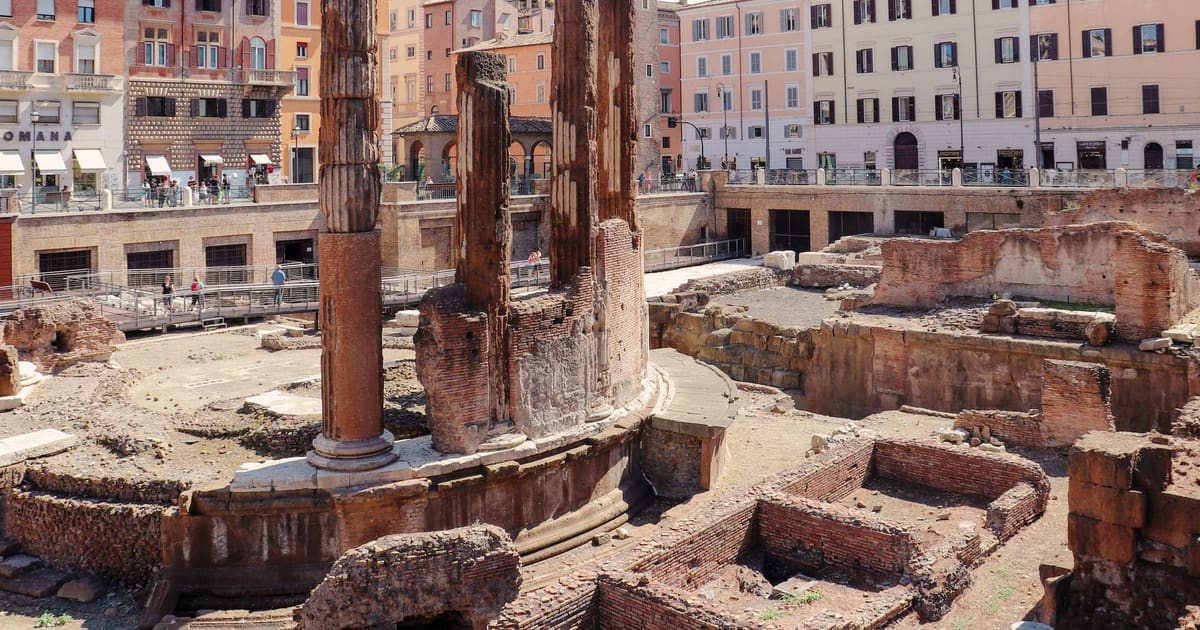
 Stand at the railings. Below you are four temples, labeled A to D. Behind the middle two, B and C, on the west side toward the Teatro Argentina, is a large rectangle of tuff blocks. That is the foundation of the Curia of Pompey. Here, Julius Caesar died.
The Senate met here because its own house in the Forum was being rebuilt. On the way, someone pressed a note into Caesar's hand revealing the plot. He kept it with his papers to read later. A seer, Spurinna, had warned him of danger "not later than the Ides of March." At the hall Caesar joked that the Ides had come. Spurinna answered that they had come, but not gone. "Beware the Ides of March" is Shakespeare's wording.
Outside, Antony was kept talking. Most sources say Trebonius did it; one of Plutarch's accounts says Decimus Brutus. Inside, Tillius Cimber came close as if to plead for his exiled brother, then seized Caesar's toga at both shoulders. Suetonius, in Rolfe's translation, has Caesar cry "Why, this is violence!" One of the Casca brothers stabbed him just below the throat. Caesar pulled his toga over his head and down over his legs, to fall decently, and fell at the foot of Pompey's statue.
Suetonius counts twenty-three wounds; Nicolaus says thirty-five. The killers numbered more than sixty, says Suetonius; more than eighty, says Nicolaus. His last words? Suetonius says none, though "some have written" that to Brutus he said, in Greek, "You too, my child?" Plutarch says he simply covered his head. "Et tu, Brute" is Shakespeare. The Senate later voted to wall up this hall.
Walk south-east for about ten minutes, until the arcaded curve of an ancient theatre rises in front of you.
含まれるもの
私たちのツアーは、瞑想的で没入感のある体験を目指しています。歩きながら、ただ耳を傾けてください。誰かと一緒ならもっと楽しく、アプリがナレーションを同期再生するので、あなたもパートナーも友人も、各スポットを同じ瞬間に聴けます。
Here is another theatre, with a later palace built into its top.This one is about what died with Caesar.
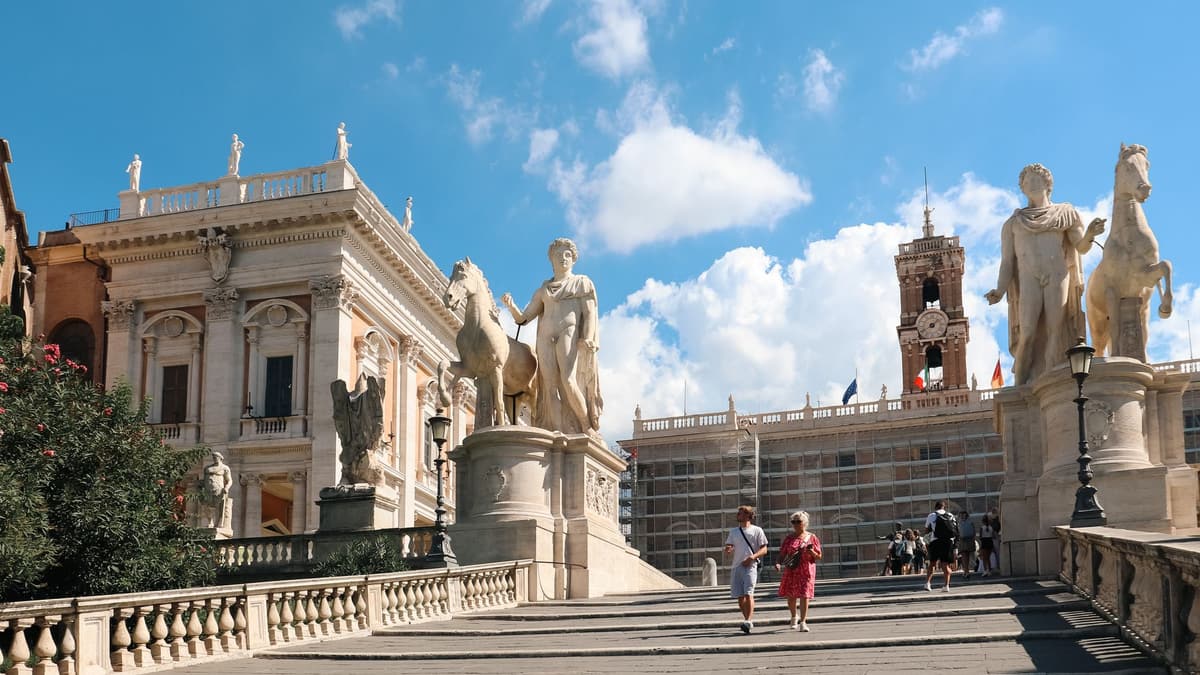
このスポットの続きは音声ツアー全編でお聴きいただけます。
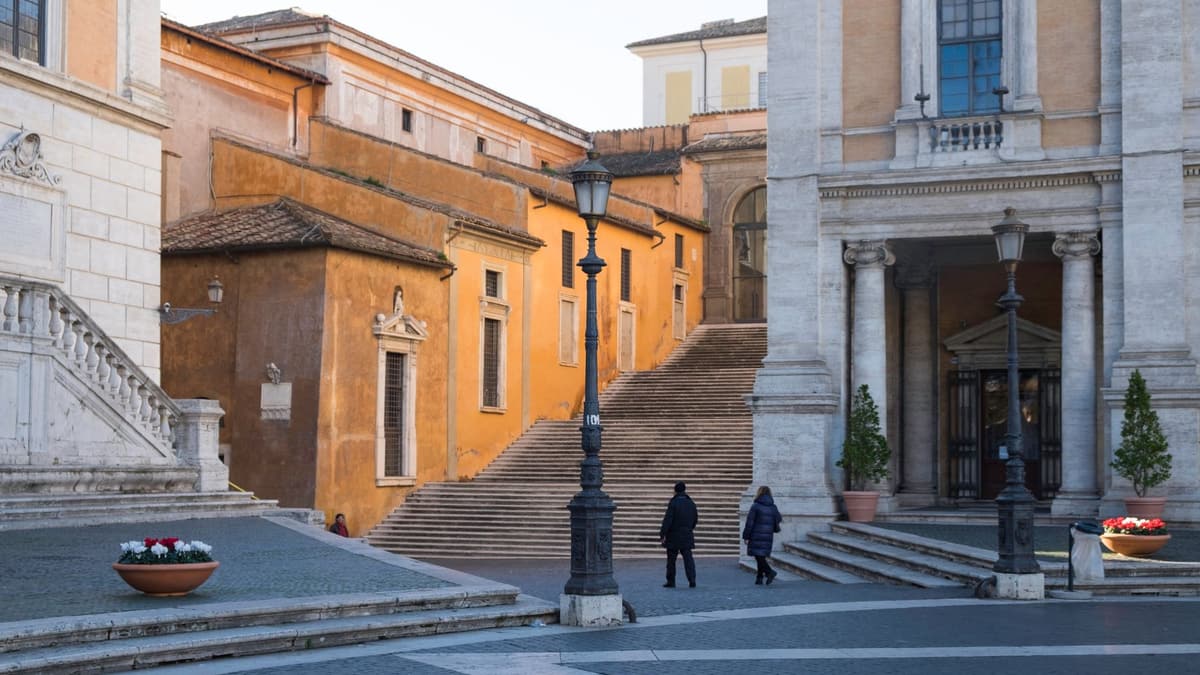
You're at the bottom of two stairways.
このスポットの続きは音声ツアー全編でお聴きいただけます。
Look down at the Roman Forum.
このスポットの続きは音声ツアー全編でお聴きいただけます。
This is the forum Caesar built for himself.
このスポットの続きは音声ツアー全編でお聴きいただけます。
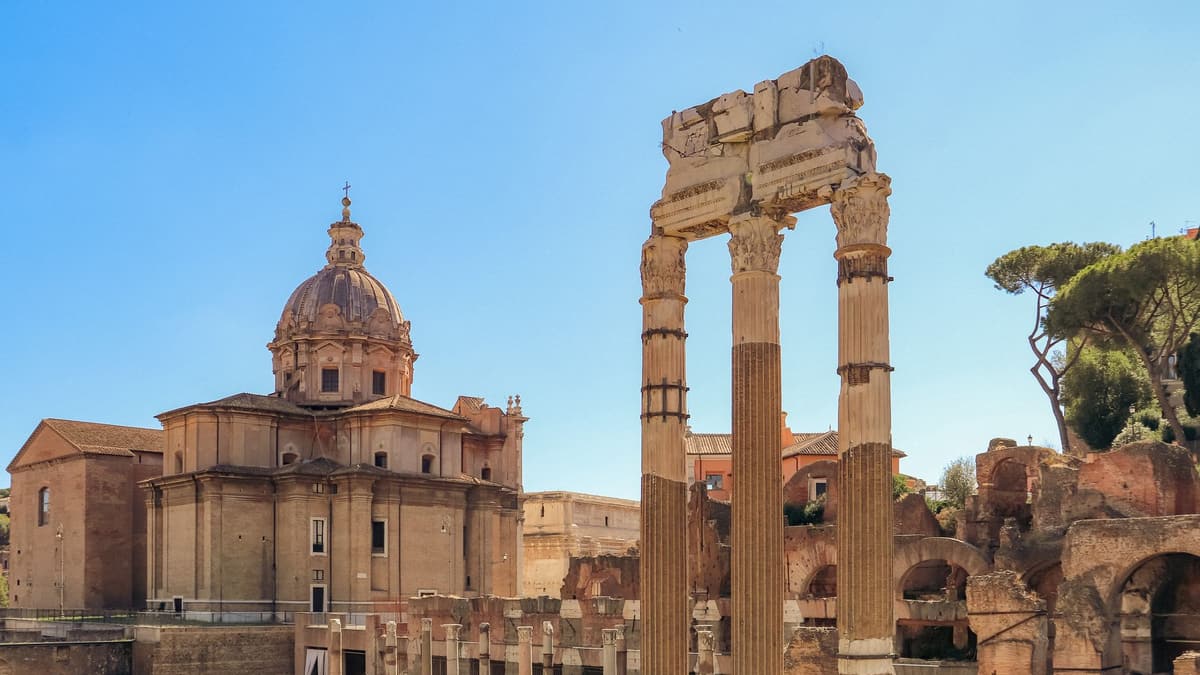
Look down into the Forum.The columns with a church facade behind them are the Temple of Antoninus and Faustina.
このスポットの続きは音声ツアー全編でお聴きいただけます。
次回予定されているツアーで、他の人と一緒にこのウォークをしましょう。
約2.8 km、ゆったりしたペースで約40分 · 8停留所
友達は無料で歩けますOctober 11, 2026 · 9 min read
From the Hollandsche Schouwburg through the old Jewish Quarter, past the Dockworker and the Dam, to the Anne Frank House on the Prinsengracht.
October 11, 2026 · 11 min read
From Van Houten's street by the Vondelpark past Leidseplein, the Rijksmuseum passage and the famous canal bench to the Anne Frank House.

October 11, 2026 · 10 min read
Follow the last days of April and May 1945 from the Anhalter Bahnhof ruin past the Gestapo site and Brandenburg Gate to the Moltke Bridge and the Reichstag.
