
October 11, 2026 · 9 min read
Amsterdam Anne Frank Walking Tour
From the Hollandsche Schouwburg through the old Jewish Quarter, past the Dockworker and the Dam, to the Anne Frank House on the Prinsengracht.
589

October 11, 2026 · 10 min read

 Vrienden lopen gratis mee
Elke tour is ook beschikbaar als een geplande groepswandeling waar je in de app aan kunt deelnemen.
Meer audiotours in Paris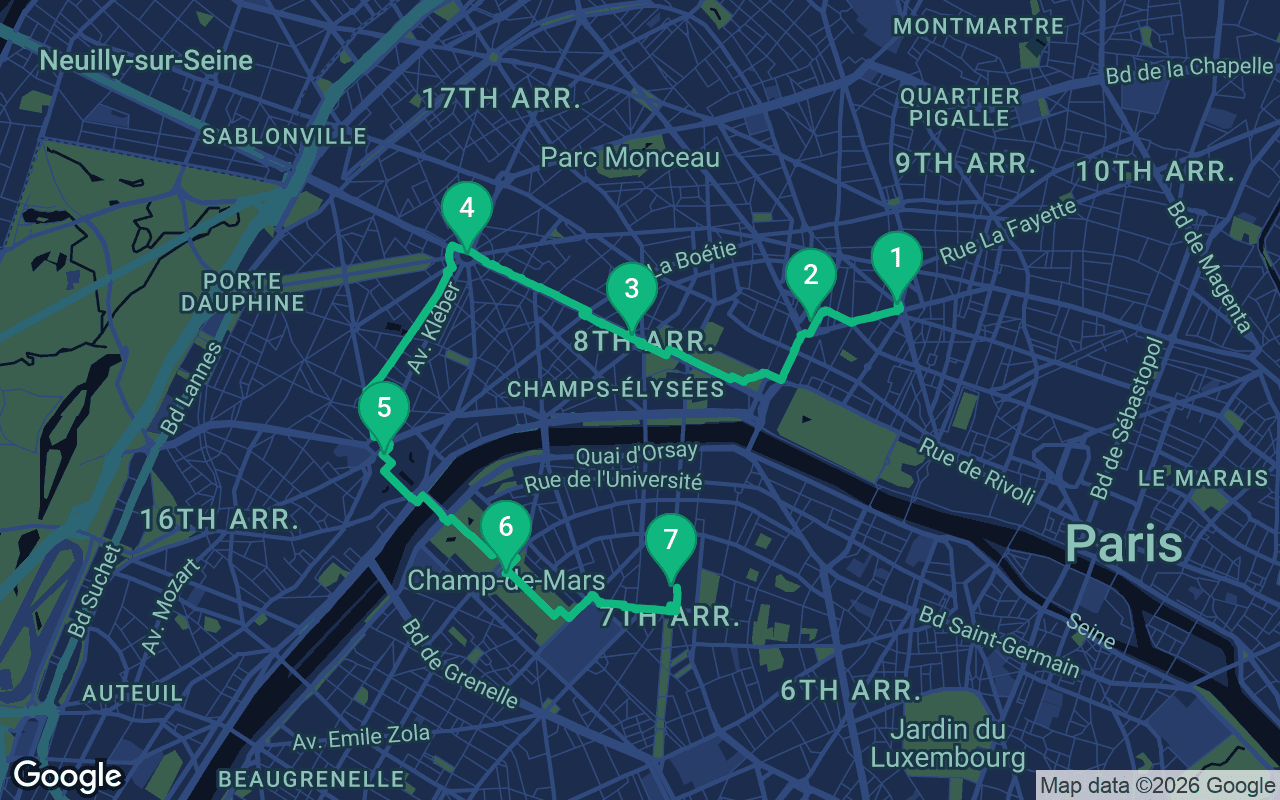
Ongeveer 8,1 km, zo'n 116 minuten op een rustig tempo.
Deze tour is ingesproken
Druk op afspelen bij de eerste 3 stops voor een demo van 30 seconden van de vertelling. In de app zijn de intro en die 3 stops volledig gratis te beluisteren, en bij elke stop klinkt een signaal zodra je aankomt. De hele tour met gids is van jou voor $19.99, een eenmalige aankoop die je voor altijd behoudt.
Werkt met Garmin, Komoot, Strava, OS Maps en elke GPX-app.
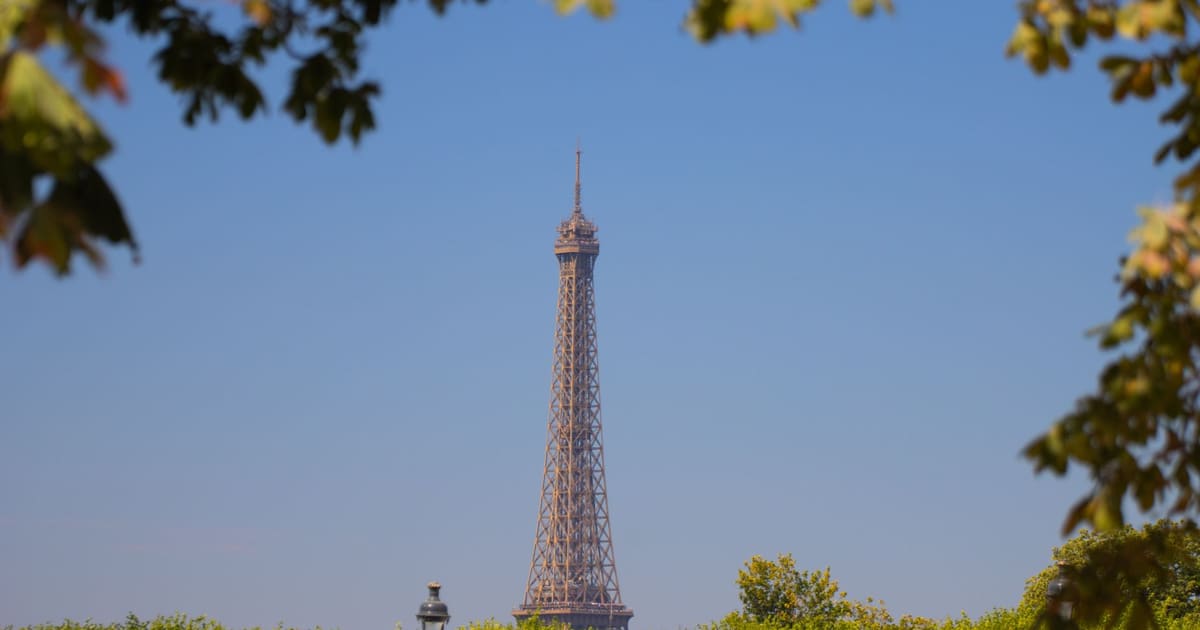
In June 1940 Paris fell. The German army marched into the city on the fourteenth of June, and France signed an armistice with Germany on the twenty-second. Then, one early morning in late June, most often dated the twenty-third, Adolf Hitler landed at Le Bourget airfield at about half past five and was driven through the empty streets of the conquered capital. By about nine he was gone, and he never came back. This walk follows his car, but it is not a walk in his footsteps. It is about the city: what it meant to be occupied, the small refusals of the people who lived here, and how the story ended four years later. It starts at the Opéra and ends at Napoleon's tomb at the Invalides, about eight kilometers on foot, one of the longest of our self-guided walking tours.
This is a long walk: 8.1 kilometers, about two hours of walking, and closer to three hours with the stops. Wear comfortable shoes and take water. There are plenty of cafés along the way, especially on the Champs-Élysées and around the Trocadéro, so plan a break. It is mostly flat, with a gentle climb up the Champs-Élysées and steps down from the Trocadéro. Start at Opéra metro, on lines 3, 7 and 8. Finish at Varenne metro, on line 13, or La Tour-Maubourg, on line 8, both a few minutes from the dome. One note on sources: much of what we know about that morning comes from Albert Speer, Hitler's architect, who rode in the car. He wrote his memoir decades later, partly to clean up his own record, so we tell you when a detail rests on his word alone. Accounts also disagree on the exact order of the stops, so we walk them in the order the streets allow.
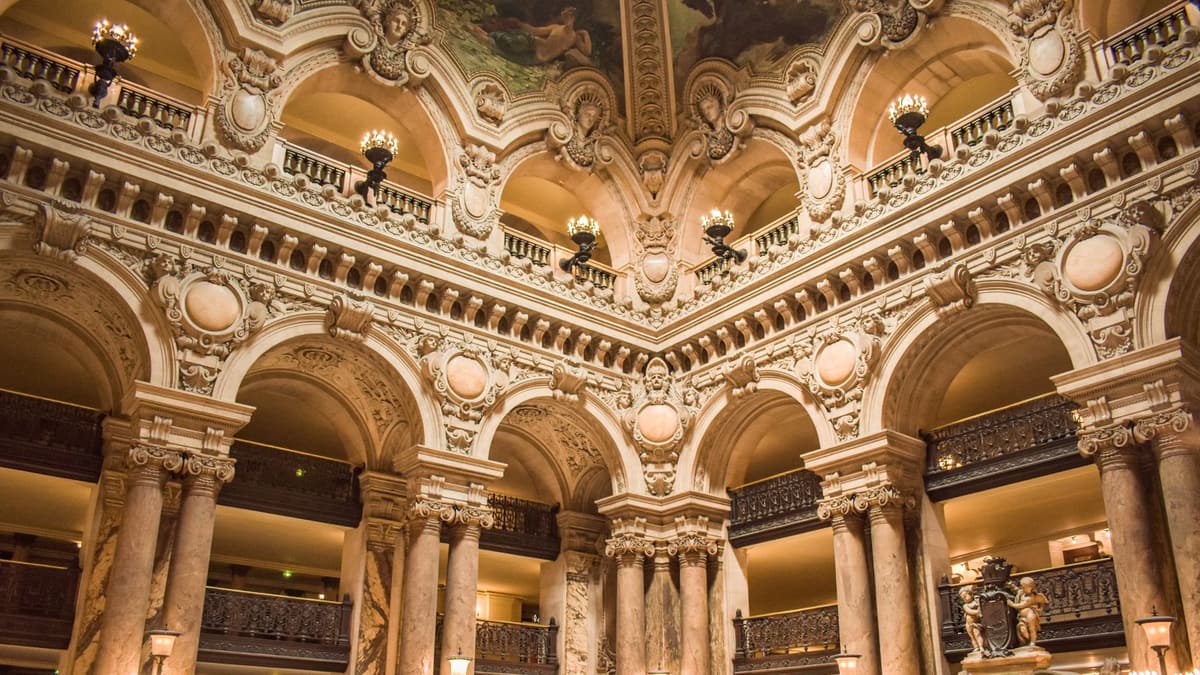
You're on the Place de l'Opéra, facing the steps and the great gilded front of the Palais Garnier, still an opera house today. The grand staircase is inside, on a ticketed visit, but this is the front the visitors walked through that morning.
This was the first thing Hitler wanted to see. He arrived in a convoy of three Mercedes cars. Hitler sat in front beside the driver; behind him were Albert Speer and the sculptor Arno Breker, then the architect Hermann Giesler and the adjutants. The artists wore field-grey uniforms.
According to Albert Speer, who was in the car, the lights were on inside, as on a gala night, and a white-haired attendant showed the party round. Hitler had studied the building's plans. He noticed a salon missing near the stage box, and, Speer says, he was right: it had been removed in a renovation long before. Speer describes the attendant as businesslike but distinctly aloof. When he was offered a fifty-mark note as a tip, he refused it, twice, saying he had only done his duty.
It is a tiny moment, and it comes only from Speer. But it is the first glimpse on this walk of what occupation looked like from the Parisian side: a man who showed the conqueror round his building at dawn, and would not take his money.
Walk west along boulevard des Capucines to the columned church at the end, about seven minutes.
 In front of you is the Madeleine, a church built like a Roman temple, with its ring of columns, standing at the head of rue Royale.
The cars came this way after the Opéra, along the boulevard and down rue Royale toward the river. The cars did not stop here. They were heading for the river and the great avenue beyond. Picture the streets around you almost empty in the early light. Paris had been declared an open city, and on the fourteenth of June the German army walked in.
That is what this morning really was. Not a visit, but an inspection of a captured capital. Paris would stay occupied for more than four years, until August 1944. For the people living behind these shutters, the fighting had stopped, but the war had not ended. A different life had begun, with German soldiers on their boulevards.
Look down rue Royale. At its end is the Place de la Concorde and the river, and beyond it, the avenue the German army had already claimed for its cameras.
Walk down rue Royale to the Place de la Concorde, then turn right and head up the Champs-Élysées along the gardens to the roundabout, the Rond-Point, about twenty minutes.
You're on the Champs-Élysées, just past the Rond-Point, with the avenue climbing toward the Arc de Triomphe at the top.
On the eighteenth of June 1940, four days after they entered the city, German troops held a triumphal parade on this avenue, and German propaganda filmed it. The point was the picture: the most famous street in France, with the conqueror marching down it, shown to the world.
Hitler's car drove along the avenue too. According to Speer, during the tour Hitler talked about holding a victory parade of his own in Paris, and then dropped the idea. The official reason, Speer says, was the risk of British air raids. Later, Speer writes, Hitler admitted he was not in the mood for one, telling him that they were not at the end yet.
So that parade never happened. The occupation did. For four years, Parisians walked their own avenue past the soldiers who had marched down it for the cameras.
Walk straight up the avenue to the arch at the top, about fifteen minutes. Use the underpass to reach the arch itself; never cross the traffic of the circle.
Wat er inbegrepen is
Onze tours zijn bedoeld om meditatief en meeslepend te zijn: je blijft in beweging en luistert gewoon. Samen zijn ze altijd beter, en de app speelt de vertelling synchroon af, zodat jij, je partner en je vrienden elke stop op hetzelfde moment horen.
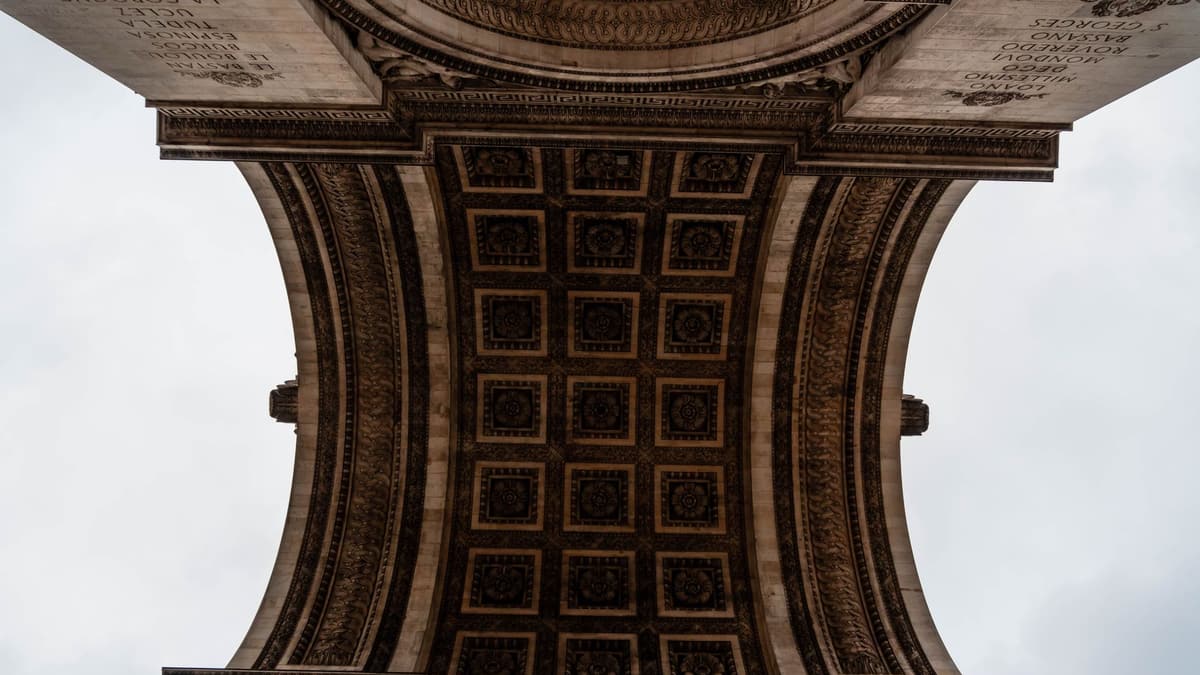
Stand under the great arch. Beneath the vault lies the Tomb of the Unknown Soldier from the First World War, with its flame.
De rest van deze stop zit in de volledige audiotour.
Walk out onto the open terrace between the two curved wings of the Palais de Chaillot, to the top of the central steps. In front of you is the most famous view of the Eiffel Tower.
De rest van deze stop zit in de volledige audiotour.
You're on the Champ de Mars, the long lawns that run away from the tower. Turn around and look back up at it.
De rest van deze stop zit in de volledige audiotour.
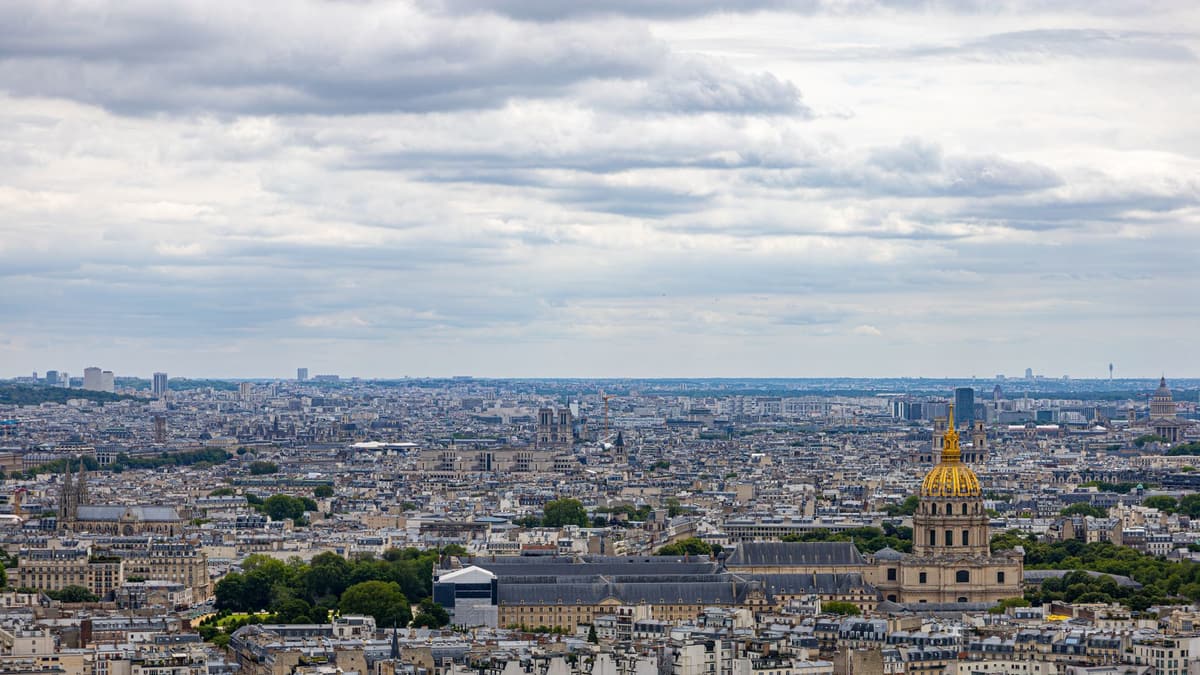
Ahead of you rises the golden Dôme des Invalides. Napoleon's tomb lies inside, under the dome, in the Army Museum, which needs a ticket.
De rest van deze stop zit in de volledige audiotour.
Doe deze wandeling samen met anderen tijdens de eerstvolgende geplande tour.
Ongeveer 8,1 km, circa 116 minuten in een rustig tempo · 7 stops
Vrienden lopen gratis meeOctober 11, 2026 · 9 min read
From the Hollandsche Schouwburg through the old Jewish Quarter, past the Dockworker and the Dam, to the Anne Frank House on the Prinsengracht.
October 11, 2026 · 11 min read
From Van Houten's street by the Vondelpark past Leidseplein, the Rijksmuseum passage and the famous canal bench to the Anne Frank House.

October 11, 2026 · 10 min read
Follow the last days of April and May 1945 from the Anhalter Bahnhof ruin past the Gestapo site and Brandenburg Gate to the Moltke Bridge and the Reichstag.
