
October 11, 2026 · 9 min read
Amsterdam Anne Frank Walking Tour
From the Hollandsche Schouwburg through the old Jewish Quarter, past the Dockworker and the Dam, to the Anne Frank House on the Prinsengracht.
589

October 9, 2026 · 11 min read

 Znajomi spacerują za darmo
Każdy spacer odbywa się również jako zaplanowany spacer grupowy, do którego możesz dołączyć w aplikacji.
Więcej wycieczek audio w Hamburg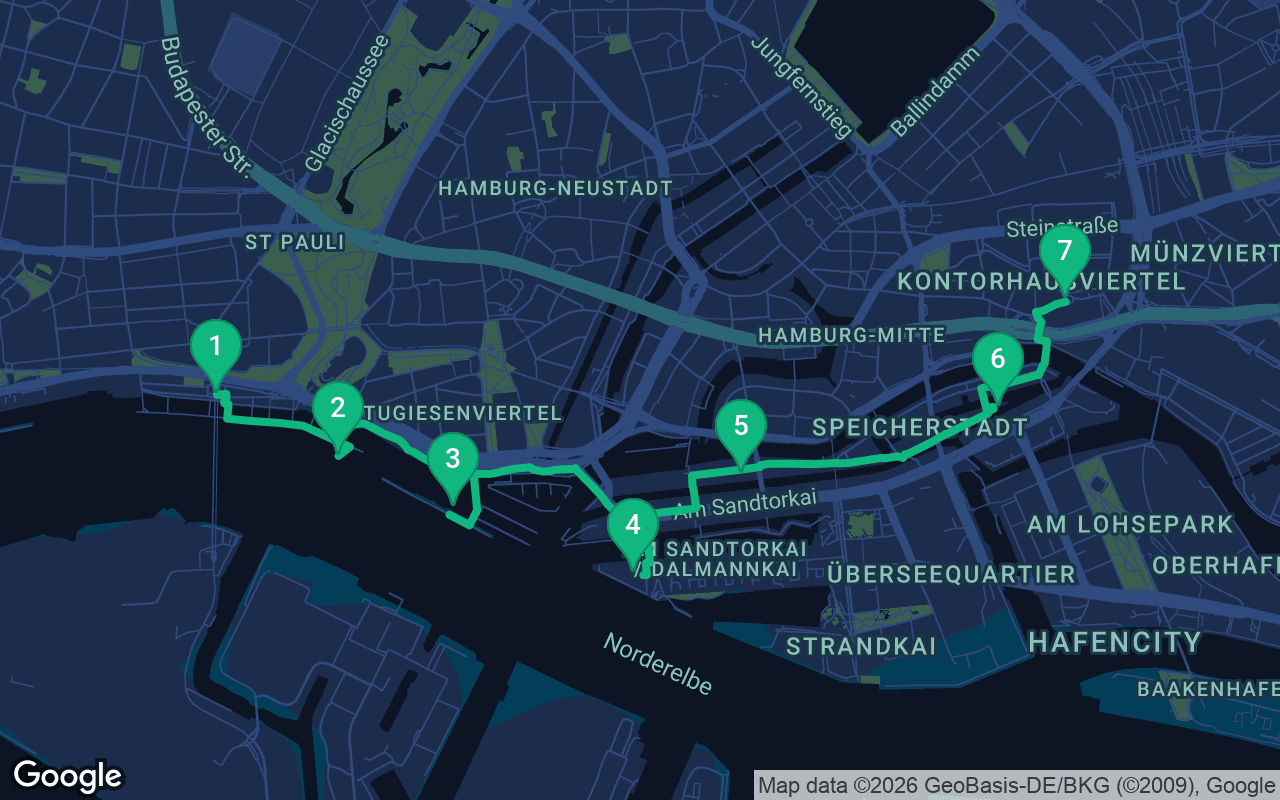
Około 4,1 km, mniej więcej 59 minut w spokojnym tempie.
Ten spacer ma narrację
Naciśnij odtwarzanie na pierwszych 3 przystankach, aby posłuchać 30-sekundowego demo narracji. W aplikacji wstęp i te przystanki odtworzysz w całości za darmo, a każdy z nich zasygnalizuje się dźwiękiem po przybyciu. Cały spacer z narracją otrzymasz za $9.99, jednorazowy zakup, który zachowasz na zawsze.
Działa z Garmin, Komoot, Strava, OS Maps i każdą aplikacją GPX.
Hamburg sits more than a hundred kilometers up the Elbe from the North Sea, and yet it is a port city to its bones. This walk follows the water. It starts underground, in a tiled tunnel beneath the river, then runs east along the piers where the harbor ferries come and go, past a tall ship and a cargo liner you can climb aboard, out to the glittering concert hall on the old quayside and into the red-brick warehouse district of the Speicherstadt. It ends among the dark brick office palaces of the Kontorhaus district, at a building shaped like the bow of a ship. It is about four kilometers, flat the whole way, and one of the most varied self-guided walking tours you can do in a single morning.
At a stroll the walking alone takes about an hour, but give it at least half a day, because almost every stop invites you inside. The Elbphilharmonie plaza, the museum ship and above all Miniatur Wunderland can each swallow an hour or more, and Wunderland is popular enough that booking a timed ticket ahead is wise. Opening times and ticket arrangements change, so check before you go. The route is level and paved, with a few bridges and some cobbles in the Speicherstadt. Wind is the thing to plan for. Hamburg weather blows in off the water, changes quickly and rains often, so bring a light waterproof layer even on a bright day, and something warm outside summer. There is little shade along the river and plenty of open sky. Mornings are calmer at the piers, while late afternoon brings the best light on the warehouses and the glass of the concert hall. If your legs tire, the harbor ferries and the elevated railway run right alongside the route.
You are standing at the domed entrance hall of the Old Elbe Tunnel, the St. Pauli Elbtunnel to locals. Step inside and look down. Instead of a ramp there is a deep shaft with lifts, big cages that once carried horses and carts down to the river bed, while people take the stairs or the smaller lifts. At the bottom, two tiled tubes run side by side for a little over 400 meters, about twenty-four meters under the Elbe, to the far bank. The tunnel opened in 1911 to solve a daily problem. Tens of thousands of dock and shipyard workers lived on this side of the river and worked on the other, and the ferries could be slowed by fog, ice and the sheer crush of people. Look closely at the glazed tiles as you walk through. Set among them are small ceramic reliefs of fish, crabs, eels and mussels, and a few odder things too, as if the river had left its belongings on the walls. Cars have used the lifts over the years, though vehicle access has been limited during a long renovation, so you may see only walkers and cyclists. If you have twenty minutes, walk through and look back from the south bank at the whole waterfront. Then come back up and turn east along the riverfront, with the water on your right, to the long stone hall with the copper domes, about five minutes away.
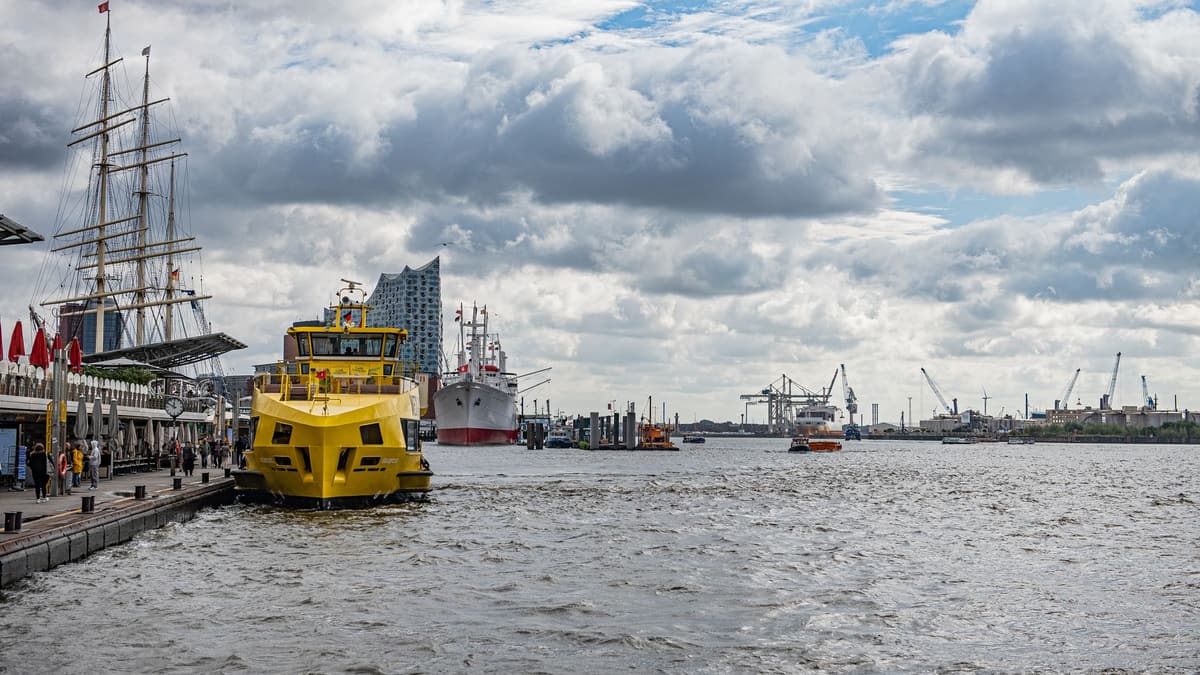 This is the St. Pauli Landungsbrücken, the landing stages, and the long stone hall beside you was built in the early twentieth century, around the same time as the tunnel. Look up at the tower at its eastern end. One face tells the time, and another shows the level of the water, because the Elbe here is tidal and rises and falls by several meters twice a day. That is why the piers in front of you float. They are pontoons, joined to the land by hinged bridges that tilt steeper or flatter as the tide moves, so watch the angle as you walk down. From here the harbor ferries leave, and they are part of the city's ordinary public transport, so a regular transit ticket generally covers them. Riding one downstream past the container terminals is one of the best cheap thrills in Hamburg. Every May the city throws a huge party here for the harbor's birthday, honoring a charter of 1189 in which Emperor Frederick Barbarossa is said to have granted free passage on the Elbe. Historians are fairly sure the document was forged decades later. Hamburg celebrates anyway. At the eastern end, the green hull and three masts belong to the Rickmer Rickmers, a sailing ship launched in 1896 that spent decades under the Portuguese flag before coming home to Hamburg in 1983. Walk past her along the promenade, about four minutes east, to the big white cargo ship.
The long white ship moored in front of you is the Cap San Diego, and she is not a replica or a hulk. She was built here in Hamburg and launched in 1961 for the Hamburg Süd line, one of a family of fast, elegant sister ships that carried general cargo between Hamburg and the east coast of South America, along with a handful of paying passengers. She earned the nickname the white swan of the South Atlantic, and you can see why in the sweep of her bow and her slim, low superstructure. Look at her deck cranes and the open hatches. Everything she carried, sacks of coffee, crates, machinery, was loaded piece by piece, which could take days in every port. Within a few years of her launch the shipping container arrived and changed all of that, and ships like her became obsolete almost overnight. The city bought her in the 1980s, and she has been a museum ship ever since. She is also said to be the largest museum ship in the world that still goes to sea, and a few times a year she casts off and sails down the Elbe, crewed largely by volunteers, many of them retired seafarers. If she is open, wander her decks, engine room and cargo holds. Then carry on east along the waterfront for about ten minutes, under the elevated railway, and cross the bridge on your right toward the glass building that looks like a frozen wave.
Co zawiera
Nasze wycieczki mają być medytacyjne i wciągające: idziesz i po prostu słuchasz. Zawsze lepiej przeżywa się je razem, a aplikacja odtwarza narrację synchronicznie, więc ty, twój partner i twoi przyjaciele słyszycie każdy przystanek w tej samej chwili.
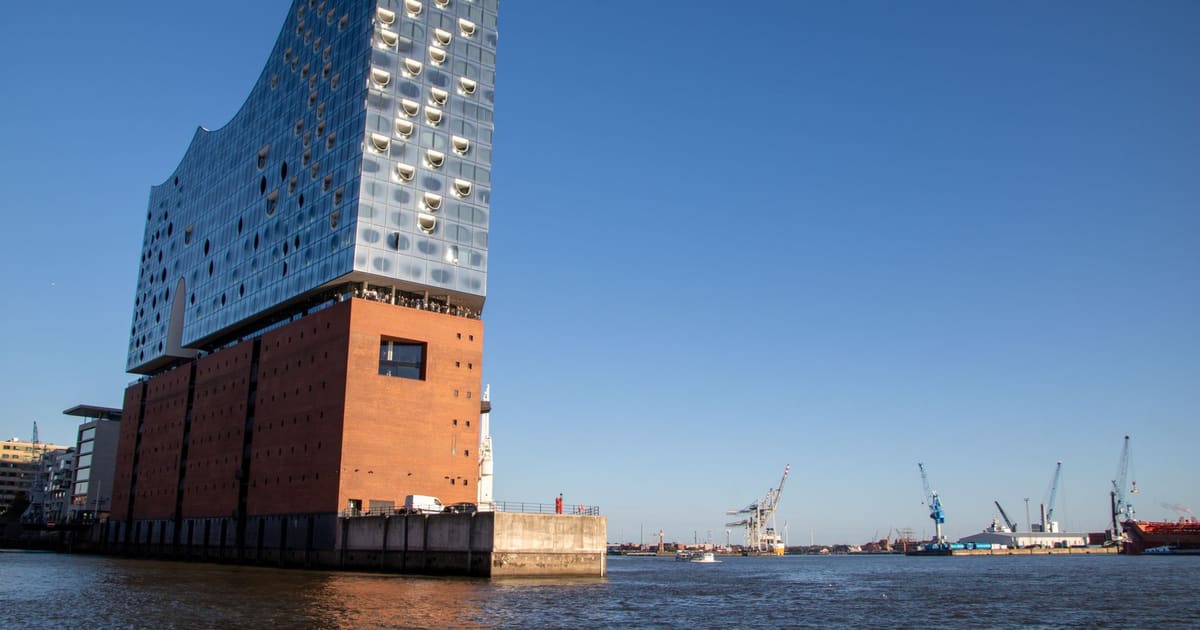
Stand back and take in the whole of it. The lower part is a plain brick block, Kaispeicher A, a warehouse built in the 1960s to store goods like cocoa and tea.
Dalsza część tego przystanku jest w pełnej audiowycieczce.
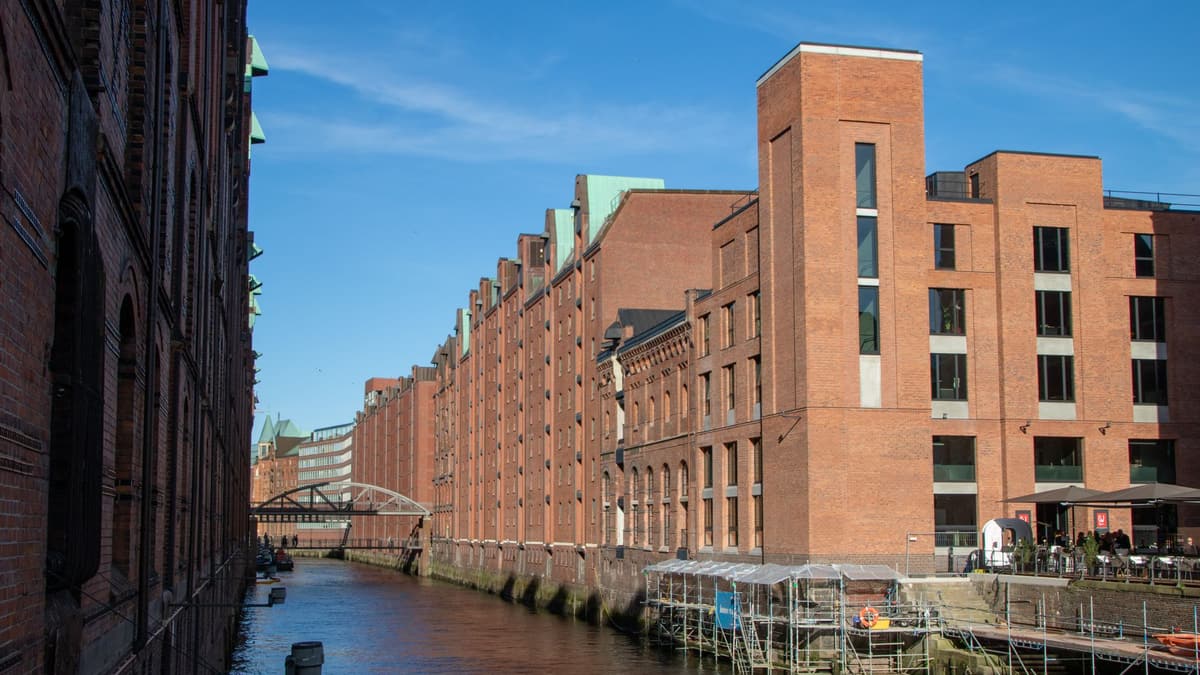
You are now inside the Speicherstadt, and the warehouse in front of you holds what Guinness lists as the largest model railway in the world.
Dalsza część tego przystanku jest w pełnej audiowycieczce.
Stand on the bridge and you have the view on a thousand postcards. Two canals meet in front of you, and on the narrow point of land between them stands the Wasserschloss, the water castle, its turrets and gables rising straight out of the water.
Dalsza część tego przystanku jest w pełnej audiowycieczce.
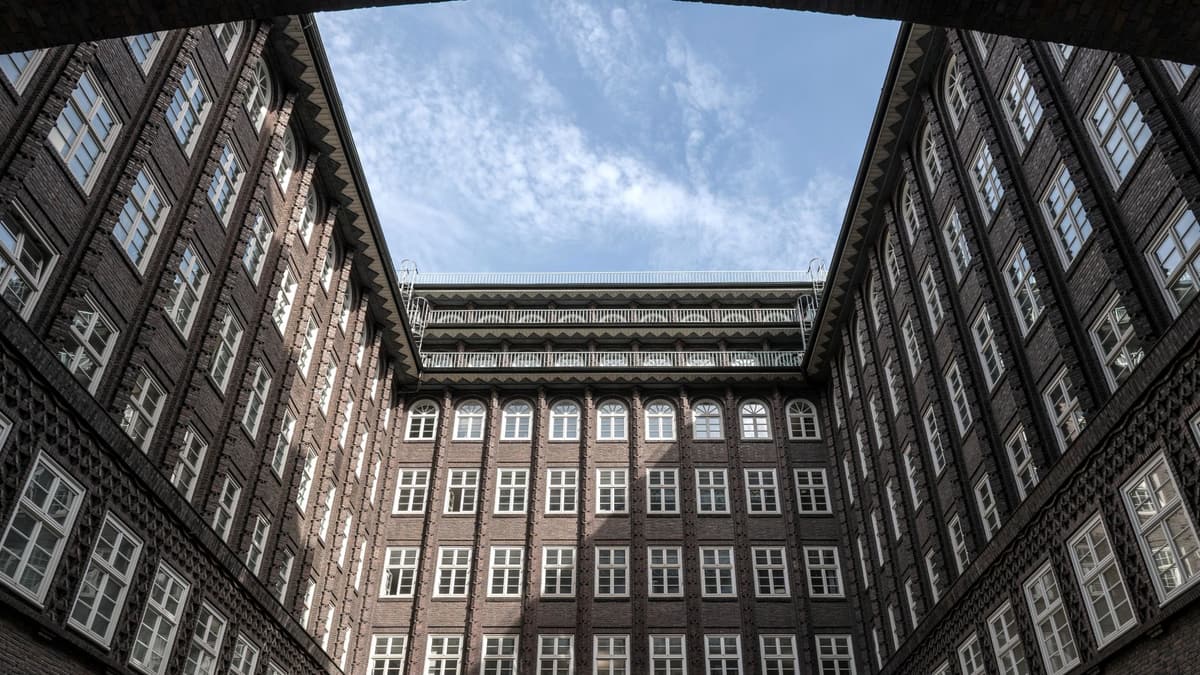
The walk ends at the Chilehaus, and the best way to meet it is to stand at its sharp eastern tip and look up.
Dalsza część tego przystanku jest w pełnej audiowycieczce.
Wykonaj ten spacer z innymi ludźmi na następnym zaplanowanym spacerze.
Około 4,1 km, mniej więcej 59 minut w spokojnym tempie · 7 przystanków
Znajomi spacerują za darmoOctober 11, 2026 · 9 min read
From the Hollandsche Schouwburg through the old Jewish Quarter, past the Dockworker and the Dam, to the Anne Frank House on the Prinsengracht.
October 11, 2026 · 11 min read
From Van Houten's street by the Vondelpark past Leidseplein, the Rijksmuseum passage and the famous canal bench to the Anne Frank House.

October 11, 2026 · 10 min read
Follow the last days of April and May 1945 from the Anhalter Bahnhof ruin past the Gestapo site and Brandenburg Gate to the Moltke Bridge and the Reichstag.
