
October 11, 2026 · 9 min read
Amsterdam Anne Frank Walking Tour
From the Hollandsche Schouwburg through the old Jewish Quarter, past the Dockworker and the Dam, to the Anne Frank House on the Prinsengracht.
589

October 9, 2026 · 12 min read

 Znajomi spacerują za darmo
Każdy spacer odbywa się również jako zaplanowany spacer grupowy, do którego możesz dołączyć w aplikacji.
Więcej wycieczek audio w Tainan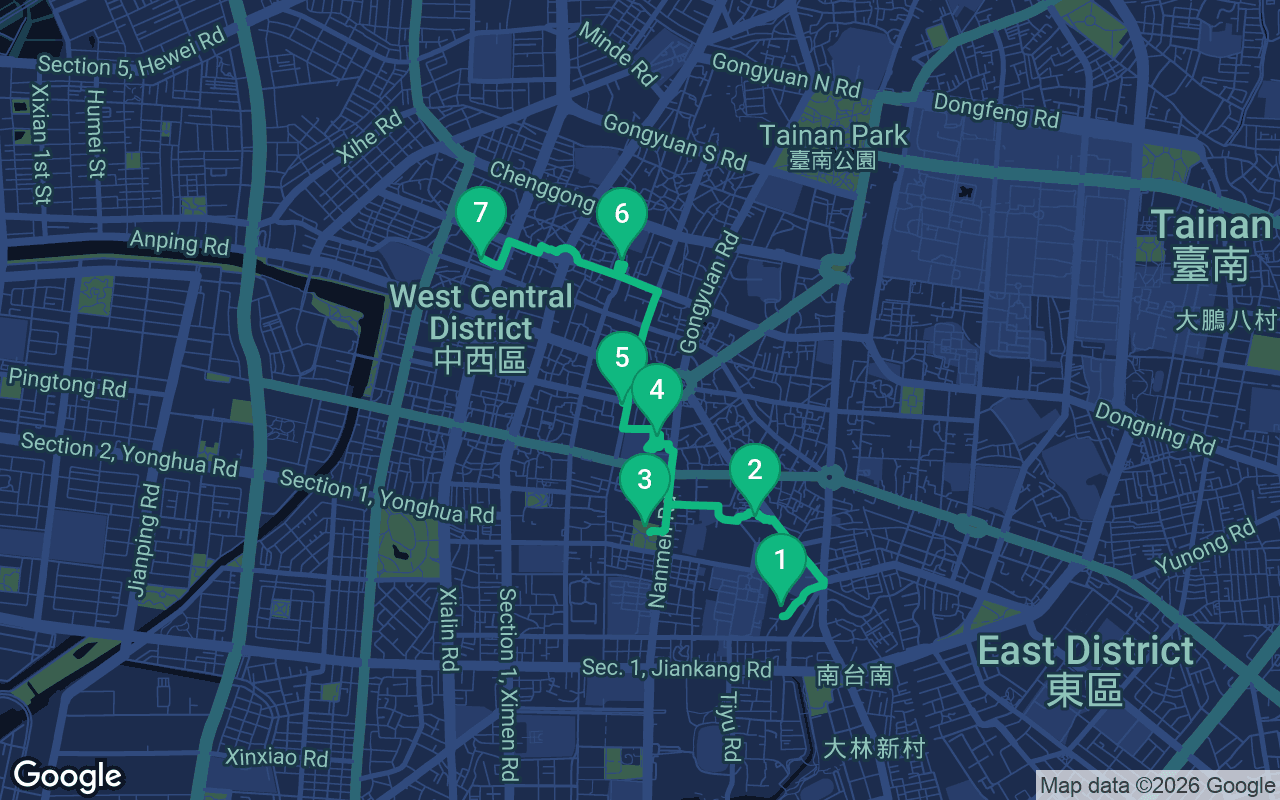
Około 4 km, mniej więcej 57 minut w spokojnym tempie.
Ten spacer ma narrację
Naciśnij odtwarzanie na pierwszych 3 przystankach, aby posłuchać 30-sekundowego demo narracji. W aplikacji wstęp i te przystanki odtworzysz w całości za darmo, a każdy z nich zasygnalizuje się dźwiękiem po przybyciu. Cały spacer z narracją otrzymasz za $9.99, jednorazowy zakup, który zachowasz na zawsze.
Działa z Garmin, Komoot, Strava, OS Maps i każdą aplikacją GPX.
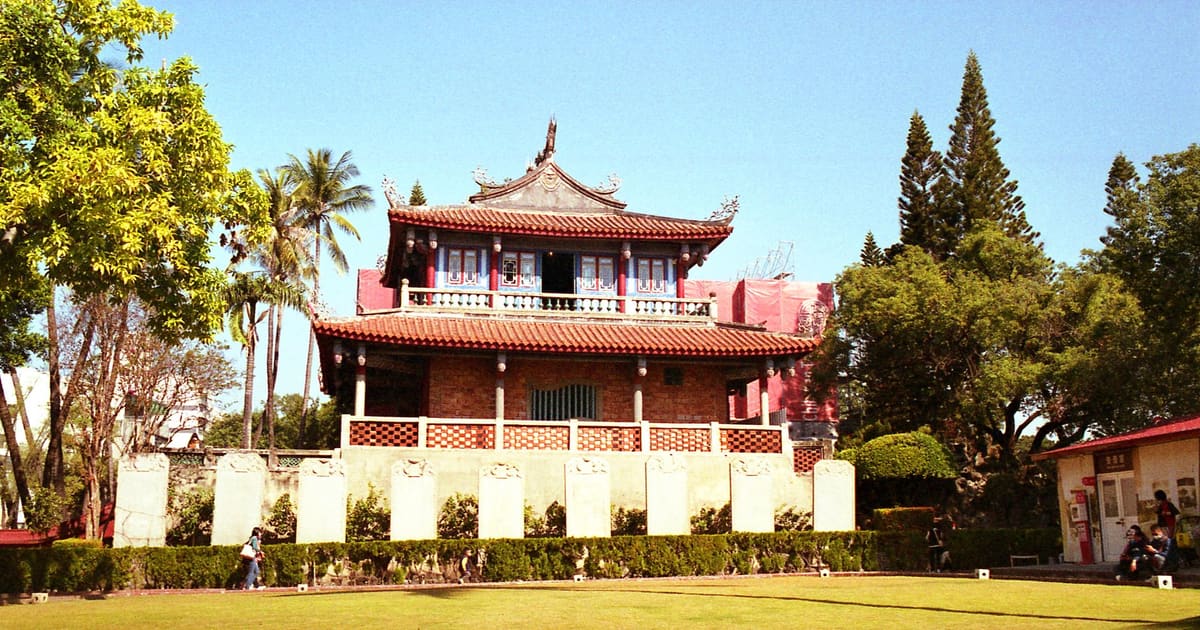
For more than two hundred years, Tainan was the capital of Taiwan. Koxinga made it the seat of his government in 1661, the Qing ruled the island from here, and only late in the nineteenth century did the capital move north. The result is a city packed with temples, old walls and shrines, all within a short stroll of one another, and fed by one of the best snack cultures in Asia. This walk starts at a quiet Buddhist temple that began as a scholar's garden, visits the shrine of Koxinga, a surviving city gate and the island's first Confucian school, then heads north past a 1930s department store to Chihkan Tower, built on the ruins of a Dutch fort, and ends among the lanterns of Shennong Street. It is about four kilometers and flat, and it is one of the most satisfying self-guided walking tours in Taiwan for anyone who loves history with good food along the way.
The walking takes about an hour, but plan on three to four hours with visits and snack stops, because skipping Tainan's food would miss half the point. The route is flat and mostly paved, though sidewalks come and go and scooters are everywhere, so stay alert at crossings and in narrow lanes. Tainan lies just south of the Tropic of Cancer, and the sun here is strong for much of the year. Carry water, wear a hat and sunscreen, and use the shade of temple courtyards, banyan trees and covered walkways whenever you can. Winter is mild and dry and the most comfortable time to walk; summer brings heavy heat and sudden storms. Some sites, such as Chihkan Tower and the inner halls of the Confucius Temple, keep their own hours and charge a small entry fee, so check before you go. In temples, step over the raised thresholds rather than on them, enter by the right-hand door and leave by the left, and be discreet with your camera around people at prayer. Starting in the late afternoon means you reach Shennong Street just as its lanterns come on.
Step through the gate and the traffic noise falls away. Fahua Temple is one of the oldest temples in Tainan, and it began not as a temple at all but as a private garden. In 1664, a scholar named Li Maochun crossed to Taiwan, one of many Ming loyalists who refused to serve the new Qing dynasty after it conquered the mainland and who gathered under the Zheng family in Tainan. Here he made a quiet retreat he called the Garden of Dreaming of Butterflies. The name comes from a famous story by the Chinese philosopher Zhuangzi, who dreamed he was a butterfly and woke unsure whether he was a man who had dreamed of being a butterfly, or a butterfly now dreaming he was a man. It is a fitting name for a man whose world had vanished. After Li's death, and after the Qing took Taiwan in 1683, his garden became a Buddhist temple in 1684, often counted as the first temple founded under Qing rule on the island. Air raids in 1945 destroyed most of the buildings, and what you see was largely rebuilt after the war. Walk slowly through the halls and courtyards, look at the carved stone and painted doors, and enjoy what is still a calm, local place of worship rather than a tourist sight. Leave by the main gate onto Fahua Street, follow it a short way northeast to Kaishan Road, then turn left and walk northwest for about eight minutes. The shrine's gates are on your left.
 Walk through the gate into a calm garden courtyard. This shrine honors Zheng Chenggong, known in the West as Koxinga, one of the most remarkable figures in East Asian history. He was born in 1624 in Hirado, Japan, the son of a powerful Chinese sea trader and a Japanese mother. When the Ming dynasty fell, he fought on for years against the Qing, and the exiled Ming court granted him the imperial surname. His title, Lord of the Imperial Surname, sounded to European ears like Koxinga. In 1661 he led a fleet across the strait, and early the next year the Dutch surrendered their colony to him, a story you can follow on the Anping walk. He died only months later, aged 37. The shrine has lived three lives. A simple local temple to him stood here early on. In 1875 the Qing official Shen Baozhen persuaded the court to honor him officially for his loyalty, a curious gesture toward a man who had fought the Qing all his life, and a shrine in the style of Fuzhou was built. Under Japanese rule it became a Shinto shrine, with his Japanese mother as the link, and in the 1960s it was rebuilt in the northern Chinese palace style you see now. Inside, a statue of Koxinga sits in the main hall, and a rear hall honors his mother. Look for the old plum tree in the courtyard, said by legend to have been planted by him. When you are ready, leave the shrine and walk west along Jianye Street to Nanmen Road. Turn left, and after a short block the gate park opens on your right, about eight minutes in all.
You are in a small, leafy park, and ahead of you stands the Great South Gate, a solid tower of brick and stone with a tiled roof above an arched passage. Tainan's first city defenses, built by the Qing in the 1720s, were little more than a wooden palisade, and over the following decades they were rebuilt in earth, brick and stone, with gates facing every direction. Most of the wall was pulled down in the Japanese era to make room for roads, but a few gates survived, and this one is the most complete. Walk around to its outer side and you will find what makes it special: a curved wall standing in front of the gate, enclosing a small courtyard. This was a barbican, a trap for attackers, who had to get through the outer wall and then cross the enclosed space under fire before reaching the gate itself. It is the only one of its kind left in Taiwan. Behind the gate, the park holds what locals call a forest of stone tablets: dozens of old inscribed steles collected from around the city, many from the Qing era, recording decrees, temple donations, public works and local rules, laid out in rows under the trees. Few visitors stop here, which makes it a peaceful place to sit in the shade for a few minutes. Walk back out to Nanmen Road and turn left, heading north for about five minutes. The red walls of the Confucius Temple appear on your left.
Co zawiera
Nasze wycieczki mają być medytacyjne i wciągające: idziesz i po prostu słuchasz. Zawsze lepiej przeżywa się je razem, a aplikacja odtwarza narrację synchronicznie, więc ty, twój partner i twoi przyjaciele słyszycie każdy przystanek w tej samej chwili.
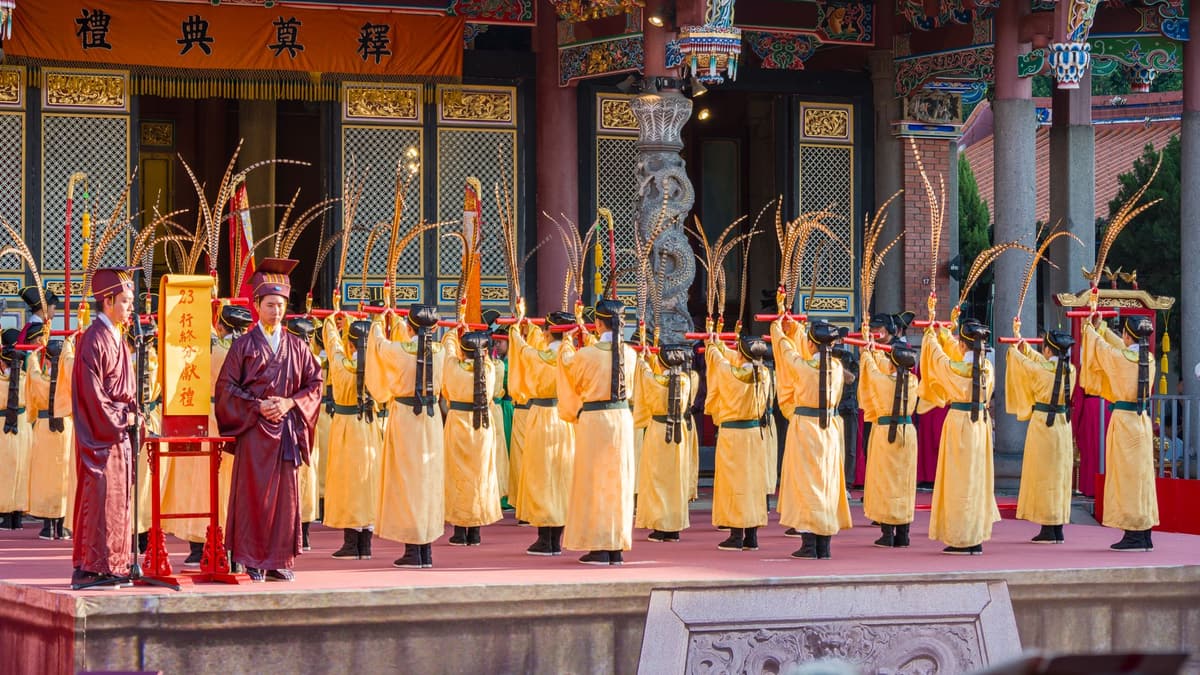
Find the main gate and look up at the plaque that reads Quan Tai Shou Xue, the First School of All Taiwan.
Dalsza część tego przystanku jest w pełnej audiowycieczce.
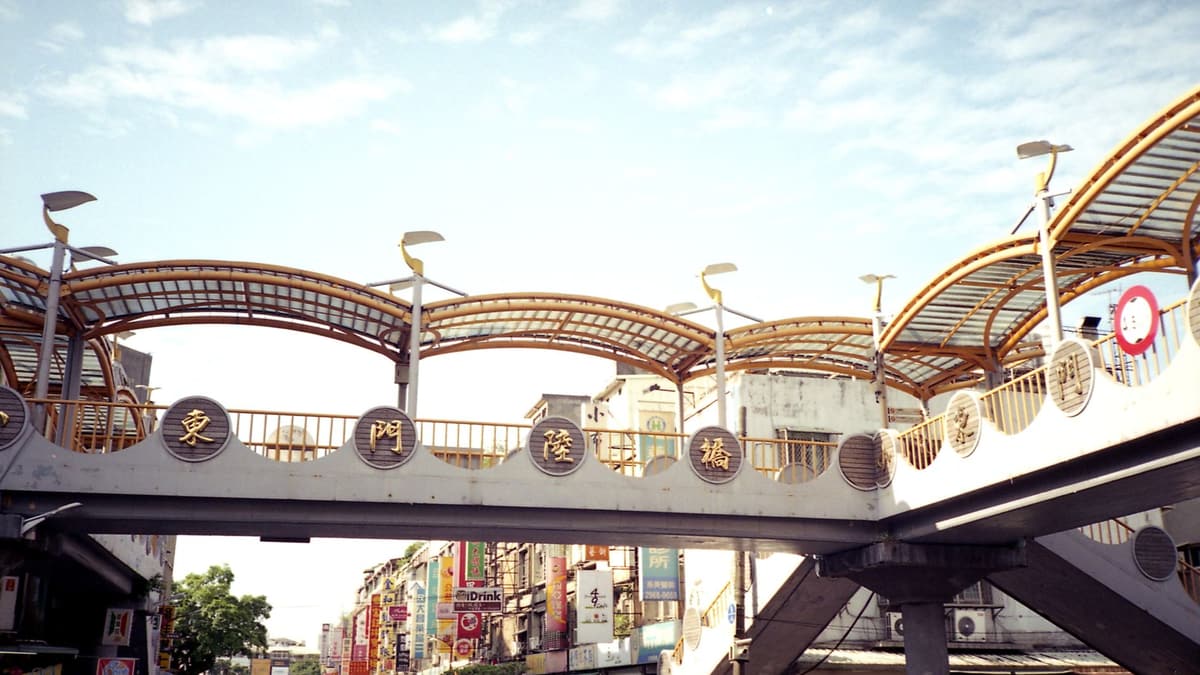
Stand across the junction and take in the five-story building on the corner, its pale tiled facade and long rows of windows.
Dalsza część tego przystanku jest w pełnej audiowycieczce.
Walk through the gate toward the two tiered pavilions standing on a raised base.
Dalsza część tego przystanku jest w pełnej audiowycieczce.

Turn into the lane and slow down. Shennong Street is a short, narrow street of two-story wooden shophouses, many hung with red lanterns, and at dusk, when the lanterns glow, it is one of the loveliest corners of Tainan.
Dalsza część tego przystanku jest w pełnej audiowycieczce.
Wykonaj ten spacer z innymi ludźmi na następnym zaplanowanym spacerze.
Około 4 km, mniej więcej 57 minut w spokojnym tempie · 7 przystanków
Znajomi spacerują za darmoOctober 11, 2026 · 9 min read
From the Hollandsche Schouwburg through the old Jewish Quarter, past the Dockworker and the Dam, to the Anne Frank House on the Prinsengracht.
October 11, 2026 · 11 min read
From Van Houten's street by the Vondelpark past Leidseplein, the Rijksmuseum passage and the famous canal bench to the Anne Frank House.

October 11, 2026 · 10 min read
Follow the last days of April and May 1945 from the Anhalter Bahnhof ruin past the Gestapo site and Brandenburg Gate to the Moltke Bridge and the Reichstag.
