
October 11, 2026 · 9 min read
Amsterdam Anne Frank Walking Tour
From the Hollandsche Schouwburg through the old Jewish Quarter, past the Dockworker and the Dam, to the Anne Frank House on the Prinsengracht.
589

October 11, 2026 · 14 min read

 Bạn bè đi bộ miễn phí
Mỗi tour cũng được tổ chức như một chuyến đi bộ nhóm theo lịch trình mà bạn có thể tham gia trong ứng dụng.
Thêm tour âm thanh tại Paris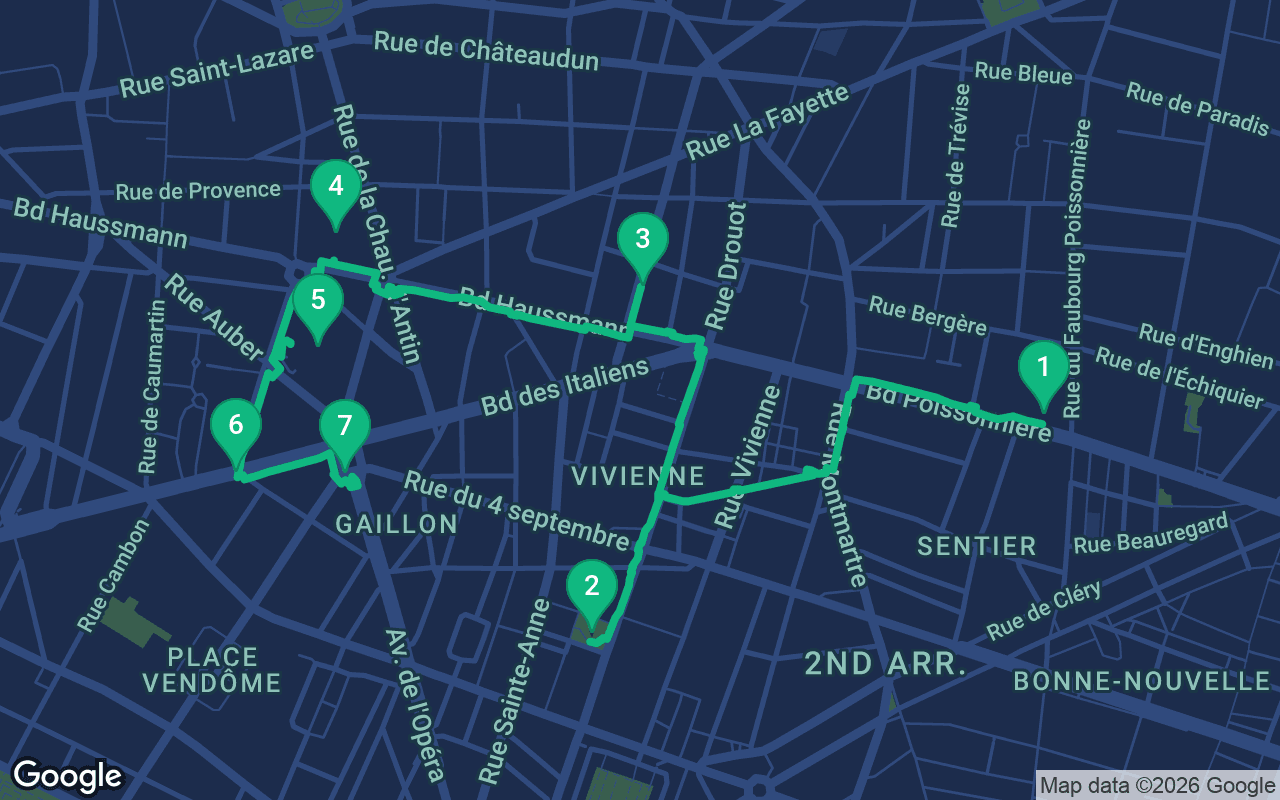
Khoảng 3km, mất khoảng 43 phút với nhịp độ thoải mái.
Tour này có thuyết minh âm thanh
Nhấn phát tại 3 điểm dừng đầu tiên để nghe thử 30 giây phần thuyết minh ngay tại đây. Trong ứng dụng, phần giới thiệu và các điểm dừng này được nghe trọn vẹn miễn phí, và mỗi điểm dừng sẽ phát âm báo khi bạn đến nơi. Toàn bộ chuyến tham quan có thuyết minh sẽ là của bạn chỉ với $14.99, mua một lần và sở hữu mãi mãi.
Hoạt động với Garmin, Komoot, Strava, OS Maps và mọi ứng dụng GPX.
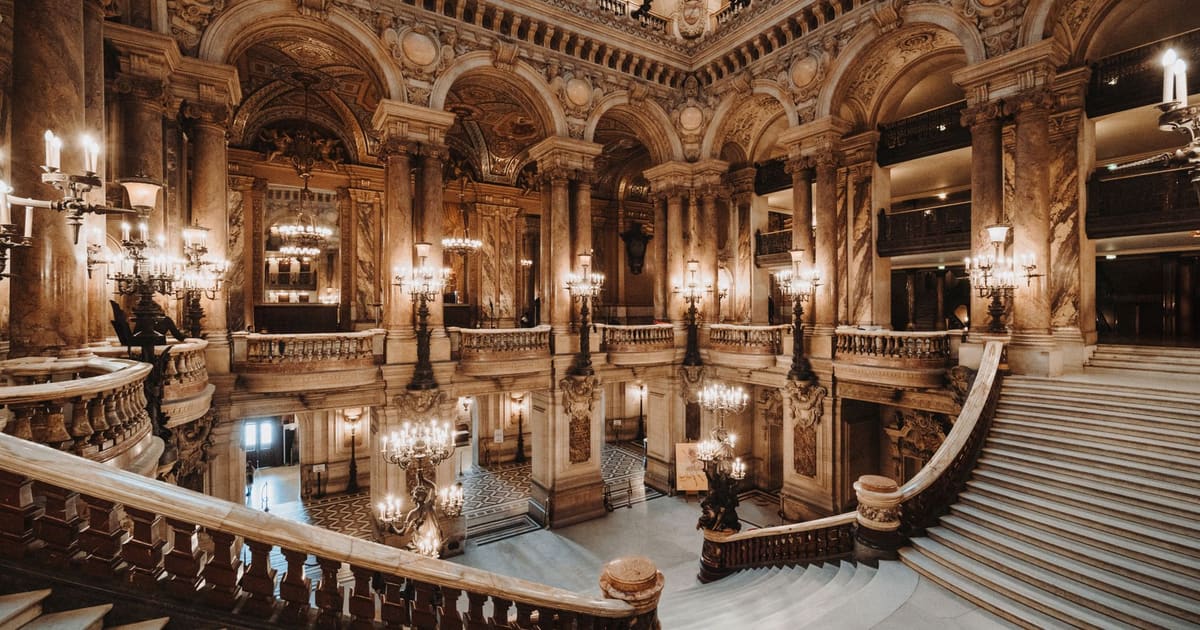
"The Opera ghost really existed." That is the first line of a ghost story that began running in a Paris newspaper in September 1909, and its author, a famous reporter named Gaston Leroux, swore he meant it. He gave the ghost a name, Erik, a home on a lake under the opera house, a private box, and a chandelier to drop on the audience. None of it happened quite the way he told it. But almost every piece of it grew out of something real: a murdered duke, bombs thrown at an emperor's carriage, a ballerina in flames, a building that sits on a man-made reservoir, and a night in 1896 when something heavy fell through the ceiling during a show. This walk sorts the true from the invented. It starts on the newspaper boulevard where Leroux made his name, goes back in time through the opera houses Paris lost, and ends in front of the Palais Garnier itself. It is about three kilometers, one of our shorter self-guided walking tours, and every stop is free to see from the street.
The walking alone takes about forty-five minutes. With the stories, allow an hour and a half, more if you go inside the opera house at the end. The route is flat, on city pavements, but it crosses some of the busiest boulevards in Paris, so take the crossings slowly. Start near Grands Boulevards metro station, lines 8 and 9; you finish at Opéra station, lines 3, 7 and 8. There is little shade on the boulevards, so carry water on a hot day. Visits inside the Palais Garnier, where you can see Box Five and the chandelier, are ticketed, and the library-museum has its own access rules. Times and prices change, so check before you go.
You're on one of the Grands Boulevards, the broad avenues that were the heart of the Paris press district around 1900. The offices of the daily paper Le Matin stood on this boulevard; the national library keeps a photograph of its building, taken in 1909, the year this story begins.
Gaston Leroux trained in law, but he made his name as a journalist. In 1900 he became a star reporter, a "grand reporter," for Le Matin. He covered trials and attended executions. In 1902 he received the Legion of Honor for fifteen years of distinguished service to the press. In 1905 he went to Russia to report on the revolution there, from riots in Odessa to mutinies in the Black Sea. Then he moved into fiction. His detective novels, starring a sleuth called Rouletabille, made him famous, beginning with The Mystery of the Yellow Room.
By 1909 Leroux was forty-one, a former reporter, and a best-selling novelist. On the twenty-second of September that year, another daily, Le Gaulois, announced his new story. It predicted "an even more prodigious success" than his earlier novels. The first instalment ran the next day. It continued until January 1910, and later that year it came out as a book.
Leroux insisted the ghost had existed and was not a fantasy of excited imaginations. His prologue says that when workmen dug under the Opera to bury some phonograph records, they found a corpse, and he could prove it was the ghost. The records were real. You'll meet them at the emperor's pavilion. The skeleton was fiction.
Walk west along the boulevard for about ten minutes to the big crossroads called Richelieu-Drouot. On your right, Rue Drouot heads north; Le Gaulois had its offices at number 2. Then turn left down Rue de Richelieu to a small square with a fountain, opposite the national library.
 You're in a small leafy square. In the middle is the Louvois fountain, built in 1844 by the architect Louis Visconti. Its four female figures stand for four great rivers of France: the Seine, the Garonne, the Loire and the Saône. Across the street is the old Richelieu site of the national library.
This stop has no ghost, but it has the first lost opera house. The Paris Opera had a long habit of losing its homes. In 1763 fire wrecked its theatre at the Palais Royal, and for the next century the company moved from hall to hall, driven out by fires and demolitions.
A theatre stood here, built in 1792 and 1793 for an actress known as Mademoiselle Montansier. From 1794 to 1820 it was the Opera's home. On the night of the thirteenth of February 1820, the Duke of Berry, an heir to the throne, was leaving the Opera when a Bonapartist worker named Louis Pierre Louvel stabbed him at the door. The duke died of the wound.
After the murder, the theatre was pulled down, and an expiatory chapel went up on the spot. That too was destroyed after the revolution of 1830. In 1859 the open ground was laid out as the square you're standing in.
The Opera, meanwhile, needed a stage at once. It moved a few streets north into a hall run up in a hurry, made largely of wood, and meant to be temporary. That temporary hall lasted fifty-two years, and its stories fed Leroux's novel.
Walk back north up Rue de Richelieu to the boulevard, cross it, go a short way left and turn right up Rue Le Peletier. Follow your map; it's about eight minutes.
You're on Rue Le Peletier, an ordinary street of nineteenth-century buildings. Nothing of the old theatre survives, and there's no plaque. But from 1821 to 1873 the Paris Opera stood right here, with passages reaching back to Rue Rossini and Rue Drouot. Its vast stage suited the lavish productions Paris loved.
On the evening of the fourteenth of January 1858, Emperor Napoleon the Third and Empress Eugénie drove up to the entrance here. As their carriage arrived, the Italian conspirator Felice Orsini and his accomplices threw bombs into the crowd. The emperor and empress escaped. Eight people died and nearly a hundred and fifty were wounded. According to the Opéra's own history, the very next day the emperor decided Paris would have a new opera house.
Four years later, in 1862, came a different tragedy. A young ballerina, Emma Livry, was in the theatre when her tutu caught fire. She died of her burns the following year.
Legends grew too. One tale says a production of the opera Der Freischütz in 1841 used a real human skeleton as a prop. It is generally treated as apocryphal, so take it as a legend, but you can see where Leroux's world of bones and shadows came from.
On the night of the twenty-eighth to twenty-ninth of October 1873, the temporary wooden hall burned to the ground. By then the new opera house was well under way, and after the fire the work was speeded up.
Walk back to Boulevard Haussmann, a minute away, and follow it west, toward the big department stores, for about seven minutes, until the tall back of the opera house rises on your left.
Bao gồm những gì
Các tour của chúng tôi được thiết kế để mang tính thiền định và đắm chìm: bạn vừa đi vừa lắng nghe. Đi cùng nhau luôn tuyệt hơn, và ứng dụng phát thuyết minh đồng bộ để bạn, người thương và bạn bè nghe mỗi điểm dừng cùng một lúc.
Stop across the boulevard and look at the enormous block in front of you. This is the back of the Palais Garnier: the stage house, the great cube with its double-sloped roof that holds the stage, the scenery and the machinery.
Phần còn lại của điểm dừng này có trong tour âm thanh đầy đủ.
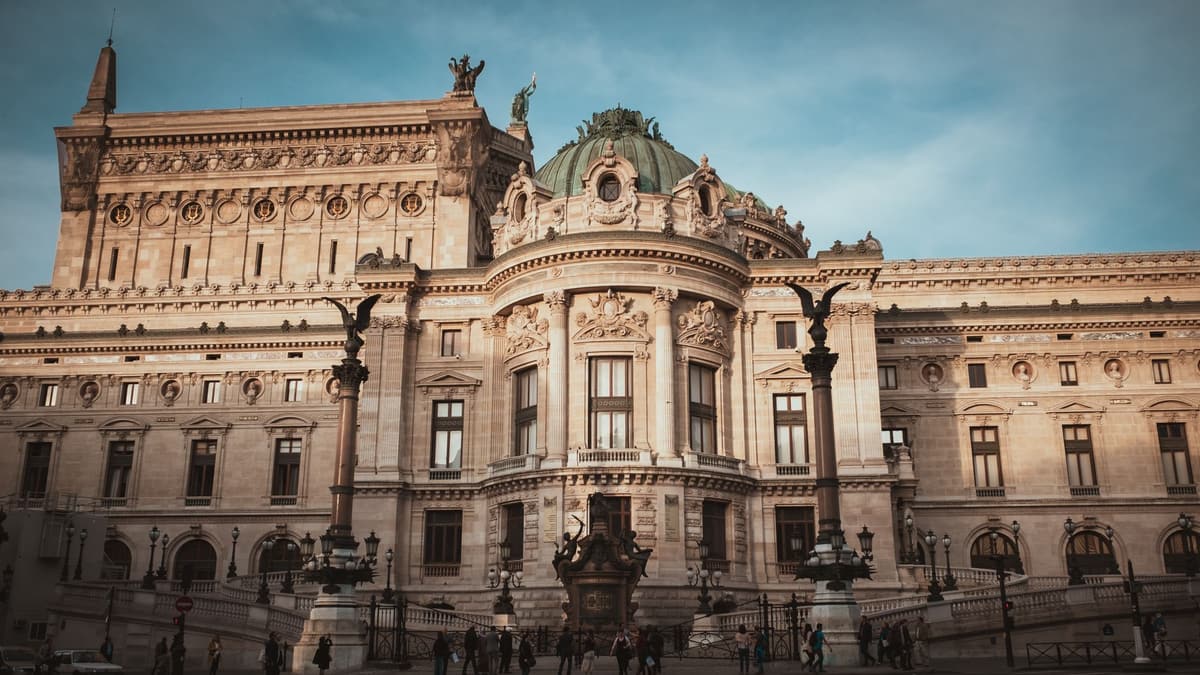
You're beside the western pavilion. Look at the sweeping ramp curving up into the building.
Phần còn lại của điểm dừng này có trong tour âm thanh đầy đủ.
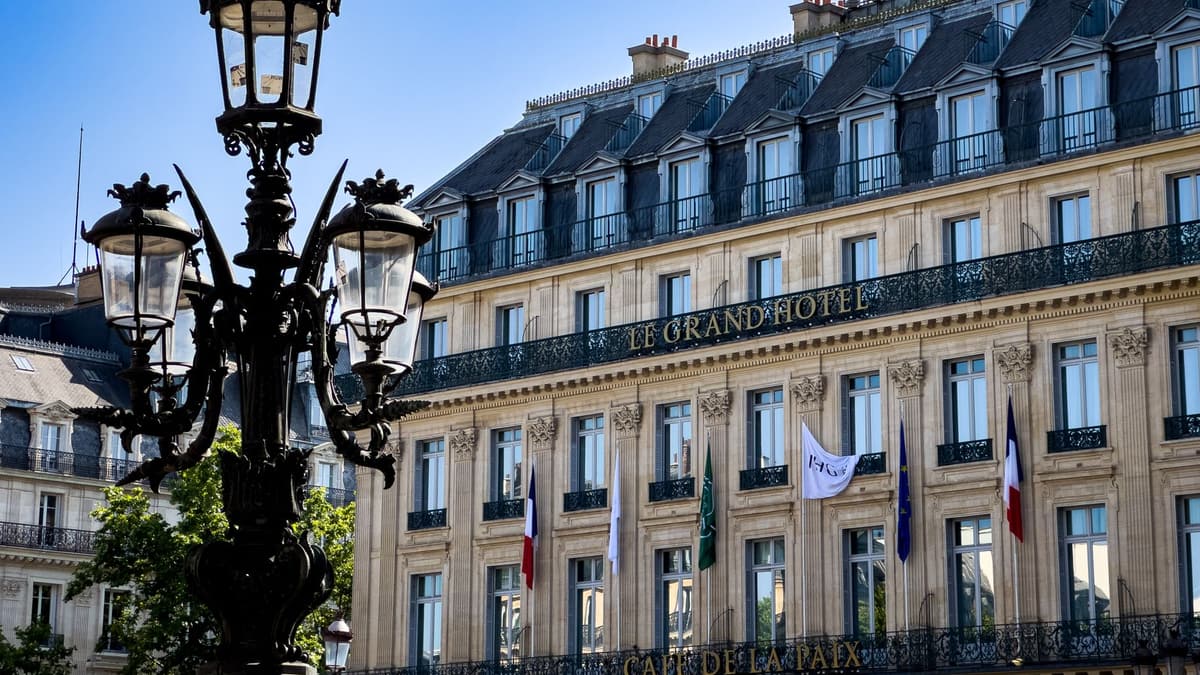
You're at the corner of Rue Scribe and the Boulevard des Capucines. The great building on the corner is the Grand Hôtel, today an InterContinental.
Phần còn lại của điểm dừng này có trong tour âm thanh đầy đủ.
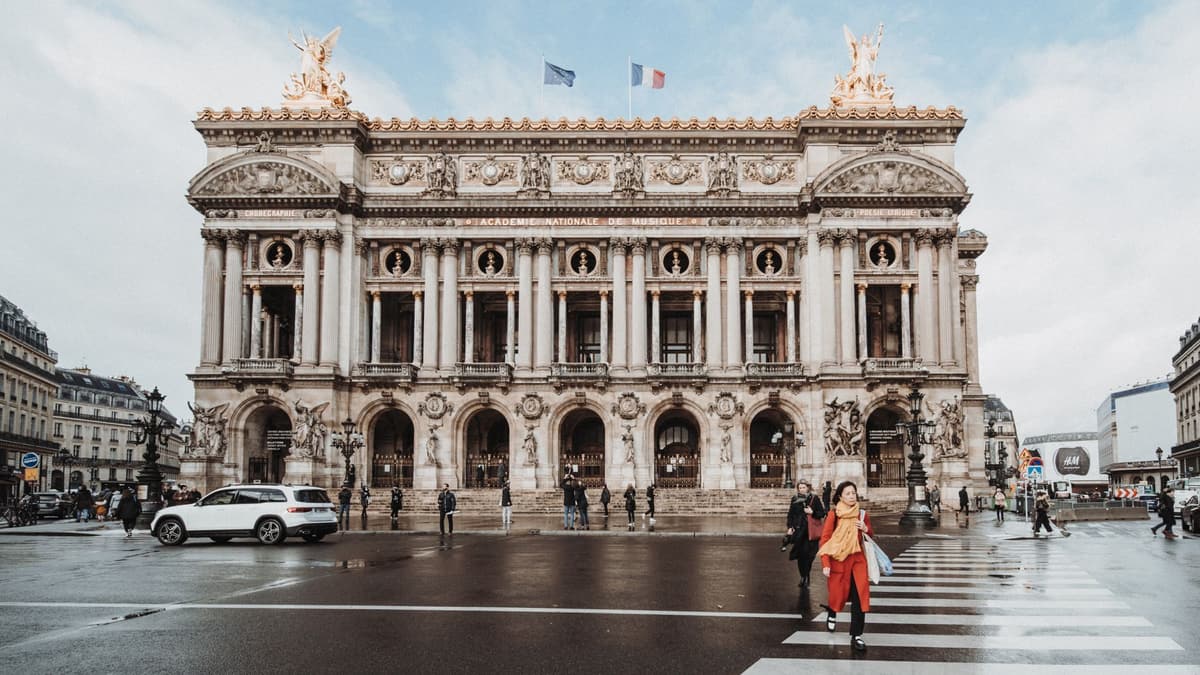
Here it is. Look at the facade: the columns, the gilded statues, the green dome over the auditorium, and on the roof the bronze Apollo, raising his lyre to announce that this building belongs to music.
Phần còn lại của điểm dừng này có trong tour âm thanh đầy đủ.
Thực hiện buổi đi bộ này cùng người khác vào tour đã lên lịch tiếp theo.
Khoảng 3km, mất khoảng 43 phút với nhịp độ thoải mái · 7 điểm dừng
Bạn bè đi bộ miễn phíOctober 11, 2026 · 9 min read
From the Hollandsche Schouwburg through the old Jewish Quarter, past the Dockworker and the Dam, to the Anne Frank House on the Prinsengracht.
October 11, 2026 · 11 min read
From Van Houten's street by the Vondelpark past Leidseplein, the Rijksmuseum passage and the famous canal bench to the Anne Frank House.

October 11, 2026 · 10 min read
Follow the last days of April and May 1945 from the Anhalter Bahnhof ruin past the Gestapo site and Brandenburg Gate to the Moltke Bridge and the Reichstag.
