September 2, 2026 · 9 min read
Edinburgh Royal Mile Walking Route
Discover the ultimate edinburgh royal mile walking route, a self-guided journey from the volcanic heights of the castle down to the palace gates.
507
August 26, 2026 · 10 min read
Do this walk with other people on the next scheduled tour.
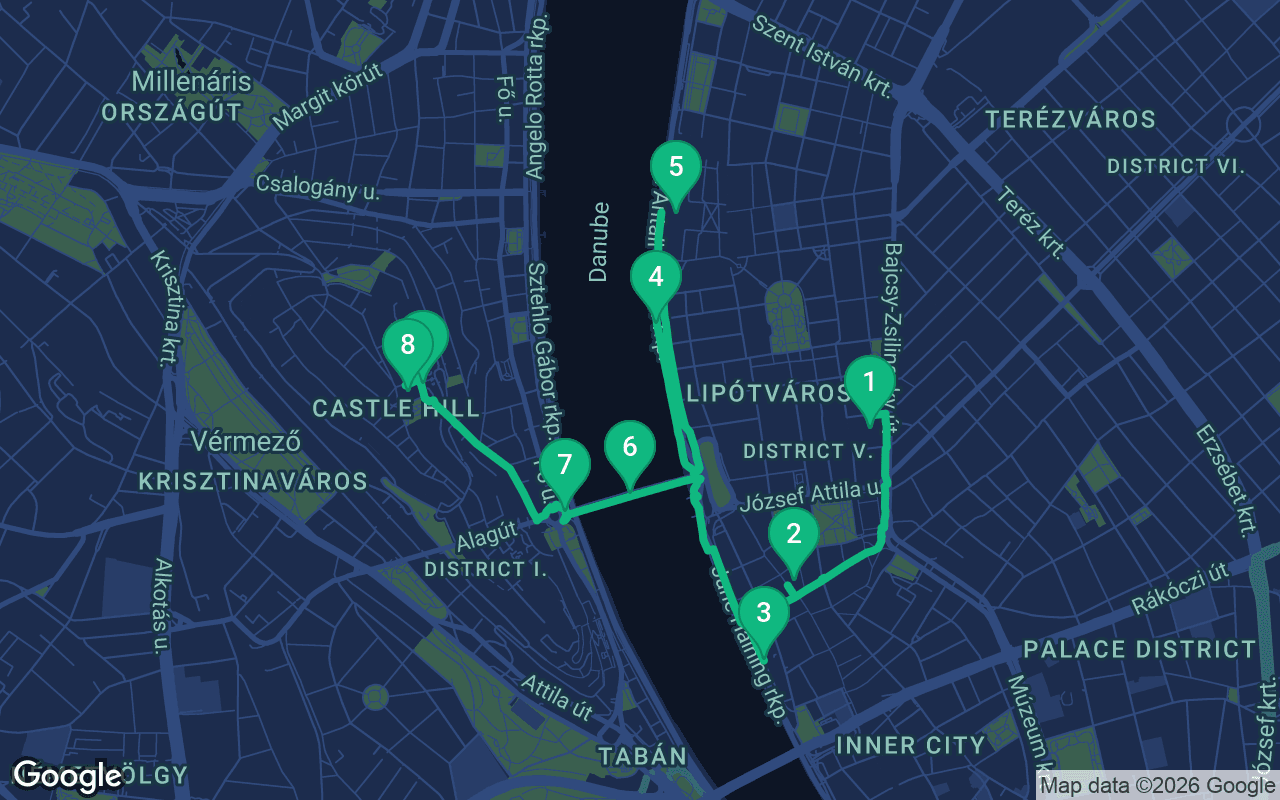
About 5.1 km, roughly 73 minutes at an easy pace · 9 stops
Audio tour · 15 min narrated$4.99 one-time
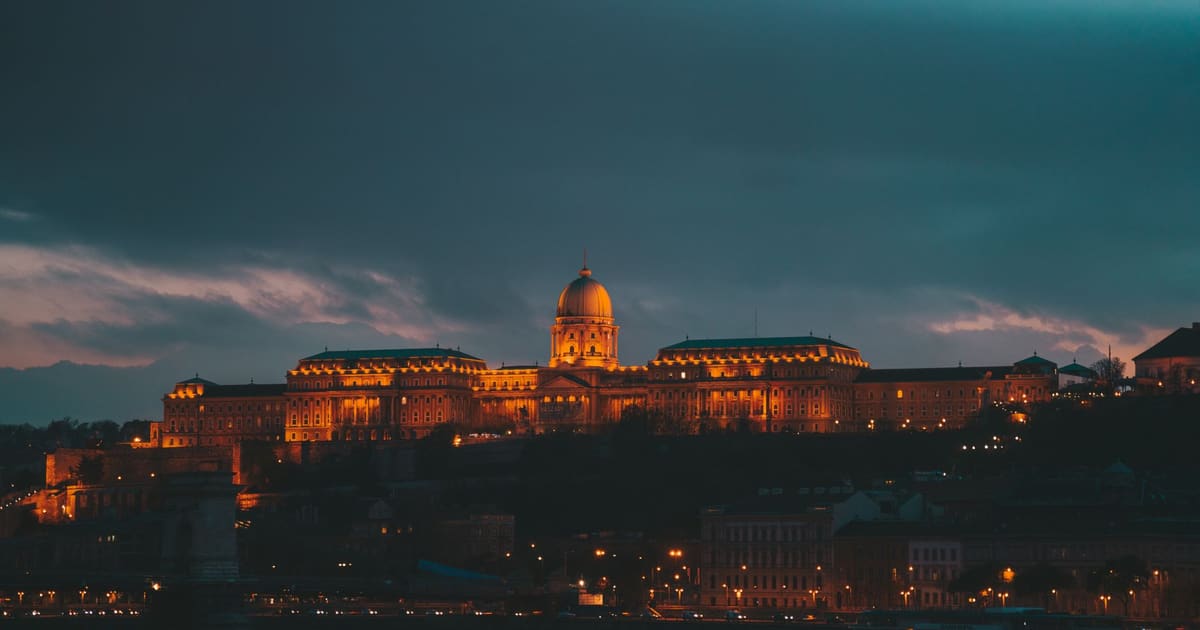
I was standing on the Pest side of the river last October, watching the thick fog roll off the Danube, when it hit me how different this city feels depending on which bank you stand on. Pest is flat, loud, and grand, while Buda is hilly, quiet, and ancient. If you are planning a walking tour in Europe, you will quickly find that the best way to understand this contrast is this budapest self guided walking tour, which bridges the two worlds across the river. You will start in the busy, grand squares of the flat side, cross one of the most beautiful bridges in Europe, and climb up to the medieval castle heights.
Before you set off, let's look at the basic logistics. This route stretches about seven kilometers from the flat streets of Pest to the heights of Buda Castle. It takes about two and a half hours of pure walking, but you should budget a full afternoon so you can stop, look around, and grab a coffee. Wear solid shoes because you will deal with uneven pavement in Pest and slick cobblestones up on Castle Hill. The best time to start is mid-afternoon. If you time it right, you will cross the river as the sun begins to drop and reach the castle viewpoint just as the city lights turn on.
To understand Budapest, you have to understand that it was not always one city. Until the late nineteenth century, Buda and Pest were independent towns facing each other across a wide, fast-flowing river. Pest was the bustling commercial hub, flat and sprawling, where merchants traded and grand boulevards were built. Buda was the seat of royal power, built on rugged limestone hills that offered defense and commanding views. Walking this route is not just a sightseeing exercise, it is a physical crossing between these two distinct histories.
By exploring on foot, you experience the transition of scale and volume. You go from the grand, towering neo-classical buildings of Pest, where the streets are wide and the traffic hums, to the quiet, narrow cobblestone alleys of Buda Castle, where the only sound is the wind in the trees. You will feel the climb in your legs, see the river change from a barrier to a scenic highway, and watch the city open up beneath you. Let's start on the flat side, right in front of the city's largest church.
We start at the massive plaza of Szent István tér. The basilica dominates the space with its dark, heavy dome. Standing here, you feel the weight of Hungarian history in the cold stone under your feet. The square is usually busy, filled with the smell of sweet, roasted chimney cakes from nearby stands and the chatter of locals meeting up. Before you walk inside, look up at the towers. One of them holds a nine-ton bell, the largest in the country.
The plaza is paved with colorful geometric stones that lead your eyes straight to the main entrance. I like starting here because it gives you a sense of Pest's grand scale. It is a loud, confident start to the walk. Once you have taken in the view, head west down Zrínyi utca. This pedestrian street is perfectly aligned with the basilica, giving you a fantastic framed view of the dome if you turn back to look. We are heading toward the heart of the old inner city.
As you reach the end of the pedestrian street, turn left and weave through the lanes toward Vörösmarty Square. This plaza is the ultimate hub of Pest's daily life. It is home to the famous Gerbeaud Cafe, where people have been eating fancy pastries since the mid-nineteenth century. You can hear the low rumble of the yellow Millennium Underground line, the oldest subway on continental Europe, which runs right beneath the pavement.
The air here is lively, often filled with the sounds of street musicians and the clinking of glasses from outdoor cafes. The buildings surrounding the square are a mix of historic facades and modern glass, showing how the city constantly rebuilds itself. Walk slowly through the square and look at the central marble monument dedicated to the poet Mihály Vörösmarty. It is a great place to watch people and get a feel for the local rhythm. From the western edge of the square, a short walk down a side street brings you directly to the edge of the river.
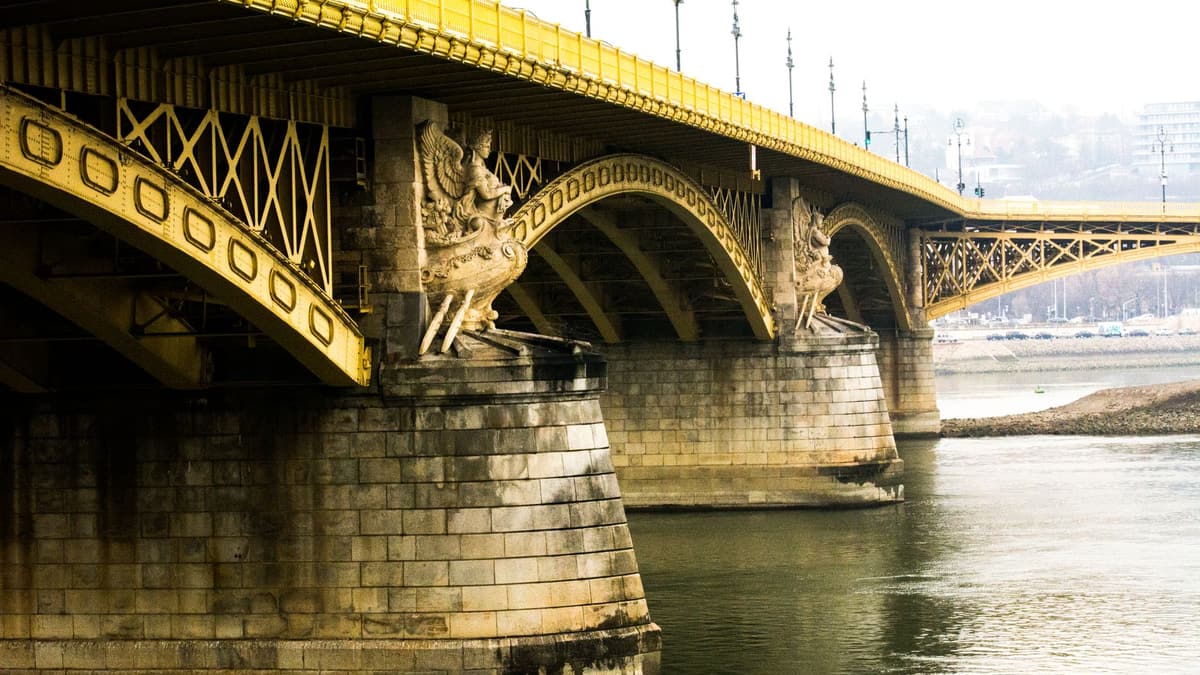
Stepping onto the Dunakorzó, or Danube Promenade, feels like stepping out of a corridor into a giant, open-air room. The density of the city streets suddenly drops away, replaced by the massive expanse of the river and the sky. This stretch of walkway has been a favorite strolling spot for locals for generations. To your left, the river flows wide and grey, and across the water, the green hills of Buda rise sharply.
You can see the Royal Palace sitting on its limestone plateau, looking down at the water. Walk north along the promenade, passing the grand hotels and the bronze statue of the Little Princess sitting on the railings. The sound of tram bells rings out as the yellow tram cars slide along the tracks parallel to the path. There is a breezy, elegant energy here that makes you want to slow your pace. The promenade naturally guides you north, parallel to the water, leading toward a much more solemn landmark.
As you continue north toward the parliament, the lively atmosphere of the promenade quietens. Here, right at the water's edge, you will find sixty pairs of rusted iron shoes. They are bolted to the stone embankment, facing the river. This is a memorial to the people, mostly Hungarian Jews, who were shot into the river by fascist militiamen during the winter of 1944 and 1945. They were ordered to take off their shoes because shoes were valuable commodities during the war.
The detail of the memorial is striking. You will see worn-down heels, tiny children's shoes, and elegant women's boots, all cast in iron. People often leave small candles, flowers, or stones inside them. It is a heavy, quiet place that demands you stop and think. The contrast between the beauty of the river and the horror of what happened here is intense. After a quiet moment of reflection, continue your walk north along the stone path as the massive dome of the parliament grows larger in your vision.
The Hungarian Parliament is one of those buildings that looks impressive in photos but completely overwhelms you in person. It is a masterpiece of Gothic Revival architecture, stretching hundreds of meters along the riverbank. Walk around to Kossuth Lajos Square on the landward side to see the full scale of the facade. The building has nearly three hundred statues clinging to its walls, dozens of spires, and a massive red central dome that reaches ninety-six meters into the air.
The square itself is vast and open, often guarded by soldiers in dress uniforms. Notice the deep, dark scars on some of the surrounding buildings, kept as reminders of the 1956 revolution. The wind off the Danube sweeps across this open plaza, keeping it cool even in summer. This is the political heart of Hungary, grand and formal. Once you have walked the perimeter, double back south along the river path. We are heading toward the river crossing.

The Széchenyi Chain Bridge was the first permanent bridge to span the Danube in Hungary, completed in 1849. Before it was built, people had to cross by boat or walk on the winter ice. Walk onto the pedestrian path of this stone and iron giant. The entrance is guarded by two massive stone lions, which local legend claims have no tongues. As you walk across, you can feel the slight vibration of the bridge under your feet as cars rumble past on the central roadway.
The views from the middle of the bridge are spectacular. You are suspended between the grand palaces of Pest and the rugged hills of Buda. Look down at the swirling green-grey waters of the Danube passing beneath you. Crossing this bridge is a physical transition. You are leaving the flat, busy commercial grid of Pest and entering the older, quieter, and steeper world of Buda. It is a satisfying feeling to cross a great river on foot.
Once you step off the bridge, you arrive in Clark Ádám Square. This is the exact geographical center of Budapest, marked by a zero-kilometer stone. Directly in front of you is the entrance to the Castle Hill tunnel and the lower station of the historic Castle Funicular. Now, here is the golden rule of this walk. Do not line up for the funicular. It is often packed with tourists, the ticket is expensive, and the ride is over in less than two minutes.
Instead, look to the left of the funicular station. You will find a set of stairs leading up into the trees. This path winds through the quiet, shaded slopes of the hill. It is a peaceful climb that lets you escape the crowds. Alternatively, you can walk slightly south to the Castle Garden Bazaar, where a series of outdoor escalators and a hidden elevator can carry you up through the beautifully restored neo-Renaissance gardens for free. Choosing the walk over the ride gives you quiet viewpoints of the river that most tourists miss entirely.
At the top of the hill, the modern world disappears. You are now walking on the quiet cobblestone streets of the Castle District. Follow the signs toward Holy Trinity Square, where Matthias Church stands. This church is spectacular, mostly because of its roof. It is covered in thousands of colorful Zsolnay ceramic tiles that form bright geometric patterns, catching the light like a mosaic.
The church has a long history. It was used as a mosque during the Ottoman occupation, and many Hungarian kings were crowned here. The exterior is a wild mix of Gothic details, stone gargoyles, and delicate spires. Walking around the church, you will notice how quiet this district is compared to Pest. There are no tram lines or heavy traffic here, only the sound of footsteps on stone. The buildings in this neighborhood are painted in soft pastel colors, looking like a scene from a fairy tale. Just behind the church lies the final stop of our route.
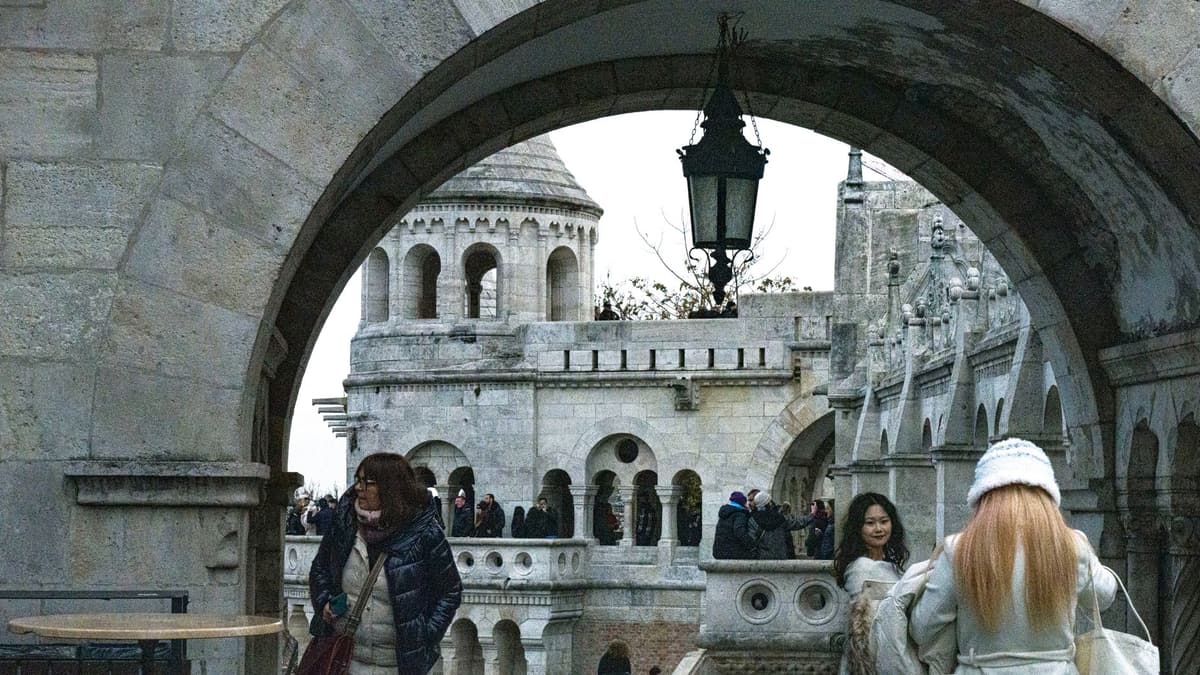
Fisherman's Bastion looks like a medieval fortress, but it was built in the late nineteenth century as a decorative viewing terrace. It has seven white stone towers, representing the seven Magyar tribes that founded Hungary. The architecture is whimsical, filled with stone arches, staircases, and lookout points. Walking through the white stone corridors, you get the absolute best views of Budapest.
The arches frame the Hungarian Parliament across the river perfectly, making it look like a painting. It is called Fisherman's Bastion because the local fishermen's guild was responsible for defending this stretch of the castle walls during the Middle Ages. Find a quiet spot along the ramparts and look down at the Danube wrapping around the city. It is a place that invites you to linger, watch the river traffic, and enjoy the cooling breeze that always blows across the hilltop.
By the time you finish this walk, the sun should be dipping below the hills behind you. This is when the real magic of Budapest happens. As the sky turns deep blue, the yellow lights of the Parliament building, the Chain Bridge, and the grand palaces of Pest turn on one by one. The city below begins to glow, reflecting in the dark waters of the Danube.
Standing up here, you can see the entire route you just conquered. You can trace your steps from the dome of St. Stephen's Basilica, along the promenade, across the historic bridge, and up to these medieval heights. Walking this city reveals its soul in a way that no tour bus can match. You feel the change in the air as you cross the river. You feel the physical effort of climbing the hill, making the spectacular view from the top feel earned. It is a reminder that the best travel experiences are the ones where you slow down and let your feet guide you. If you are looking to explore more paths like this, you can open the Walk With Me map to find other walkers who are out exploring the city right now. There is always someone ready to share the pavement.
Every stop from this walk through Budapest, Hungary, in order.
About 5.1 km, roughly 73 minutes at an easy pace.
This tour is narrated
Walk it with the app and a narrator tells the story at every stop, triggered automatically as you arrive. The intro and the first 3 stops are free to sample, and you can unlock the whole narrated tour for $4.99, a one-time purchase you keep for good.
Works with Garmin, Komoot, Strava, OS Maps and any GPX app.
September 2, 2026 · 9 min read
Discover the ultimate edinburgh royal mile walking route, a self-guided journey from the volcanic heights of the castle down to the palace gates.
August 29, 2026 · 10 min read
Experience the soul of Lisbon on this self-guided lisbon alfama walking tour, featuring breathtaking castle views, historic cathedrals, and hidden fado alleys.
August 28, 2026 · 9 min read
A self-guided Amsterdam walking tour through the Jordaan, past the Westerkerk, the Anne Frank House, hidden courtyards and the Nine Streets.