
October 11, 2026 · 9 min read
Amsterdam Anne Frank Walking Tour
From the Hollandsche Schouwburg through the old Jewish Quarter, past the Dockworker and the Dam, to the Anne Frank House on the Prinsengracht.
589

October 9, 2026 · 10 min read

 Přátelé chodí zdarma
Každá prohlídka funguje také jako naplánovaná skupinová procházka, ke které se můžete v aplikaci připojit.
Další audio prohlídky v Chiang Mai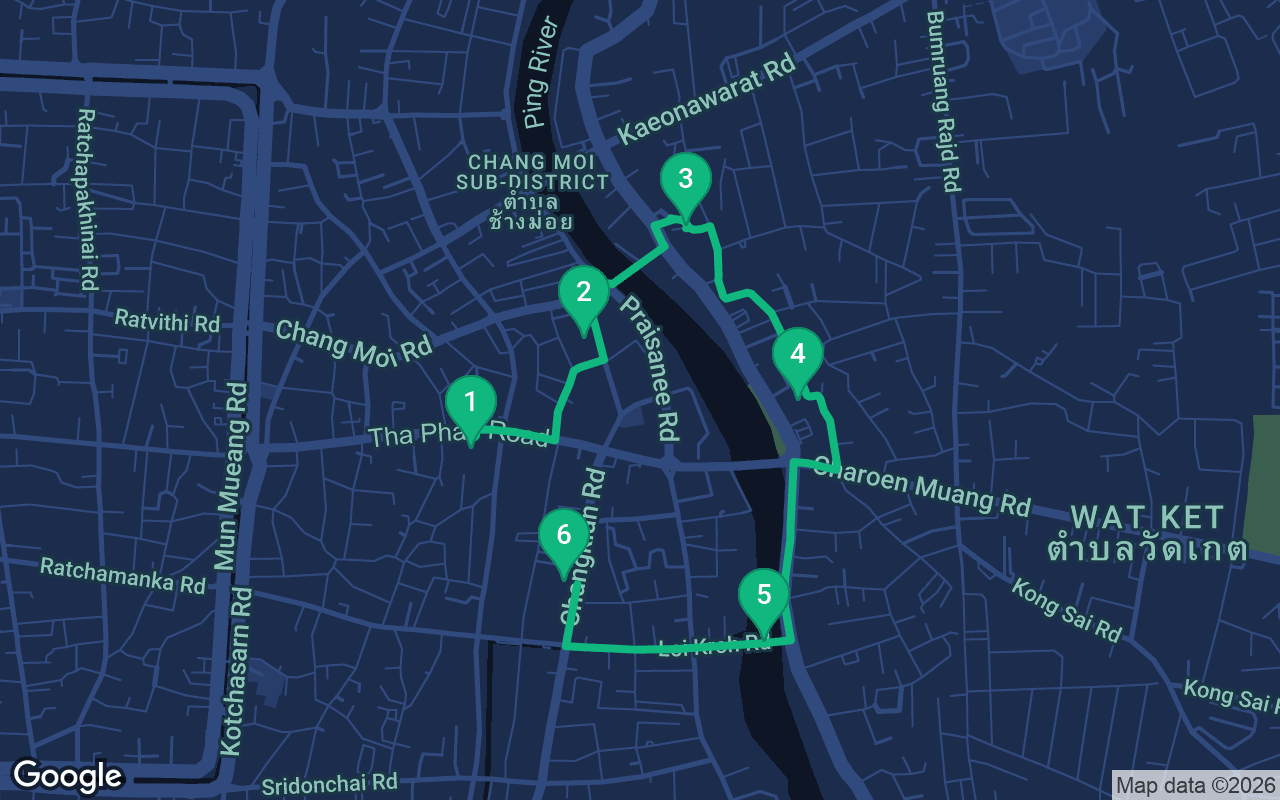
Zhruba 2,9 km, přibližně 40 minut pohodovým tempem.
Tato prohlídka je namluvená
Stisknutím tlačítka přehrávání u prvních 3 zastávek si poslechnete 30sekundovou ukázku vyprávění. V aplikaci si úvod a tyto zastávky přehrajete celé zdarma a každá se ozve zvukovým signálem, jakmile dorazíte na místo. Celá komentovaná prohlídka může být vaše za jednorázový poplatek $8.99, který vám zůstane napořád.
Funguje s aplikacemi Garmin, Komoot, Strava, OS Maps a jakýmkoli GPX programem.
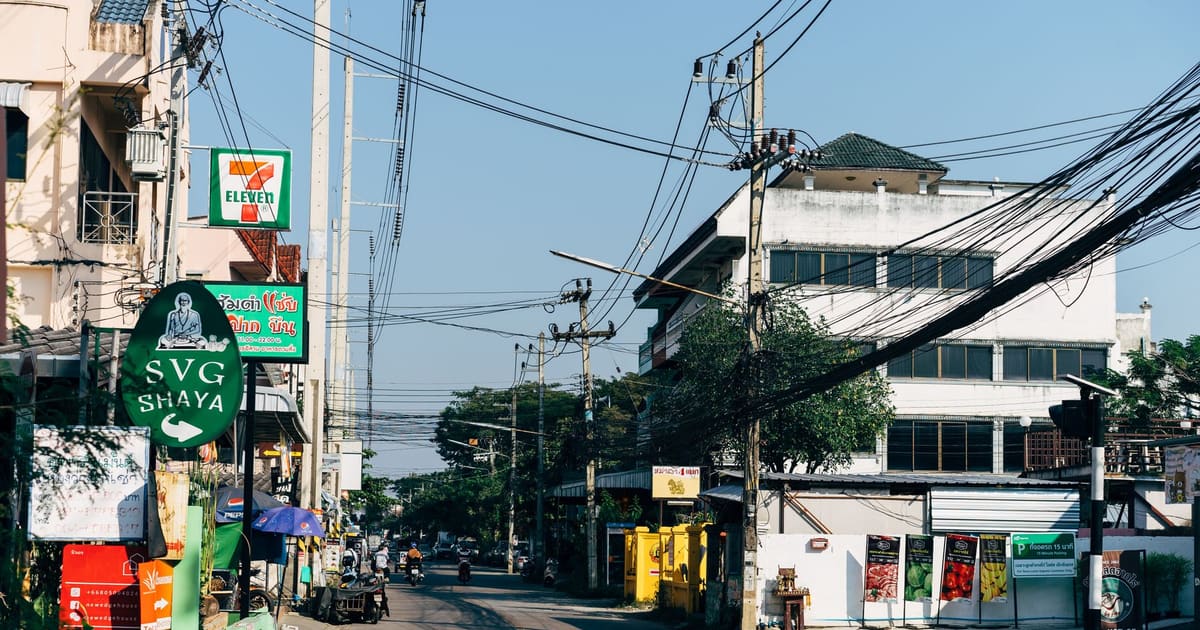
Outside the moat of Chiang Mai's old city, the land runs gently downhill to the Ping River, and for most of the city's history this was where the money was made. Rafts and boats tied up at the river landings, Chinese merchants opened shops, foreign timber companies set up house on the far bank, and missionaries arrived to stay. This walk follows that story. It starts at Wat Bupparam on Tha Phae Road, plunges into the great local market of Warorot, crosses the river on a footbridge to a riverside temple and the oldest Protestant church in the north, and comes back over an iron bridge to finish at the Night Bazaar. It is about two and a half kilometers, flat the whole way, and one of the best self-guided walking tours for seeing the working, trading side of Chiang Mai.
Allow about two hours at a stroll, more if you get lost in the market, which is easy to do. The route is flat, but the pavements are narrow and broken in places, and scooters park wherever they can, so wear comfortable shoes and watch your step. The best plan is to start in the late afternoon. The market is still busy, the river light is soft, and you reach the Night Bazaar as the stalls open at dusk. A very early start works too if you want the market at its liveliest, though the bazaar will be asleep. Either way, avoid the middle of the day, when the heat off the concrete is fierce and there is little shade. Carry water. Two of the stops are temples, so wear clothes that cover your shoulders and knees, take your shoes off before entering a hall, keep your feet from pointing at a Buddha image, and do not touch monks. The church welcomes respectful visitors, but services take priority. Opening times for the temple museum and the market halls change, so check before you go, and keep small notes handy for snacks.
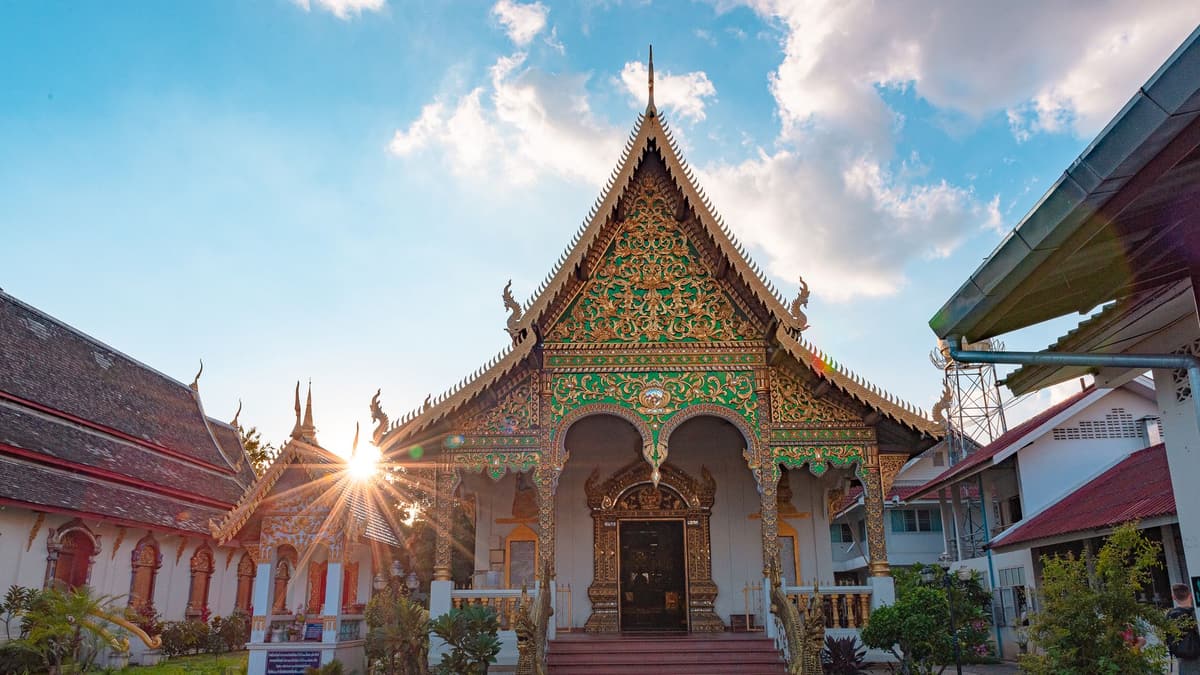
You are on Tha Phae Road, the old route between the city and the river. The name means the "raft landing," because this road led from the east gate of the walled city down to the Ping, where goods and people came and went by water. Wat Bupparam has stood on it since the time of the Lanna kings, around five hundred years ago. Walk into the grounds and look for the small, old hall made of teak, low and dark beside the much larger modern buildings, a fine example of the northern wooden style. Then look around at the statues and guardian figures dotted across the compound, put there to watch over the gates and the faithful. This temple has seen the city at its lowest. In 1558, Chiang Mai fell to the Burmese, and for most of the next two centuries the north was ruled from Burma. In the 1770s, a prince from Lampang named Kawila, allied with the Siamese king Taksin, drove the Burmese out, but years of fighting had left Chiang Mai so battered that it stood nearly empty for two decades. Kawila resettled it in the 1790s, bringing in people from across the Tai lands to the north, whose descendants still live in villages around the city. You will see Burmese and Shan touches in some temples along this road, a few of them paid for later by merchants who came with the teak trade. To go on, walk east along Tha Phae Road toward the river, then turn left into the streets heading north. Follow the crowds and the smell of frying to the market, about five minutes away.
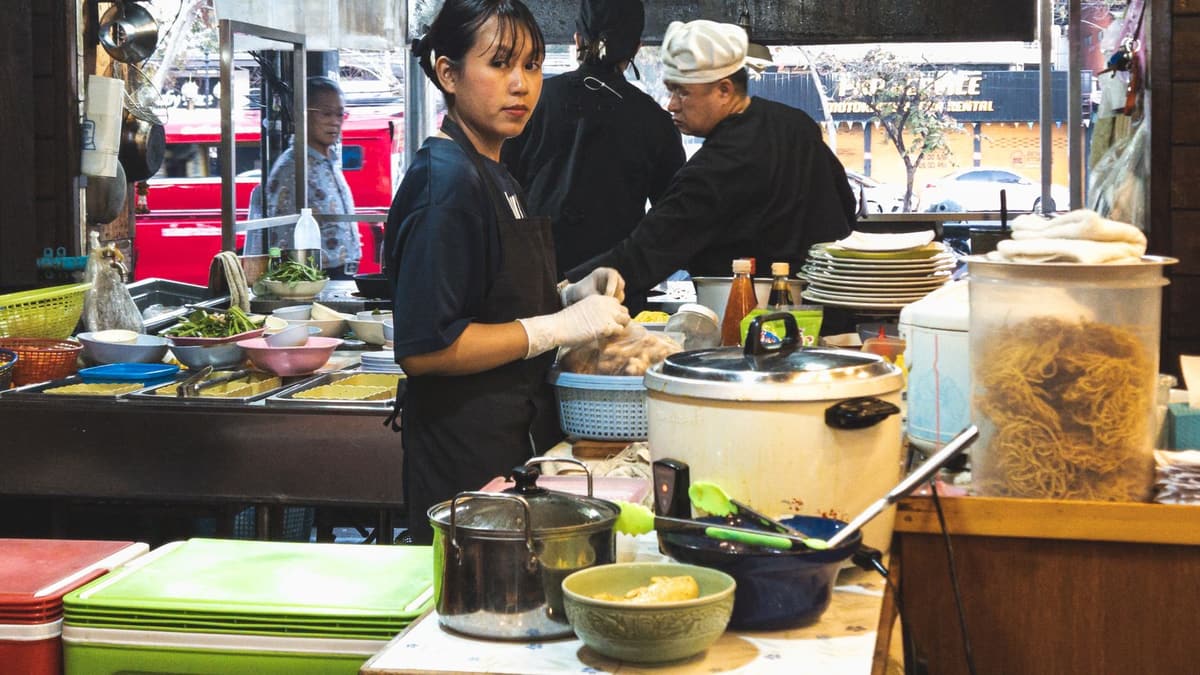 Welcome to Warorot, which locals call Kad Luang, the "great market." It is not a tourist market. This is where Chiang Mai has shopped for generations, and the buildings and the streets around them are packed with stalls selling everything from fabric and school uniforms to dried fish, temple offerings and plastic buckets. The neighborhood around it is the city's Chinatown, built up by Chinese merchant families who came north and made their living from the river trade, and you can spot their shophouses and small shrines, with red lanterns and gold characters over the doors. For the visitor, the best of Warorot is the food. Look for sai ua, the fat northern sausage stuffed with lemongrass, kaffir lime and chili, sold in coils and grilled over charcoal. Look for nam phrik noom, a smoky dip of roasted green chilies, and big crackling sheets of khaep mu, fried pork skin, to scoop it up with. Up on the upper floors you will find hill tribe textiles and silver, and all around, bags of dried fruit and tea from the mountains. The north is longan country, and dried longan is a local favorite. Bargain politely, smile a lot, and try something you cannot name. When you are ready, walk toward the river along the edge of the market, past the flower stalls on the bank, and cross the river on the footbridge. Wat Ket Karam is a couple of minutes north along the far bank, about five minutes in all.
Across the river, the noise of the market drops away, and you are on the east bank, in the old neighborhood around Wat Ket Karam. The temple faces the water, and its chedi rises over the compound. By northern tradition, each year of the twelve-year animal cycle has its own temple, and this one belongs to the year of the dog, so people born in a dog year come here to pay their respects. This part of the bank was once one of the busiest in Chiang Mai. In the late nineteenth century, the north's great forests of teak drew foreign timber companies, British firms above all, and their managers, clerks and foremen, along with Chinese traders and boatmen, lived and worked along this stretch of river. Elephants hauled the logs out of the forest to the streams, and in the rainy season the timber was floated down the Ping toward Bangkok and the world. Look for the small museum in the temple grounds, a collection put together by local people. It is a cheerful jumble of old photographs, household objects, coins, tools and curiosities from the families of this bank, and it gives a vivid picture of a time when the river was the main street of the north. Check before you go, as it does not keep fixed hours. To reach the church, walk south along Charoenrat Road, the riverside street, then bear left away from the river into the lanes. The church is about eight minutes away.
Co je v ceně
Naše prohlídky jsou zamýšlené jako meditativní a pohlcující: jdete a prostě posloucháte. Vždy jsou lepší ve společnosti a aplikace přehrává vyprávění synchronizovaně, takže vy, váš partner i vaši přátelé slyšíte každou zastávku ve stejnou chvíli.
In front of you is the First Church of Chiang Mai, the oldest Protestant congregation in northern Thailand.
Zbytek této zastávky najdete v celé audioprohlídce.
Walk out to the middle of the bridge and stop.
Zbytek této zastávky najdete v celé audioprohlídce.
The walk ends at the Night Bazaar, which spreads along Chang Khlan Road and into the covered halls and side streets around it. As the light fades, the stalls go up along the pavements, and the whole area fills with lights, music and people.
Zbytek této zastávky najdete v celé audioprohlídce.
Absolvuj tuto procházku s ostatními v rámci příští naplánované trasy.
Asi 2,9 km, zhruba 40 minut volným tempem · 6 zastávek
Přátelé chodí zdarmaOctober 11, 2026 · 9 min read
From the Hollandsche Schouwburg through the old Jewish Quarter, past the Dockworker and the Dam, to the Anne Frank House on the Prinsengracht.
October 11, 2026 · 11 min read
From Van Houten's street by the Vondelpark past Leidseplein, the Rijksmuseum passage and the famous canal bench to the Anne Frank House.

October 11, 2026 · 10 min read
Follow the last days of April and May 1945 from the Anhalter Bahnhof ruin past the Gestapo site and Brandenburg Gate to the Moltke Bridge and the Reichstag.
