
October 11, 2026 · 9 min read
Amsterdam Anne Frank Walking Tour
From the Hollandsche Schouwburg through the old Jewish Quarter, past the Dockworker and the Dam, to the Anne Frank House on the Prinsengracht.
589

October 9, 2026 · 12 min read

 Gli amici camminano gratis
Ogni tour funziona anche come camminata di gruppo programmata a cui puoi unirti nell'app.
Altri tour audio a Utrecht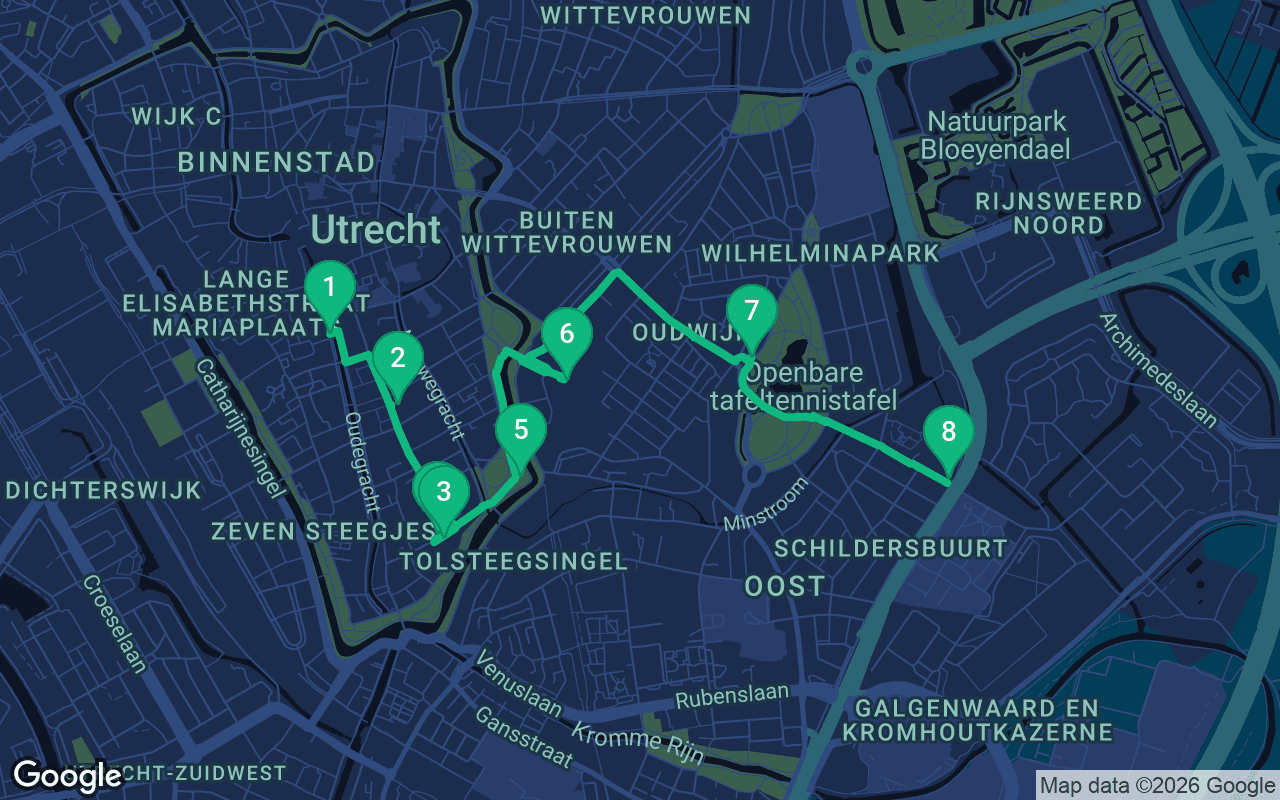
Circa 3,5 km, più o meno 48 minuti a passo tranquillo.
Questo tour è narrato
Premi play sulle prime 3 tappe per ascoltare una demo di 30 secondi della narrazione. Nell'app, l'introduzione e queste 3 tappe sono gratis e complete, e ogni tappa ti avvisa con un segnale acustico al tuo arrivo. L'intero tour narrato sarà tuo a $8.99, un acquisto unico che conservi per sempre.
Funziona con Garmin, Komoot, Strava, OS Maps e qualsiasi app GPX.
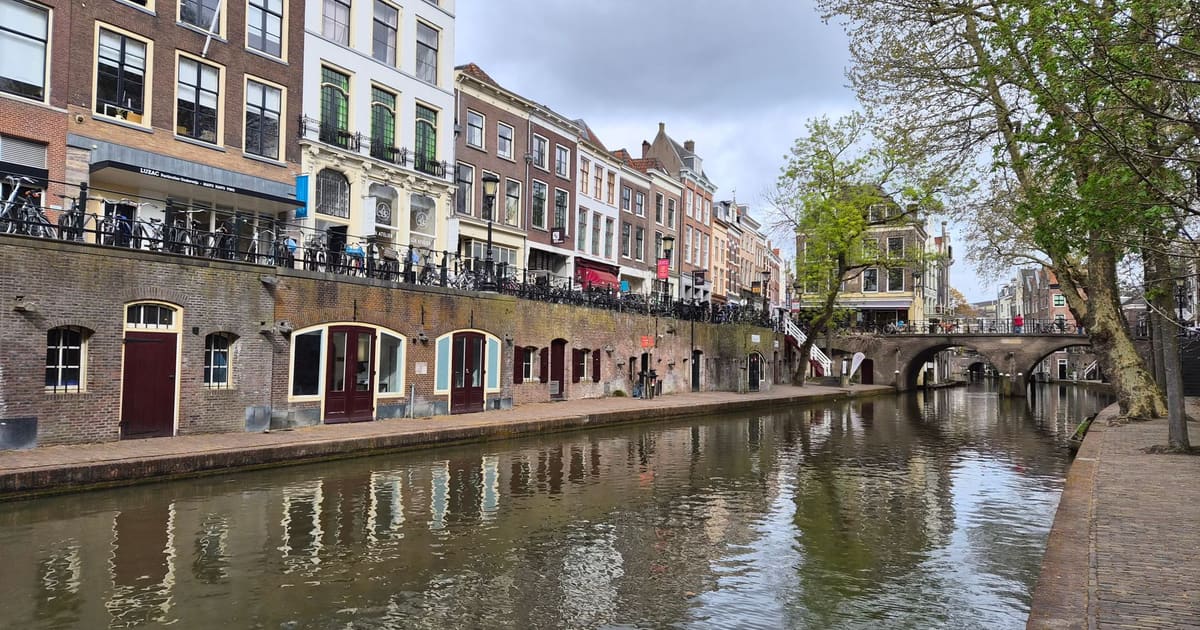
South of the Dom, Utrecht turns quieter. The shops thin out, the canals grow calmer, and the streets fill instead with museums, old convents and leafy squares. This walk starts down on the wharves of the Oudegracht, at the water's edge, and heads south through the museum quarter, from medieval treasures to a little white rabbit who conquered the world. Then it passes an observatory on an old bastion, crosses the moat to the national railway museum, strolls through a park in the villa district, and ends at the Rietveld Schröder House, one of the most famous modern houses on earth. It is about three and a half kilometers and flat the whole way, and of all our self-guided walking tours of Utrecht it is the one to choose if you want a full day of art, design and stories.
The walking takes under an hour, but with this many museums you could easily fill a whole day, so pick the one or two that tempt you most and enjoy the rest from the outside. Every museum on this route keeps its own hours and charges its own admission, so check before you go. The Rietveld Schröder House is visited by booked tour only, so reserve a slot well ahead and plan the rest of the walk around it. Note that the last stretch, from the park to the house, takes you a longer walk east of the old center through residential streets. The ground is flat and paved. The wharves at the start sit at water level, reached by steps, and like every canal edge in Utrecht they have no railings, so keep children close. Utrecht is a city of bikes, which have priority on the bike paths, usually paved in red, so stay off the red lanes and look both ways at every crossing. Bring an umbrella, and if the weather turns, you are never far from a museum cafe.
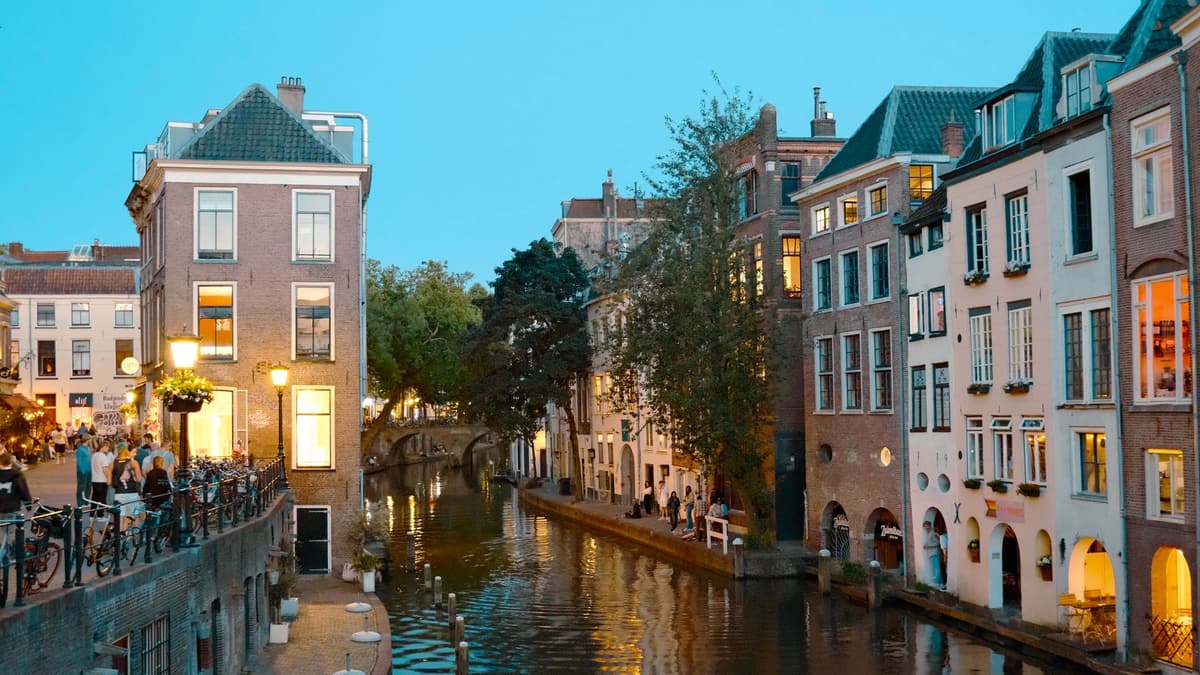
Go down the steps from the street to the water, and stand on the wharf beside the Oudegracht. Look around and you will see what makes Utrecht's main canal different from any in Amsterdam or Delft. It has two levels. Up above is the street, with its shops and bikes. Down here, right at the water's edge, runs a second, lower walkway, and set into the wall behind you are arched doorways leading into cellars that run back underneath the street. In the Middle Ages the canal was a busy route for trade, and with the street standing well above the water, merchants built their storage down at the waterline. Boats moored at the wharf, goods were carried straight into the cellars, and from there up into the houses and warehouses above. Today many of those cellars hold cafes and restaurants, and their terraces spread along the wharves in summer, which makes this one of the best places in the country to eat beside a canal. Look up over the rooftops and you will see the Dom Tower watching over everything. Utrecht has long been a meeting place. In 1713 the diplomats of Europe signed a set of peace treaties here, known as the Treaty of Utrecht, which ended a long war over the Spanish throne and handed Gibraltar to Britain. When you are ready, climb back up to the street and head southeast for about five minutes to the Nieuwegracht, a quieter canal, and the old convent that stands beside it.
In front of you is Museum Catharijneconvent, the national museum of Christian art and culture in the Netherlands, housed in a former convent beside the Nieuwegracht. The convent belonged to the Knights of Saint John, a religious order of knights and caregivers, and its old buildings and courtyard give the museum a hushed, cloistered feel before you even step inside. Next door stands the Church of Saint Catherine, which is today the Catholic cathedral of Utrecht, a reminder that this city has been a center of the church in the Netherlands for more than a thousand years. The collection inside is one of the finest of its kind in the country, especially for the Middle Ages: illuminated manuscripts glowing with gold leaf, carved and painted saints, embroidered robes and silver, as well as paintings by Dutch masters. It tells the story of how faith shaped daily life, art and politics in the Netherlands, through the upheavals of the Reformation and beyond. Even if you do not have time to go in, walk along the Nieuwegracht for a moment and enjoy the quiet, with old trees leaning over the water and handsome houses along both banks. From here, walk south for about five minutes along the street beside the museum, until you reach a cluster of old buildings around a courtyard and a busy museum entrance.
 You have reached the Centraal Museum, founded in 1838 and often called the oldest municipal museum in the Netherlands. It lives in a former convent, the convent of Saint Agnes, and its collection is wonderfully varied. There are paintings by the Utrecht Caravaggists, local artists who traveled to Rome in the early seventeenth century, fell under the spell of Caravaggio's dramatic light and shadow, and brought the style home. There is an old wooden boat, the Utrecht ship, found buried in the city and around a thousand years old. And there is the largest collection anywhere of the work of Gerrit Rietveld, the Utrecht designer whose house ends this walk. Rietveld was the son of a furniture maker and trained in his father's workshop, and in the years around the end of the First World War he made a chair that looked like nothing before it. Built from flat boards and simple rods, it was later painted red, blue, yellow and black, and it became the famous Red Blue Chair. It turned Rietveld into a key figure of De Stijl, the Dutch movement that reduced art and design to straight lines, right angles and primary colors, the same movement that gave the world the paintings of Piet Mondrian. Look for the chair inside. When you come out, the next stop is just across the street, about a minute away.
Cosa è incluso
I nostri tour sono pensati per essere meditativi e immersivi: ti muovi e semplicemente ascolti. Sono sempre più belli in compagnia, e l'app riproduce la narrazione in sincronia, così tu, il tuo partner e i tuoi amici sentite ogni tappa nello stesso momento.
Right across from the Centraal Museum is the Miffy Museum, the home of the little white rabbit with two dots for eyes and a cross for a mouth. In Dutch she is called Nijntje, a play on the word for a little rabbit.
Il resto di questa tappa è nel tour audio completo.
This low, round fortress on the edge of the old town is Sonnenborgh, a bastion built in the sixteenth century to strengthen the city's defenses at a time of war and upheaval.
Il resto di questa tappa è nel tour audio completo.
Before you is the Railway Museum, the Dutch national railway museum, set in and around the old Maliebaan station, a stately building from the nineteenth century that once welcomed passengers to Utrecht. It is a fitting home.
Il resto di questa tappa è nel tour audio completo.
This is Wilhelminapark, laid out at the end of the nineteenth century and named for the young Queen Wilhelmina.
Il resto di questa tappa è nel tour audio completo.
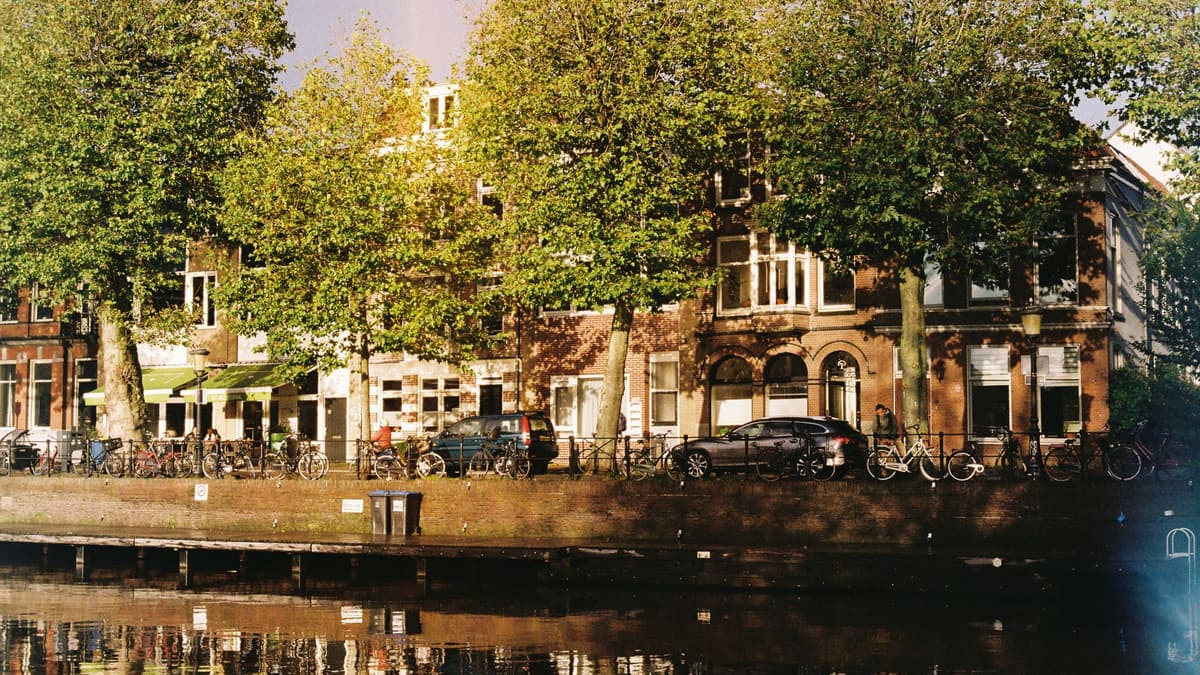
The walk ends at the Rietveld Schröder House, and the first thing that strikes you is how strange it looks beside its neighbors.
Il resto di questa tappa è nel tour audio completo.
Fai questa camminata in compagnia alla prossima uscita in programma.
Circa 3,5 km, circa 48 minuti a passo lento · 8 tappe
Gli amici camminano gratisOctober 11, 2026 · 9 min read
From the Hollandsche Schouwburg through the old Jewish Quarter, past the Dockworker and the Dam, to the Anne Frank House on the Prinsengracht.
October 11, 2026 · 11 min read
From Van Houten's street by the Vondelpark past Leidseplein, the Rijksmuseum passage and the famous canal bench to the Anne Frank House.

October 11, 2026 · 10 min read
Follow the last days of April and May 1945 from the Anhalter Bahnhof ruin past the Gestapo site and Brandenburg Gate to the Moltke Bridge and the Reichstag.
