
October 11, 2026 · 9 min read
Amsterdam Anne Frank Walking Tour
From the Hollandsche Schouwburg through the old Jewish Quarter, past the Dockworker and the Dam, to the Anne Frank House on the Prinsengracht.
589

October 9, 2026 · 11 min read

 친구는 무료로 함께 걸어요
모든 투어는 앱에서 참여할 수 있는 정기 그룹 걷기 모임으로도 운영됩니다.
Seville의 오디오 투어 더 보기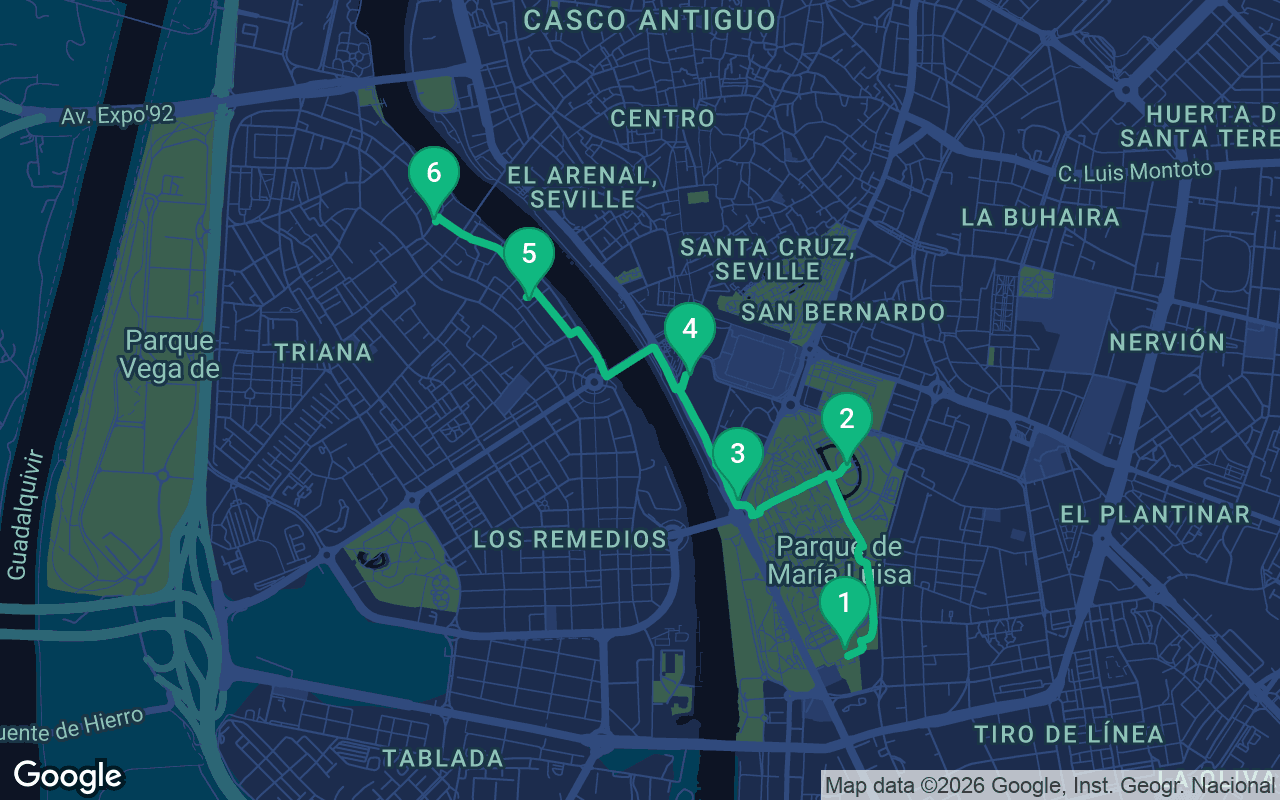
약 3.5km, 여유로운 페이스로 대략 47분 소요.
음성 가이드가 포함된 투어입니다
처음 3개 스톱에서 재생을 누르면 여기에서 나레이션을 30초 데모로 들을 수 있습니다. 앱에서는 인트로와 이 스톱들을 무료로 끝까지 들으실 수 있으며, 각 스톱에 도착하면 알림음이 울립니다. 전체 오디오 투어는 $8.99에 한 번만 구매하시면 평생 소장하실 수 있습니다.
Garmin, Komoot, Strava, OS Maps 및 모든 GPX 앱과 호환됩니다.
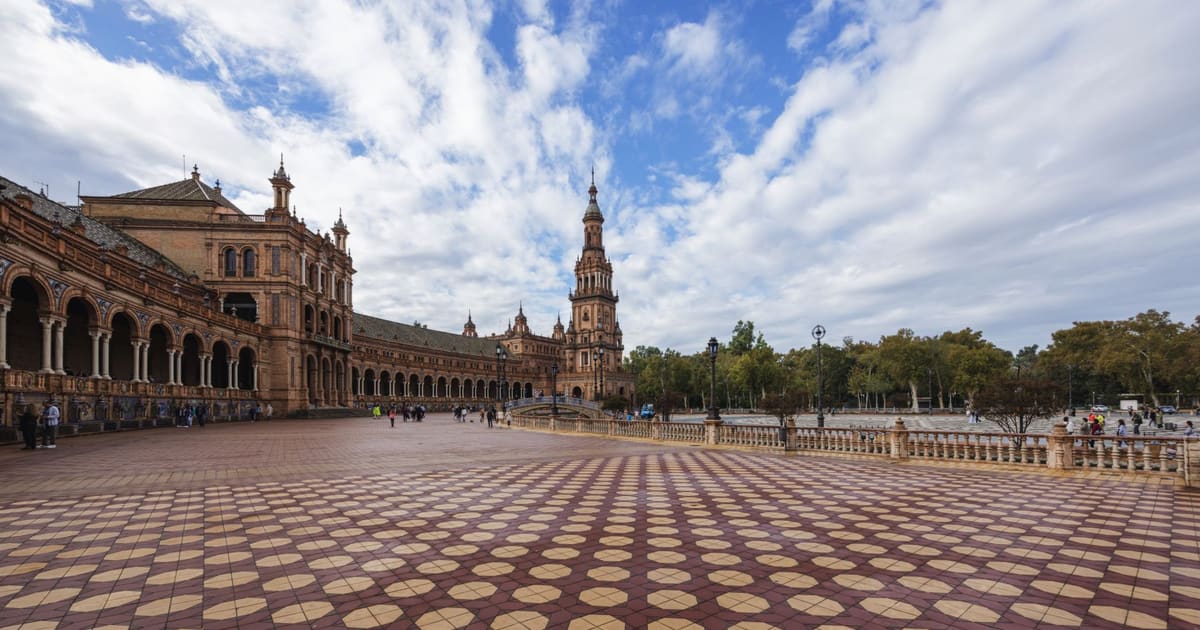
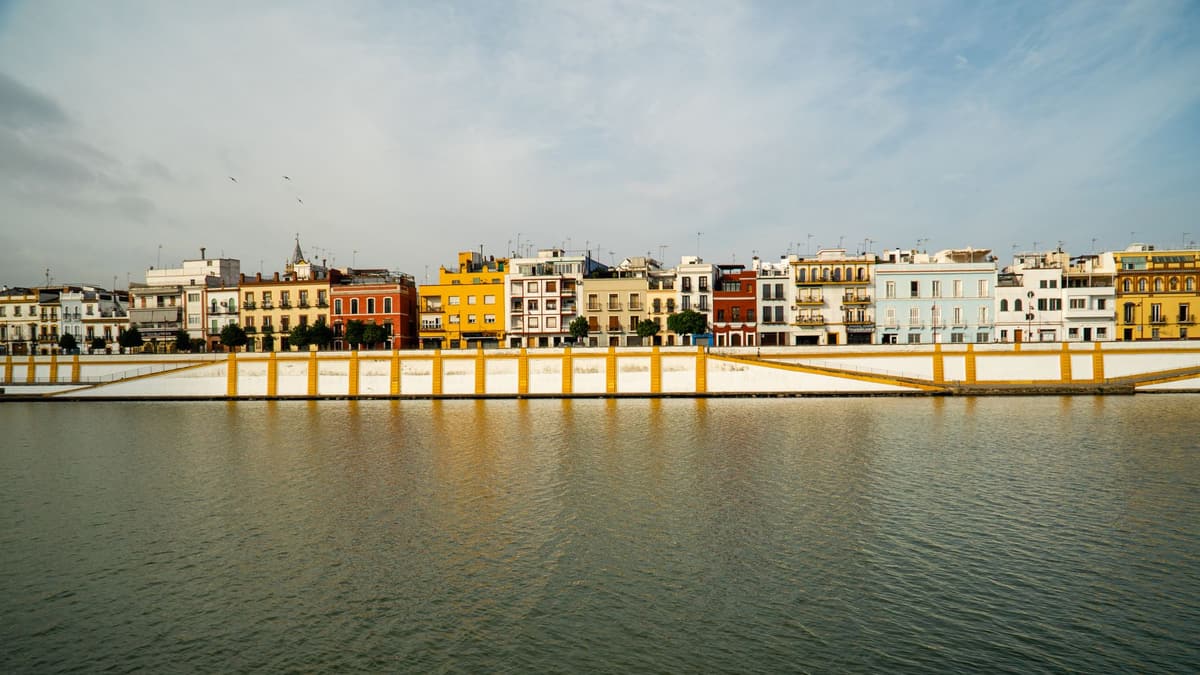
This is the other Seville, the one that lies just outside the old walls. The walk starts among the pavilions of the 1929 Ibero-American Exposition at the far end of María Luisa Park, crosses the great tiled semicircle of Plaza de España, follows the park's edge to a baroque palace built to train sailors, and then crosses the Guadalquivir into Triana, the riverside barrio of seafarers, potters and flamenco. It ends in an old tile factory a few minutes from Triana market. The route is about three and a half to four kilometers and flat the whole way, an easy and shady one among our self-guided walking tours, and a good one to pair with a morning in the cathedral quarter.
The walking takes about an hour, but give it three hours or more, because Plaza de España alone can swallow forty minutes and the museums along the way are tempting. The ground is flat and mostly paved, with sandy paths in the park, so any comfortable shoes will do. Heat is the thing to plan around. From June to September the middle of the day in Seville is brutal, often well past what is pleasant for walking, so start early in the morning or set off in the last few hours before sunset, carry water and refill it whenever you can. The first half of the walk runs through the park, under big trees, and is the shadiest part; the bridge over the river and the open squares are fully exposed, so time those for the cooler part of the day. Several stops on this walk are museums or government buildings with their own hours, and some open only on certain days or for guided visits, so check before you go if there is something you want to see inside. Spring is lovely here, especially around Easter and the April fair, but it is also the busiest season.
You are standing at the southern end of María Luisa Park, in a long garden square framed by three grand buildings, each in a different historical costume. To one side is a pavilion in the Mudéjar style, all brick and tile and Moorish arches. Opposite stands a Renaissance-style palace, and between them, at the end, a pavilion dressed in late Gothic stonework. All three were designed by the Seville architect Aníbal González for the Ibero-American Exposition of 1929, a world's fair meant to celebrate Spain's ties with the nations of Latin America, and with Portugal and Brazil. It had been planned for years before it opened, delayed again and again, including by the First World War. When it finally opened in May 1929, Spain was under the dictatorship of Miguel Primo de Rivera, and within months the Wall Street crash had darkened the mood. The fair left the city with heavy debts, but also with these buildings, new avenues and a whole new quarter. The Mudéjar pavilion now holds the Museum of Popular Arts and Customs, and the Renaissance one the Archaeological Museum. The white doves are the square's other residents, and they are famously unafraid of people. From here, head north through the park along its broad central paths, about ten minutes, past fountains, tiled benches and ponds, until the towers of Plaza de España appear above the trees ahead and to your right.
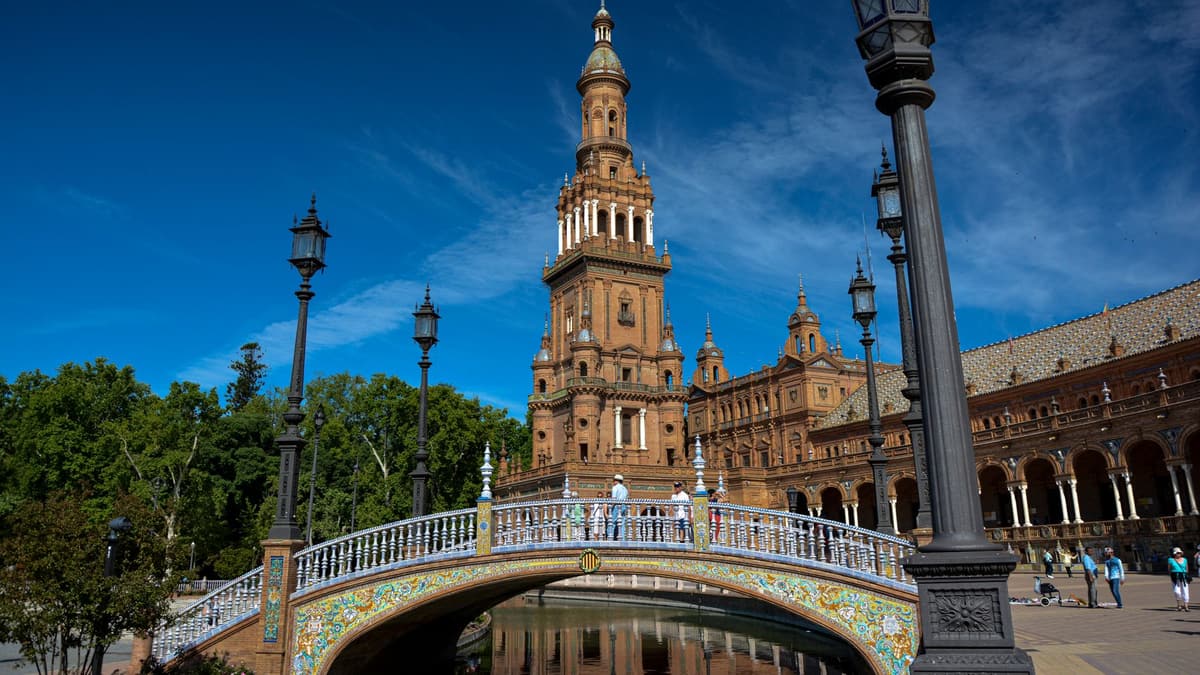 Walk out into the middle and turn slowly around. Plaza de España is a vast half circle of brick, marble and painted tile, with a tall tower at each end, an arcade running the whole way around and a canal crossed by four bridges curving along the front. It was the showpiece of the 1929 fair, also designed by Aníbal González, and its shape is meant as a gesture: the two arms open wide toward the river, as if Spain were embracing the countries across the Atlantic. The four bridges stand for the four old kingdoms of Spain, Castile, León, Aragon and Navarre. Now look along the base of the building. Set into the wall is a row of tiled alcoves, almost fifty of them, one for each of the Spanish provinces, arranged in alphabetical order. Each has a tiled map, a scene from the province's history and its coat of arms, and Spanish visitors like to find their own province and take a photo on its bench. Seville's potters made the tiles, and many of their workshops were across the river in Triana, where this walk ends. Film fans may recognize the place: it stood in for a British headquarters in Cairo in Lawrence of Arabia, and for a planet in one of the Star Wars films. You can hire a little rowing boat on the canal, and the shady arcade is a good place to cool off. When you are ready, leave by the way you came in, cross back into the park, and head west across it for about seven or eight minutes to a tiny castle on its western edge.
This little building, with its crenellated towers, horseshoe windows and striped arches, looks like a toy fortress someone forgot to put away. It is the Costurero de la Reina, which means the queen's sewing box, and it sits on the edge of the park beside the Paseo de las Delicias. It was built in the 1890s in the neo-Moorish style that Seville loved at the time, as a lodge for the keeper of the gardens. To understand why it is here at all, you need the story of the park. All of this land was once the private garden of the Palacio de San Telmo, your next stop, where the Duke and Duchess of Montpensier lived. The duchess, the Infanta María Luisa Fernanda, gave a large part of the gardens to the city in 1893, and the park still carries her name. Later, in the years leading up to the fair, the French landscape designer Jean-Claude Nicolas Forestier reshaped it into the park you just walked through, with its avenues, fountains and tiled benches. The nickname comes from a romantic story about the couple's daughter, María de las Mercedes, who married King Alfonso XII and died of typhus at eighteen, months after the wedding. Legend has her sewing and playing here as a girl. It is a lovely tale, but it is hard to square with the dates, since she died in 1878, before the building went up. From here, follow the Paseo de las Delicias north, with the river off to your left, for about six or seven minutes, until a long palace with a richly carved doorway appears on your right.
포함 사항
저희 투어는 명상하듯 몰입할 수 있도록 만들어졌습니다. 걸으며 그저 귀 기울이시면 됩니다. 함께하면 언제나 더 좋고, 앱이 나레이션을 동기화해 재생하므로 당신과 파트너, 친구들이 모든 스톱을 같은 순간에 들을 수 있습니다.
Find the main doorway and stand back to take it in. It is one of the most exuberant pieces of baroque carving in the city, a riot of columns, curls and statues, with Saint Elmo, the patron saint of sailors, at the top.
이 스톱의 나머지 내용은 전체 오디오 투어에 있습니다.
You are in the heart of Triana, outside the Iglesia de Santa Ana, the church locals call the cathedral of Triana. Look up at the tower, with its tiled spire, and then at the solid walls.
이 스톱의 나머지 내용은 전체 오디오 투어에 있습니다.
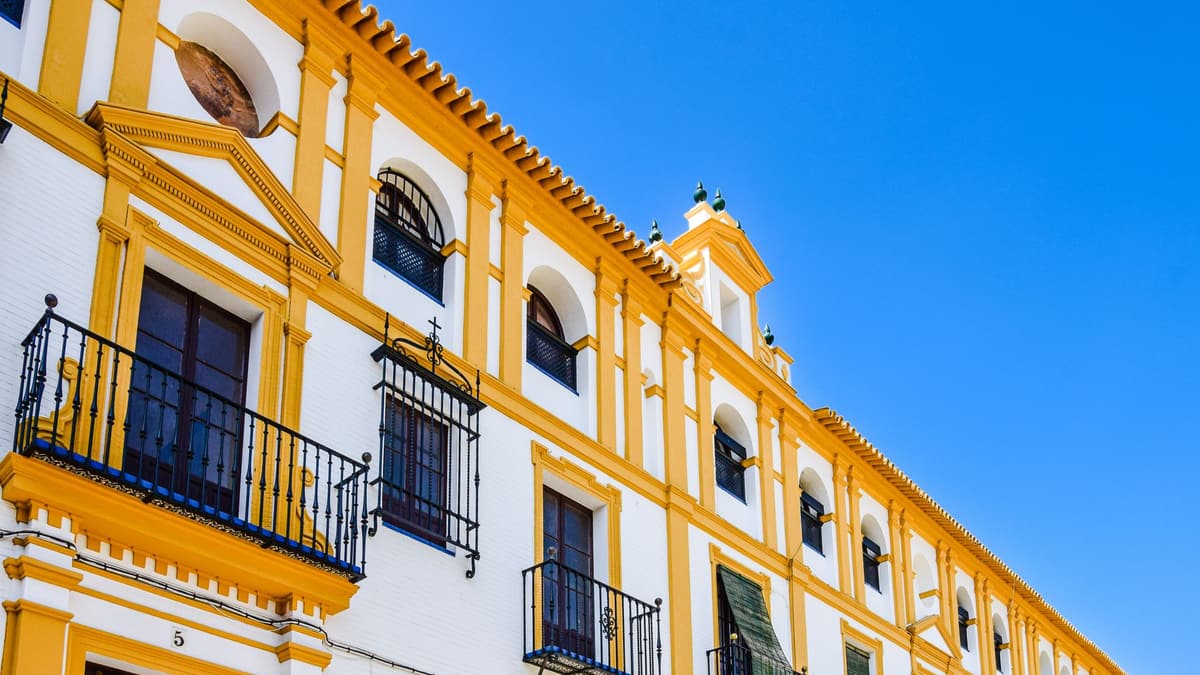
The walk ends inside the brick walls of an old pottery, the Cerámica Santa Ana, whose factory has been turned into the Centro Cerámica Triana, a museum of the craft that made this barrio famous.
이 스톱의 나머지 내용은 전체 오디오 투어에 있습니다.
다음 예정된 투어에서 다른 사람들과 함께 이 산책을 해보세요.
약 3.5km, 여유로운 페이스로 대략 47분 소요 · 6 정류장
친구는 무료로 함께 걸어요October 11, 2026 · 9 min read
From the Hollandsche Schouwburg through the old Jewish Quarter, past the Dockworker and the Dam, to the Anne Frank House on the Prinsengracht.
October 11, 2026 · 11 min read
From Van Houten's street by the Vondelpark past Leidseplein, the Rijksmuseum passage and the famous canal bench to the Anne Frank House.

October 11, 2026 · 10 min read
Follow the last days of April and May 1945 from the Anhalter Bahnhof ruin past the Gestapo site and Brandenburg Gate to the Moltke Bridge and the Reichstag.
