2026년 10월 11일 · 7분
How to Build a Walking Habit
Why a daily walk is worth it, how long a new habit takes to form, and a simple plan that still works on a bad week.
A short walk is one of the better alternatives to an afternoon coffee, and the main reason to make the swap is your sleep. Caffeine stays in the body for hours: its average half-life in healthy adults is about four hours, so half of a 3pm coffee can still be there at 7pm, and a 2023 review worked out that a standard cup should be finished at least 8.8 hours before bed if you don't want to lose sleep. A walk has no such cost, and in a small study, ten minutes of easy stair walking left tired young women feeling more energetic than a low dose of caffeine did. What a walk won't do is make up for a short night or sharpen your thinking much; the lift it gives is real but brief. Here's what causes the dip, what the research says about each option, and how to make the swap.
The afternoon slump has a name in sleep research, the post-lunch dip, and it isn't a sign that something is wrong with you. A 2005 review of the research describes it as "a real phenomenon that can occur even when the individual has had no lunch and is unaware of the time of day": a rise in sleepiness in the middle of the afternoon that has its roots in human biology and may be tied to the body clock. The review adds that it's "certainly exacerbated by a high-carbohydrate lunch" and may be more common in people who are strongly morning types. Not everyone gets it, and it doesn't affect every kind of task, but if you do, it's predictable, which is useful: you can plan for it instead of reaching for whatever is nearest at 3pm. A lighter lunch takes some of the edge off, and the rest is about what you do when it arrives.
According to the European Food Safety Authority, caffeine starts to work 15 to 30 minutes after you drink it and its effects "last a number of hours". In healthy adults its average half-life, the time the body takes to clear half of it, is about four hours, with a range of two to eight depending on things like age, body weight, pregnancy, medication and liver health. On the average figure, a quarter of a 3pm coffee is still in you at 11pm; for someone who clears caffeine slowly, it's closer to half. The same agency notes that a single 100 mg dose may affect how long and how well some adults sleep, especially when it's taken close to bedtime. The US Food and Drug Administration makes a similar point about how much people differ: "There is wide variation in both how sensitive people are to the effects of caffeine and how fast they eliminate it from the body."
The sleep studies show what that means at night. A 2023 review in Sleep Medicine Reviews pooled 24 studies and found that caffeine cut total sleep by an average of 45 minutes and reduced deep sleep, and it worked out that a standard coffee (107 mg in a 250 ml cup) should be drunk at least 8.8 hours before bed to avoid losing sleep. If you go to bed at 11pm, that puts your last coffee at around 2pm, which is before the slump even starts. An earlier study from 2013 adds an uncomfortable detail. Twelve adults took a large dose of caffeine, 400 mg, at bedtime, three hours before or six hours before, and even at six hours a sleep monitor showed they lost more than an hour of sleep, while their own sleep diaries didn't clearly pick it up. It was a small study with a big dose, but it suggests you can lose sleep to an afternoon coffee without noticing, and then feel the result as tiredness the next afternoon.
 Photo: Pavel Danilyuk, Pexels
The study most often cited for walking instead of coffee comes from the University of Georgia. In 2017, researchers there tested 18 college women aged 18 to 23 who drank caffeine every day, were physically active and slept less than 45 hours a week. On separate days, each woman did ten minutes of easy to moderate stair walking, took a capsule with 50 mg of caffeine, or took a dummy capsule. Straight afterwards, the stair walking raised their feelings of energy more than either capsule. The limits matter here. The group was small and all young women, 50 mg is less than a typical cup of brewed coffee (the FDA puts a 12-ounce cup at 113 to 247 mg), the effect faded, and the stair walking didn't improve memory, attention or reaction time on the tests they used. So the honest reading is that a ten-minute walk can make you feel more awake for a while, at least as much as a small dose of caffeine, without the sleep cost.
A second study looked at a normal working day. Researchers at the University of Colorado had 30 inactive adults spend three separate days of about ten hours in a lab: one sitting all day, one with a 30-minute walk on a treadmill in the morning, and one with a five-minute brisk walk every hour, six times. Both walking days raised how energetic the participants felt compared with sitting, and the five-minute walks through the day also improved their mood and lowered their fatigue and food cravings by the end of the day, which in this study was ten to three in the afternoon. Their scores on thinking tests didn't change. The participants knew which day was which and rated their own energy, so some of the effect may be expectation. For an office day, though, it points to short, regular walks as a better bet than a single long one before work.
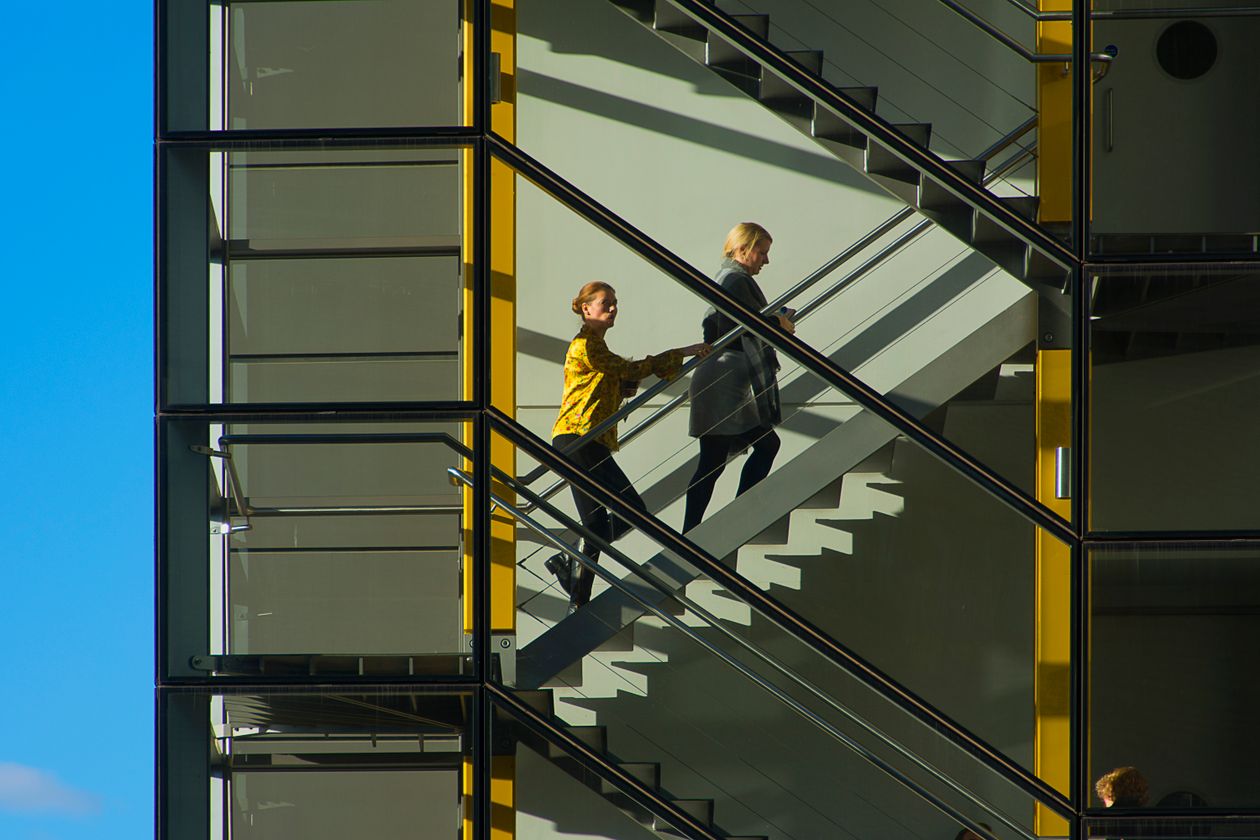 Photo: Jan van der Wolf, Pexels
The swap works best if the walk is as easy to start as the coffee was, and if the coffee moves earlier in the day rather than vanishing. This is how I'd set it up:
A walk changes how awake you feel for a while; it doesn't pay back lost sleep. If you're short on sleep most nights, the afternoon dip will keep coming back however well you handle it, and the longer fix is earlier, more regular nights. If you're tired all the time, see a GP: the NHS advises it if you've felt tired for a few weeks and aren't sure why, if it affects your daily life, if it comes with other symptoms such as weight loss or mood changes, or if you've been told you make gasping, snorting or choking noises in your sleep. If you're pregnant or take medication, ask your doctor or pharmacist how much caffeine is right for you.
A walk at 3pm is easier to take when someone's going with you. Walk With Me is a free walking app that shows walks near you on a map, live ones and ones planned for later, so you can join someone, or start a walk where you are and let people nearby ask to come along. It's free on the App Store and Google Play.
2026년 10월 11일 · 7분
Why a daily walk is worth it, how long a new habit takes to form, and a simple plan that still works on a bad week.
2026년 9월 7일 · 5분
Why a walk loosens stuck thinking, what the research says about walking, stress and anxiety, and when a walk isn't enough on its own.

2026년 9월 1일 · 6분
For fitness, a treadmill walk counts as much as an outdoor one. What walking outside adds for your mood, and when the treadmill is the smarter choice.