
October 11, 2026 · 9 min read
Amsterdam Anne Frank Walking Tour
From the Hollandsche Schouwburg through the old Jewish Quarter, past the Dockworker and the Dam, to the Anne Frank House on the Prinsengracht.
589

October 9, 2026 · 10 min read

 Prietenii merg gratis
Fiecare tur funcționează și ca o plimbare de grup programată la care te poți înscrie în aplicație.
Mai multe tururi audio în Verona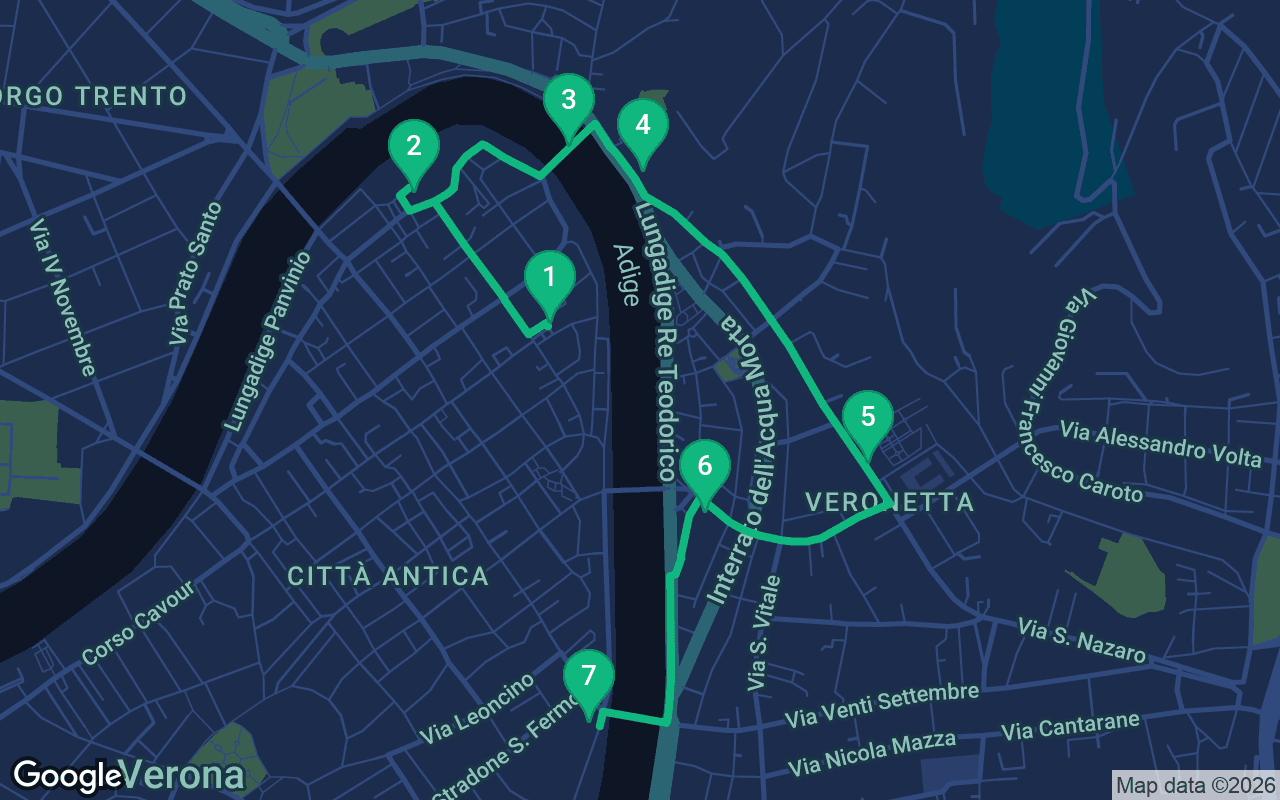
Aproximativ 2,6 km, aproximativ 36 minute într-un ritm ușor.
Acest tur este narat
Apasă pe redare la primele 3 opriri pentru o demonstrație de 30 de secunde a narațiunii. În aplicație, introducerea și aceste 3 opriri se aud integral și gratuit, iar fiecare te anunță printr-un semnal sonor când ajungi. Întregul tur ghidat este al tău pentru $7.99, o achiziție unică pe care o păstrezi pentru totdeauna.
Funcționează cu Garmin, Komoot, Strava, OS Maps și orice aplicație GPX.
Most visitors to Verona go straight from the Arena to Juliet's balcony and back. This walk takes the quieter way round, through the northern tip of the old town and across the river to the green hillside on the far bank. It starts at Sant'Anastasia, the city's largest church, visits the cathedral, crosses the Adige on the old Roman stone bridge to the Roman Theatre, then strolls along the far bank to one of the loveliest Renaissance gardens in Italy. It returns past the church where a teenage Mozart played the organ and finishes at San Fermo, where one church sits on top of another. The whole route is a little over two and a half kilometers, and it is one of the calmer self-guided walking tours in the city, full of art, river views and surprising stories.
Allow two to three hours, more if you spend time in the garden or the churches, which reward a slow look. The streets are flat, but the Roman Theatre is built into a hillside, so you will climb some stone steps there, and the Giusti garden rises in terraces toward a lookout at the top. If you want the big view over the city from Castel San Pietro, add half an hour and either a stiff climb up steps or a short ride on the funicular. Morning light is lovely on the river and the bridge, and the garden is at its best before the midday heat. Several of the churches ask for a small entry fee, and Verona sells a combined church ticket and a city card, but arrangements change, so check before you go. Churches may also close to visitors during services and over lunch. Wear comfortable shoes for the cobbles, bring water in summer, and keep a light layer handy for cool church interiors.
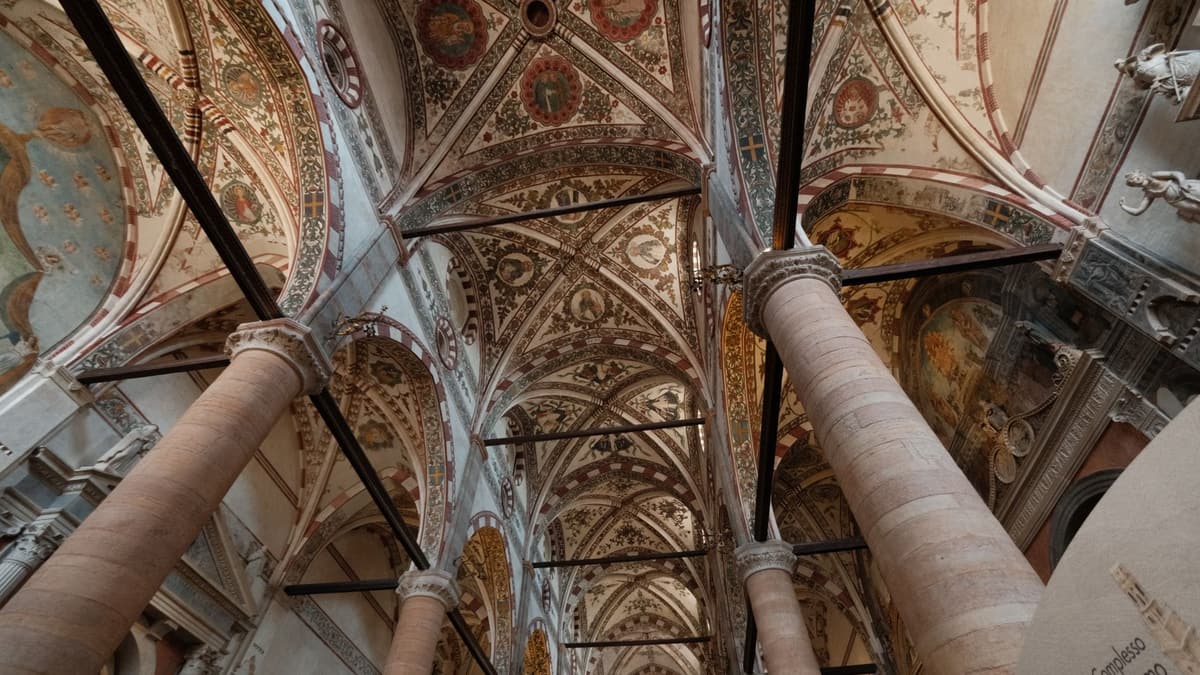
Stand in front of the tall brick facade and notice that it looks unfinished. It is. Work on Sant'Anastasia began at the end of the thirteenth century, for the Dominican friars, and went on for generations, but the marble facing that was meant to cover the front never got beyond the carved doorway. Even so, this is the largest church in Verona, and inside it soars. Step in and look up at the vaults, painted with twining leaves and flowers, and down at the patterned marble floor. Then look at the two holy water basins on the first columns of the nave. Each one is held up by a crouching stone figure bent under the weight, known in Verona as the gobbi, the hunchbacks. They were carved a century apart, and one is traditionally credited to the father of the painter Paolo Veronese. Their strained faces are wonderfully human, and people have been dipping their fingers in the water above them for centuries. The church's greatest treasure is a fresco by Pisanello, one of the finest painters of the early fifteenth century, showing Saint George about to ride off to fight the dragon, while a princess in a high-fashion gown waits beside him. Remember that name, because you will meet Pisanello again at the end of the walk. When you come out, take the street leading north from the church, Via Duomo, to the cathedral, about four minutes.
The cathedral's front is a small masterpiece of twelfth-century carving, so before you go in, stand close to the porch. Its columns rest on the backs of two stone griffins, and on either side of the door stand two stone knights. They are Roland and Oliver, heroes of the legends of Charlemagne, and if you look closely at Roland's sword, you can find its name, Durindarda, carved along the blade. The cathedral was consecrated in 1187, when a pope who happened to be staying in Verona performed the ceremony. Inside, the walls are richly painted, and the first chapel on the left holds the cathedral's prize: an Assumption of the Virgin by Titian, painted around 1530. It is a quieter, more intimate picture than his famous version in Venice, with the apostles gathered around an empty tomb and Mary rising above them. The cathedral is the heart of a whole cluster of old buildings. Through a door you can reach a baptistery with a great eight-sided font, carved from a single block of marble, and nearby is the Chapter Library, which grew out of a scriptorium where monks were copying books more than fifteen hundred years ago, and is often called one of the oldest libraries in the world still in use. From the cathedral, head east toward the river and follow the street along it, with the water on your left, to the old stone bridge, about four minutes.
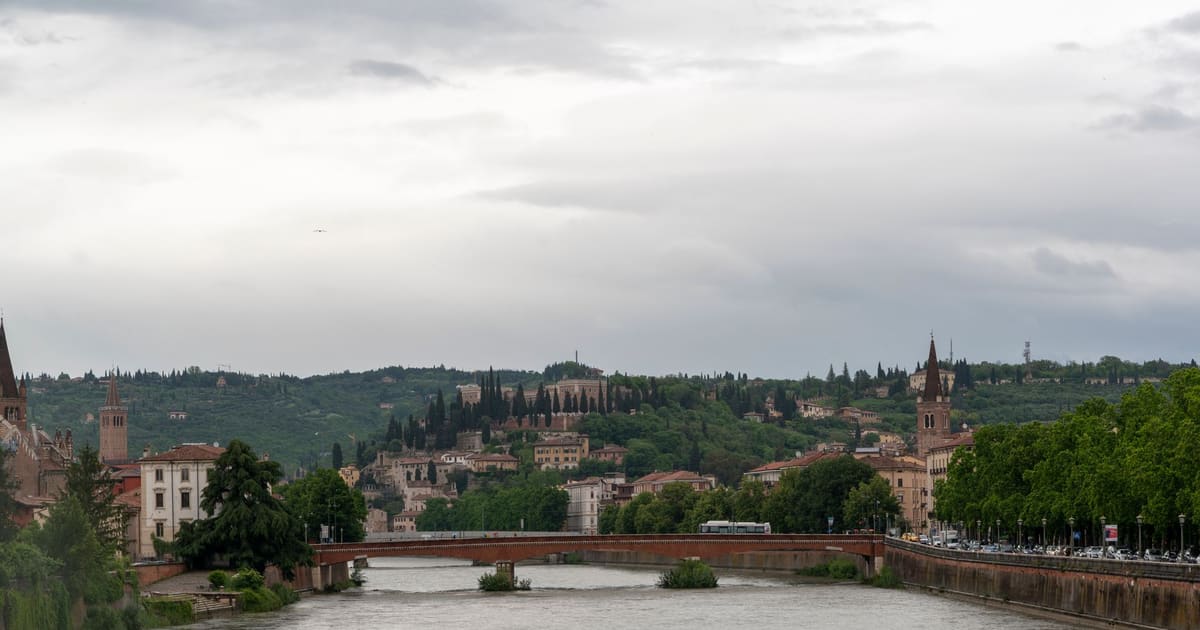
Walk out to the middle of Ponte Pietra and look back at it from the parapet. The bridge is a patchwork, and every patch tells part of its story. The arches nearest the far bank, built of pale stone, are Roman, from the first century before Christ, which makes this the oldest bridge in Verona. The arches nearer the city side are red brick, repairs from the Middle Ages after floods and wars took their toll, and the tower at the city end was part of its medieval defenses. Then came April 1945. As German troops retreated from Verona at the end of the Second World War, they blew up every bridge in the city, Ponte Pietra included. After the war, Verona decided to bring it back. Divers and workers fished the original stones and bricks out of the river, one by one, and rebuilt the bridge with them, finishing in 1959. So the Roman stone under your feet really is Roman, even if it spent years on the riverbed. Lean over and look at the water rushing below. The Adige is fast and cold here, fed by the Alps, and it has flooded the city many times. Ahead of you, the hillside rises with the curving rows of a Roman theatre at its foot and a long pale barracks on top. Cross to the far bank and turn right, about two minutes.
Ce este inclus
Tururile noastre sunt gândite să fie meditative și captivante: te miști și pur și simplu asculți. Sunt mereu mai frumoase împreună, iar aplicația redă narațiunea sincronizat, astfel încât tu, partenerul tău și prietenii tăi auziți fiecare oprire în același moment.
You are standing below the Teatro Romano, built into the slope of the hill at the end of the first century before Christ, so that the audience could look over the stage toward the river and the city beyond.
Restul acestei opriri este în turul audio complet.
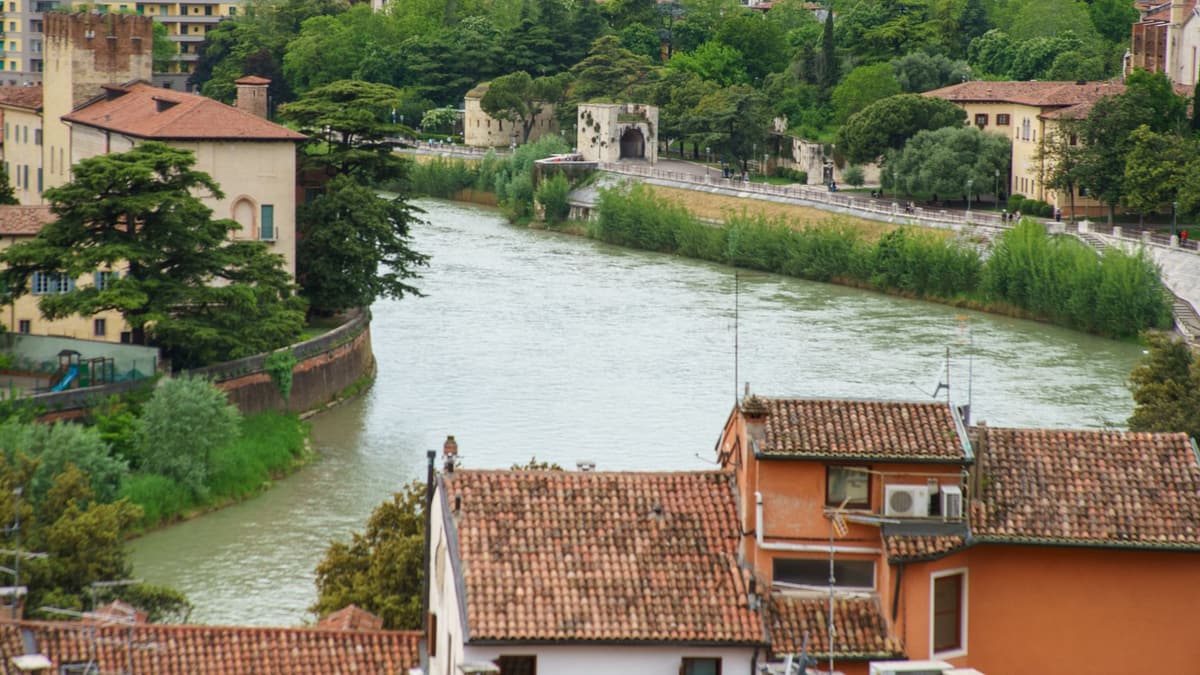
Pass through the courtyard of Palazzo Giusti, and the garden opens up in front of you, climbing the hill in terraces. The Giusti family laid it out in the late sixteenth century, and remarkably it still belongs to them.
Restul acestei opriri este în turul audio complet.
The wide street in front of you looks like an ordinary road, but it hides a secret.
Restul acestei opriri este în turul audio complet.
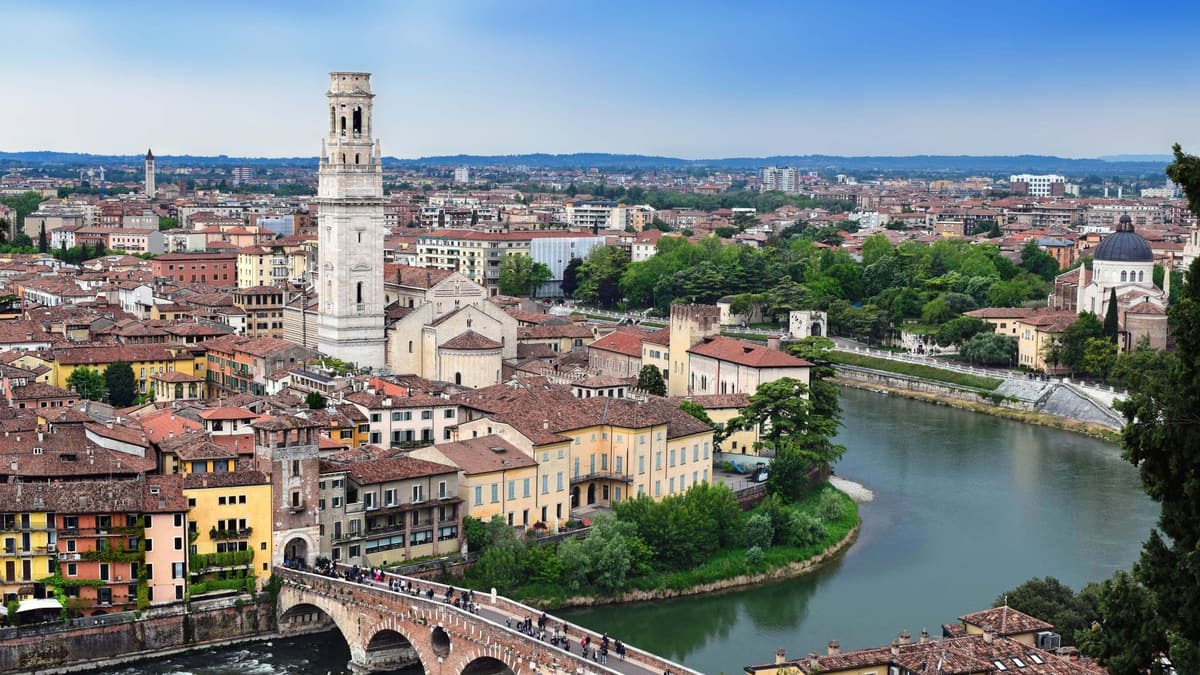
As you come off the bridge, the tall walls of San Fermo rise in front of you, striped in brick and pale stone, with tall pointed windows. What you are looking at is two churches, one built on top of the other.
Restul acestei opriri este în turul audio complet.
Fă această plimbare alături de alți oameni la următorul tur programat.
Aproximativ 2,6 km, aproximativ 36 minute într-un ritm ușor · 7 opriri
Prietenii merg gratisOctober 11, 2026 · 9 min read
From the Hollandsche Schouwburg through the old Jewish Quarter, past the Dockworker and the Dam, to the Anne Frank House on the Prinsengracht.
October 11, 2026 · 11 min read
From Van Houten's street by the Vondelpark past Leidseplein, the Rijksmuseum passage and the famous canal bench to the Anne Frank House.

October 11, 2026 · 10 min read
Follow the last days of April and May 1945 from the Anhalter Bahnhof ruin past the Gestapo site and Brandenburg Gate to the Moltke Bridge and the Reichstag.
