
October 11, 2026 · 9 min read
Amsterdam Anne Frank Walking Tour
From the Hollandsche Schouwburg through the old Jewish Quarter, past the Dockworker and the Dam, to the Anne Frank House on the Prinsengracht.
589

October 9, 2026 · 10 min read

 Друзья гуляют бесплатно
Каждую экскурсию можно пройти в составе запланированной группы, к которой легко присоединиться в приложении.
Страница аудиоэкскурсии в Cappadocia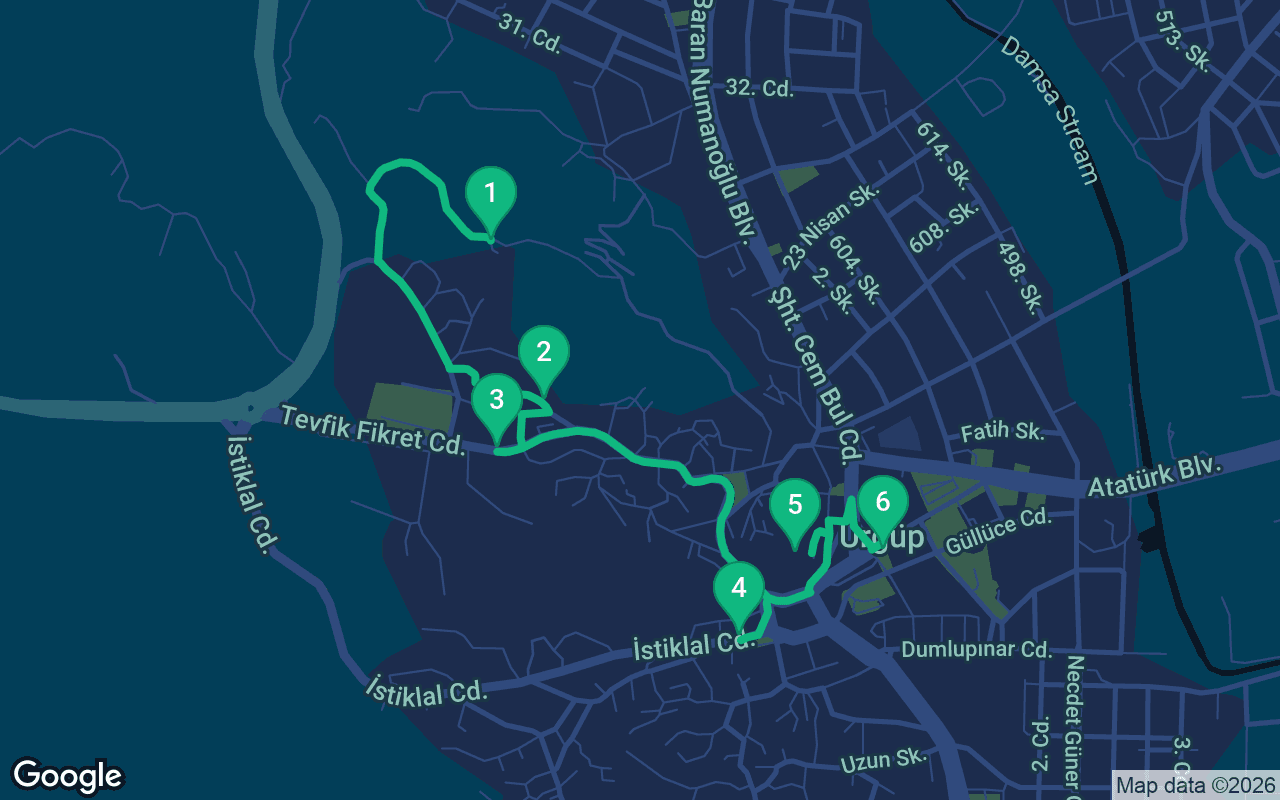
Примерно 2,6 км, около 36 минут в спокойном темпе.
Эта экскурсия озвучена
Нажмите «Воспроизвести» на первых 3 остановках, чтобы послушать 30-секундный фрагмент озвучки. В приложении вступление и эти остановки звучат полностью и бесплатно, а о каждой из них вас оповестит звуковой сигнал, когда вы до неё дойдёте. Вся экскурсия будет вашей за $7.99, это разовая покупка навсегда.
Совместимо с Garmin, Komoot, Strava, OS Maps и любыми приложениями для GPX.
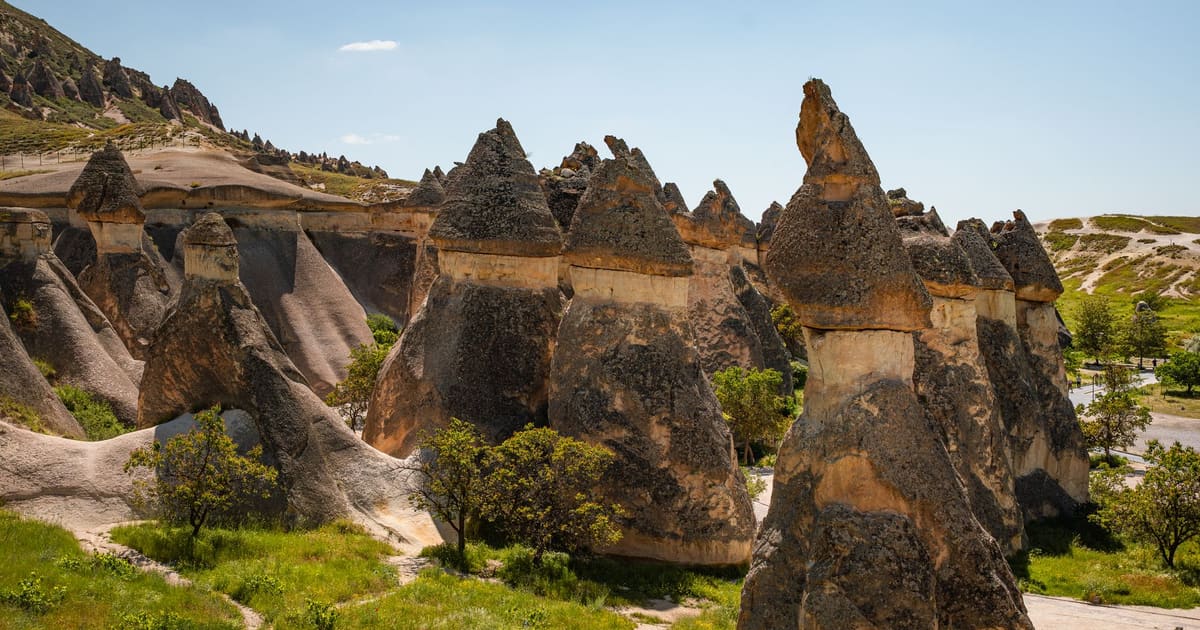
Ürgüp is the old wine town of Cappadocia, a place where people have been carving homes, churches and cellars out of soft volcanic rock for well over a thousand years. Greek and Turkish families lived here side by side for centuries, and their cave houses and carved stone mansions still climb the slopes above the town. This walk starts in Kayakapı, a cave quarter brought back to life after decades of neglect, passes the mansion that a hit television drama made famous and a winery working in rock-cut cellars, warms up at the old Turkish bath, climbs Temenni Hill for the view, and finishes at the library on the town square. It is about one and a half kilometers, under a mile, and one of the most atmospheric short self-guided walking tours in Cappadocia, with a single steep climb along the way.
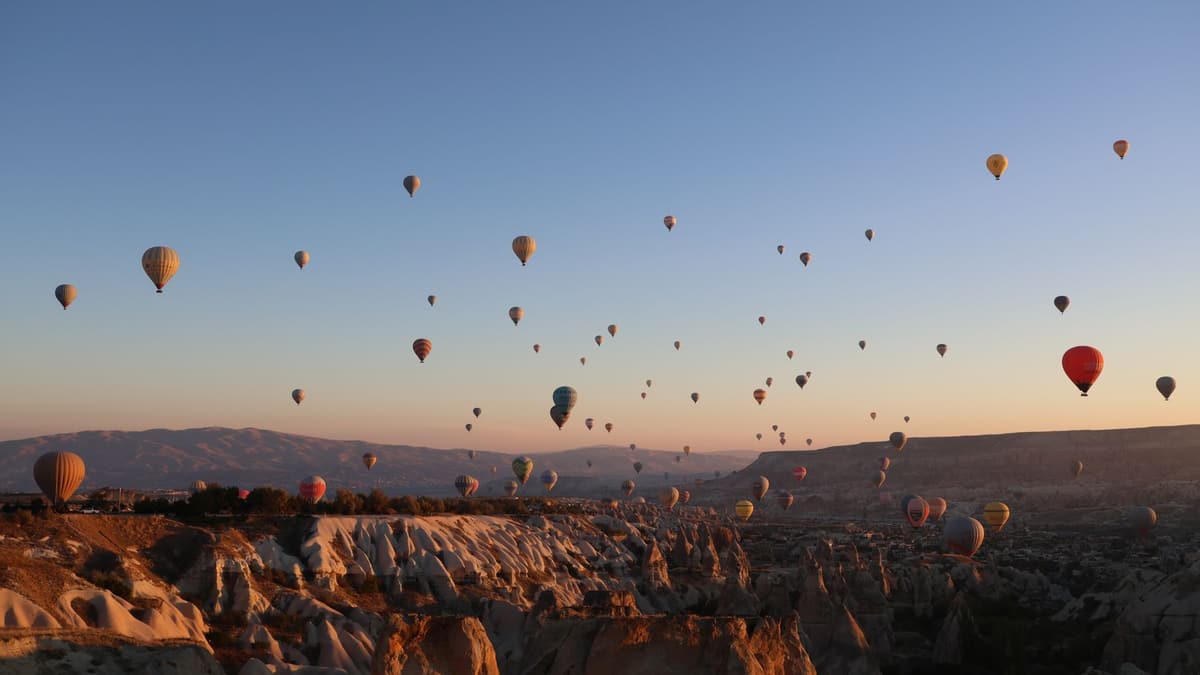
Allow about an hour and a quarter at a stroll, and longer if you stop for a wine tasting or a bath, both of which are well worth the time. The distance is short, but Ürgüp is a hill town, so expect slopes, some uneven cobbles and stone steps, and one short, steep climb up Temenni Hill near the end. Wear shoes with a good grip. Ürgüp sits at over a thousand meters above sea level, which gives it a climate of extremes: summer days are hot and dry, with strong sun and little shade on the open hillsides, while winter is cold and often snowy, and the cobbles can turn icy. Spring and autumn are the loveliest seasons to walk, and early autumn brings the grape harvest. In summer, walk in the early morning or late afternoon and carry water. If you are up at dawn, look to the west for hot air balloons drifting over the valleys. The winery and the bath keep their own hours, and tastings and bath sessions may need booking, so check before you go. The cave houses on this route are private homes and hotels, so look from the lanes and respect the residents.
Stand where you can look across Kayakapı and take in the slope in front of you. The hillside is honeycombed with doorways, windows and chambers cut straight into the pale rock, with stone-built houses fronting many of them. This is the stuff Cappadocia is made of. Millions of years ago, volcanoes in this region, among them Mount Erciyes to the east, blanketed the land in thick layers of ash. Over time the ash hardened into tuff, a rock soft enough to dig with hand tools but firm enough to hold a roof. People here worked out long ago that it was easier to carve a home than to build one, and that a room cut into the rock stays cool in the scorching summer and holds its warmth in the bitter winter. Kayakapı, which means "rock gate," was one of Ürgüp's old neighborhoods, a living quarter with houses, workshops and its own mosque. In the twentieth century people moved out to newer homes, and the quarter slowly emptied and crumbled. In recent decades it has been carefully restored, much of it as a hotel, and the old lanes, terraces and carved facades have been brought back. From here, walk downhill to the south, about five minutes, to the stone mansion of Asmalı Konak.
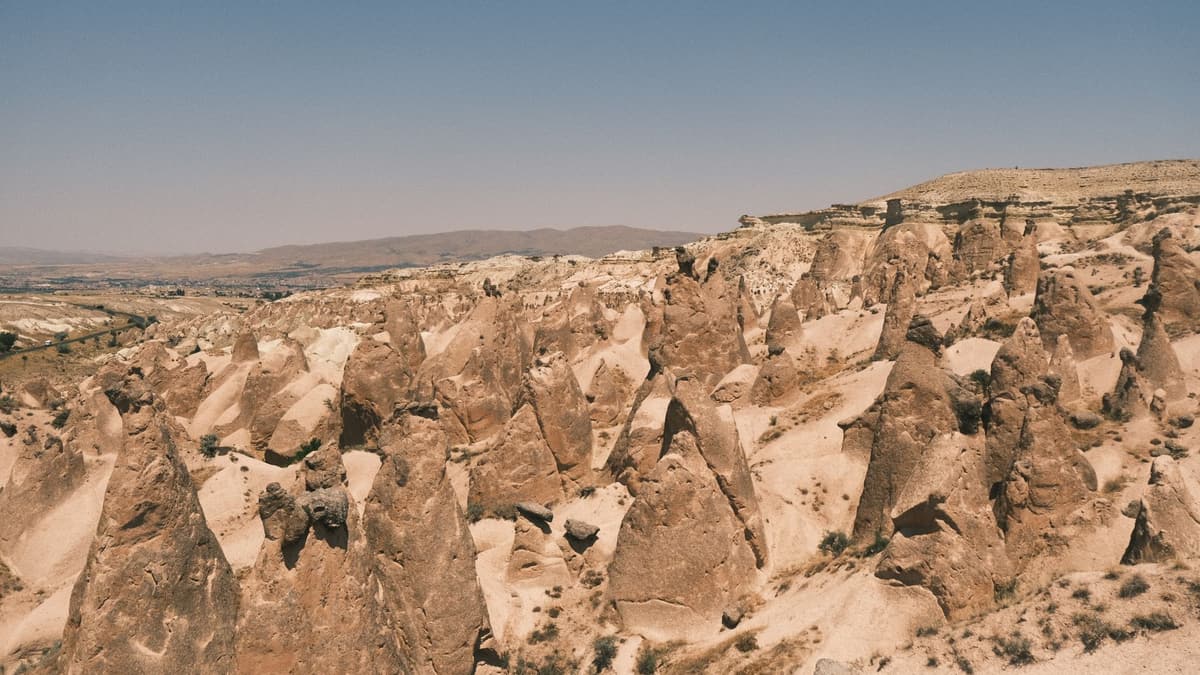 In front of you is Asmalı Konak, the "vine mansion," a grand house of cut stone with arched windows and carved details, the kind of home that only the most prosperous families of Ürgüp could afford. Plenty of fine old mansions like it stand around town, built in the late Ottoman period by merchants, many of them from the Greek Orthodox community, whose wealth came from trade, often in Istanbul, and who poured it back into impressive homes here. This one became the most famous house in Türkiye for a while. In 2002 a television drama called Asmalı Konak, set in Ürgüp, became a huge hit across the country, with viewers everywhere following its story of a powerful Cappadocian family, its love affairs and its feuds. The series, which ran until 2003, put this little town on the map for Turkish viewers, and fans came to see the places they had watched on screen. For many, it was their first glimpse of Cappadocia's cave houses and vineyards, and it helped turn Ürgüp into one of the region's favorite bases. Take a moment to look at the stonework, the masons' craft that the tuff makes possible, carved as easily as wood. Then walk a minute or two down the slope to the south-west to the Turasan Winery.
The Turasan Winery is a family business, one of the best-known wineries in Cappadocia, and it ages its wine in cellars cut deep into the rock. That is no gimmick. Tuff keeps a steady, cool temperature all year round, which is exactly what wine needs, and the people of Ürgüp have been storing wine in caves like these for centuries. Grapes have grown in Cappadocia since ancient times. The volcanic soil drains well, the high plateau has hot, sunny days and cold nights, and the vines thrive on it. Look out on the hillsides around town for the dovecotes cut into the cliffs, rows of small holes where pigeons nested. For generations, farmers collected the droppings as fertilizer for their vineyards. The region even has its own white grape, Emir, which makes a crisp, fresh wine. Both the Greek and Muslim families of Ürgüp made wine, and when the Greek community left in 1923, local families kept the vineyards and cellars going. Today the town is the heart of Cappadocian winemaking. If you would like a tasting, you will need to be of legal drinking age, and arrangements change, so check before you go. From the winery, head south-east, down into the town center, about eight minutes, to the Ürgüp Hamam.
Что входит
Наши экскурсии задуманы как медитативные и захватывающие: вы идёте и просто слушаете. Вместе всегда лучше, и приложение воспроизводит озвучку синхронно, так что вы, ваш партнёр и ваши друзья слышите каждую остановку одновременно.
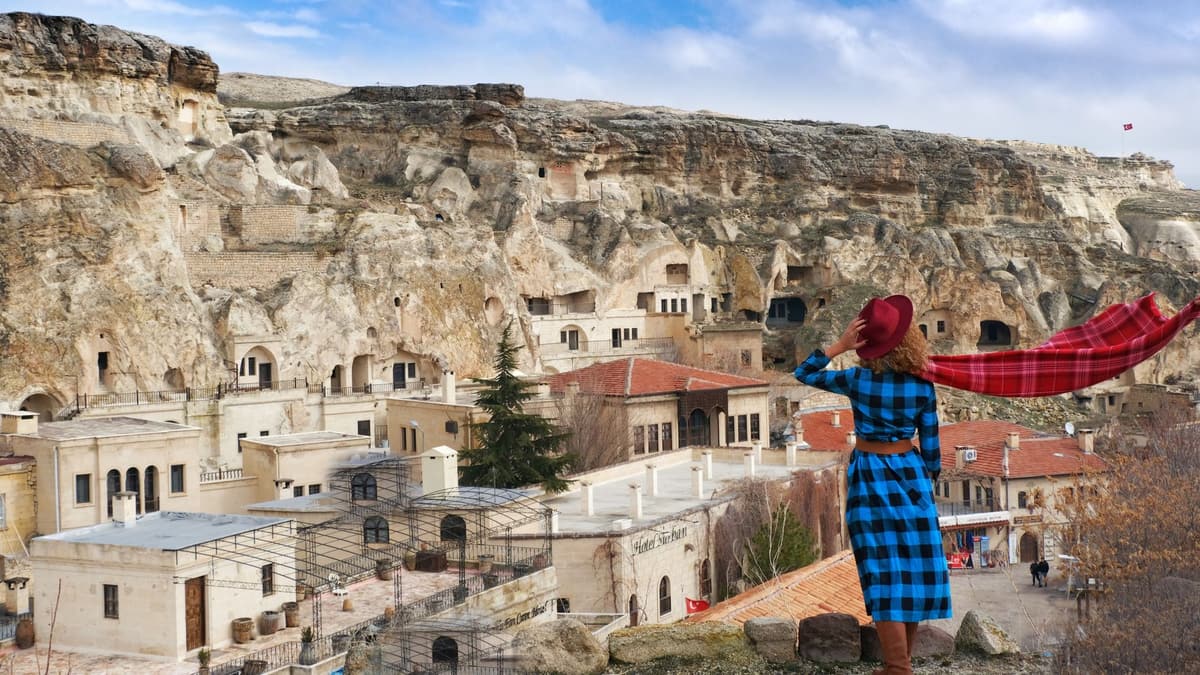
You are now in the heart of town, at the Ürgüp Hamam, the historic Turkish bath. Bathhouses have been part of life in Anatolia since Roman times, and the Turkish hamam grew out of that tradition.
Продолжение этой остановки есть в полной аудиоэкскурсии.
You have climbed to Temenni Hill, and the effort pays off at once. Temenni means "wish," and people come up here to make one, so take a moment and make yours.
Продолжение этой остановки есть в полной аудиоэкскурсии.
The walk ends at the Tahsin Ağa Library, a handsome stone building on Ürgüp's main square, named for the local man who founded it.
Продолжение этой остановки есть в полной аудиоэкскурсии.
Пройдите этот маршрут вместе с другими во время следующей запланированной прогулки.
Около 2,6 км, примерно 36 мин в спокойном темпе · 6 остановок
Друзья гуляют бесплатноOctober 11, 2026 · 9 min read
From the Hollandsche Schouwburg through the old Jewish Quarter, past the Dockworker and the Dam, to the Anne Frank House on the Prinsengracht.
October 11, 2026 · 11 min read
From Van Houten's street by the Vondelpark past Leidseplein, the Rijksmuseum passage and the famous canal bench to the Anne Frank House.

October 11, 2026 · 10 min read
Follow the last days of April and May 1945 from the Anhalter Bahnhof ruin past the Gestapo site and Brandenburg Gate to the Moltke Bridge and the Reichstag.
