
October 11, 2026 · 9 min read
Amsterdam Anne Frank Walking Tour
From the Hollandsche Schouwburg through the old Jewish Quarter, past the Dockworker and the Dam, to the Anne Frank House on the Prinsengracht.
589

October 9, 2026 · 12 min read

 Друзья гуляют бесплатно
Каждую экскурсию можно пройти в составе запланированной группы, к которой легко присоединиться в приложении.
Ещё аудиоэкскурсии в Dublin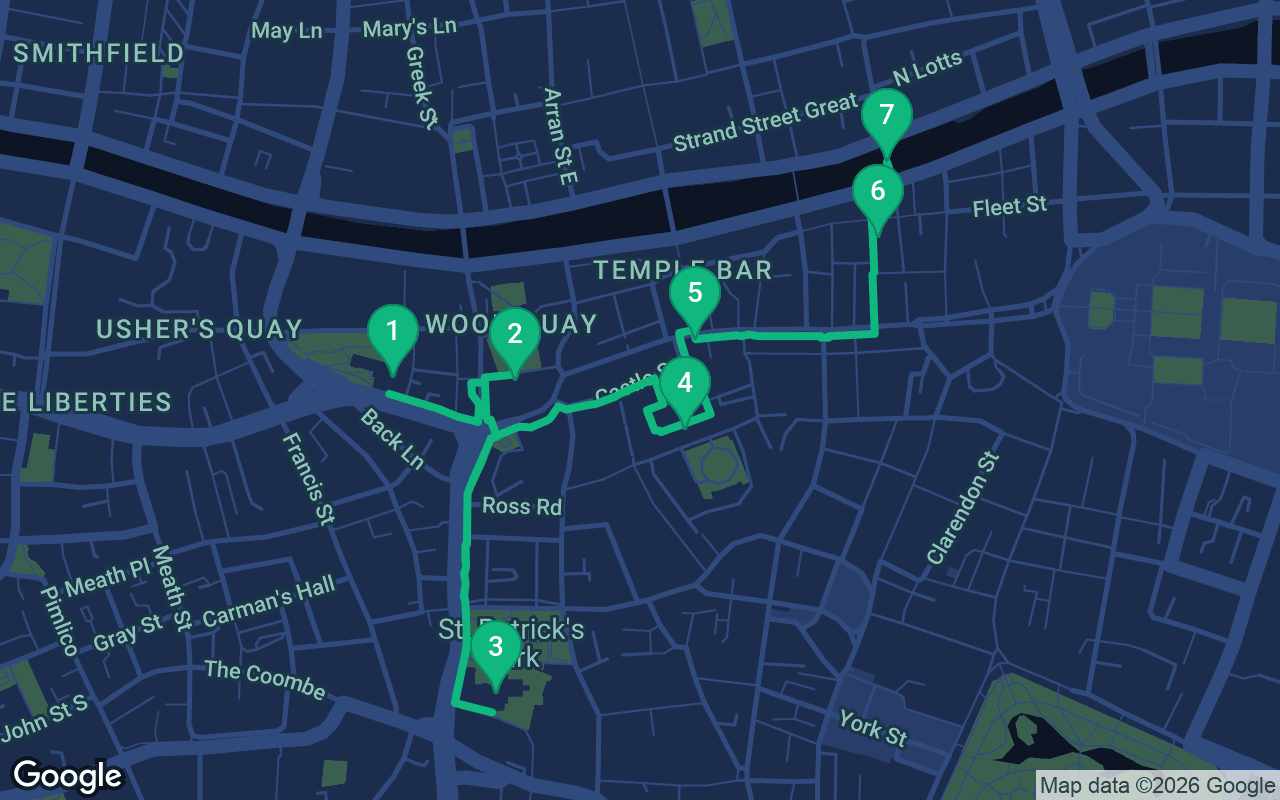
Примерно 2,4 км, около 33 минут в спокойном темпе.
Эта экскурсия озвучена
Нажмите «Воспроизвести» на первых 3 остановках, чтобы послушать 30-секундный фрагмент озвучки. В приложении вступление и эти остановки звучат полностью и бесплатно, а о каждой из них вас оповестит звуковой сигнал, когда вы до неё дойдёте. Вся экскурсия будет вашей за $7.99, это разовая покупка навсегда.
Совместимо с Garmin, Komoot, Strava, OS Maps и любыми приложениями для GPX.
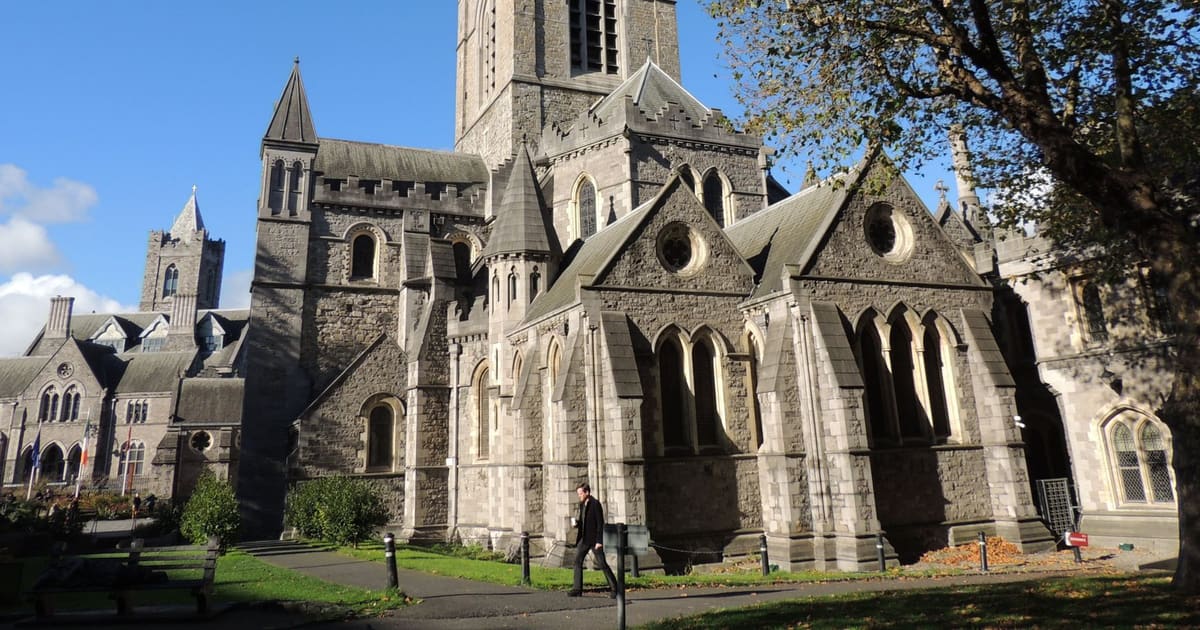
Before Dublin was a capital, it was a Viking trading town on a low ridge above the River Liffey, and that ridge is still there under your feet. This walk follows the oldest streets in the city. It starts at St Audoen's, the last medieval parish church still in use, visits the two great cathedrals and the castle that was the seat of English and then British government in Ireland for seven centuries, and then drops through the cobbles of Temple Bar to finish on the Ha'penny Bridge over the river. It covers about two and a half kilometers, and it is one of the easiest self-guided walking tours in Ireland to fit into a morning, with a thousand years of history packed into a few hundred meters of streets.
Allow about two hours at a stroll, and a good deal longer if you go inside. Both cathedrals charge for sightseeing visits and close to visitors during services, the castle's state rooms are seen by ticket, and St Audoen's opens its visitor center only at certain times of year, so check before you go. The castle courtyards and gardens are free to walk through. The old city sits on a ridge, so there is a gentle slope down to St Patrick's and back up again, and a downhill finish to the river, but nothing you would call a climb. Pavements are uneven in places and Temple Bar is cobbled, so wear comfortable shoes. Dublin weather changes quickly, and a light waterproof is worth carrying on even a bright morning. Weekday mornings are the calmest time; Temple Bar gets loud and crowded in the evenings and on weekends, which is part of its fun but not the best time for a quiet look. There are cafes all along the route, and the castle grounds make a good place to sit for a while.
Stand on High Street at the railings in front of a low, gray stone church with a stout square tower. Do not be distracted by the big church with the columned front right next door. That is the Catholic St Audoen's, built in the nineteenth century. The one you want is older and humbler. It was built around the end of the 1100s, soon after the Normans took Dublin, and its name tells you who prayed here. Audoen, or Ouen, was a seventh century bishop of Rouen, a favorite saint of the Normans, and the newcomers brought him with them. It is the only parish church from medieval Dublin still in use, and its tower holds three bells cast in 1423, the oldest in Ireland. Just inside the entrance is the Lucky Stone, an early Christian grave slab that Dubliners have rubbed for good fortune for generations. Now walk around the side of the church to the top of the steps behind it. They lead down to St Audoen's Arch, the only surviving gateway in the old city walls, with a stretch of the wall itself beside it. Everything inside that wall was medieval Dublin, and it was a small place. When you are ready, come back to High Street and walk east toward the big cathedral ahead, about three minutes. You will reach it at Christchurch Place.
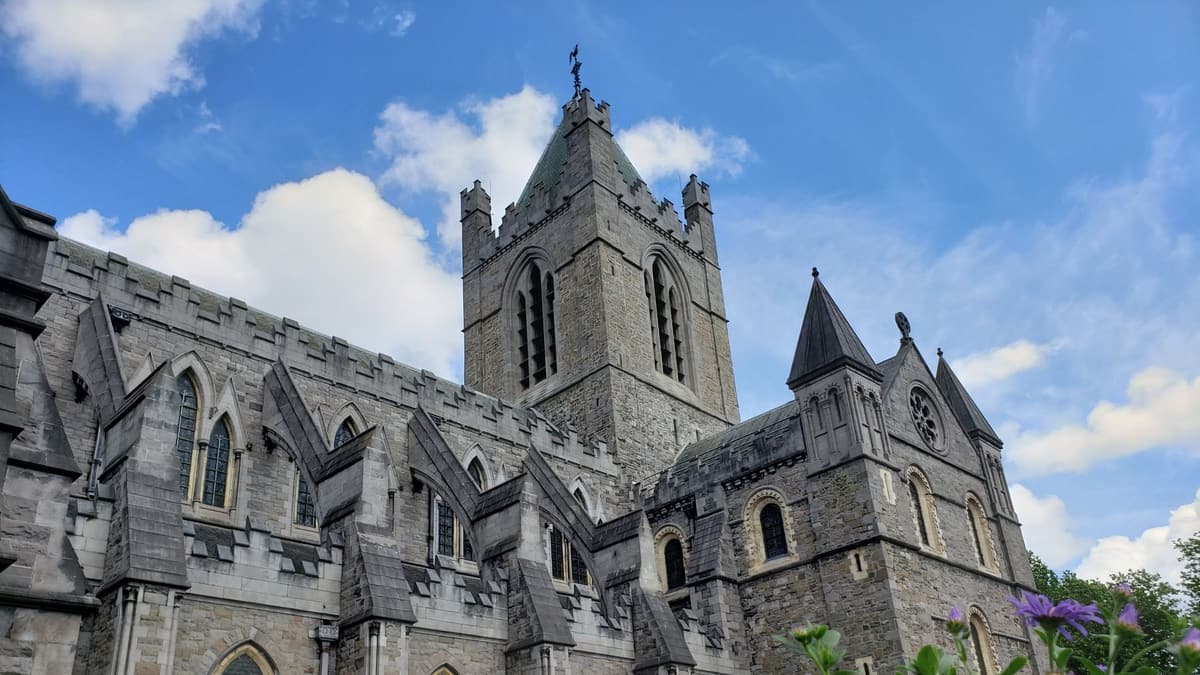
 In front of you is Christ Church, and this is where the city's story begins. In the ninth century, Viking raiders set up a fortified base where a small river, the Poddle, met the Liffey in a dark tidal pool. The Irish called the pool Dubh Linn, the black pool, and that gave the city its English name. Its Irish name, Baile Átha Cliath, the town of the hurdle ford, remembers a river crossing nearby. The Vikings stayed, traded, married into Irish families and became Christian, and around 1030 their king, Sitric Silkbeard, gave land on this ridge for a cathedral. The Normans, who captured Dublin in 1170, replaced his church with the stone one you see, and the Victorians restored it heavily. Inside, the tomb with the knight's effigy is known as Strongbow's, after the Norman leader, though the original was smashed when part of the roof fell in 1562. Under your feet runs a vast crypt the length of the building, among the largest medieval crypts in Ireland or Britain. It holds a famous oddity: a mummified cat and rat, found trapped in an organ pipe. In 1487 a boy named Lambert Simnel was crowned here as King Edward VI of England, a pretender who was later pardoned and put to work in the royal kitchens. The covered bridge over the road links the cathedral to the old Synod Hall, now Dublinia, a museum of Viking and medieval Dublin. Downhill toward the river, at Wood Quay, archaeologists uncovered the Viking town in the 1970s before the city built its offices on top, despite huge protests. To continue, walk past the front of the cathedral and head south down Nicholas Street, which becomes Patrick Street. After about seven minutes, turn left into St Patrick's Close, and the second cathedral is in front of you.
St Patrick's stood just outside the city walls, and it was built that way on purpose. In the 1190s Archbishop John Comyn founded a church here, beside a well where Saint Patrick was said to have baptized converts, partly so he could run it free of the city's authorities. That is why Dublin has two medieval cathedrals within a ten minute walk of each other. It is the largest church in Ireland, and today it is the national cathedral of the Church of Ireland. Its most famous dean was Jonathan Swift, who ran it from 1713 until his death in 1745. Swift was the sharpest pen of his age. He wrote Gulliver's Travels, and in A Modest Proposal he suggested, with a perfectly straight face, that the poor of Ireland sell their babies as food to the rich, a savage joke about how the country was being treated. He is buried inside, beside Esther Johnson, the woman he called Stella, and his Latin epitaph says he lies where savage indignation can no longer tear at his heart. He left most of his money to found a hospital for the mentally ill, which still exists. Look too for the old door with a rough hole cut through it. In 1492 two feuding families, the FitzGeralds of Kildare and the Butlers of Ormond, clashed here. The Butler side barricaded itself in the chapter house, and the Earl of Kildare cut a hole in the door and pushed his arm through to offer a handshake, risking the arm being cut off. That, Dubliners say, is where chancing your arm comes from. The brewer Benjamin Lee Guinness paid for a major restoration in the 1860s. Just beside the cathedral is Marsh's Library, opened in 1707 as Ireland's first public library. To reach the castle, walk back to Patrick Street and head north the way you came, up Nicholas Street toward Christ Church. Just before it, turn right along Castle Street, and look for the Castle Steps dropping down on your right into the castle grounds. It takes about twelve minutes.
Что входит
Наши экскурсии задуманы как медитативные и захватывающие: вы идёте и просто слушаете. Вместе всегда лучше, и приложение воспроизводит озвучку синхронно, так что вы, ваш партнёр и ваши друзья слышите каждую остановку одновременно.
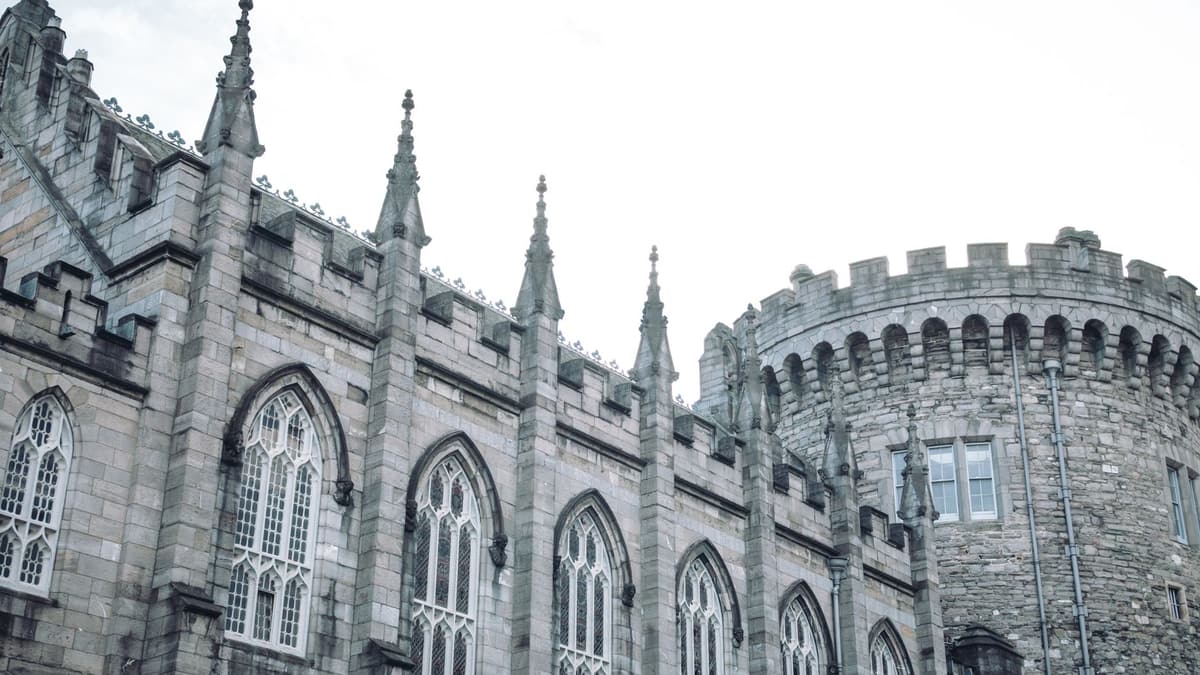
You have come down into the grounds beside the Dubh Linn Garden, the round lawn laid out roughly where the black pool once lay. Look up at the big round stone tower.
Продолжение этой остановки есть в полной аудиоэкскурсии.
Stand on Cork Hill and look at the square stone front with its columns and the dome behind. It was not built as a town hall at all.
Продолжение этой остановки есть в полной аудиоэкскурсии.
You are now in Temple Bar, the tangle of narrow cobbled lanes between Dame Street and the river. Most of this ground was mudflat and riverbank until the seventeenth century, when it was walled in and built over.
Продолжение этой остановки есть в полной аудиоэкскурсии.
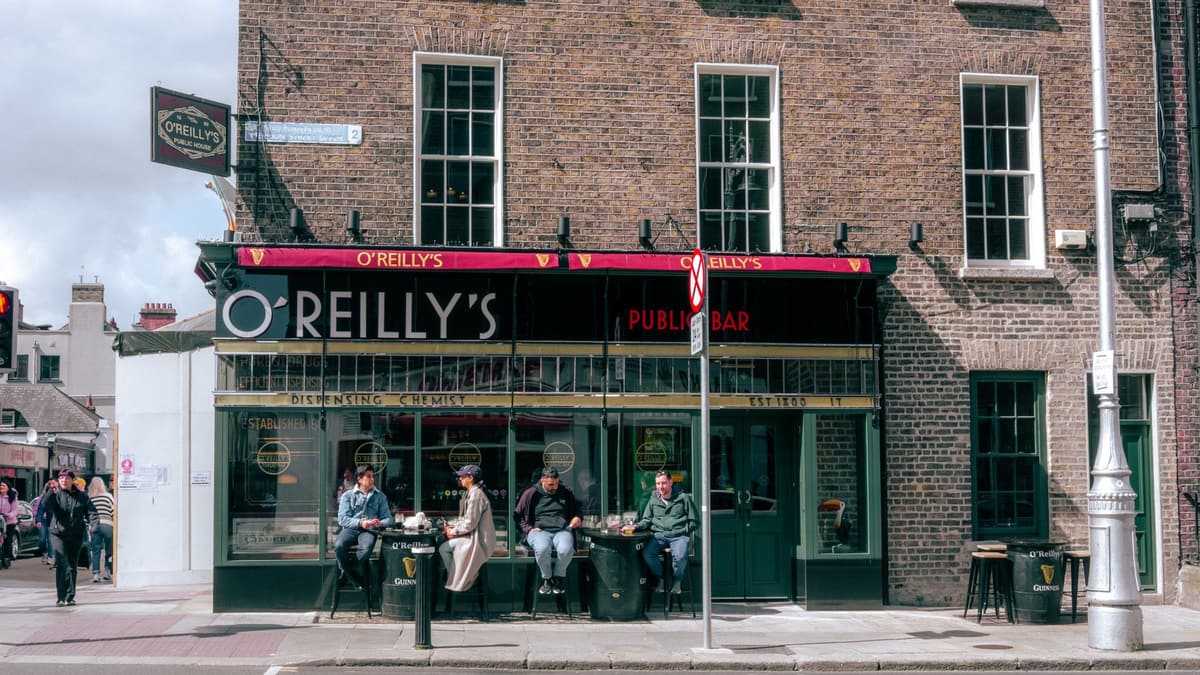
Step onto the Ha'penny Bridge and walk to the middle of its graceful white arch. This cast iron footbridge was made at Coalbrookdale in England, the cradle of the iron industry, and it opened in 1816.
Продолжение этой остановки есть в полной аудиоэкскурсии.
Пройдите этот маршрут вместе с другими во время следующей запланированной прогулки.
Около 2,4 км, примерно 33 мин в спокойном темпе · 7 остановок
Друзья гуляют бесплатноOctober 11, 2026 · 9 min read
From the Hollandsche Schouwburg through the old Jewish Quarter, past the Dockworker and the Dam, to the Anne Frank House on the Prinsengracht.
October 11, 2026 · 11 min read
From Van Houten's street by the Vondelpark past Leidseplein, the Rijksmuseum passage and the famous canal bench to the Anne Frank House.

October 11, 2026 · 10 min read
Follow the last days of April and May 1945 from the Anhalter Bahnhof ruin past the Gestapo site and Brandenburg Gate to the Moltke Bridge and the Reichstag.
