October 11, 2026 · 11 min read
Amsterdam Fault in Our Stars Walking
From Van Houten's street by the Vondelpark past Leidseplein, the Rijksmuseum passage and the famous canal bench to the Anne Frank House.
618

October 11, 2026 · 9 min read

 Bạn bè đi bộ miễn phí
Mỗi tour cũng được tổ chức như một chuyến đi bộ nhóm theo lịch trình mà bạn có thể tham gia trong ứng dụng.
Thêm tour âm thanh tại Amsterdam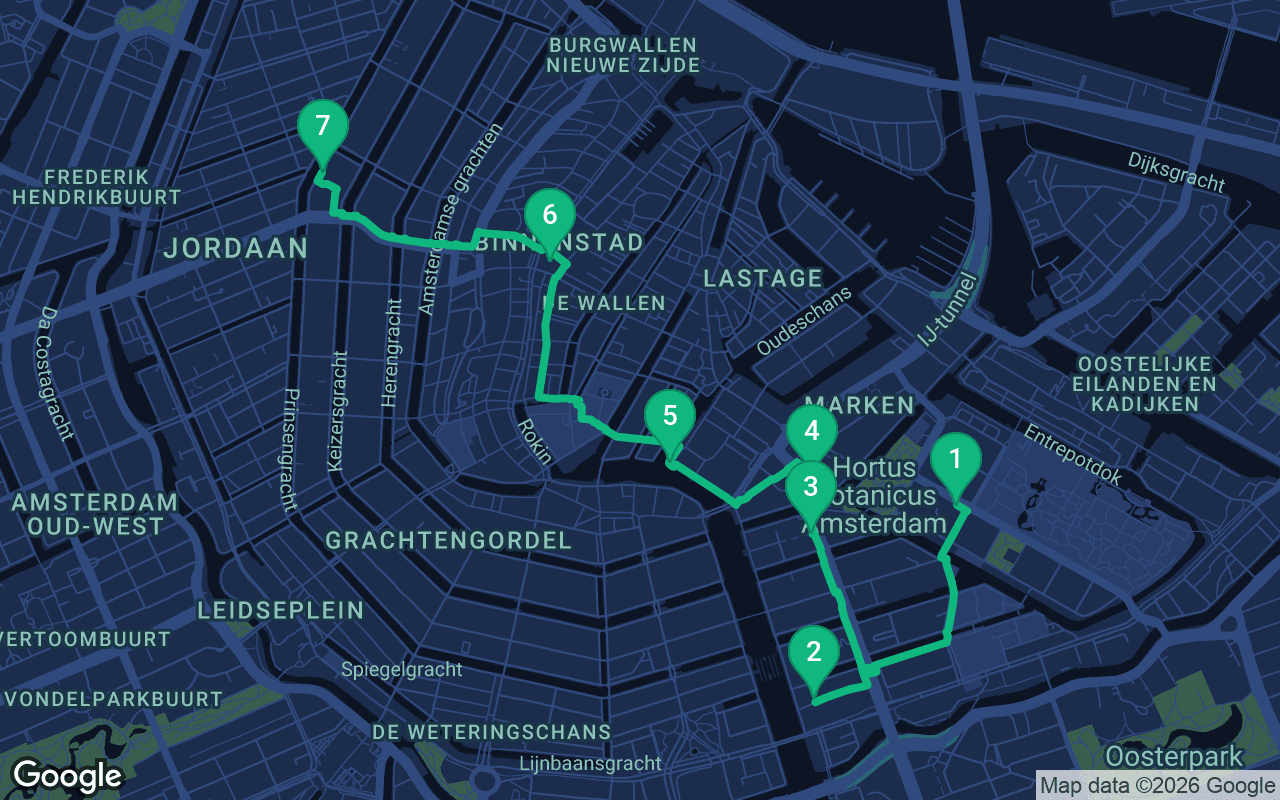
Khoảng 4,3km, mất khoảng 60 phút với nhịp độ thoải mái.
Tour này có thuyết minh âm thanh
Nhấn phát tại 3 điểm dừng đầu tiên để nghe thử 30 giây phần thuyết minh ngay tại đây. Trong ứng dụng, phần giới thiệu và các điểm dừng này được nghe trọn vẹn miễn phí, và mỗi điểm dừng sẽ phát âm báo khi bạn đến nơi. Toàn bộ chuyến tham quan có thuyết minh sẽ là của bạn chỉ với $16.99, mua một lần và sở hữu mãi mãi.
Hoạt động với Garmin, Komoot, Strava, OS Maps và mọi ứng dụng GPX.

Anne Frank's diary is read all over the world. This walk tells the story around it: what happened to the Jews of Amsterdam under German occupation, in the streets where it happened. You start at the Hollandsche Schouwburg, the theater where deportations began, visit Anne and Margot's school and a wall of 102,000 names, then step back to the strike of February 1941 before moving through the monuments of resistance and remembrance. You finish on the Prinsengracht, at the house where Anne hid. It's about four kilometers, one of our self-guided walking tours best taken slowly. This is a memorial walk. Where the sources give names, you will hear them.
Allow about two and a half hours with the stories; the walking itself is about an hour. The route is flat, on pavements and canal streets, with bikes everywhere, so keep to the footpath and look both ways twice. The Hollandsche Schouwburg memorial is free and open most days; check before you go. The Anne Frank House sells timed tickets only, so book ahead if you want to go in. The walk ends near the Westermarkt tram stop. The Names Memorial and the theater are places of mourning, so keep your voice low there.
You're on Plantage Middenlaan, outside the former Hollandsche Schouwburg, a theater that is now a memorial. Across the street, the old teacher-training college beside the site of a children's crèche houses the National Holocaust Museum.
From July 1942 to November 1943, this theater was where Amsterdam's Jews were ordered to report for deportation. Tens of thousands passed through its doors on their way to the camps.
From October 1942, young children were separated from their parents here and kept in the crèche across the road. And that is where a quiet rescue took place. Four underground groups, among them Piet Meerburg's student group, the Utrecht Children's Committee and the Trouw group, smuggled about 600 children out. Some were carried out in bags. Some were passed out through the gardens next door. Two people on the inside took part: Walter Süskind, head of the Jewish staff at the theater, and Henriëtte Pimentel, the director of the crèche. The crèche was finally cleared on the twenty-ninth of September 1943.
Hold on to one date: July 1942, the month this theater began to fill. That same month, across the city, a family had disappeared from view. You will end this walk at their door.
Follow your map southwest for about twelve minutes, to a short street called Voormalige Stadstimmertuin near the Amstel, and the school at number 1.
 You're outside the old Jewish Lyceum. By the door is a plaque with a twisted metal Star of David, and a glass panel, for the pupils and teachers who were murdered.
After the summer of 1941, Jewish children were forced out of ordinary schools and into Jewish ones. This school opened in October 1941 and lasted two years. Two of its pupils were sisters, refugees from Germany: Margot Frank and her younger sister Anne, who had arrived in Amsterdam in 1934.
Hundreds of children passed through these classrooms, with 44 teachers. One teacher, Yakov Arnon, later said the thought on everyone's mind each day was simply: "who's gone?"
Anne's school year ended in early July 1942. On the sixth of July her family went into hiding, and her seat stayed empty too.
About half of the pupils, Anne and Margot among them, were murdered, and so were about a third of the teachers. Stand a moment by the twisted star.
Follow your map north up Weesperstraat for about nine minutes to the brick memorial where the names are.
You're at the Holocaust Names Memorial, opened in September 2021 and designed by Daniel Libeskind. Walk in among the walls. They are made of 102,000 bricks, and each one carries a name of someone from the Netherlands murdered in the Holocaust, with a birth date and an age at death. A thousand more bricks are left blank. Above the walls, four mirrored steel shapes form the Hebrew letters for "In memory of".
The names run in alphabetical order. If you want to, look for the Franks. Take your time; you may need to search.
This is where the numbers you will hear on this walk become people. A child from the crèche. A pupil from the Lyceum. A family that hid for two years and was found. Read a few names quietly to yourself as you walk through, if it feels right.
Now the story steps back in time. Before the theater, before the Jewish school, there were a few days in February 1941 when the city saw what the occupation meant, and stopped work in protest.
Continue north on Weesperstraat for about four minutes to the open square of Jonas Daniël Meijerplein, and the bronze figure of a working man.
Bao gồm những gì
Các tour của chúng tôi được thiết kế để mang tính thiền định và đắm chìm: bạn vừa đi vừa lắng nghe. Đi cùng nhau luôn tuyệt hơn, và ứng dụng phát thuyết minh đồng bộ để bạn, người thương và bạn bè nghe mỗi điểm dừng cùng một lúc.
You're on Jonas Daniël Meijerplein, facing the Dockworker, a bronze by Mari Andriessen, unveiled by Queen Juliana in December 1952. Across the street stands the Portuguese Synagogue.
Phần còn lại của điểm dừng này có trong tour âm thanh đầy đủ.
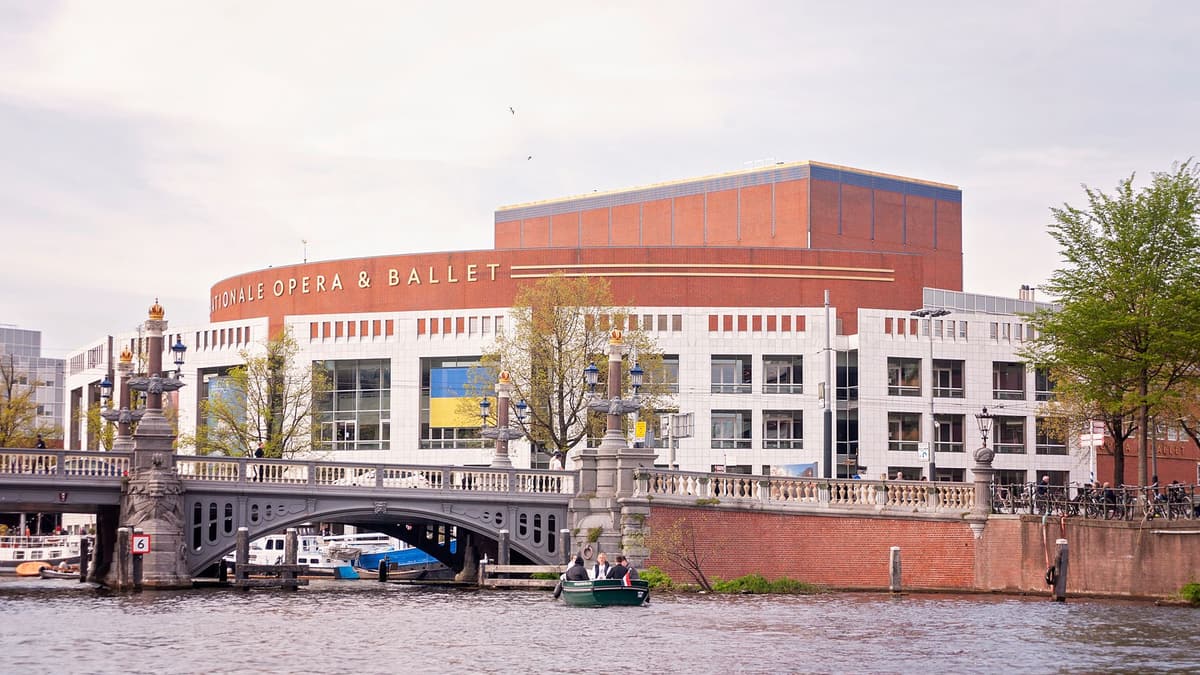
You're at the corner of the Amstel and the Zwanenburgwal, behind the city hall and opera house. In front of you is a black marble column with gold letters and forms like stone tablets.
Phần còn lại của điểm dừng này có trong tour âm thanh đầy đủ.
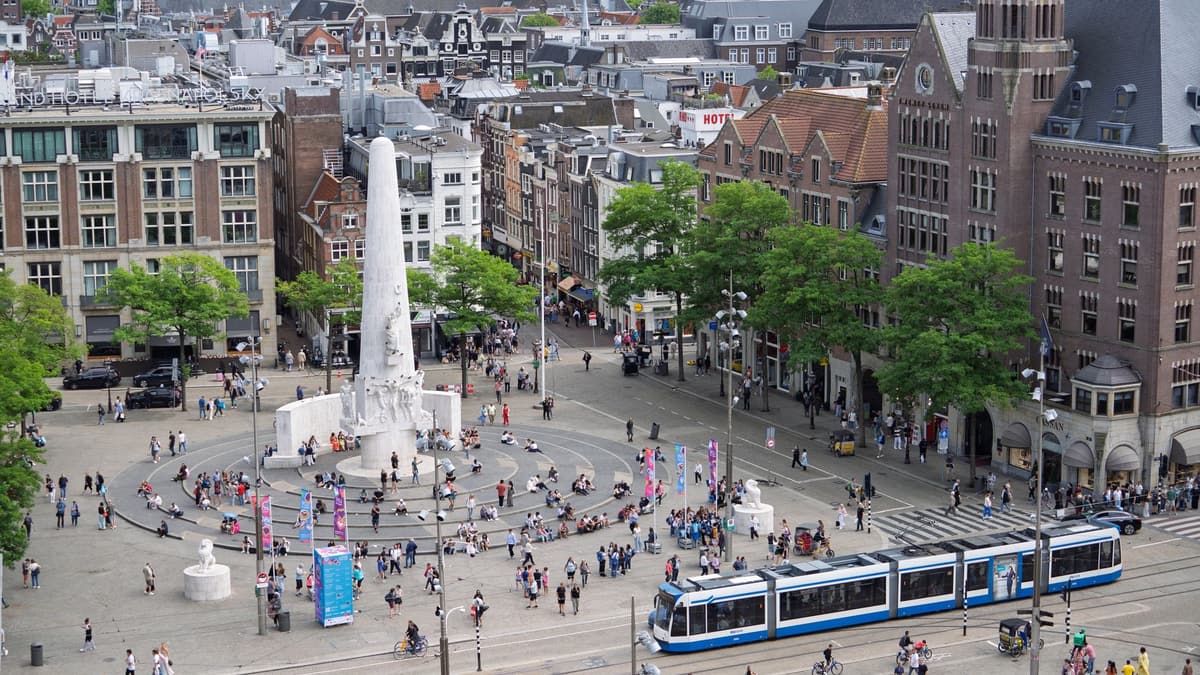
You're on the Dam, at the National Monument: a stone column with sculpted figures and doves in relief, and a curved white wall behind it. Set into that wall are urns of earth from the Dutch provinces and the former Dutch East Indies.
Phần còn lại của điểm dừng này có trong tour âm thanh đầy đủ.
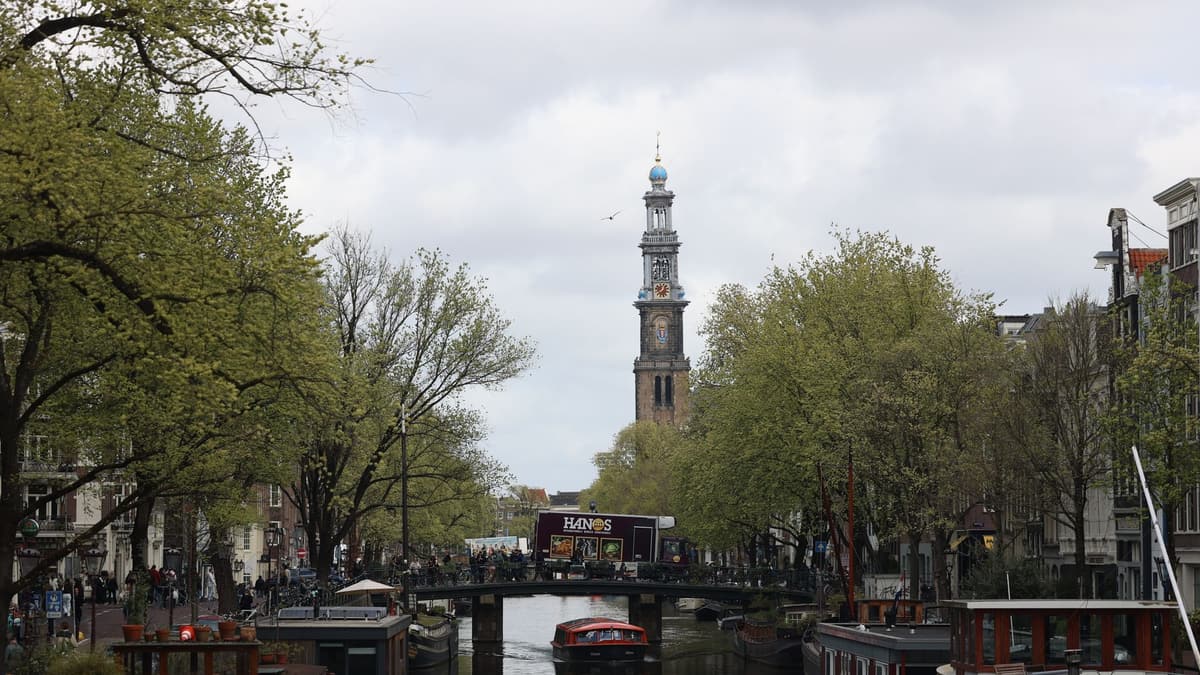
You've reached the last stop. Stand back from the entrance and the canal edge, where people queue.
Phần còn lại của điểm dừng này có trong tour âm thanh đầy đủ.
Thực hiện buổi đi bộ này cùng người khác vào tour đã lên lịch tiếp theo.
Khoảng 4,3km, mất khoảng 60 phút với nhịp độ thoải mái · 7 điểm dừng
Bạn bè đi bộ miễn phíOctober 11, 2026 · 11 min read
From Van Houten's street by the Vondelpark past Leidseplein, the Rijksmuseum passage and the famous canal bench to the Anne Frank House.
October 11, 2026 · 10 min read
Follow the last days of April and May 1945 from the Anhalter Bahnhof ruin past the Gestapo site and Brandenburg Gate to the Moltke Bridge and the Reichstag.

October 11, 2026 · 10 min read
Walk Bernauer Strasse from Ida Siekmann's window past Conrad Schumann's leap, Tunnel 57 and the Window of Remembrance to the Günter Litfin watchtower.