20 settembre 2026 · 7 minuti
What Is Netwalking?
Netwalking is networking on a walk instead of over coffee or drinks. What it's good for, what the research says, and how to plan one that works.
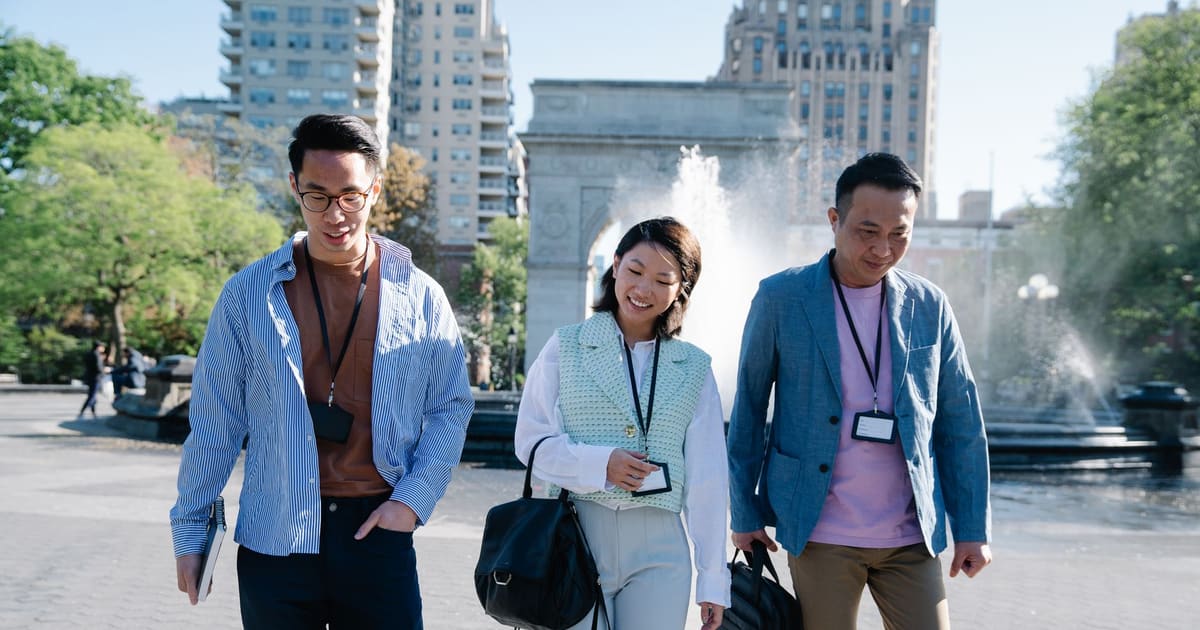

A first walk with someone new is less awkward than it feels beforehand, and much less awkward than coffee. You walk side by side instead of facing each other, there's always something around you to talk about, and a silence on a walk just looks like two people walking. Most of the stiffness sits in the first few minutes, and most of the nerves are a forecast that research says is usually wrong. What helps most is simple: pick a route with a clear end, open with the walk itself, let the slower walker set the pace, don't fight the quiet bits, and finish at the place you agreed with one plain sentence about whether you'd like to do it again. Here's the reasoning behind each of those, and what to say.
Before meeting someone new, most of us expect it to go worse than it does. In a set of experiments published in 2014, Nicholas Epley and Juliana Schroeder asked Chicago train and bus commuters either to talk to a stranger, to sit alone, or to do whatever they normally did. Beforehand, people predicted that sitting alone would be the more pleasant ride. Afterwards, the ones who had talked to someone reported the most positive journey of all three groups. People also assumed others wouldn't want to chat, and expected to be brushed off far more often than they were. Those were short conversations with strangers on a commute, not a planned walk, but the pattern is the useful part: the dread before is louder than the experience.
The worry after the walk is just as unreliable. A 2018 paper in Psychological Science by Erica Boothby and colleagues found that after a conversation, people consistently underestimated how much the other person liked them and enjoyed their company. The researchers called it the liking gap. They saw it in strangers meeting in a lab, in first-year students getting to know their dorm mates, and in adults at a personal development workshop, and among the students it lasted for months. So when you replay the walk on the way home and decide you talked too much or said something odd, remember that the other person probably enjoyed it more than you think.
Sitting across a table puts your face in the spotlight. You're expected to hold eye contact, and every pause feels like it belongs to someone. Walking takes most of that away. You both look ahead, you only glance at each other now and then, and there's a moving view handing you things to mention. There's also a small piece of research behind the relief. In five lab experiments published in 1998, Arthur Glenberg and colleagues found that people tend to look away when they're asked moderately hard questions, and that looking away helped them answer better. Those studies weren't about walking, so take this as my reading rather than their finding, but it fits: on a walk you can look at the path while you think about your answer, and it never looks like you're avoiding someone's eyes.
Open-ended plans make people anxious, because nobody knows how or when it's supposed to finish. Pick a loop or a there-and-back of about 30 to 45 minutes that ends somewhere useful, like near a bus stop, a station or a café you could go into if things are going well. A route with a little life on it helps, such as a park with dogs and runners, a riverside path or a market street. It gives you things to point at when the conversation runs out, and other people around make most of us feel more at ease. Say the plan out loud when you meet ("I thought we'd do the loop round the lake, it's about forty minutes"), so both of you know where the end is from the first step.
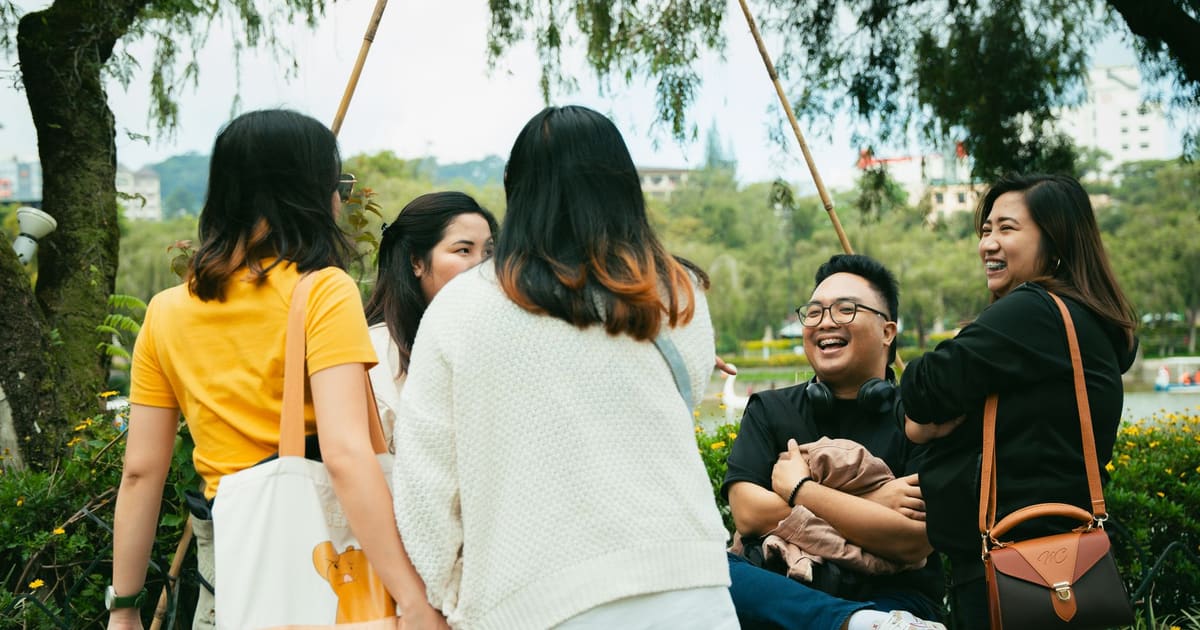
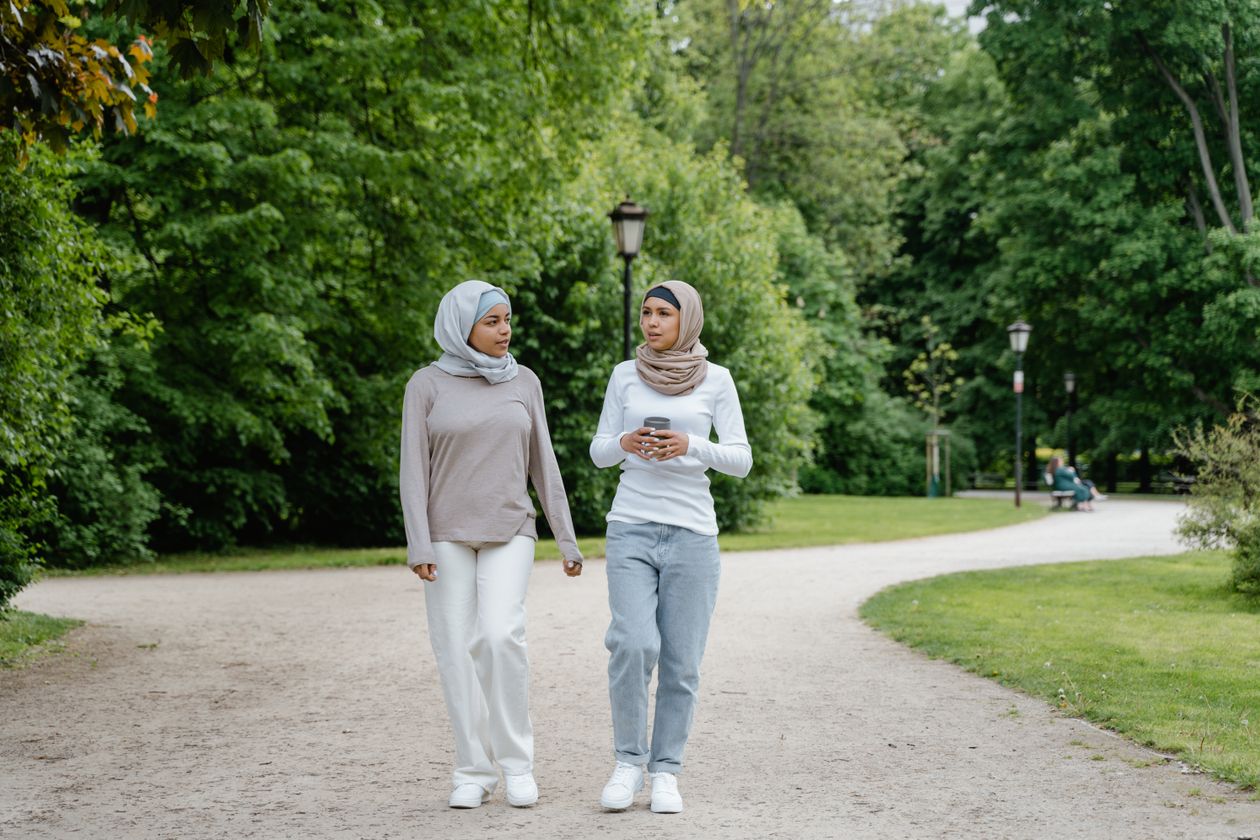 Photo: MART PRODUCTION, Pexels
The first few minutes are the clumsy part for almost everyone. You're working out where to stand, which side to walk on and how fast to go, all while saying hello to someone you don't know. Don't try to be interesting yet. Start with the walk itself, because it's right there and it's easy for both of you to answer. These openers work because they're about the moment, not about either of you:
The second question does more than it seems: it settles the pace early and tells the other person you're paying attention. After that, the trick is follow-up questions. When they mention a park they like, a neighbourhood they moved from or a dog they grew up with, ask about that instead of moving on to your next prepared topic. Keep one question in reserve for when things dry up, something like their favourite walk nearby or the best thing they've found since moving here, and save heavy subjects for a later walk.
A silence that would feel long across a table is normal on a walk. You're moving, there's something to look at, and both of you are breathing harder on the uphill bits. Let a topic finish without rushing to fill the gap, and when you want to start again, use what's in front of you: a dog, a strange building, a café you've been meaning to try. If you notice you've been doing most of the talking, ask a question and then let the answer run. On my own walks with people I'd met at social events, we mostly talked about random things and let the places do the work: we'd head somewhere interesting, the streets and the atmosphere kept handing us something to talk about, and more often than not we ended up somewhere unexpected, with interesting people, in the middle of a good discussion.
Pace is the other thing that quietly makes a walk awkward. The fairest rule is that the slower walker sets the speed, because the faster one can always slow down but the slower one can't easily speed up and talk at the same time. If you're the faster walker, ease off before you're asked. If you're the slower one, say it early and plainly ("I'm more of a stroller, is that all right?"), which is much easier in minute two than after half an hour of trying to keep up. Hills are a natural break in the talking, so don't treat a quiet climb as a sign that something is wrong.
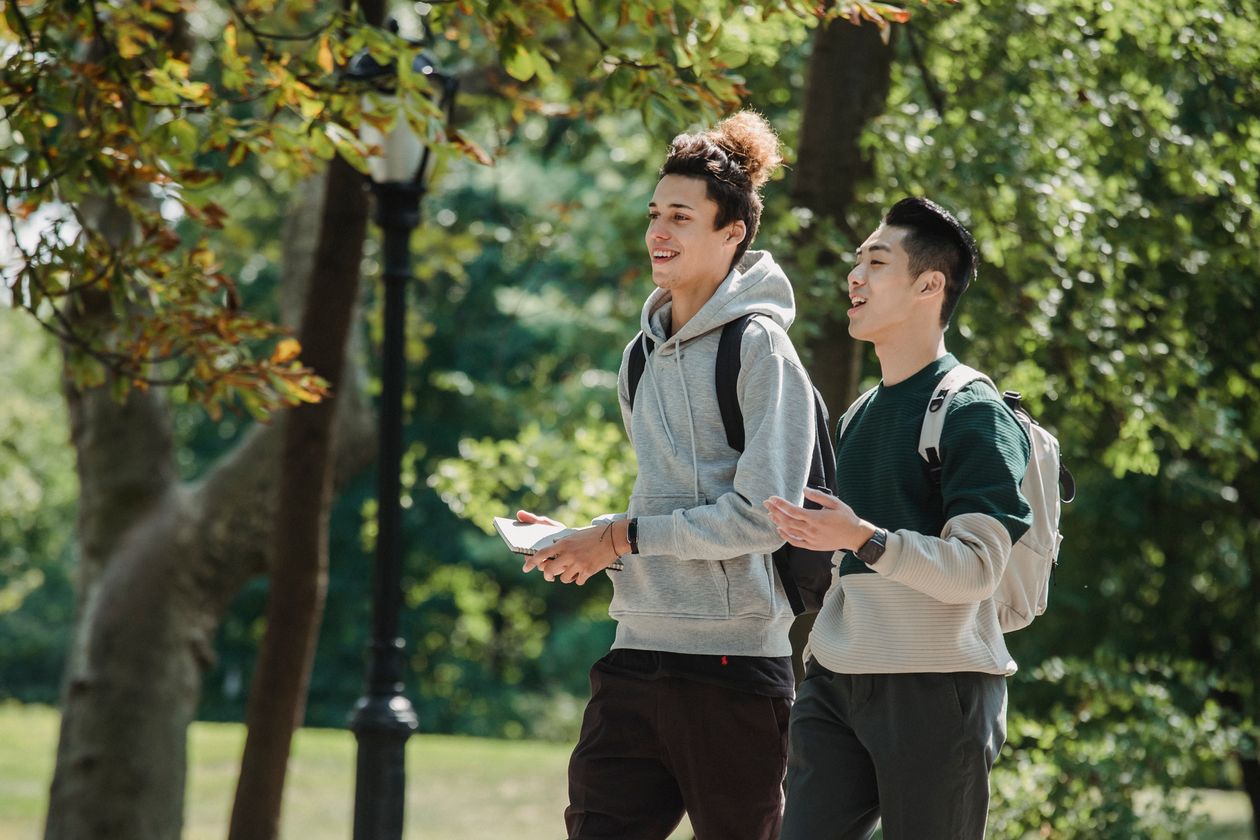 Photo: Armin Rimoldi, Pexels
Because you agreed the route at the start, the end does most of the work for you. When you get back to the meeting point, thank them and mention one specific thing you enjoyed, then say clearly what you'd like next. If you'd like to walk again, suggest a day and a route ("I'm doing the river path again next Saturday morning, want to come?") rather than a vague "we should do this again", which rarely turns into anything. If you don't feel a connection, "It was nice to meet you, enjoy the rest of your day" is a complete and kind goodbye, and nobody needs an excuse. The same goes mid-walk: if someone makes you uncomfortable, you can cut the loop short and head back, and you don't owe anyone the full route. And if you liked it, send a short message later that day. Thanks to the liking gap, they're probably wondering whether you enjoyed it too.
Keep the safety part simple. For a first walk with someone you don't know, meet in a public place, choose a route with other people on it, go in daylight, tell a friend where you're going and roughly when you'll be back, and make sure you can get home on your own. If anything feels off, trust that and leave. There's a longer guide to walking safely with new people on our site if you'd like more.
If you'd like to try a first walk, Walk With Me shows walks near you on a live map. Each one has a title, a description and a purpose such as Social, Fitness or Dog-friendly, so you can pick the kind of walk you're comfortable with, and by default the host approves who joins. Group walks are an easy start because the conversation never rests on one person, and there are Women Only, Men Only and LGBTQ+ Only walks if you'd feel more at ease on one of those. You can also find people to walk with on the site. It's free on the App Store and Google Play.
20 settembre 2026 · 7 minuti
Netwalking is networking on a walk instead of over coffee or drinks. What it's good for, what the research says, and how to plan one that works.
17 agosto 2026 · 7 minuti
Meeting someone new, for friendship, a date or work? When a walk works better, when a coffee does, and why a coffee to go often beats both.
11 agosto 2026 · 8 minuti
Going to a group walk on your own for the first time? What happens on the day, the manners that matter, and why the third walk counts most.