
October 11, 2026 · 9 min read
Amsterdam Anne Frank Walking Tour
From the Hollandsche Schouwburg through the old Jewish Quarter, past the Dockworker and the Dam, to the Anne Frank House on the Prinsengracht.
589

October 9, 2026 · 11 min read

 친구는 무료로 함께 걸어요
모든 투어는 앱에서 참여할 수 있는 정기 그룹 걷기 모임으로도 운영됩니다.
Quebec City의 오디오 투어 더 보기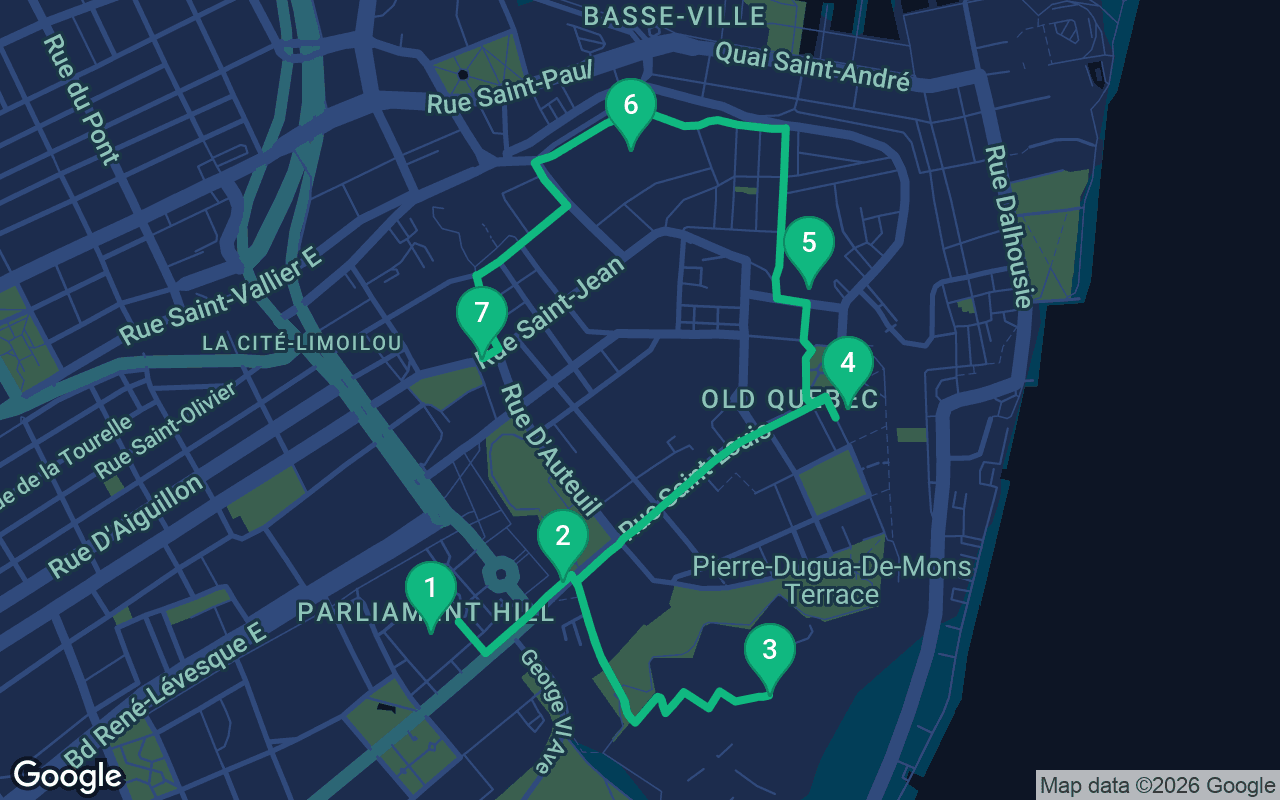
약 3.4km, 여유로운 페이스로 대략 47분 소요.
음성 가이드가 포함된 투어입니다
처음 3개 스톱에서 재생을 누르면 여기에서 나레이션을 30초 데모로 들을 수 있습니다. 앱에서는 인트로와 이 스톱들을 무료로 끝까지 들으실 수 있으며, 각 스톱에 도착하면 알림음이 울립니다. 전체 오디오 투어는 $8.99에 한 번만 구매하시면 평생 소장하실 수 있습니다.
Garmin, Komoot, Strava, OS Maps 및 모든 GPX 앱과 호환됩니다.
Quebec City is the only city north of Mexico that still stands inside its old stone walls, and the best way to understand why it needed them is to walk them. This loop starts just outside the ramparts at the Parliament Building, slips through the grandest of the city gates, climbs to the star-shaped Citadelle on top of the cliff, then drops to the boardwalk under the Chateau Frontenac. From there it winds through the cathedral, the convents and the old hospital that made this the religious heart of New France, and finishes at Porte Saint-Jean on the city's liveliest street. It covers roughly two and a half kilometers, and it is one of the most rewarding self-guided walking tours in North America for history packed into a small space.
Allow about two hours at a stroll, and a good deal longer if you take a guided tour of the Citadelle or the Parliament Building, both of which are worth the time. The Upper Town sits on top of a cliff, so expect one real climb, up the lane to the Citadelle, and plenty of short slopes after that. The streets are paved and some are cobbled, so wear shoes with a good grip, especially between November and April, when snow and ice are part of daily life here and sidewalks can be slick. Summer brings warm days, big crowds and long light; spring and fall are quieter and often lovely. Mornings are calmer everywhere. There is little shade on the boardwalk and the ramparts, so bring a hat in summer and a proper warm coat in winter, when the wind off the river bites. The Citadelle, the Parliament Building, the basilica and the Augustines museum all keep their own hours, and some change with the season, so check before you go. French is the language of the city. A simple bonjour when you walk into a shop goes a long way.
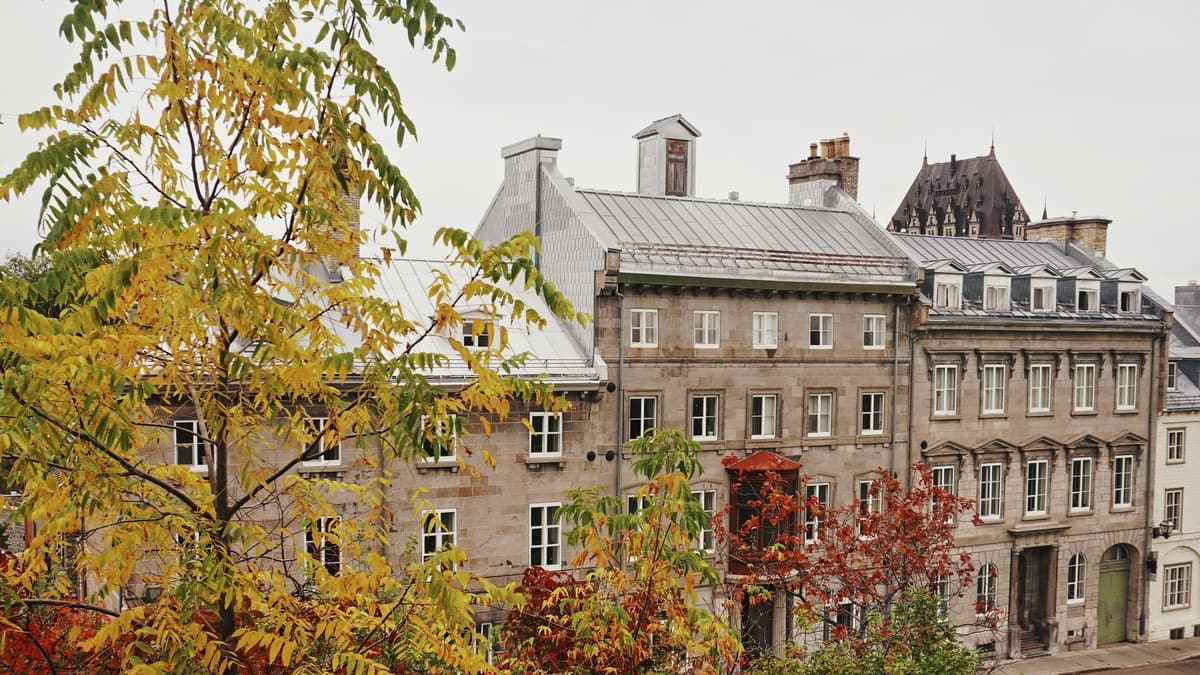
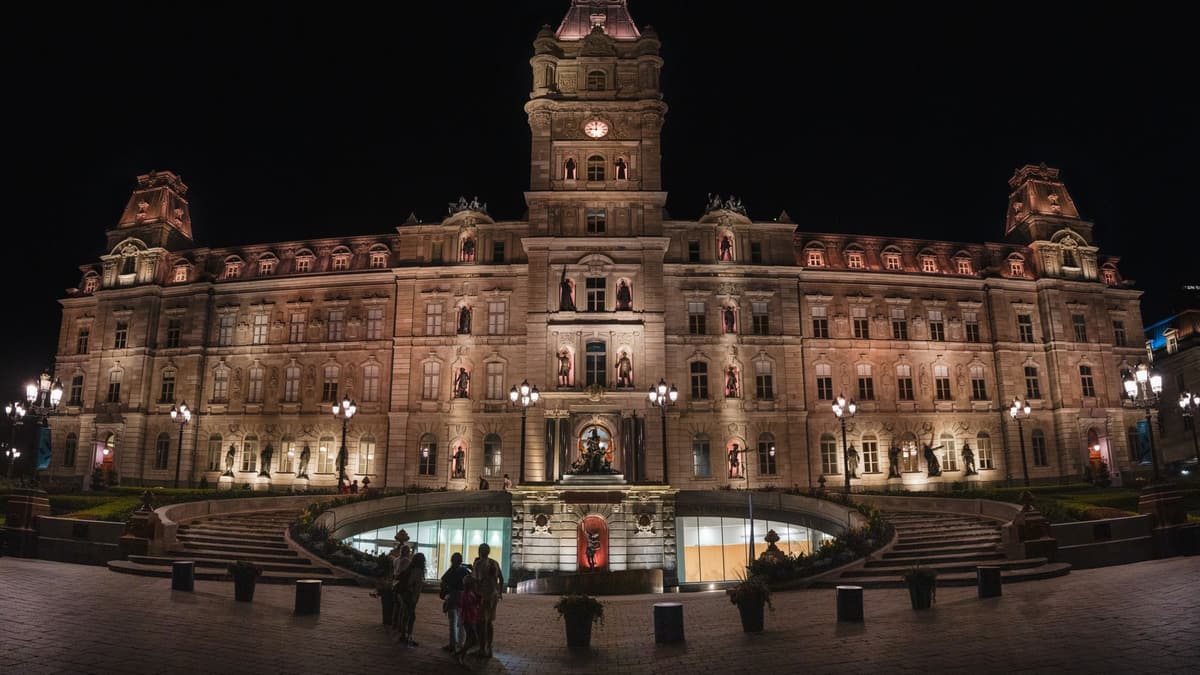
Stand by the ornate fountain in front of the main facade and look up at the Parliament Building, home of Quebec's National Assembly. It went up between 1877 and 1886 to designs by the architect Eugene-Etienne Tache, in the Second Empire style of Paris, with a tall central tower and steep mansard roofs. Now look closer at the facade. It is lined with niches, and the niches hold bronze figures from the province's past: explorers, governors, soldiers, missionaries and politicians, added over many decades, so the building reads like a history book in metal. Above the main door, under the coat of arms, you will find three words carved in stone: Je me souviens, I remember. Tache put them there, and the phrase became the province's official motto and now appears on every Quebec license plate. He never spelled out exactly what he meant, and people here still debate what it is that Quebec remembers. The fountain beside you has a story too. It was made in France in the nineteenth century and stood for years in Bordeaux before a Quebec family found it and gave it to the city for its 400th birthday in 2008. When you are ready, walk east along Grande Allee toward the stone wall ahead, about four minutes, to the gate with the turrets.
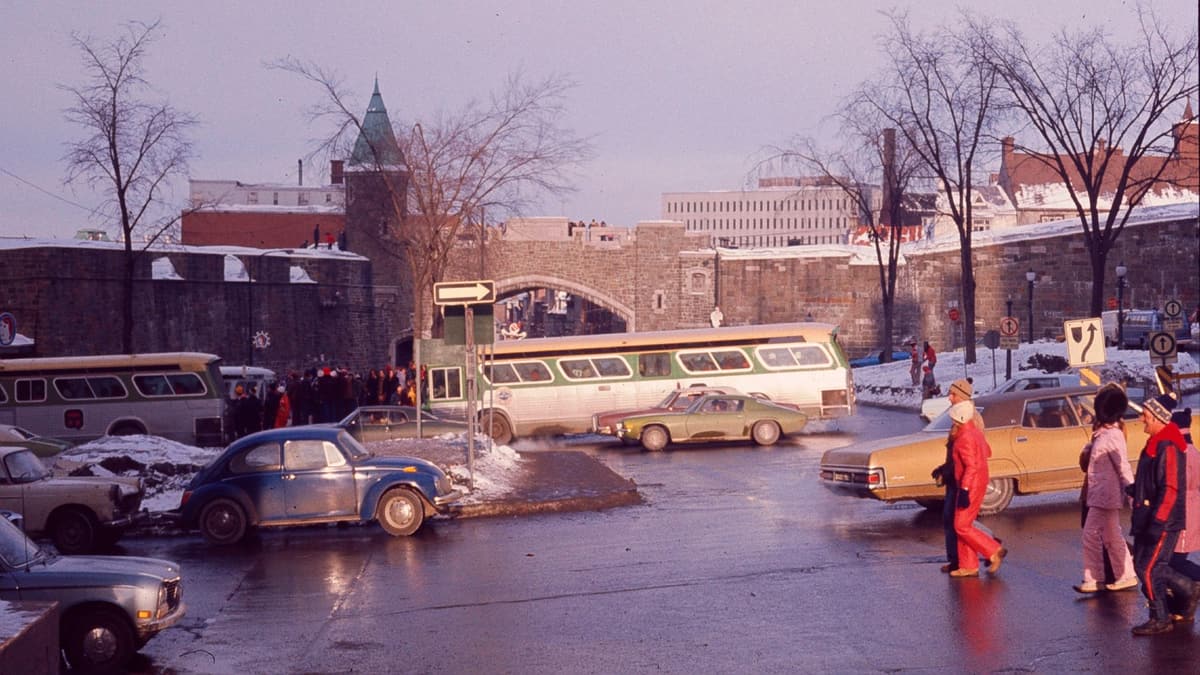
 This is Porte Saint-Louis, the grandest of the city gates, and you are standing at the edge of the walls that make Quebec unique on the continent. There has been a gate on this road since the days of New France, but the one in front of you, with its pointed turrets and battlements, belongs to the late 1870s, and it exists because of a rescue. By then the walls had lost their military purpose, and many locals saw them as an obstacle, a stone collar choking traffic and trade. Several gates had already been pulled down, and the rest of the fortifications looked doomed. Lord Dufferin, then Governor General of Canada, argued that they were the city's greatest treasure. Under his plan the walls were kept, and new, wider gates were built in a romantic style that let carriages through while making the ramparts look even more like a storybook. Today more than four kilometers of walls survive, and in 1985 the old city became a UNESCO World Heritage Site. Climb the steps beside the gate if you like and walk a little way along the top for the view. Then pass through the gate, and just inside, take the lane on your right, Cote de la Citadelle, which climbs steeply up the hill. The fortress is at the top, about six minutes away.
At the top of the lane you reach the gate of the Citadelle, a star-shaped fortress sitting on Cap Diamant, the highest point of the cliff. The name of the cape goes back to the 1540s, when French sailors gathered shiny crystals here, sure they were diamonds; they turned out to be quartz. The British built the Citadelle between 1820 and the early 1830s, and its reason for being lies just beyond its western walls, on the Plains of Abraham. In September 1759 the British general James Wolfe landed his troops at night below the cliffs upriver and led them up a narrow path. By morning they stood in battle lines on the plain, a stretch of farmland outside the walls. The French commander, the Marquis de Montcalm, attacked, and the battle was over in well under an hour. Wolfe was killed on the field and Montcalm was mortally wounded and died the next day. The city surrendered within the week, and New France soon passed to Britain. The fortress came later, built against a new threat: the Americans, who had already attacked Quebec once, in 1775. It was never tested. Today it is still a working military base, home of the Royal 22nd Regiment, and an official residence of the Governor General and the monarch. In summer you can watch the changing of the guard, bearskin hats and all. To reach the next stop, walk back down Cote de la Citadelle to Rue Saint-Louis, turn right and follow it east to the open square at its end, about eight minutes. In the warmer months you can take the Governors' Promenade instead, a cliffside boardwalk and staircase below the fortress walls; it closes in winter.
포함 사항
저희 투어는 명상하듯 몰입할 수 있도록 만들어졌습니다. 걸으며 그저 귀 기울이시면 됩니다. 함께하면 언제나 더 좋고, 앱이 나레이션을 동기화해 재생하므로 당신과 파트너, 친구들이 모든 스톱을 같은 순간에 들을 수 있습니다.
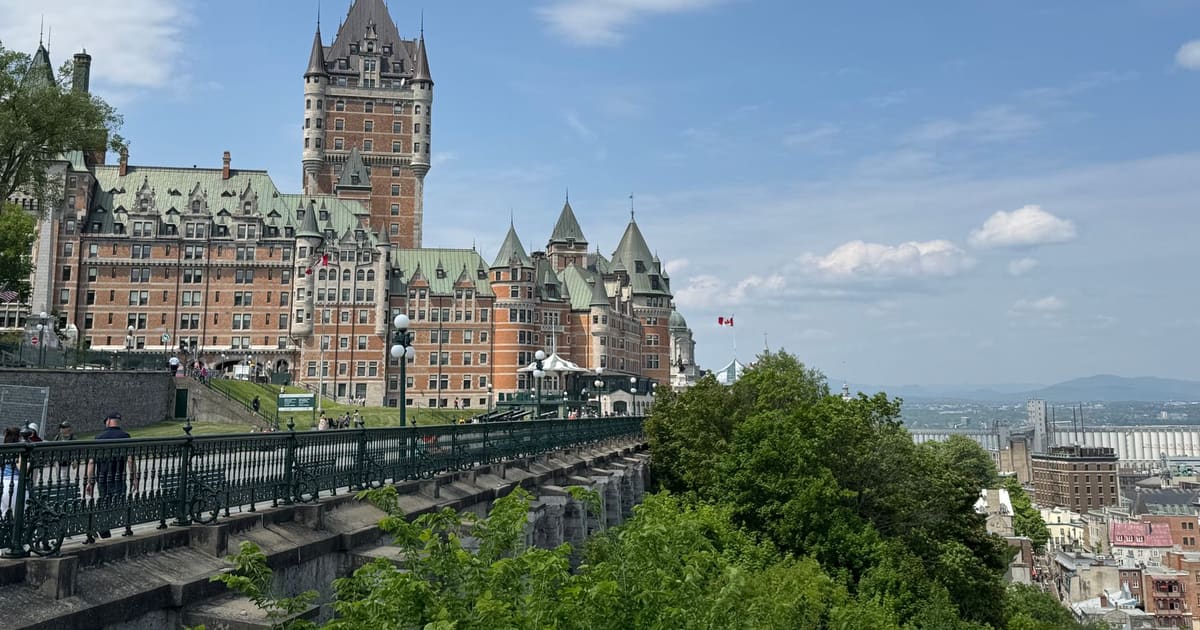
Walk out onto Dufferin Terrace, the broad wooden boardwalk along the cliff edge, and turn around. Towering over you is the Chateau Frontenac, often called the most photographed hotel in the world, and it is easy to see why.
이 스톱의 나머지 내용은 전체 오디오 투어에 있습니다.
You are standing before the mother church of French North America.
이 스톱의 나머지 내용은 전체 오디오 투어에 있습니다.
This long, quiet building at the edge of the walls is where the first hospital in North America north of Mexico began.
이 스톱의 나머지 내용은 전체 오디오 투어에 있습니다.
The walk ends at Porte Saint-Jean, the gate at the western end of Rue Saint-Jean, the busiest and most cheerful street in the old city.
이 스톱의 나머지 내용은 전체 오디오 투어에 있습니다.
다음 예정된 투어에서 다른 사람들과 함께 이 산책을 해보세요.
약 3.4km, 여유로운 페이스로 대략 47분 소요 · 7 정류장
친구는 무료로 함께 걸어요October 11, 2026 · 9 min read
From the Hollandsche Schouwburg through the old Jewish Quarter, past the Dockworker and the Dam, to the Anne Frank House on the Prinsengracht.
October 11, 2026 · 11 min read
From Van Houten's street by the Vondelpark past Leidseplein, the Rijksmuseum passage and the famous canal bench to the Anne Frank House.

October 11, 2026 · 10 min read
Follow the last days of April and May 1945 from the Anhalter Bahnhof ruin past the Gestapo site and Brandenburg Gate to the Moltke Bridge and the Reichstag.
