
11 oktober 2026 · 7 minuten
How to Build a Walking Habit
Why a daily walk is worth it, how long a new habit takes to form, and a simple plan that still works on a bad week.


Mostly, yes: nothing special happens at 10,000 steps a day, and the number didn't come from a study. It most likely comes from the name of a Japanese pedometer sold in 1965, the Manpo-kei, which means "10,000 steps meter". When researchers later measured steps and health, the benefits started far lower and levelled off before 10,000 for most people: at about 7,500 steps a day in a large study of older women, and somewhere between 6,000 and 10,000 depending on age in the biggest pooled analyses. Ten thousand isn't harmful or wrong, it just isn't a threshold. For most people a target of about 7,000 to 8,000 steps covers most of the benefit, and if you're well below that, each extra thousand steps counts for more than it would for someone already near 10,000. Here's where the number came from, what the research found, and how to pick your own.
The origin story comes from the researchers themselves. A 2019 study in JAMA Internal Medicine says the goal "likely derives from the trade name of a pedometer sold in 1965 by Yamasa Clock and Instrument Company in Japan called Manpo-kei, which translates to '10 000 steps meter' in Japanese." The authors of a 2022 analysis in The Lancet Public Health put it more bluntly: the goal "is not based on evidence, but instead originates from a marketing campaign in Japan." The word "likely" matters, because nobody has found a study behind the figure; it was a good name for a product, round and easy to remember. It stuck for the same reasons: it's simple, it's big enough to feel like an achievement, and it fits on a watch face. None of that makes 10,000 a bad goal, but it changes the useful question from whether you hit the number to where the benefit is. If you'd like to see what 10,000 steps is as a distance for your height, you can convert steps to kilometres.
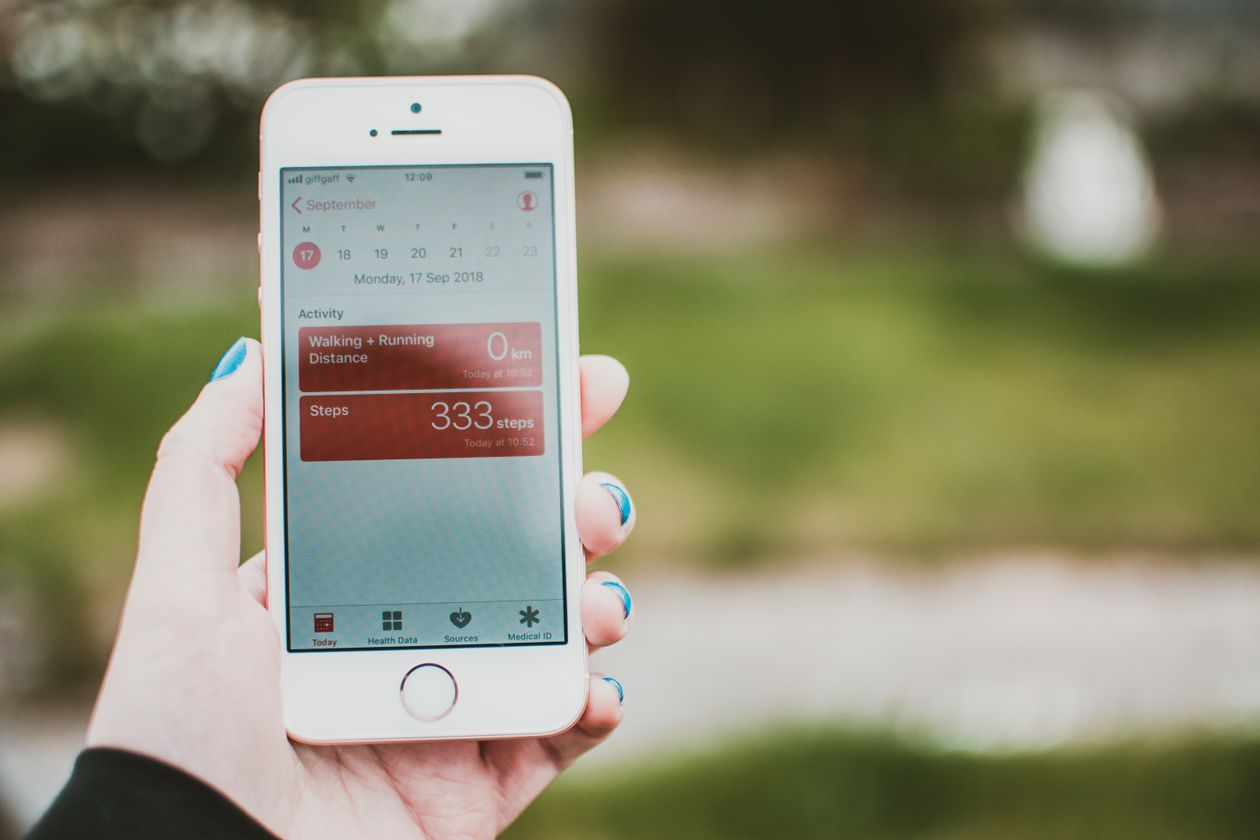 Photo: Lisa Fotios, Pexels
That 2019 study, led by I-Min Lee, tested the number directly. The researchers gave 16,741 women, with an average age of 72, a device to wear on the hip for a week that counted their steps, then followed them for an average of 4.3 years, during which 504 of the women died. The least active quarter took a median of about 2,700 steps a day. The next quarter, at about 4,400 steps, had a 41% lower risk of dying during the study, a big difference for fewer than 2,000 extra steps a day. The risk kept falling as steps went up, until about 7,500 steps a day, and then it flattened out. The team also looked at how fast the women stepped, and once total steps were taken into account, the intensity measures made little difference. The limits are worth knowing: the study was observational, so it shows a link rather than proof that the steps caused the difference; the women were mostly white and better off than average; and one week of steps stood in for years of habits. Still, for women in their seventies, it put the useful target well below 10,000.
The 2022 analysis by Paluch and colleagues pooled 15 studies of 47,471 adults, followed for a median of about seven years, and found the same shape. The risk of dying fell steeply at first and then levelled off at around 6,000 to 8,000 steps a day for people aged 60 and over, and 8,000 to 10,000 for younger adults. The authors note that the steep early slope suggests more steps help most for people who take few. A bigger review in 2025, in the same journal, pooled 57 studies from 35 groups of people and looked beyond death to heart disease, cancer, diabetes, dementia, depression and falls. Compared with 2,000 steps a day, 7,000 steps was linked to a 47% lower risk of dying during the studies, a 25% lower risk of heart and circulation disease, a 38% lower risk of dementia and a 22% lower risk of depressive symptoms. Even 4,000 steps was linked to a 36% lower risk of dying than 2,000. Going from 7,000 to 10,000 added only a little, about a 10% lower risk of dying, and no clear difference for most of the other outcomes. The authors concluded that 7,000 "might be a more realistic and achievable target for some", while 10,000 "can still be a viable target for those who are more active." They rated the certainty of the evidence as moderate for most outcomes, and all of it is observational: people who walk more may be healthier in other ways too.
 Photo: Radik 2707, Pexels
Both of the big studies asked whether the speed of your steps matters on top of the total. In Lee's study of older women, once total steps were accounted for, the intensity measures were "largely nonsignificant". Paluch's team called their own results on step rate "inconclusive". So the total number of steps is what the evidence supports best, and the extra value of stepping fast is still an open question. That doesn't make brisk walking pointless, because the weekly activity guidelines count minutes of brisk walking, which is a different measure from steps, and it's fine to keep an eye on both. What it does mean is that steps you take around the house, at work and on the way to the shops count towards your daily total just as much as the ones on a planned walk, which makes a step goal easier to reach than the slogan suggests.
Start by finding your real number. Most phones already count steps, so look at your average over a normal week rather than your best day. Then pick the next target from the table below, and move up only once the new number feels routine. For most people, I think 7,000 is a better default than 10,000, because it's where most of the measured benefit has already arrived, and it's a number you can still hit on a busy, rainy Tuesday. If you have a heart condition, joint problems, or haven't been active for a long time, check with your doctor before adding a lot of steps quickly.
| Your usual daily average | A sensible next target |
|---|---|
| Under 4,000 steps | 4,000, then build up from there |
| 4,000 to 7,000 steps | About 7,000 |
| 7,000 or more, aged 60 and over | Keep it up; extra steps add little |
| 7,000 or more, under 60 | 8,000 to 10,000, if you enjoy it |
A target is easier to choose once you can see what an ordinary day looks like. Walk With Me is a free walking app that counts your steps through Apple Health or Health Connect, with a daily step goal ring and week and month rings, so a short day and a long walk both show up in the same picture. When you'd like company for the extra steps, it also shows walks near you on a map that you can join, or you can set up your own. It's free on the App Store and Google Play.
11 oktober 2026 · 7 minuten
Why a daily walk is worth it, how long a new habit takes to form, and a simple plan that still works on a bad week.
17 september 2026 · 8 minuten
Why the afternoon dip happens, how long a 3pm coffee stays with you, and what a ten-minute walk can and can't do instead.

7 september 2026 · 5 minuten
Why a walk loosens stuck thinking, what the research says about walking, stress and anxiety, and when a walk isn't enough on its own.
