
17 августа 2026 г. · 7 минут
Walk or Coffee First?
Meeting someone new, for friendship, a date or work? When a walk works better, when a coffee does, and why a coffee to go often beats both.
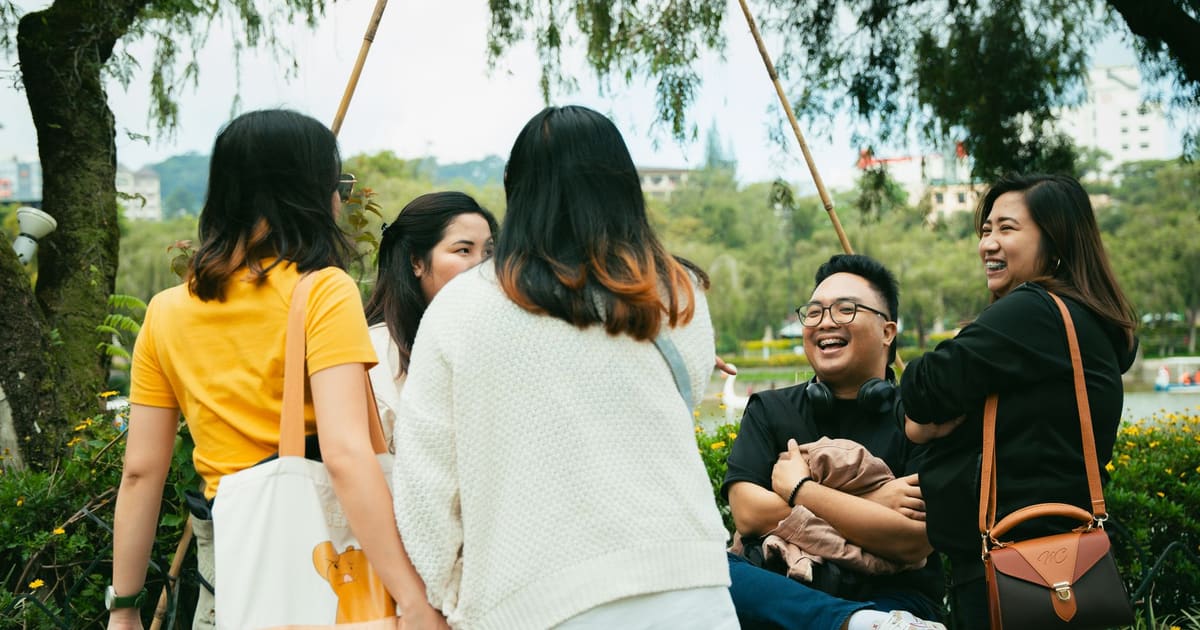
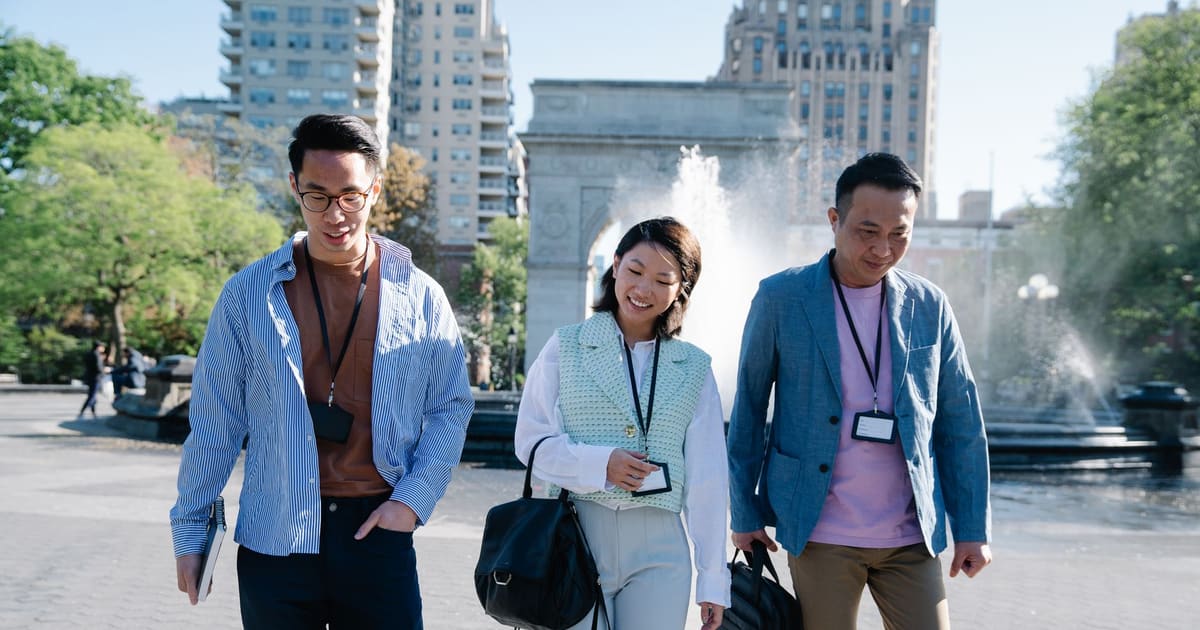
Netwalking (also written net walking, or a netwalk) is networking while you walk: you meet a work contact, a client, a colleague or a group of professionals for a walk instead of a coffee, a desk meeting or a drinks event. It can be a one-to-one walking meeting, or an organised group walk where people in the same field or the same area meet and talk as they go, often swapping partners along the way. It works best for getting to know someone and for open-ended thinking, such as ideas, advice and catching up. It works badly for anything that needs notes, a screen, confidential detail or more than two or three people in one conversation. The research is encouraging on the thinking and honest about the practical problems, and both shape how to plan a good one.
The best netwalks are conversations where nobody needs to look anything up. A first meeting with someone you've been introduced to, a mentoring chat, a catch-up with a former colleague, or a "what should we try next?" session with a co-founder all suit a walk, because the point is the conversation itself. Reviewing a contract, going through numbers, presenting slides or anything you wouldn't want a passer-by to overhear belong at a table. A useful test before you suggest one is to ask whether you'd be happy to leave your laptop and notebook behind for the whole meeting. If the answer is yes, walk. If you'd spend the hour wishing you could write something down or show the other person a screen, book a room or a café, or split it: walk for the first half to talk through the big picture, then sit down for the detail.
The best-known study here is by Marily Oppezzo and Daniel Schwartz at Stanford, published in 2014. Across four experiments with 176 people, mostly college students, walking boosted the kind of thinking where you generate lots of possibilities, measured with tasks like listing new uses for an everyday object. In the first experiment, 81% of people scored higher on that task while walking than while sitting, and the effect lingered when they sat down afterwards. Walking outside produced the most original ideas, though walking on a treadmill indoors still beat sitting. The limits matter for work, too. These were short lab tasks with mostly young students, and walking helped far less with puzzles that have one right answer, where only 23% of people improved. So a walk is a good place to ask "what could we do?" and a poor place to check whether a figure in a spreadsheet is right.
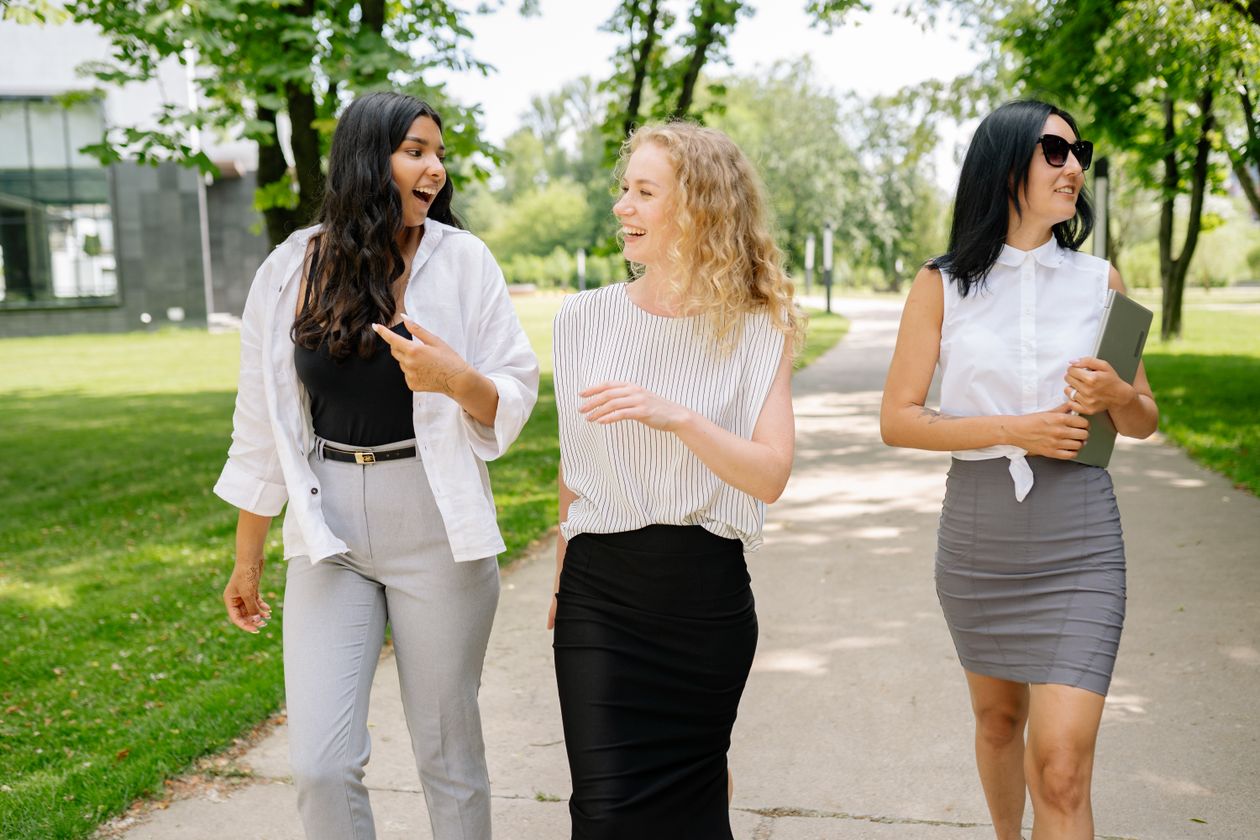 Photo: Yan Krukau, Pexels
There isn't much research on walking meetings at work, and what there is points both ways. In a small pilot study published in 2016 in Preventing Chronic Disease, a journal of the US Centers for Disease Control and Prevention, 17 office workers at a university in southern Florida replaced one seated meeting a week with a walking meeting of 30 to 40 minutes, in groups of two or three, for two weeks after a normal baseline week. Their work-time moderate and vigorous activity, measured with a device worn on the body, rose from an average of 107 minutes a week in the baseline week to 114 in the second and 117 in the third, and the participants found the meetings easy to fit in. It was a tiny study with no comparison group, and people who know they're being measured tend to move more, so the main finding is simply that walking meetings were workable for these people.
A larger study is less rosy. In the "Take a Stand!" trial, a Danish study of office workers published in 2020, 173 people in the group offered new ways to sit less were encouraged to hold both standing and walking meetings. Standing meetings caught on and were associated with less sitting. Walking meetings barely happened, and the people who tried them listed the reasons: the weather, needing to write or look at a computer, how hard it is to walk and talk with more than two people, the lack of privacy in a public place, trouble staying focused, the extra preparation, and a worry that leaving the office looked like skipping work. That list is the most useful thing in the research for anyone planning a netwalk, because every item on it is something you can plan around.
Most of the problems in that list disappear with a bit of planning, and these are the things I'd sort out before the day:
And keep the sales pitch out of it. Someone walking beside you can't easily leave, and a conversation that turns into a pitch halfway round a park feels like a trap. Use the walk to understand the other person's work and problems, and send the proposal afterwards if there's a reason to.
 Photo: Ketut Subiyanto, Pexels
A group netwalk is a networking event that moves. It needs a host, a meeting point that's easy to find, a route of an hour or so and, ideally, a café at the end for people who want to keep talking. The difficulty of walking and talking with more than two people, which came up in the Danish study, is the main design problem, and the fix is to stop trying to hold one big conversation. Let people walk in pairs and swap partners at set points, such as a bridge, a park gate or every fifteen minutes, so everyone meets several people without having to manage the move themselves. Keep introductions short at the start, ask people to say what they do and what they're looking for in one sentence, and finish at the café, where swapping contact details comes naturally.
If you'd like to host one, Walk With Me lets you plan a walk for a set date and time, give it a title, a description and a meeting note, set a participant limit, and choose who can see it: everyone, just your friends, or only the people you invite. Join requests come to you for approval by default, and the walk has its own chat for last-minute messages. You can also find other walks near you on the map and meet people walking in your area. It's free on the App Store and Google Play.
17 августа 2026 г. · 7 минут
Meeting someone new, for friendship, a date or work? When a walk works better, when a coffee does, and why a coffee to go often beats both.
11 августа 2026 г. · 8 минут
Going to a group walk on your own for the first time? What happens on the day, the manners that matter, and why the third walk counts most.
5 августа 2026 г. · 7 минут
Nervous about walking with someone you've just met? What to say first, how to handle silences and pace, and how to end the walk well.
