
October 11, 2026 · 9 min read
Amsterdam Anne Frank Walking Tour
From the Hollandsche Schouwburg through the old Jewish Quarter, past the Dockworker and the Dam, to the Anne Frank House on the Prinsengracht.
589

October 8, 2026 · 11 min read

 Arkadaşlar ücretsiz yürür
Her tur aynı zamanda uygulamada katılabileceğiniz planlı bir grup yürüyüşü olarak da gerçekleştirilir.
Charleston'de daha fazla sesli tur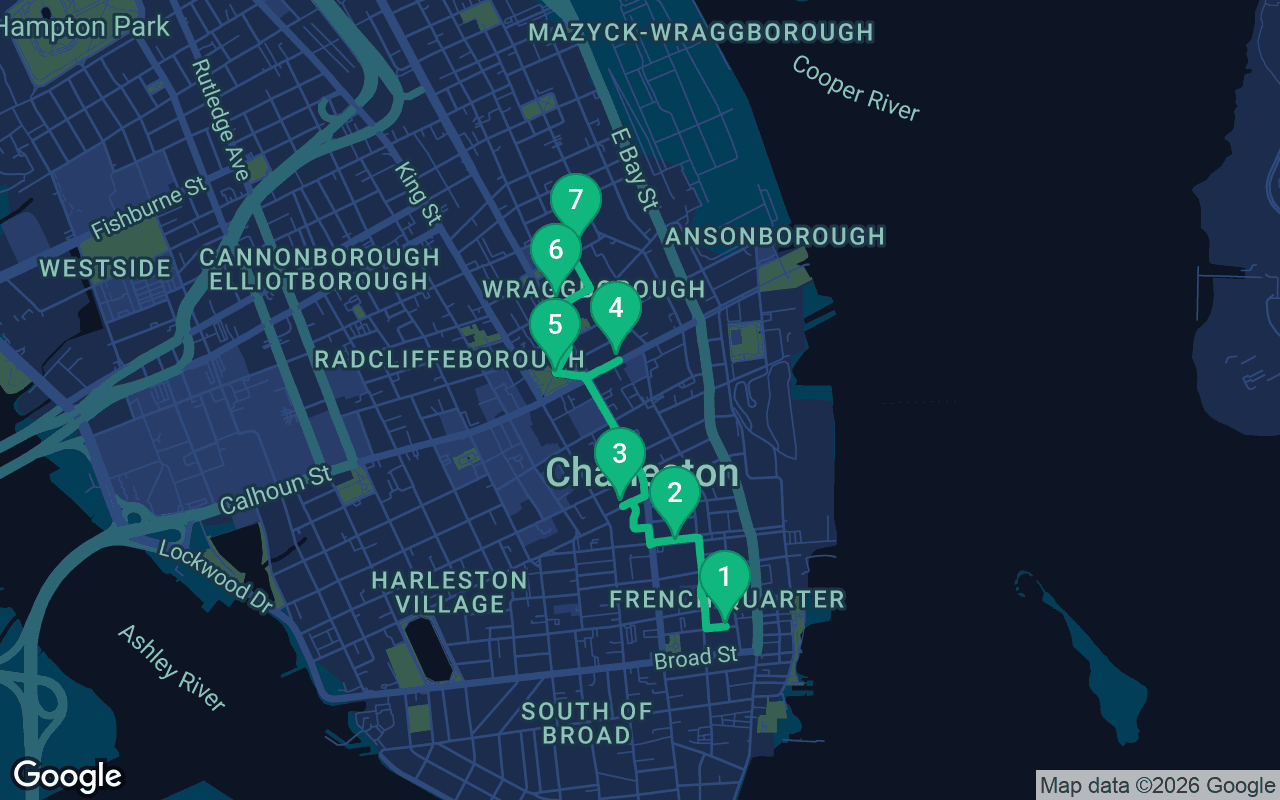
Yaklaşık 2,6 km, rahat bir tempoyla aşağı yukarı 37 dakika.
Bu tur sesli anlatımlıdır
Anlatımdan 30 saniyelik bir demo dinlemek için ilk 3 durakta oynat düğmesine basın. Uygulamada giriş bölümü ve bu 3 durak baştan sona ücretsizdir ve her birine vardığınızda sesli bir uyarı çalar. Tüm sesli tur, kalıcı olarak sahip olacağınız tek seferlik bir satın alma ile $7.99 karşılığında sizin olur.
Garmin, Komoot, Strava, OS Maps ve tüm GPX uygulamalarıyla çalışır.
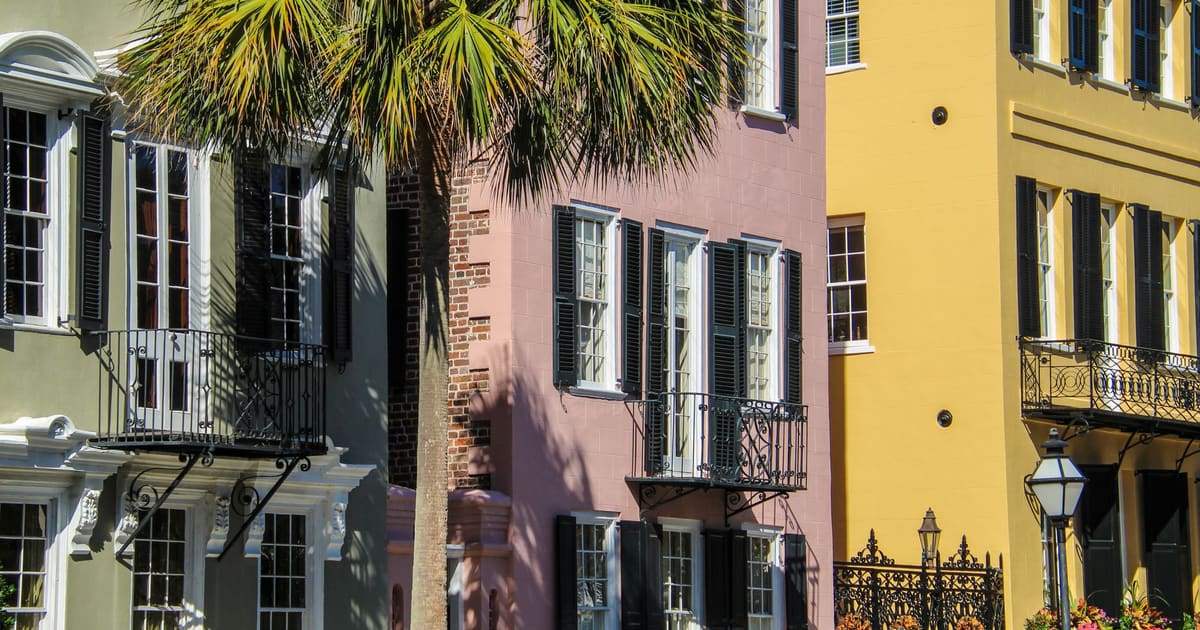
This is a walk about how Charleston became rich and who paid the price. It begins on a cobbled lane at the Old Slave Mart, the last known building in South Carolina where enslaved people were auctioned, then heads north through the long sheds of the City Market, past one of the oldest synagogues in the country and the church known around the world as Mother Emanuel, across the town green of Marion Square, and ends at a mansion that has been left almost exactly as time found it. It runs about 2.6 kilometers, a little over a mile and a half, mostly in a straight line up Meeting Street. Among self-guided walking tours of the city it is the one that asks the most of you, and gives the most back: beautiful buildings, living traditions, and the honest history behind them.
Allow an hour and a half to walk it, and a full morning or afternoon if you plan to go inside the Old Slave Mart Museum, the Charleston Museum and the Aiken-Rhett House, which together tell the story of this walk in depth. Check opening days and tickets before you go. The route is flat, with brick and cobbled stretches near the start, so comfortable shoes are a must. Summers are hot and humid, and Meeting Street has patchy shade, so carry water and plan your stops for the hottest part of the day indoors. The City Market is liveliest from late morning, and Marion Square hosts a farmers market on many Saturdays, so check the dates if you would like to catch it. Mother Emanuel is a working church and a place of mourning as well as history. Visitors are welcome, but keep your voice low, ask before taking photographs of people, and if you would like to attend a service, check the church's schedule ahead of time. Some parts of this walk are heavy going, so let yourself pause when you need to.
You are on Chalmers Street, one of the last cobbled streets in the city, in front of a modest building with a tall arched opening. This is the Old Slave Mart, and it deserves a quiet moment. Historians estimate that close to half of the enslaved Africans brought into what became the United States arrived through Charleston harbor. After the international trade was banned in 1808, the city became a hub of the domestic trade, where people were sold away from their families to plantations across the South. For decades those sales were held outdoors near the Old Exchange on East Bay Street. In 1856 the city banned public auctions, not out of mercy but because the spectacle had become an embarrassment, and the trade simply moved indoors to private sales rooms clustered around this street. This building, put up around 1859, was the auction gallery of a complex known as Ryan's Mart, with a yard and a jail behind it where people were held before sale. It is the last such building known to survive in South Carolina. Inside, the museum tells the story of the trade through the lives of the people sold here. When you are ready, walk west along Chalmers Street to Church Street, turn right, and follow Church Street north for about six minutes, past the Dock Street Theatre and the tall steeple of St Philip's, until the market sheds open on your left.
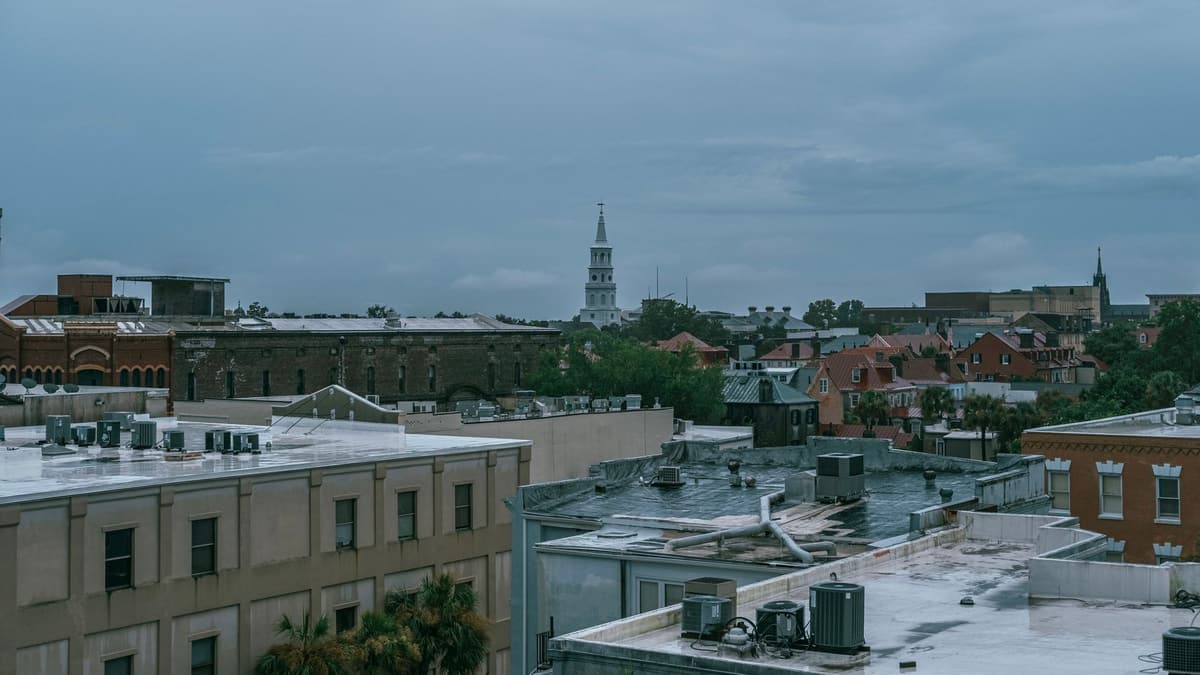 You are in the middle of the City Market, a line of open brick sheds that runs for four blocks from Meeting Street down toward the harbor. The land was given to the city in the 1780s by the Pinckney family on the condition that it be used as a public market, and it has been one ever since. In its first century this was where Charleston bought its meat, fish and vegetables, and the turkey vultures that cleaned up the butchers' scraps were so much a part of the scene that, the story goes, locals called them Charleston eagles. One thing to clear up: despite what you may hear, the City Market was never a place where people were sold. That trade happened on the street you just left. Today the stalls sell crafts and food, and the most remarkable things here are the sweetgrass baskets. They are made by Gullah Geechee artists, descendants of enslaved West and Central Africans on the Carolina and Georgia coast, who have kept their own language, food and crafts alive for centuries. The coiled baskets of sweetgrass, bulrush and palmetto descend from the fanner baskets once used to winnow rice. If a maker is weaving, watch for a while, and ask before taking a picture. Walk west through the sheds to the columned Market Hall on Meeting Street, turn right for one block, then left onto Hasell Street, about four minutes in all.
Behind the iron railings on your left stands a white temple with tall Doric columns, and it is a synagogue. Kahal Kadosh Beth Elohim, the Holy Congregation House of God, was founded in 1749, which makes it one of the oldest Jewish congregations in the United States. Jews came early to Carolina because the colony's founding constitutions promised freedom of worship, a rare thing at the time, and by around 1800 Charleston had one of the largest Jewish communities in the country. The congregation's first synagogue on this spot burned in the great fire of 1838. The building you see replaced it in 1840 and 1841, designed in the Greek Revival style to look less like a European synagogue and more like an American public building, which says a lot about how its members saw themselves. That idea went further inside. In 1824 a group of members had asked for shorter services, some prayers in English and a sermon, and when the new temple installed an organ, traditional members left to found a congregation of their own. Out of those arguments came Reform Judaism in America. At the dedication, the congregation's minister is remembered for saying that this city was their Jerusalem and this country their Palestine. Walk back to Meeting Street, turn left and head north for about seven minutes, then turn right onto Calhoun Street and look for the white steeple.
Neler dahil
Turlarımız meditatif ve sürükleyici olacak şekilde tasarlandı: yürürsünüz ve sadece dinlersiniz. Birlikte her zaman daha güzeldir; uygulama anlatımı senkronize çalar, böylece siz, partneriniz ve arkadaşlarınız her durağı aynı anda duyarsınız.
This tall white Gothic Revival church is Emanuel African Methodist Episcopal Church, known everywhere as Mother Emanuel, the oldest AME church in the South.
Bu durağın devamı tam sesli turda.
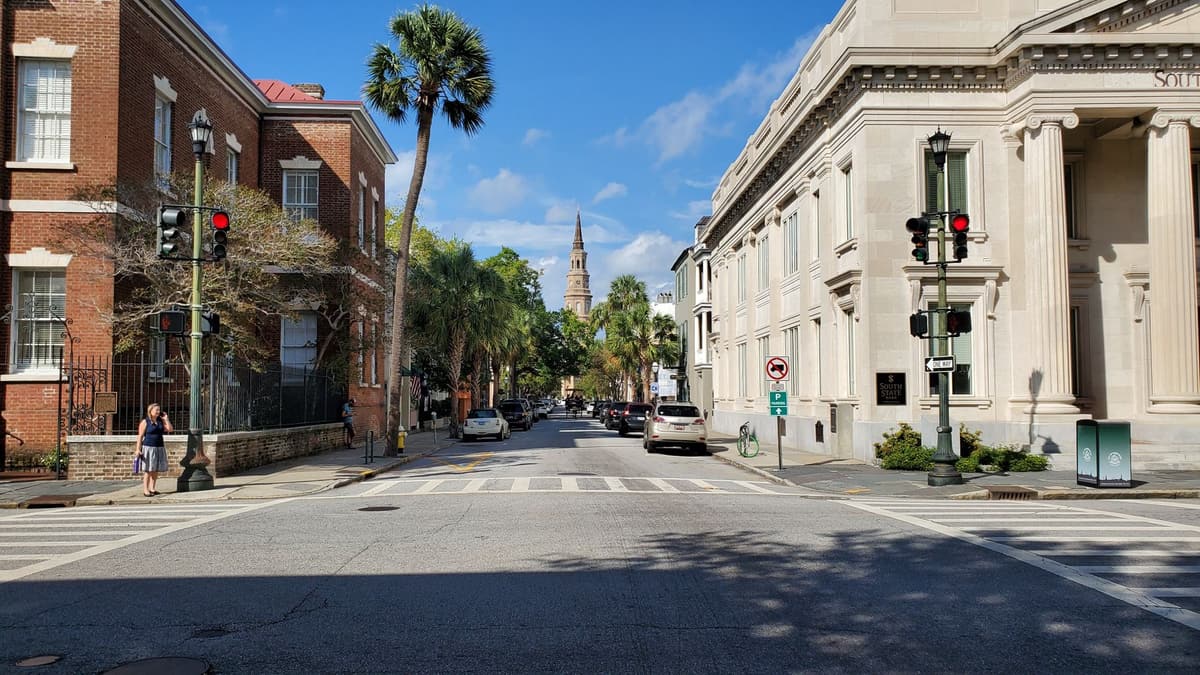
Marion Square is Charleston's town green, a broad sweep of lawn and paths between Meeting Street and the shops of King Street, and it is named for Francis Marion, the Revolutionary War officer known as the Swamp Fox.
Bu durağın devamı tam sesli turda.
The modern brick building on your left at the corner of John Street is the Charleston Museum, and the building is newer than the institution by more than two hundred years.
Bu durağın devamı tam sesli turda.
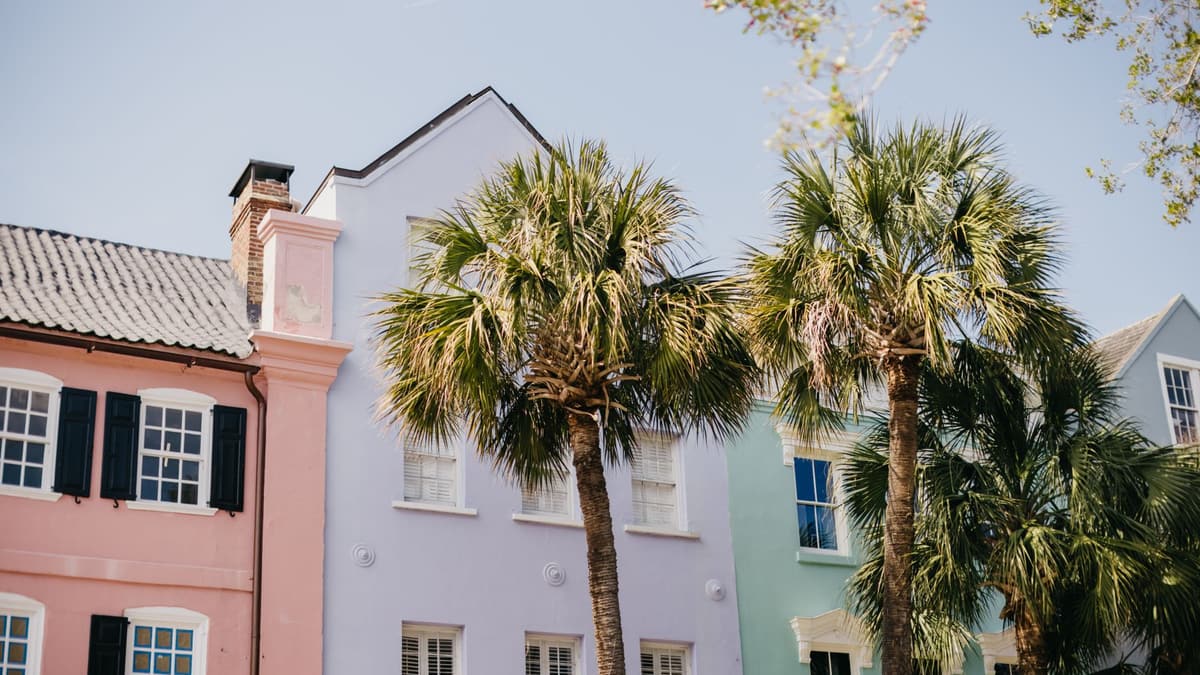
You finish at the Aiken-Rhett House, a big stuccoed mansion whose walls have faded to soft grays and ochres, and the fading is the point. A merchant built it in 1820, and soon afterward it passed to the Aiken family.
Bu durağın devamı tam sesli turda.
Bir sonraki planlı turda bu yürüyüşü diğer insanlarla birlikte yapın.
Kolay tempoda yaklaşık 2,6 km, tahminen 37 dakika · 7 durak
Arkadaşlar ücretsiz yürürOctober 11, 2026 · 9 min read
From the Hollandsche Schouwburg through the old Jewish Quarter, past the Dockworker and the Dam, to the Anne Frank House on the Prinsengracht.
October 11, 2026 · 11 min read
From Van Houten's street by the Vondelpark past Leidseplein, the Rijksmuseum passage and the famous canal bench to the Anne Frank House.

October 11, 2026 · 10 min read
Follow the last days of April and May 1945 from the Anhalter Bahnhof ruin past the Gestapo site and Brandenburg Gate to the Moltke Bridge and the Reichstag.
