
October 11, 2026 · 9 min read
Amsterdam Anne Frank Walking Tour
From the Hollandsche Schouwburg through the old Jewish Quarter, past the Dockworker and the Dam, to the Anne Frank House on the Prinsengracht.
589

October 9, 2026 · 11 min read

 Arkadaşlar ücretsiz yürür
Her tur aynı zamanda uygulamada katılabileceğiniz planlı bir grup yürüyüşü olarak da gerçekleştirilir.
Oaxaca'de daha fazla sesli tur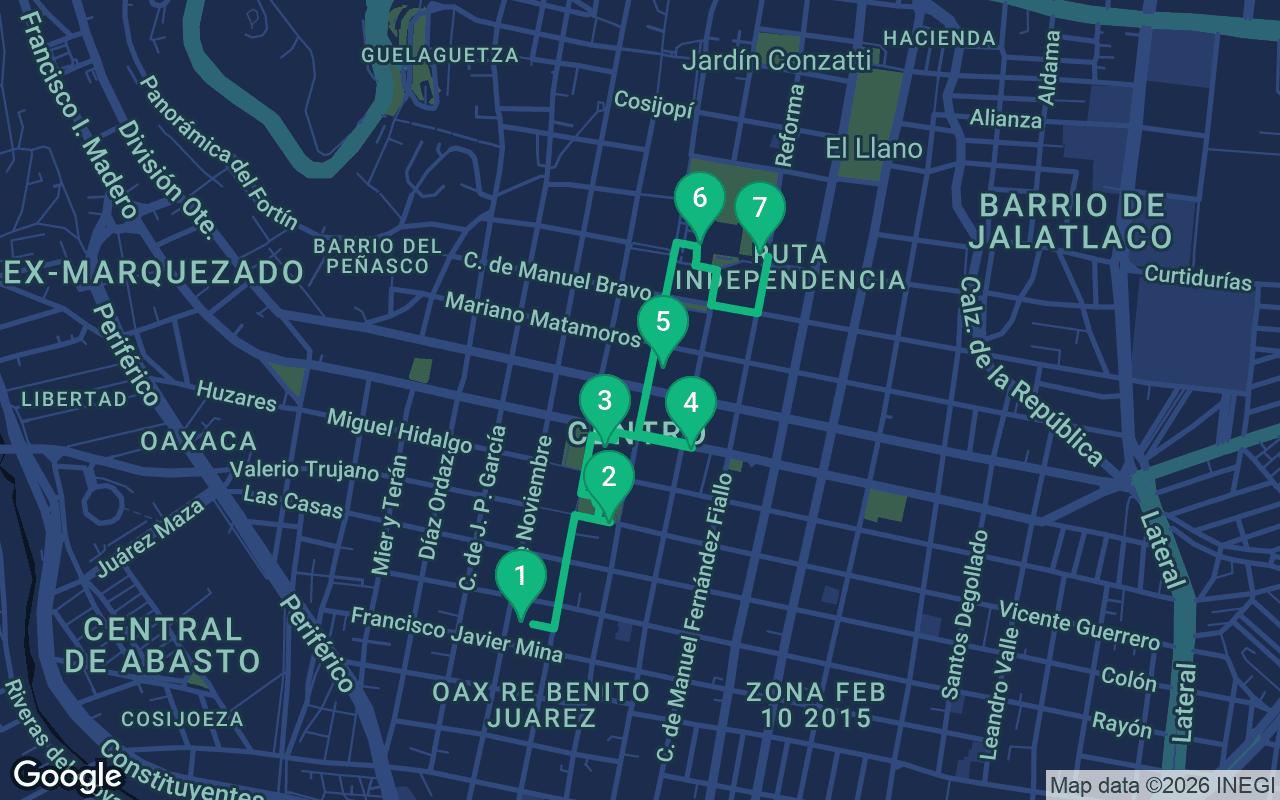
Yaklaşık 1,9 km, rahat bir tempoyla aşağı yukarı 27 dakika.
Bu tur sesli anlatımlıdır
Anlatımdan 30 saniyelik bir demo dinlemek için ilk 3 durakta oynat düğmesine basın. Uygulamada giriş bölümü ve bu 3 durak baştan sona ücretsizdir ve her birine vardığınızda sesli bir uyarı çalar. Tüm sesli tur, kalıcı olarak sahip olacağınız tek seferlik bir satın alma ile $6.99 karşılığında sizin olur.
Garmin, Komoot, Strava, OS Maps ve tüm GPX uygulamalarıyla çalışır.
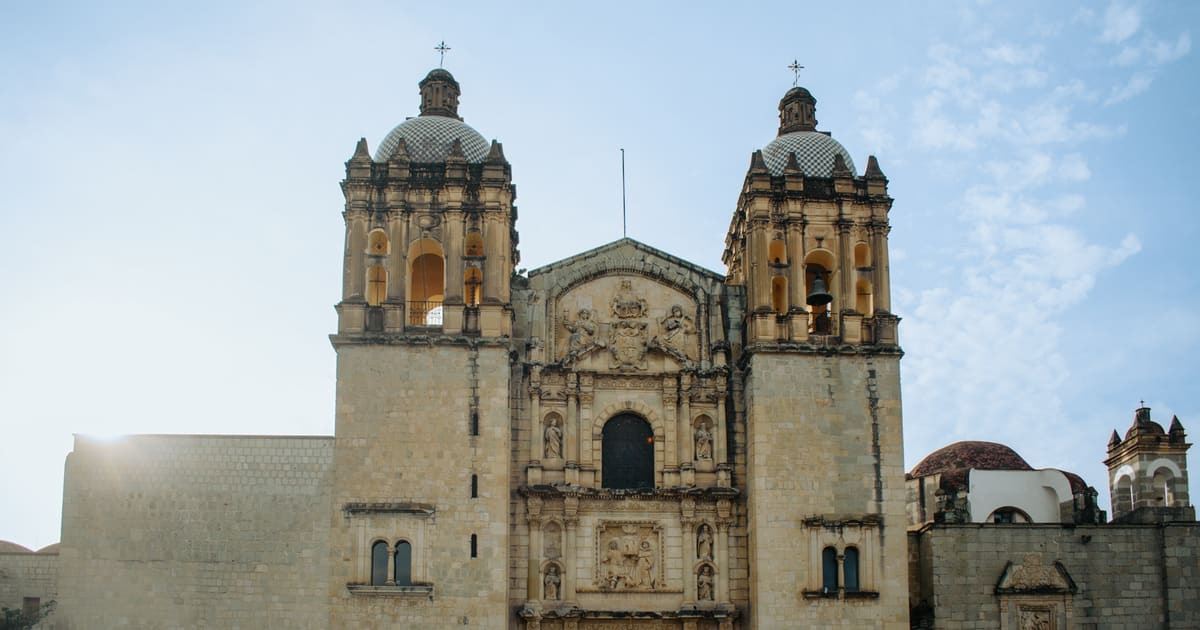
Oaxaca takes its name from Huaxyacac, the Nahuatl name for this valley, usually translated as the place of the guaje trees. Zapotec farmers had been working this land for thousands of years before the Aztecs placed a garrison here and the Spanish laid out a grid of streets in the years after the conquest. This walk follows the spine of that colonial town. It starts among the charcoal grills of the Mercado 20 de Noviembre, crosses the Zócalo, passes the cathedral and the old theater, and climbs the pedestrian Andador Macedonio Alcalá to the gilded church of Santo Domingo and the cactus garden behind it. It is about 1.6 kilometers, a little over a mile, and it may be the best fed of all our self-guided walking tours. Come hungry.
Allow an hour and a half at a stroll, and most of a day if you plan to eat lunch in the market and go inside the museums along the way. The route is flat and paved, and the Andador is closed to cars, but sidewalks elsewhere are narrow, curbs are high and the stone can be uneven, so watch your feet when you are looking up at the buildings. Oaxaca sits at about 1,550 meters, a little over 5,000 feet, so if you have just arrived, take it slowly and drink plenty of water. The sun is strong at this altitude even when the air feels mild, so bring a hat and sunscreen. Mornings are calm and bright. The rainy season runs roughly from June to September and usually brings storms in the afternoon, so walk early in those months. The Museo de las Culturas, the contemporary art museum and the ethnobotanical garden all keep their own schedules, and the garden is visited on guided tours only, so check before you go. Carry cash in small notes for the market, and expect the occasional march or sit-in around the Zócalo, which is part of life here.
Follow your nose. Somewhere inside the Mercado 20 de Noviembre you will find a long aisle hazy with smoke, the pasillo de humo, lined with butchers' stalls and glowing charcoal grills. Here is how it works. You point at what you want from the hanging meats, usually tasajo, thin sheets of salted beef, cecina enchilada, pork rubbed red with chile, and links of chorizo, and pay by weight. Someone grills it for you with spring onions and chiles while you buy tortillas, salsa, radishes and guacamole from the vendors working the aisle. Then you squeeze onto a bench at a shared table and eat with your hands. The rest of the market is just as good. The small comedores serve mole, and Oaxaca is often called the land of seven moles, from the dark, bittersweet mole negro to a yellow mole and a green one bright with fresh herbs. Look for chocolate ground with sugar and cinnamon and drunk hot, for golden egg-yolk bread, and for chapulines, toasted grasshoppers with lime and chile. And look for mezcal. Most of Mexico's mezcal is made in Oaxaca, from agave hearts roasted for days in earth pits, which gives the spirit its smoke. Sip it slowly, the local way. When you have eaten, leave by the market's north side. Across the street stands the larger Benito Juárez market, named for the Oaxacan president, and two blocks north, about five minutes, you come out under the trees of the main square.
 This is the Zócalo, officially the Plaza de la Constitución, and it is the city's living room. Giant Indian laurel trees shade the benches, arcades line the edges with café tables, and an iron bandstand stands in the middle, where a band often plays in the evening. Behind you on the south side is the old Palacio de Gobierno, the former seat of the state government, now a museum. Take a seat for a while and watch. Balloon sellers drift past, shoe shiners set up their stands, and women from villages in the valleys and the mountains sell embroidered blouses, woven belts and painted wooden animals. You will hear Spanish all around you, and often Zapotec or Mixtec too, because Oaxaca is home to more than a dozen Indigenous peoples, many of whom still speak their own languages. The square is also where Oaxacans come to be heard. Teachers and many other groups have long used it for marches and sit-ins, and in 2006 a protest movement held the city center for months before a police crackdown ended it in violence, a time people here have not forgotten. If you find tents and banners, that is part of the square's life too. The Spanish named their town Antequera, after a town in Spain, and the old name of Oaxaca returned after independence. Walk to the north side of the square, a minute or two, and the cathedral is right in front of you.
Stand back from the cathedral and look at the stone. That soft green-gray color is cantera, a volcanic stone quarried in the valley, and it is the color of the whole old town. It earned the colonial city the nickname la Verde Antequera, the green Antequera. The cathedral is dedicated to Our Lady of the Assumption, and its main front looks west onto the Alameda de León, the leafy square beside the Zócalo, so walk round to that side for the best view, with its carved panels rising above the doors. Work on a cathedral here began in the 1530s, but the valley shakes often and hard. Earthquakes damaged the building again and again, and most of what you see comes from rebuilding in the eighteenth century. Notice how squat and heavy it is, with thick walls and towers that barely rise above the roof. Oaxaca's builders learned to build low and broad so their churches would stay standing, and it is a style you will see all over the city. If no service is under way, step inside quietly for a look at the long, cool nave. Then, from the cathedral's north side, walk east along Avenida Independencia for two blocks, about three minutes, and look for a building that seems to have wandered in from Paris.
Neler dahil
Turlarımız meditatif ve sürükleyici olacak şekilde tasarlandı: yürürsünüz ve sadece dinlersiniz. Birlikte her zaman daha güzeldir; uygulama anlatımı senkronize çalar, böylece siz, partneriniz ve arkadaşlarınız her durağı aynı anda duyarsınız.
This theater is Oaxaca at its most Parisian. It went up in the first decade of the twentieth century and opened in 1909, during the long rule of Porfirio Díaz, who was born in Oaxaca and governed Mexico for more than thirty years.
Bu durağın devamı tam sesli turda.
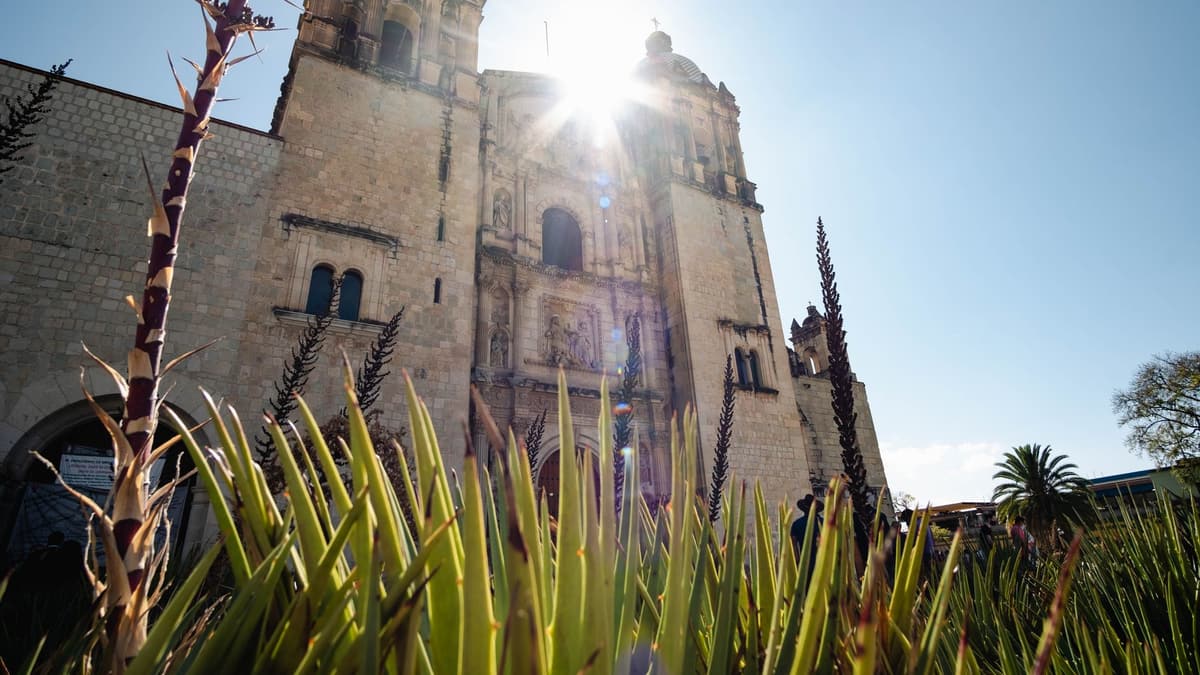
You are now on the Andador, Oaxaca's main promenade, a car-free street of green stone houses painted ocher, blue and rose, with shops selling weaving, galleries, cafés and mezcal bars.
Bu durağın devamı tam sesli turda.
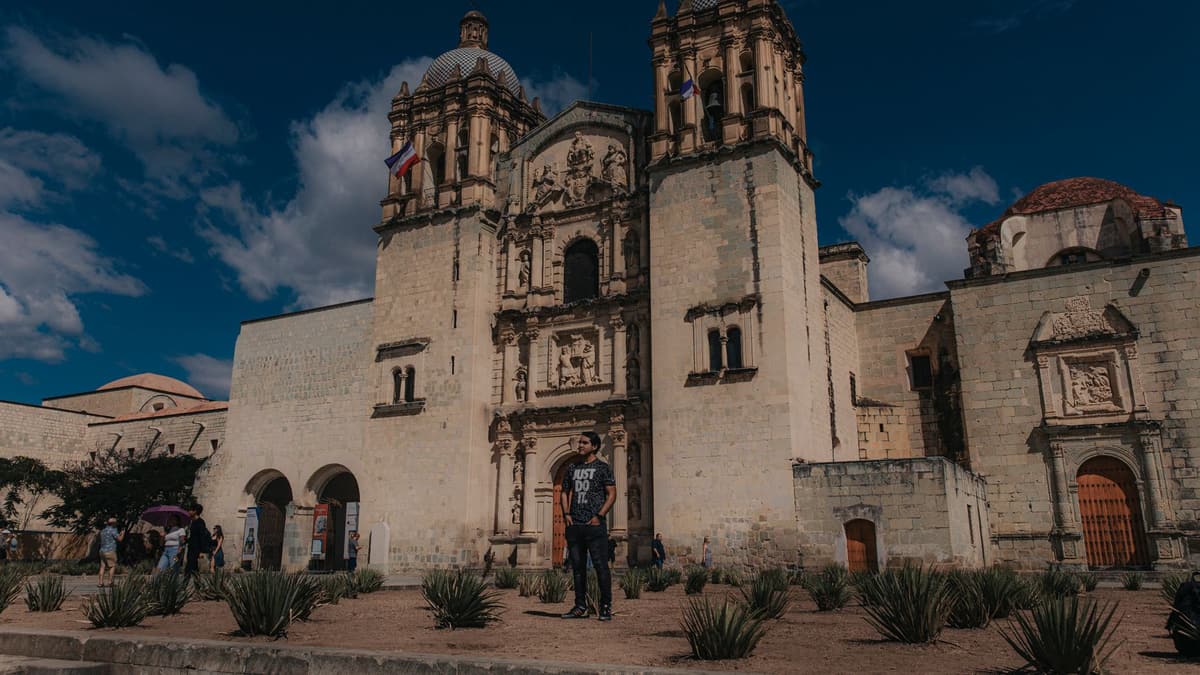
Take this one in from the far end of the forecourt first.
Bu durağın devamı tam sesli turda.
Behind the church and the convent lies one of the most original gardens in Mexico. For well over a century these grounds were part of a military barracks, and when the army finally left in the 1990s there were plans to build here.
Bu durağın devamı tam sesli turda.
Bir sonraki planlı turda bu yürüyüşü diğer insanlarla birlikte yapın.
Kolay tempoda yaklaşık 1,9 km, tahminen 27 dakika · 7 durak
Arkadaşlar ücretsiz yürürOctober 11, 2026 · 9 min read
From the Hollandsche Schouwburg through the old Jewish Quarter, past the Dockworker and the Dam, to the Anne Frank House on the Prinsengracht.
October 11, 2026 · 11 min read
From Van Houten's street by the Vondelpark past Leidseplein, the Rijksmuseum passage and the famous canal bench to the Anne Frank House.

October 11, 2026 · 10 min read
Follow the last days of April and May 1945 from the Anhalter Bahnhof ruin past the Gestapo site and Brandenburg Gate to the Moltke Bridge and the Reichstag.
