
October 11, 2026 · 9 min read
Amsterdam Anne Frank Walking Tour
From the Hollandsche Schouwburg through the old Jewish Quarter, past the Dockworker and the Dam, to the Anne Frank House on the Prinsengracht.
589

October 9, 2026 · 11 min read

 Arkadaşlar ücretsiz yürür
Her tur aynı zamanda uygulamada katılabileceğiniz planlı bir grup yürüyüşü olarak da gerçekleştirilir.
Thessaloniki'de daha fazla sesli tur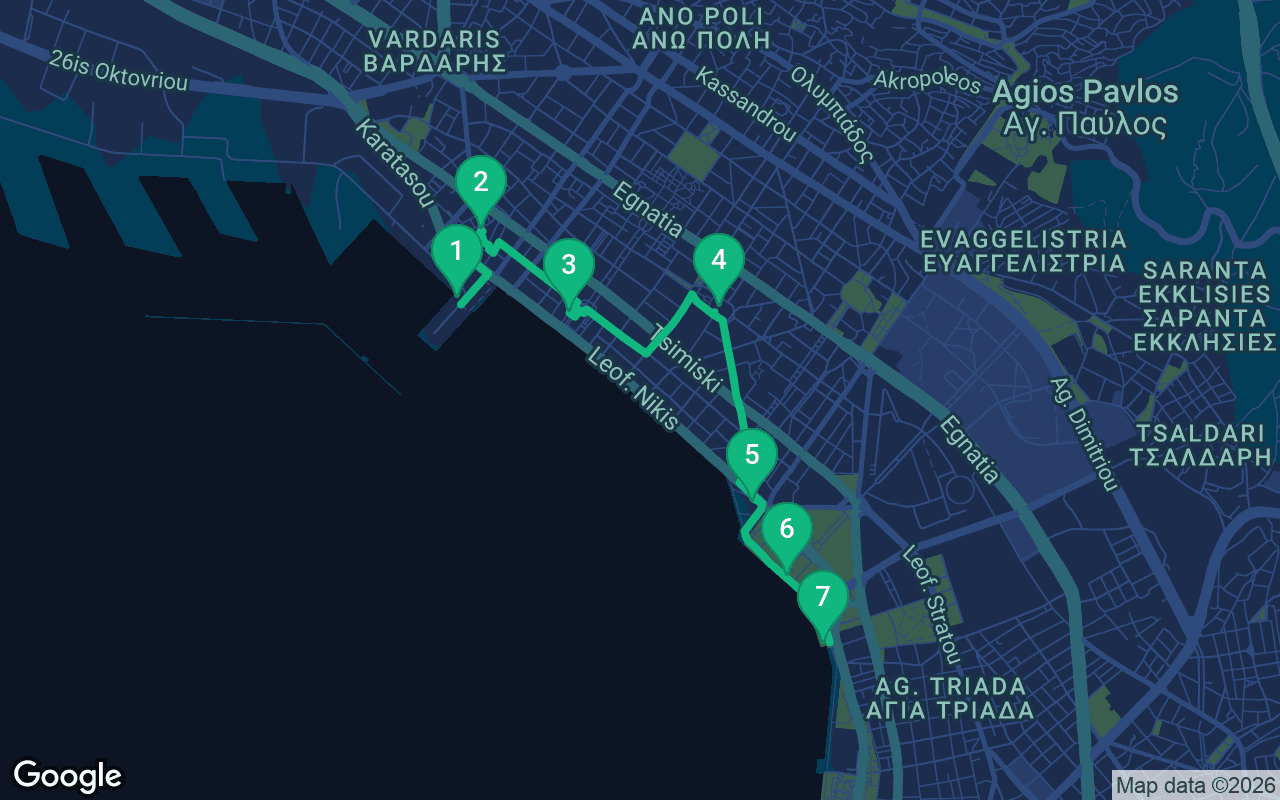
Yaklaşık 3,2 km, rahat bir tempoyla aşağı yukarı 44 dakika.
Bu tur sesli anlatımlıdır
Anlatımdan 30 saniyelik bir demo dinlemek için ilk 3 durakta oynat düğmesine basın. Uygulamada giriş bölümü ve bu 3 durak baştan sona ücretsizdir ve her birine vardığınızda sesli bir uyarı çalar. Tüm sesli tur, kalıcı olarak sahip olacağınız tek seferlik bir satın alma ile $8.99 karşılığında sizin olur.
Garmin, Komoot, Strava, OS Maps ve tüm GPX uygulamalarıyla çalışır.
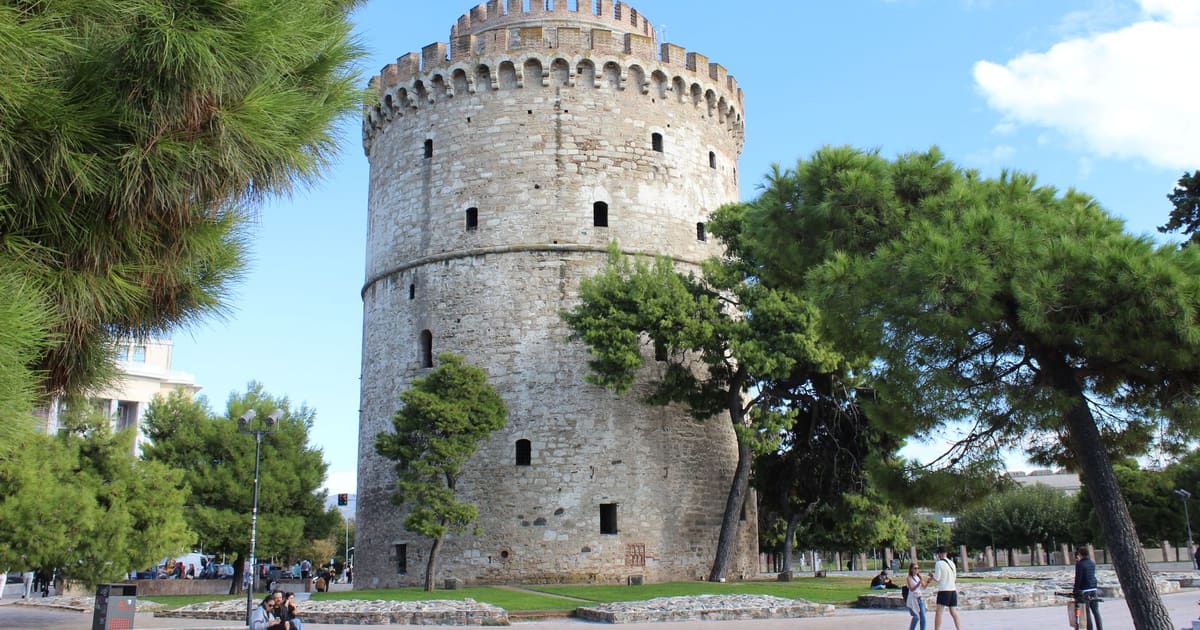
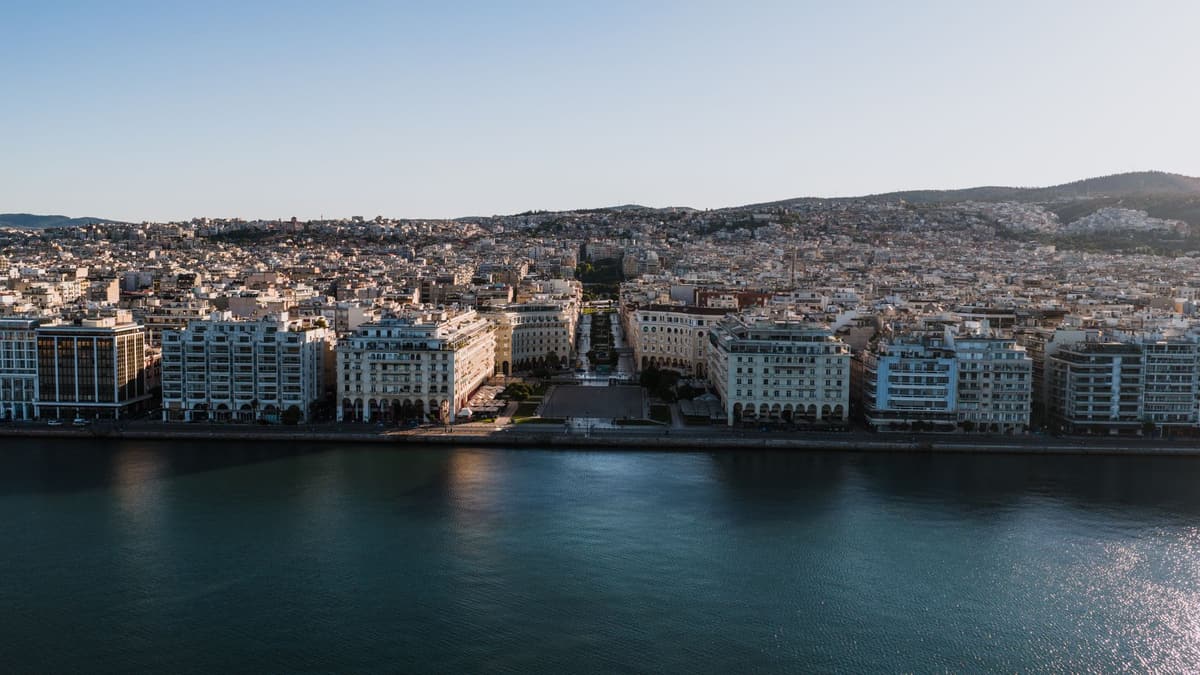
Thessaloniki lives facing the sea. Its long seafront promenade is where the whole city comes out in the evening, and the streets just behind it hold some of the most dramatic stories in modern Greek history. This walk follows the water from the old port warehouses at the western end, through the tavernas of Ladadika and the grand square built after the fire of 1917, past an eighth-century church and the White Tower, to Alexander the Great on his horse and the Umbrellas sculpture on the new waterfront. It is about three kilometers and flat the whole way, an easy evening stroll and one of the most rewarding self-guided walking tours in northern Greece. It pairs with the city's Byzantine walk, which climbs into the Roman and early Christian city a few blocks inland.
Allow about an hour and a half at a stroll, longer if you go inside the church or climb the White Tower. The route is flat and paved throughout. The seafront has very little shade, and Thessaloniki summers are hot and humid, so in the warm months go in the late afternoon and time the last stretch for sunset, when the light over the gulf is at its finest and the promenade is at its liveliest. On a clear day you can see Mount Olympus across the water, so keep an eye on the horizon. The White Tower is a museum with tickets and its own hours, and the church keeps hours around its services, so check before you go. Dress modestly for the church. In winter the wind off the water can be sharp, so bring a layer. Ladadika, the second stop, is full of tavernas and ouzeri, the small places that serve ouzo with plates of seafood and meze, so this walk works very well with dinner at either end.
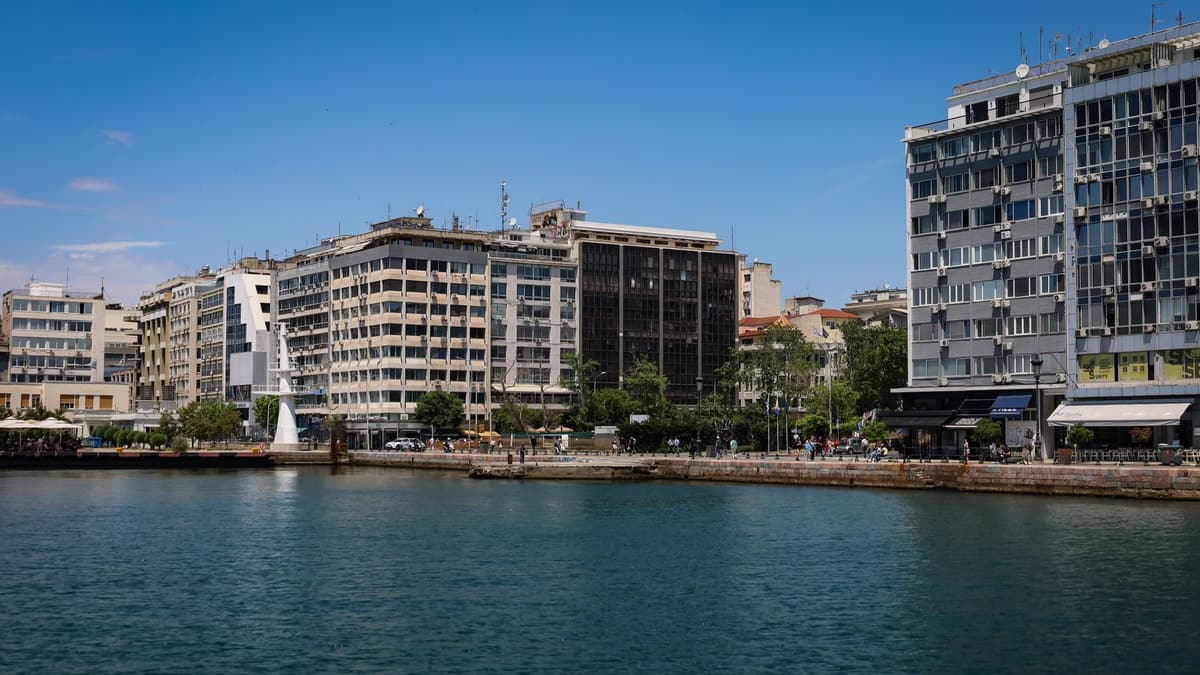
You are standing on the first pier of Thessaloniki's port, among long, low stone warehouses with big doors and pitched roofs. Goods once came off the ships into these sheds; now they hold cinemas, a cinema museum and a photography museum. Every November the warehouses become screening rooms for the Thessaloniki International Film Festival, which began in 1960 as a week of Greek cinema and is now the most important film festival in the country. Walk to the edge of the quay and look along the water. Thessaloniki has been a port since its founding more than two thousand years ago, and in Ottoman times it was one of the great trading cities of the eastern Mediterranean. Much of that trade ran through the hands of the city's Jewish community. After Spain expelled its Jews in 1492, the Ottoman sultan welcomed thousands of them here, and for over four centuries Thessaloniki was one of the great Jewish cities of the world, speaking Judeo-Spanish, or Ladino, in its streets and markets. Jews were for long the largest group in the city, and so many dockworkers, porters and boatmen were Jewish that the port fell quiet on Saturdays, the Sabbath. Hold on to that picture of the city; the next stop tells what became of it. Walk out of the port area through its gate, cross the main road, and turn left into the grid of small streets ahead. Ladadika is about five minutes away.
 These few blocks of low, brightly painted buildings, with tables spilling into lanes strung with lights, were once the city's olive oil market; the name comes from ladi, Greek for oil. Merchants traded oil, soap, spices and food here, and the district was one of the few in the lower town to survive the fire of 1917. It later fell into neglect and became a run-down red-light district, before a restoration from the 1980s turned it into the eating and drinking quarter you see. A few steps south of here is Eleftherias Square, Liberty Square, and it holds the city's darkest memory. German forces occupied Thessaloniki in April 1941. On a Saturday in July 1942, around nine thousand Jewish men were ordered into that square, kept for hours in the summer heat, humiliated and registered for forced labor. That December the vast old Jewish cemetery was destroyed and its gravestones were used as building stone; the university now stands on the site. Then, between March and August of 1943, about fifty thousand Jewish men, women and children were deported by train from the city, almost all to Auschwitz-Birkenau, where most were murdered on arrival. Very few came back, and a community four and a half centuries old was all but wiped out. The city remembers its lost community with a Holocaust memorial, and the city's Jewish Museum is a few blocks east on Agiou Mina Street. Walk south to the square and pause there, then turn left and follow the streets southeast, parallel to the sea, to the great open square on the waterfront. About eight minutes.
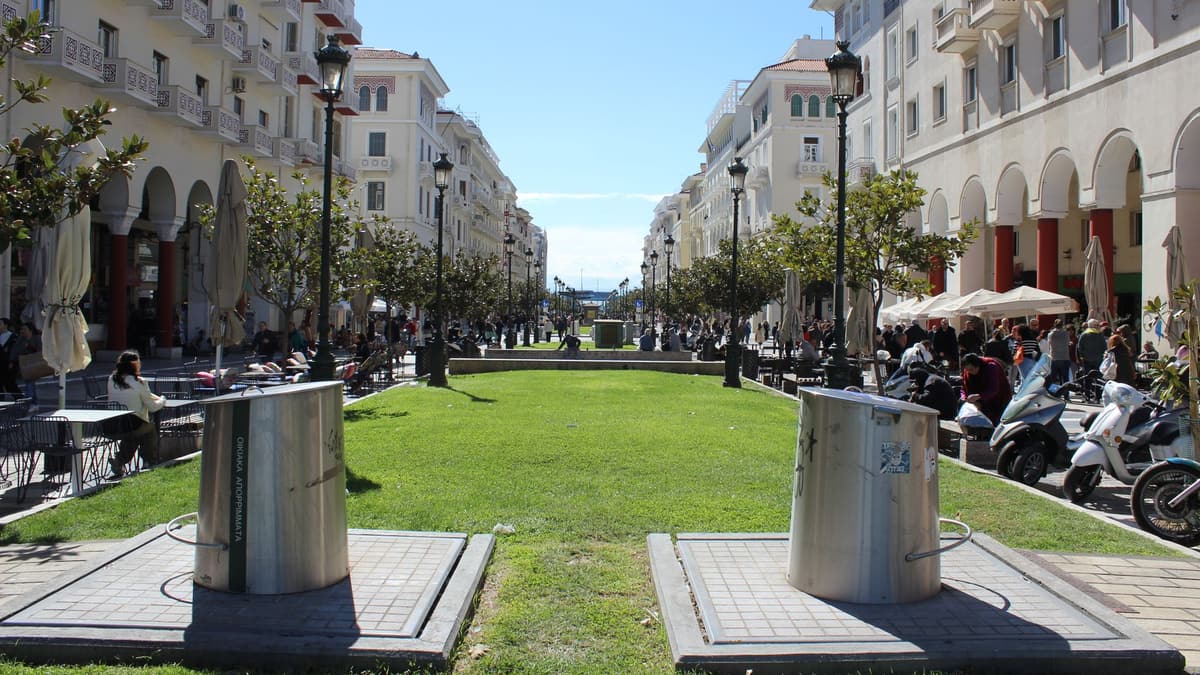
You are standing in the grandest square in Thessaloniki, a long open space that runs from the sea up toward the old town, framed on both sides by matching curved buildings with arcades at street level. It looks as though it has always been here, but it exists because of a disaster. On 18 August 1917, a fire started in a single house and, driven by strong winds, burned through the night and the next day. It destroyed much of the historic center, with its markets, synagogues, mosques and churches, and left around seventy thousand people homeless, many of them from the Jewish neighborhoods of the lower town. The Greek government decided not to rebuild the old maze of lanes but to plan a new city, and it gave the job to the French architect and archaeologist Ernest Hébrard, who was in Thessaloniki with the Allied armies of the First World War. His plan brought wide avenues, diagonal streets and this square, laid out as a grand axis climbing from the sea toward a planned civic center on the slope above, where digging later uncovered the Roman forum. Building took decades, and some of the square was finished long after Hébrard had gone. Look for the Electra Palace hotel and the Olympion cinema, the film festival's home, on the square, and at the upper end find the statue of Aristotle, who was born in nearby Stagira. People rub his foot for luck. Leave by the lower end of the square, head east for a few blocks, then turn left, inland, toward the domed church in its own green square. About eight minutes.
Neler dahil
Turlarımız meditatif ve sürükleyici olacak şekilde tasarlandı: yürürsünüz ve sadece dinlersiniz. Birlikte her zaman daha güzeldir; uygulama anlatımı senkronize çalar, böylece siz, partneriniz ve arkadaşlarınız her durağı aynı anda duyarsınız.
In front of you, in a leafy square, stands the Church of Hagia Sophia, Holy Wisdom, the same dedication as the great church in Istanbul, and a smaller, younger cousin of it.
Bu durağın devamı tam sesli turda.
The round stone tower in front of you is the symbol of Thessaloniki, and you will see its outline on postcards and souvenirs all over town.
Bu durağın devamı tam sesli turda.
A huge bronze Alexander rides here on his horse Bucephalus, with the open gulf beyond him. The statue has stood on this stretch of seafront since the 1970s, and it is one of the most photographed spots in the city.
Bu durağın devamı tam sesli turda.
The walk ends at one of the city's favorite meeting points, the Umbrellas, a sculpture by the Greek artist Giorgos Zongolopoulos.
Bu durağın devamı tam sesli turda.
Bir sonraki planlı turda bu yürüyüşü diğer insanlarla birlikte yapın.
Kolay tempoda yaklaşık 3,2 km, tahminen 44 dakika · 7 durak
Arkadaşlar ücretsiz yürürOctober 11, 2026 · 9 min read
From the Hollandsche Schouwburg through the old Jewish Quarter, past the Dockworker and the Dam, to the Anne Frank House on the Prinsengracht.
October 11, 2026 · 11 min read
From Van Houten's street by the Vondelpark past Leidseplein, the Rijksmuseum passage and the famous canal bench to the Anne Frank House.

October 11, 2026 · 10 min read
Follow the last days of April and May 1945 from the Anhalter Bahnhof ruin past the Gestapo site and Brandenburg Gate to the Moltke Bridge and the Reichstag.
