
October 11, 2026 · 9 min read
Amsterdam Anne Frank Walking Tour
From the Hollandsche Schouwburg through the old Jewish Quarter, past the Dockworker and the Dam, to the Anne Frank House on the Prinsengracht.
589

October 9, 2026 · 11 min read

 Друзі гуляють безкоштовно
Кожен тур також доступний як запланована групова прогулянка, до якої можна приєднатися в додатку.
Більше аудіотурів у Phuket Old Town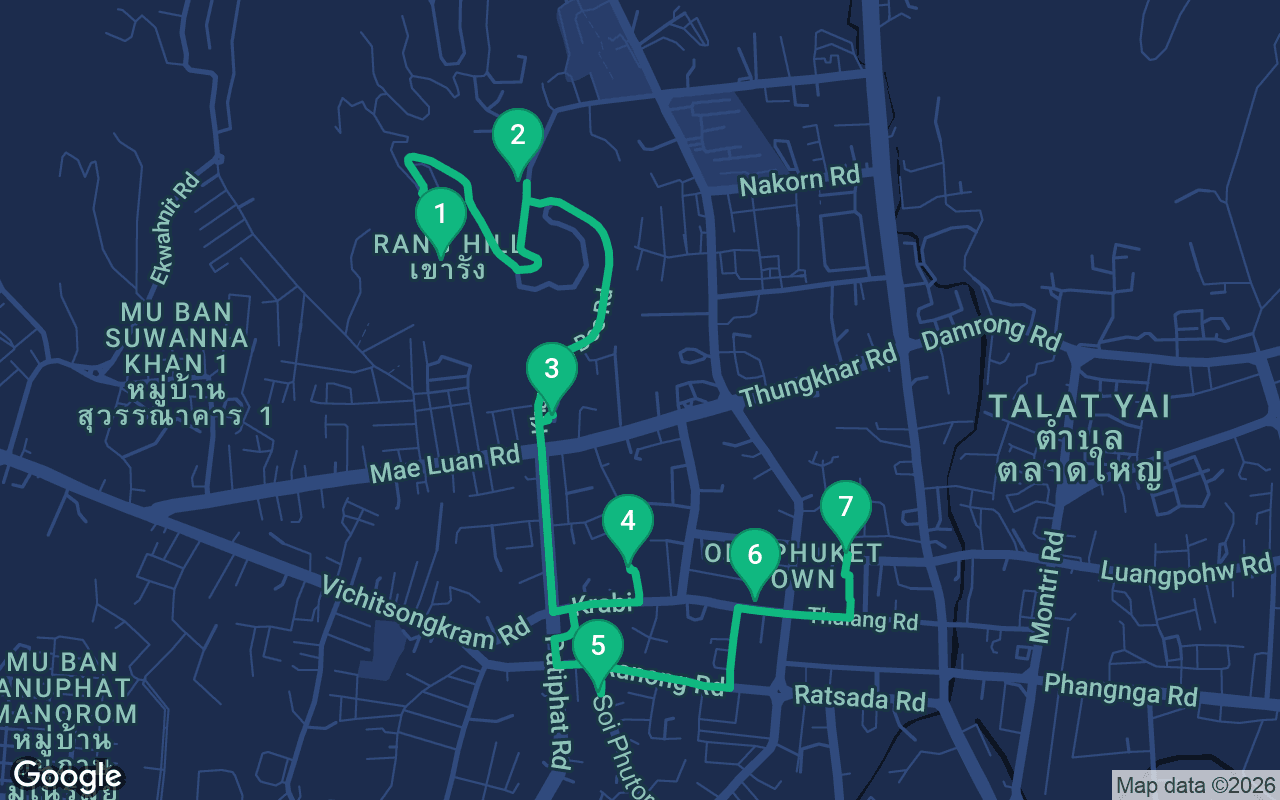
Приблизно 4 км, приблизно 54 хвилин у легкому темпі.
Цей тур озвучено
Натисніть відтворення на перших 3 зупинках, щоб послухати 30-секундний фрагмент розповіді. У додатку вступ і ці зупинки звучать повністю й безкоштовно, а про кожну з них вас сповістить звуковий сигнал, щойно ви прибудете. Весь тур із розповіддю буде вашим за $9.99, одноразова покупка назавжди.
Працює з Garmin, Komoot, Strava, OS Maps та будь-яким застосунком GPX.
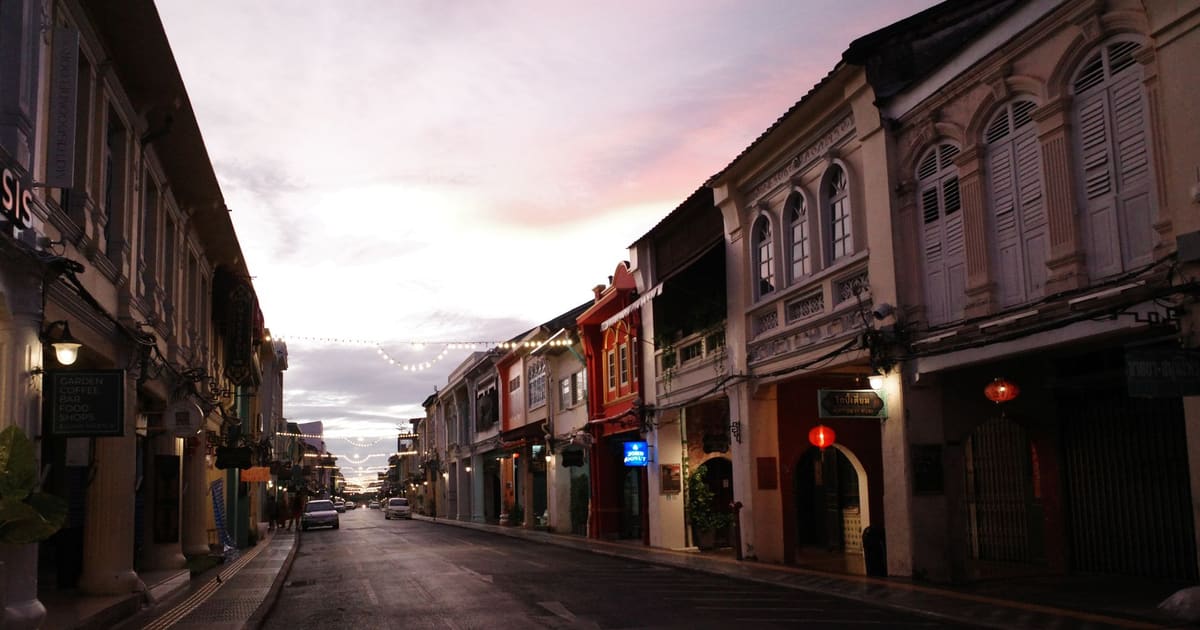
Phuket Town was built by people who crossed the sea to get here. In the nineteenth and early twentieth centuries, thousands of Hokkien Chinese came to the island, and the most successful of them, and their children and grandchildren, built a town in their own image: shophouses with Chinese tiles and European windows, mansions for the wealthy, shrines for their gods, and schools for their children. This walk tells their story. It begins on top of Khao Rang, the hill above the town, passes the hill temple and a quiet nunnery, then goes down into the old town past a family mansion, the busiest Chinese shrine on the island and a former Chinese school, and finishes at Wat Mongkol Nimit, a few steps from the prettiest shophouse streets in Phuket. It is about four kilometers, nearly all of it downhill or flat, and one of the most rewarding self-guided walking tours on the island.
Take a taxi or ride-hailing car up to the viewpoint and let gravity do the rest. The walking takes under an hour, but give it two and a half to three hours with stops. The first stretch down the hill road is steep in places and has little pavement, so walk on the side facing the traffic and take care on the bends. Phuket is hot and humid all year, so start early in the morning, when the view from the top is clearest and the air coolest, or in the late afternoon if you want to finish in the old town at dusk. Carry water and a hat, and something for the sudden heavy showers of the rainy season, roughly May to October. Dress for temples and shrines with your shoulders and knees covered. In the Buddhist temples and at the nunnery, take your shoes off before entering a hall, never point your feet at a Buddha image, and do not touch monks or nuns. In the Chinese shrines, follow any signs about shoes and photos, and step over the raised threshold rather than on it. The family mansion and the museum keep their own hours, so check before you go.
Stand at the rail and look out over the town. Below you, Phuket Town spreads to the sea in a jumble of rooftops, with the old town's narrow streets packed in near the middle and the bay and its islands beyond. On a clear day the view runs far down the east coast of the island. This hill, Khao Rang, has long been the town's favorite escape, a green park where families come for the cooler air, the view and dinner in the restaurants along the top. The town you are looking at was shaped by the Hokkien. They came from Fujian, on the southeast coast of China, a region of poor land and many people, and most of them reached Phuket by way of Penang, the British port down the coast, where Hokkien merchants were already strong. They came to dig tin, but those who prospered moved into trade, shipping and mine ownership, and the richest families became the island's elite. One of them, Khaw Sim Bee, from a Hokkien family that had risen to govern the province of Ranong, became the Siamese governor of the whole region in the early twentieth century, building roads and modernizing the town below you. To go on, follow the road north around the hilltop. The temple and its golden Buddha are just ahead, about eight minutes away.
 Here, near the top of the hill, a large golden Buddha sits looking out over the town, a calm and gleaming presence above the rooftops. Walk up to the image, take your shoes off where you see others doing so, and take a moment at the rail beside it. A temple on a hill is an old idea in Thailand, a place lifted a little closer to the sky and a little farther from the noise, and this one draws local people who come to pray, make merit and enjoy the breeze. It is also a reminder of how the Hokkien families of Phuket made their home here. The newcomers brought their own gods and built shrines for them in the town, but over the generations they married into Thai families, learned Thai, sent sons to be ordained as monks, and took Thai surnames. Many Phuket families today keep both traditions at once, bowing to the Buddha at a Thai temple in the morning and lighting incense at a Chinese shrine in the afternoon, with no sense that they are switching between two worlds. Look down at the town once more before you leave, because from here the walk only goes down. To go on, take the hill road heading south, down toward town, for about nine minutes. The nunnery is near the bottom of the slope.
This quiet compound at the foot of the hill is a samnak chee, a home for Buddhist nuns, known in Thai as mae chi. You may see them going about their day: women with shaved heads and white robes, sweeping, cooking, chanting or sitting in meditation. Thai mae chi live a disciplined religious life, keeping more precepts than lay people, living as simply as they can, and spending their days in study, practice and service. Some come for a few weeks or months as a retreat, others stay for many years. Their white robes set them apart from the saffron of the monks, and their place in Thai Buddhism has long been a modest one, but they are widely respected for their seriousness and simplicity, and places like this offer women a path into religious life and a refuge from the pressures outside. This is a place of practice rather than a sight, so keep your voice low, be careful with your camera, and ask before stepping inside any building. If someone greets you, a small bow with your palms pressed together, the gesture called the wai, is the right reply. Then let the calm of the place settle on you before the busy streets ahead. To go on, continue south down to Krabi Road at the bottom, turn left and walk east. The house is on your left, about ten minutes away.
Що входить
Наші екскурсії задумані медитативними та захопливими: ви рухаєтеся й просто слухаєте. Разом завжди краще, і додаток відтворює розповідь синхронно, тож ви, ваш партнер і ваші друзі чуєте кожну зупинку одночасно.
This handsome house is one of the finest family homes in Phuket Town, built in the early twentieth century by a Hokkien family grown rich on tin, and remarkably, it still belongs to the family's descendants, who open it to visitors at times; check before…
Продовження цієї зупинки є в повній аудіоекскурсії.
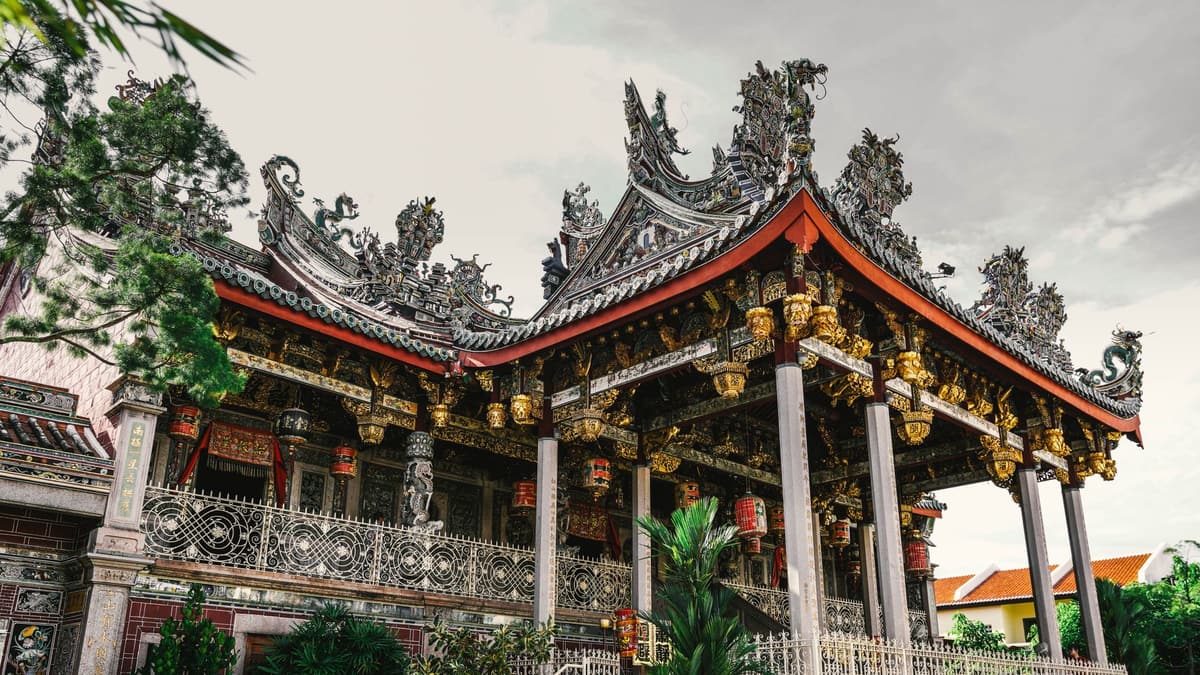
The smell of incense reaches you before you see the gate. Jui Tui Shrine is the busiest Chinese shrine in Phuket Town, a riot of red and gold, with dragons along the roof ridges, painted door gods guarding the entrance and lanterns overhead.
Продовження цієї зупинки є в повній аудіоекскурсії.
This elegant building, with its tall windows and grand front, was built in the 1930s as a school for the town's Chinese community, and it is now the best place in Phuket to understand the people whose story you have been following all morning.
Продовження цієї зупинки є в повній аудіоекскурсії.
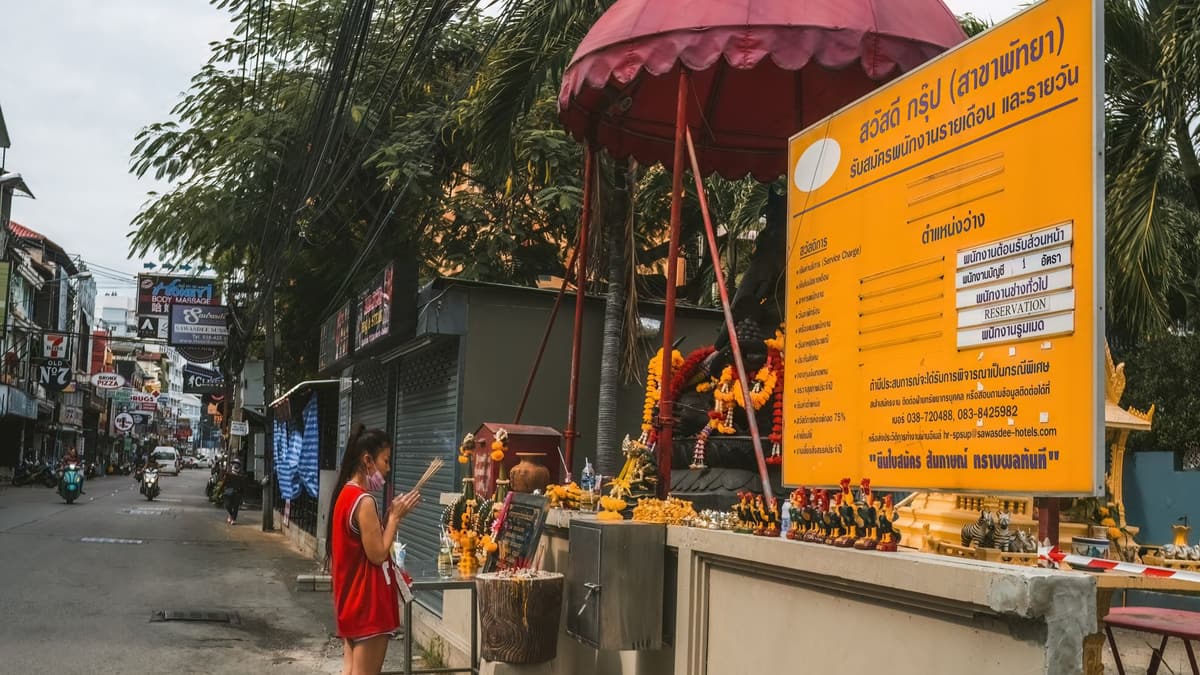
The walk ends at Wat Mongkol Nimit, the Thai Buddhist temple at the heart of the old town, with its gilded gables and graceful layered roofs rising above the shophouses around it.
Продовження цієї зупинки є в повній аудіоекскурсії.
Зробіть цю прогулянку разом з іншими людьми на наступному запланованому турі.
Приблизно 4 км, приблизно 54 хвилин у легкому темпі · 7 зупинок
Друзі гуляють безкоштовноOctober 11, 2026 · 9 min read
From the Hollandsche Schouwburg through the old Jewish Quarter, past the Dockworker and the Dam, to the Anne Frank House on the Prinsengracht.
October 11, 2026 · 11 min read
From Van Houten's street by the Vondelpark past Leidseplein, the Rijksmuseum passage and the famous canal bench to the Anne Frank House.

October 11, 2026 · 10 min read
Follow the last days of April and May 1945 from the Anhalter Bahnhof ruin past the Gestapo site and Brandenburg Gate to the Moltke Bridge and the Reichstag.
