
October 11, 2026 · 9 min read
Amsterdam Anne Frank Walking Tour
From the Hollandsche Schouwburg through the old Jewish Quarter, past the Dockworker and the Dam, to the Anne Frank House on the Prinsengracht.
589

October 9, 2026 · 10 min read

 Bạn bè đi bộ miễn phí
Mỗi tour cũng được tổ chức như một chuyến đi bộ nhóm theo lịch trình mà bạn có thể tham gia trong ứng dụng.
Thêm tour âm thanh tại Siena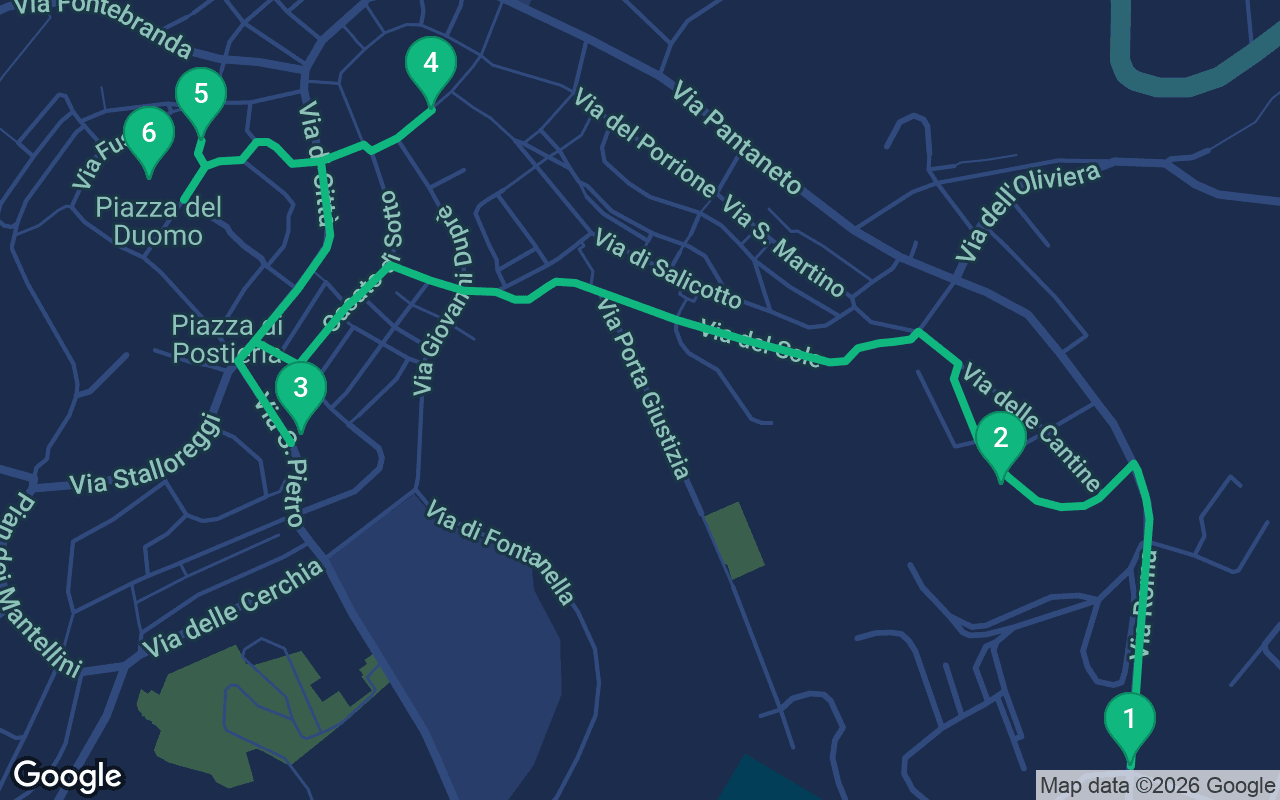
Khoảng 2km, mất khoảng 33 phút với nhịp độ thoải mái.
Tour này có thuyết minh âm thanh
Nhấn phát tại 3 điểm dừng đầu tiên để nghe thử 30 giây phần thuyết minh ngay tại đây. Trong ứng dụng, phần giới thiệu và các điểm dừng này được nghe trọn vẹn miễn phí, và mỗi điểm dừng sẽ phát âm báo khi bạn đến nơi. Toàn bộ chuyến tham quan có thuyết minh sẽ là của bạn chỉ với $7.99, mua một lần và sở hữu mãi mãi.
Hoạt động với Garmin, Komoot, Strava, OS Maps và mọi ứng dụng GPX.
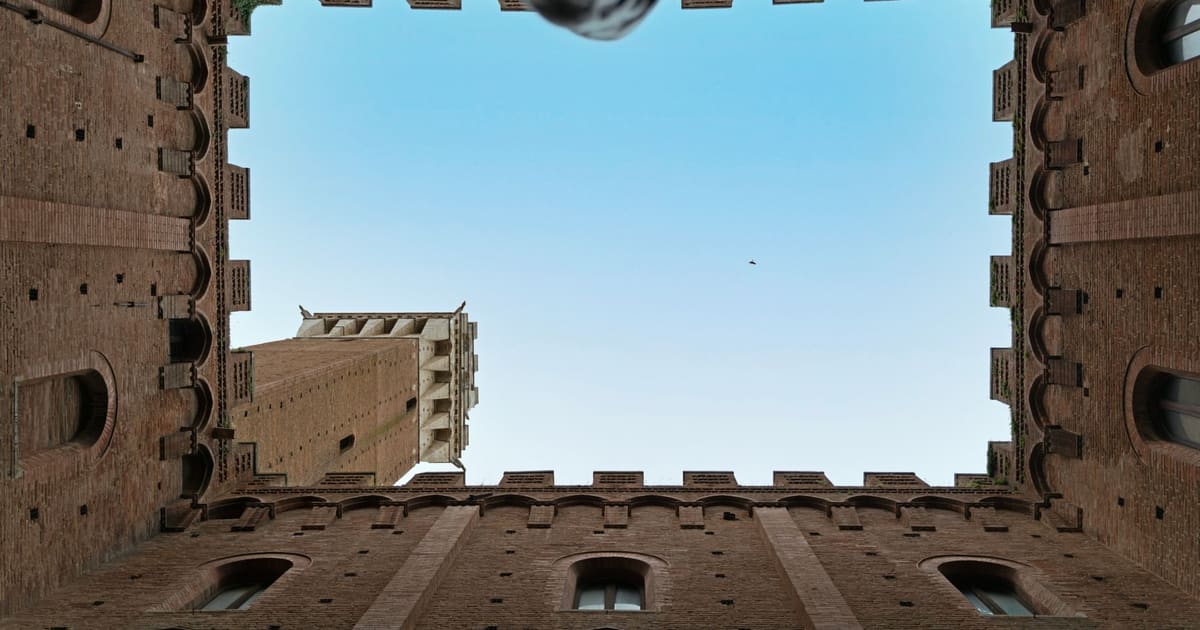
Siena is a city of three steep ridges that meet in a hollow, and in that hollow lies the most famous square in Italy. This walk comes at it the way travelers from Rome always did, in through the great southern gate, then up past a hilltop church and a gallery of gold-ground paintings before dropping into the Piazza del Campo, where the Palio is run. It finishes on the highest point of the old town, at the baptistery and the black and white cathedral. It is one of the shortest of our self-guided walking tours, only about two kilometers, but every few minutes of it lands you somewhere extraordinary, and the hills make sure you feel each one.
The walking itself takes about forty minutes, but give it a full morning, and most of a day if you want to go inside the gallery, the town hall, the tower and the cathedral, each of which can easily hold an hour. Be ready for hills. The street up from Porta Romana climbs steadily, there is a dip and a short, steep climb on the way to the gallery, the lanes into and out of the Campo are sharp little slopes, and a long flight of steps joins the baptistery to the cathedral. The paving is stone and brick, smooth in places and slippery after rain, so wear shoes with some grip. The Campo has no shade at all and the stone throws back the heat, so in summer start early, carry water, and save the square for the softer evening light if you can. Day-trip crowds peak around the middle of the day. The cathedral complex sells timed and combined tickets, and the tower limits how many people can climb at once, so check before you go. Churches expect covered shoulders and knees. Around the Palio on July 2 and August 16 the Campo is closed off and packed for days, which changes everything, so plan around it.
Stand outside the gate first, on the side facing away from the town, and take in its size. Porta Romana is the biggest of Siena's gates, a tall block of brick and stone built in the early fourteenth century, with an outer gateway in front of the main arch so that an attacker who broke through the first barrier found himself trapped in a walled yard under the defenders. It was built for the road you are standing on, the old way south to Rome, and for centuries pilgrims, merchants and armies came and went beneath it. Look on the gate for the faded remains of a painted Coronation of the Virgin, a reminder that Siena put its gates, like everything else, under the protection of Mary. The Roman connection runs deeper than the road. Siena's founding legend says the city was started by Senius and Aschius, the sons of Remus, who fled Rome after their father was killed by his brother Romulus and brought the image of the she-wolf with them. That is why you will see statues of the wolf suckling twins on columns all over Siena, a Roman emblem in a city that spent much of its history fighting its neighbors. When you are ready, walk through the gate and follow Via Roma north, uphill, then take the lane that climbs to the left up to the brick church on its rise, about five minutes.
You are on one of the high points of the southern ridge, in front of the basilica of the Servite friars. Before going in, turn around. From the top of the steps and the little square in front of the church there is one of the finest views in Siena, straight across the rooftops to the slender Torre del Mangia and the striped bulk of the cathedral, the two places this walk is heading for. Inside, the church is calm and rarely crowded, and it holds a painting with a remarkable story. The Madonna del Bordone, a large panel of the Virgin and Child, was painted in 1261 by Coppo di Marcovaldo, a Florentine. A year earlier, in 1260, Siena had crushed Florence at the battle of Montaperti, a slaughter so famous that Dante later wrote of the river Arbia running red. Coppo is thought to have been among the Florentine prisoners, and the story goes that painting this Madonna for his captors helped buy his freedom. The church also holds a harrowing Massacre of the Innocents by the Sienese painter Matteo di Giovanni, all flailing arms and terrified mothers, worth a minute if you can bear it. From here, go back down to the lane below the church and head west, downhill across the valley behind the town hall, then climb the steep lane on the far side up to Via San Pietro and turn left for the gallery, about eight minutes.
The plain doorway in front of you leads into Palazzo Buonsignori, a handsome brick palace from the fifteenth century, with Gothic windows and battlements along the top, and inside it is the greatest collection of Sienese painting anywhere. In the thirteenth and fourteenth centuries Siena and Florence were rivals in art as much as in war, and while Florence moved toward weight, volume and perspective, Siena held on to gold. The rooms here glow with it, panel after panel of gold-ground altarpieces, the Madonna in deep blue, the saints in patterned robes, everything slender and graceful. Look for the tiny Madonna of the Franciscans by Duccio, the father of the Sienese school, barely bigger than a sheet of paper and full of tenderness. Simone Martini's altarpiece of the Blessed Agostino Novello is ringed with small, lively scenes of children saved from falls and accidents, little windows onto street life in medieval Siena. The Lorenzetti brothers, Pietro and Ambrogio, are here too, and so are two small panels of a walled town by the sea and a castle by a lake, often credited to Ambrogio and sometimes called among the first pure landscapes in European painting, though scholars still argue over who painted them. Later rooms carry the story on into the restless color of Beccafumi. When you come out, walk north along Via San Pietro and on into Via di Città for a couple of minutes, then turn right down one of the short, steep lanes that drop into the Campo.
Bao gồm những gì
Các tour của chúng tôi được thiết kế để mang tính thiền định và đắm chìm: bạn vừa đi vừa lắng nghe. Đi cùng nhau luôn tuyệt hơn, và ứng dụng phát thuyết minh đồng bộ để bạn, người thương và bạn bè nghe mỗi điểm dừng cùng một lúc.
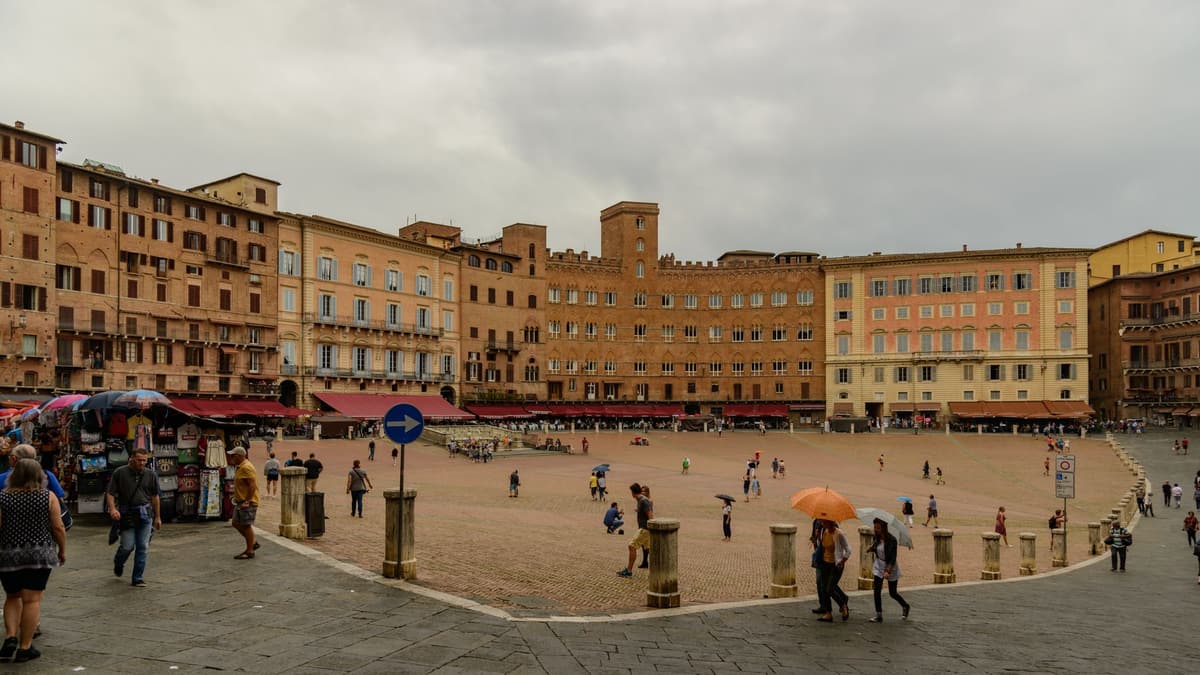
Step out of the lane and let the square open in front of you.
Phần còn lại của điểm dừng này có trong tour âm thanh đầy đủ.
You are standing in a small sloping square at the foot of a steep staircase, looking at a Gothic marble front that was never quite finished. This is the baptistery of San Giovanni, and its position is the clue to its story.
Phần còn lại của điểm dừng này có trong tour âm thanh đầy đủ.
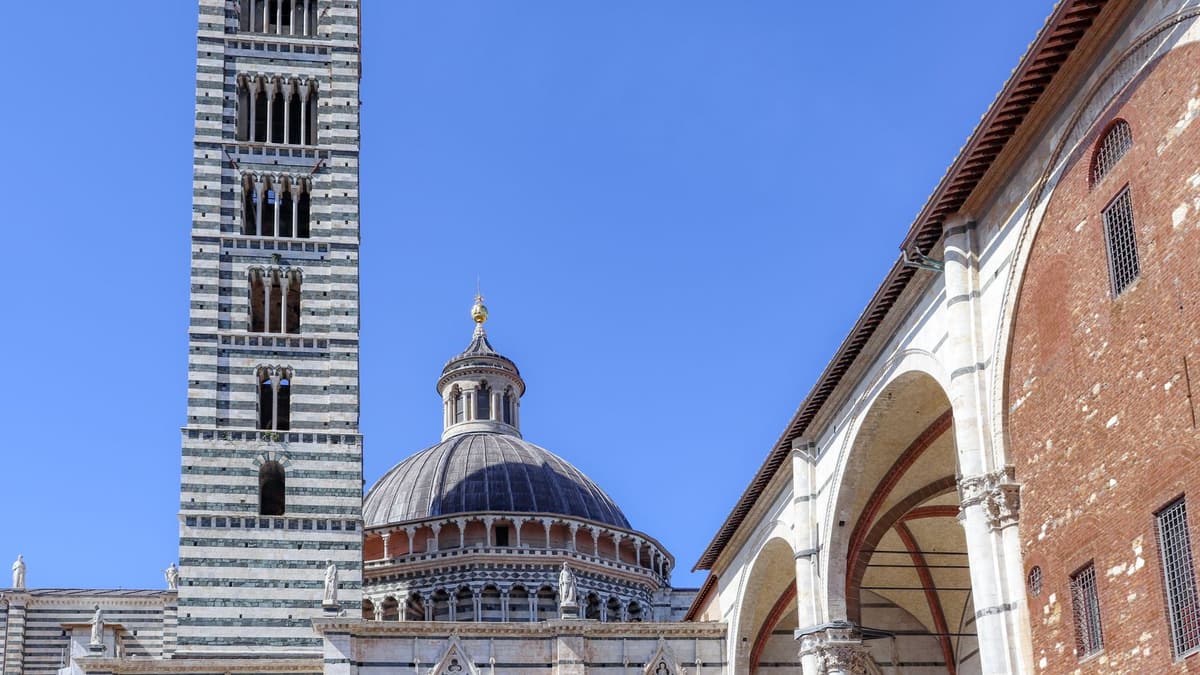
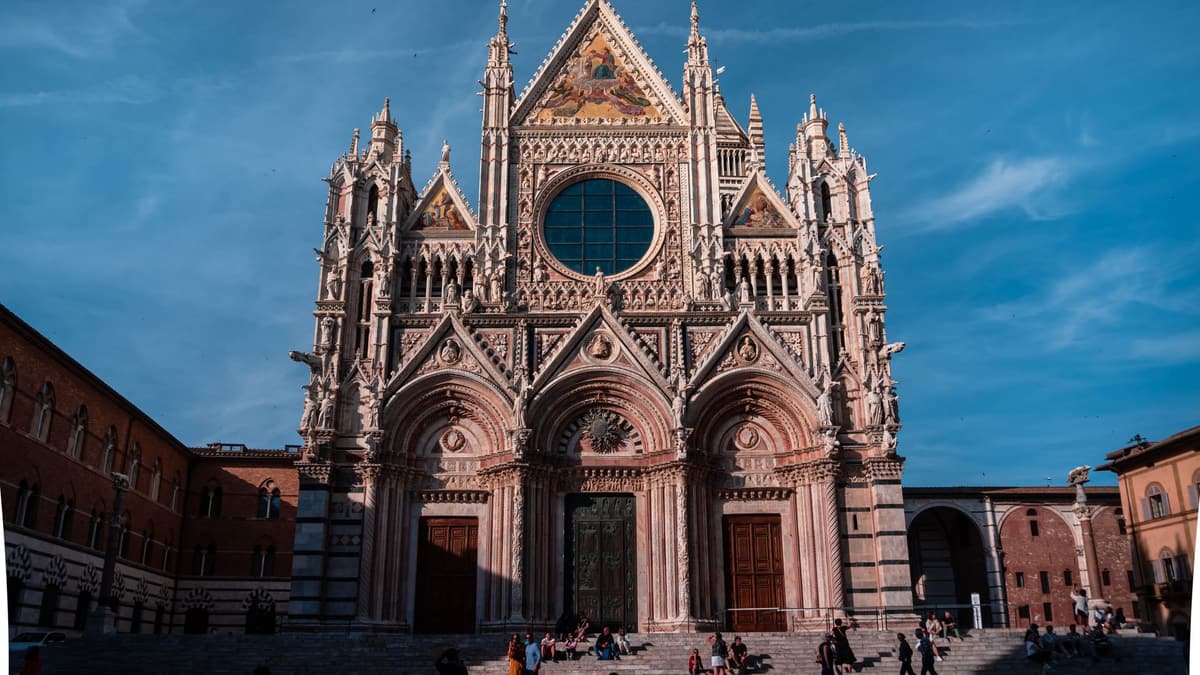
You have reached the top of the hill and the end of the walk, in front of the Duomo, Siena's cathedral of the Assumption.
Phần còn lại của điểm dừng này có trong tour âm thanh đầy đủ.
Thực hiện buổi đi bộ này cùng người khác vào tour đã lên lịch tiếp theo.
Khoảng 2km, mất khoảng 33 phút với nhịp độ thoải mái · 6 điểm dừng
Bạn bè đi bộ miễn phíOctober 11, 2026 · 9 min read
From the Hollandsche Schouwburg through the old Jewish Quarter, past the Dockworker and the Dam, to the Anne Frank House on the Prinsengracht.
October 11, 2026 · 11 min read
From Van Houten's street by the Vondelpark past Leidseplein, the Rijksmuseum passage and the famous canal bench to the Anne Frank House.

October 11, 2026 · 10 min read
Follow the last days of April and May 1945 from the Anhalter Bahnhof ruin past the Gestapo site and Brandenburg Gate to the Moltke Bridge and the Reichstag.
