
October 11, 2026 · 9 min read
Amsterdam Anne Frank Walking Tour
From the Hollandsche Schouwburg through the old Jewish Quarter, past the Dockworker and the Dam, to the Anne Frank House on the Prinsengracht.
589

October 9, 2026 · 11 min read

 Teman jalan gratis
Setiap tur juga berjalan sebagai jalan kaki kelompok terjadwal yang dapat Anda ikuti di aplikasi.
Tur audio lainnya di Sydney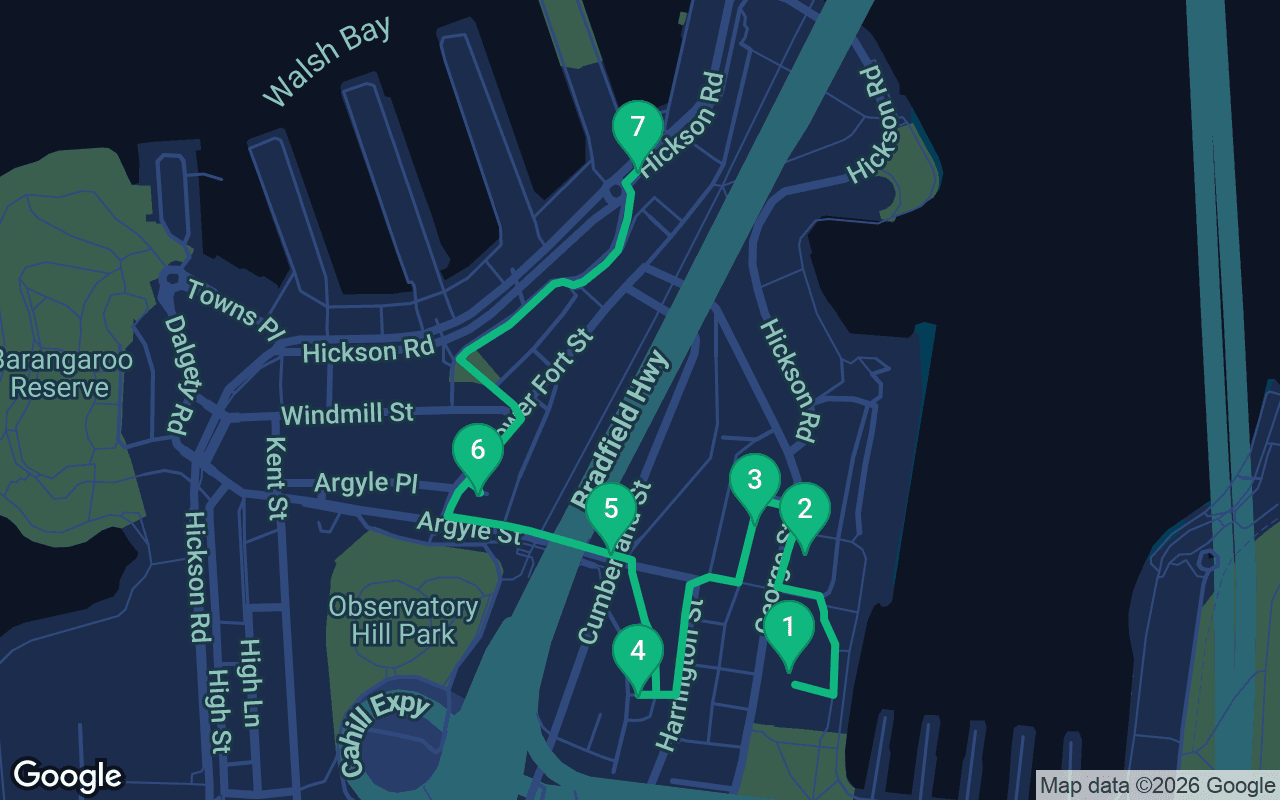
Sekitar 1,5 km, kira-kira 21 menit dengan ritme santai.
Tur ini dilengkapi narasi suara
Tekan putar pada 3 pemberhentian pertama untuk mendengarkan demo narasi 30 detik di sini. Di aplikasi, pengantar dan pemberhentian-pemberhentian ini bisa Anda dengarkan secara lengkap dan gratis, dan setiap pemberhentian membunyikan nada pemberitahuan saat Anda tiba. Seluruh tur berpemandu ini bisa Anda miliki selamanya hanya dengan $6.99, sekali beli untuk seterusnya.
Berfungsi dengan Garmin, Komoot, Strava, OS Maps, dan aplikasi GPX apa pun.
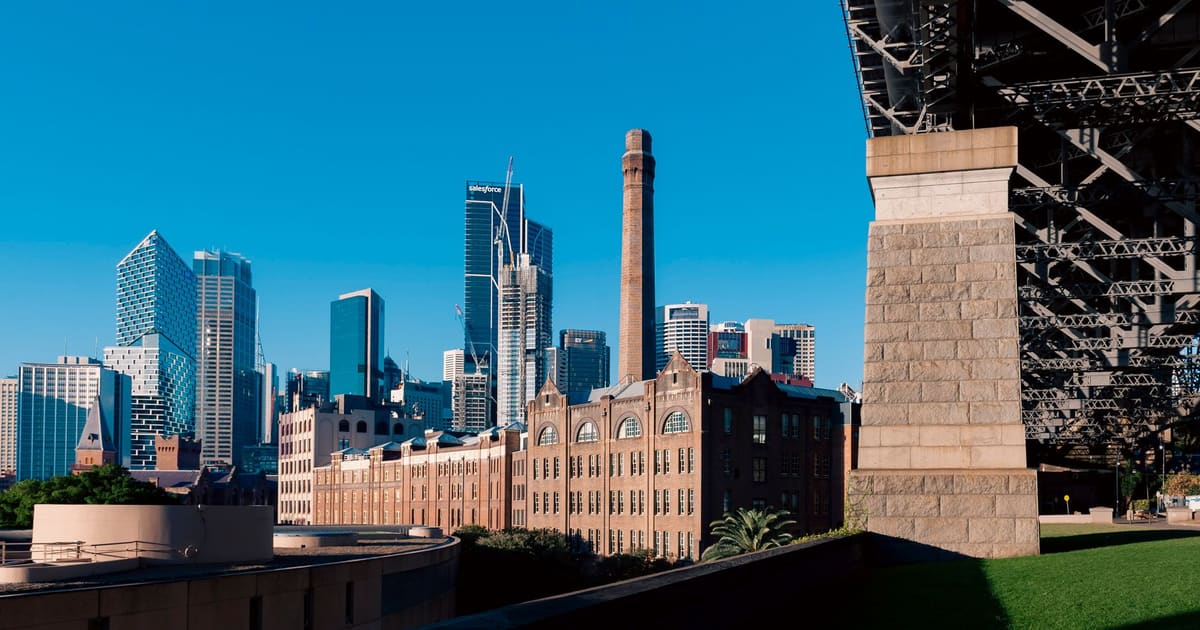
The Rocks is the sandstone ridge on the western side of Sydney Cove where the British colony began in 1788, and for thousands of years before that it was Gadigal Country, part of the lands of the Eora peoples around the harbor. This walk starts on the waterfront at Circular Quay, climbs through the old convict town of cottages, warehouses, lanes and stairs, and finishes at Dawes Point, right under the Sydney Harbour Bridge with the Opera House across the water. It is a short route, well under two kilometers, but it packs more history per step than almost anywhere in Australia, and it is one of the easiest self-guided walking tours in the city to fit into a morning. Every stop is only a few minutes from the next.
Allow about an hour and a half at a stroll, or most of a morning if you go inside the museums along the way. The distance is small, but The Rocks is built on a ridge, so expect a couple of short, steep climbs, a few flights of old sandstone steps and some uneven paving. Comfortable shoes matter more than fitness here. The Rocks Discovery Museum and Susannah Place keep their own hours, and Susannah Place is usually seen on a guided visit, so check before you go if you want to see inside. The Australian sun is strong even on a mild or cloudy day, and the waterfront at Circular Quay and Dawes Point has little shade, so bring a hat, sunscreen and water. Early morning is the quietest and coolest time. On weekends a busy market fills the top of George Street, which is fun but slow going. If it rains, the sandstone steps get slippery, so take them carefully.
Stand on the wide waterfront promenade and face the long, pale building in front of you, stepped and squared off like a giant set of building blocks. This is the Museum of Contemporary Art Australia, and the building came first. It was built for the Maritime Services Board, the government body that ran the port, in the stripped-back Art Deco style of the late 1930s. Work began just before the Second World War and was not finished until after it. The museum moved in in 1991, and a modern wing was added in the 2010s. Inside you will find changing exhibitions and a collection with a strong showing of work by Aboriginal and Torres Strait Islander artists, and if it is open, the rooftop terrace has one of the finest views of the Opera House across the cove. Now turn around and look at the water. This little bay is Warrane to the Gadigal people, who fished here for countless generations. Women fished from bark canoes with lines and shell hooks, and men speared fish from the rocks. In January 1788 the First Fleet chose this cove because it had deep water close to shore and a freshwater stream at its head. The shoreline you see has since been pushed outward by reclamation, so you are standing on what was once harbor. When you are ready, walk north along the promenade, with the water on your right, for about two minutes. Look for a small sandstone cottage sitting below street level on your left.
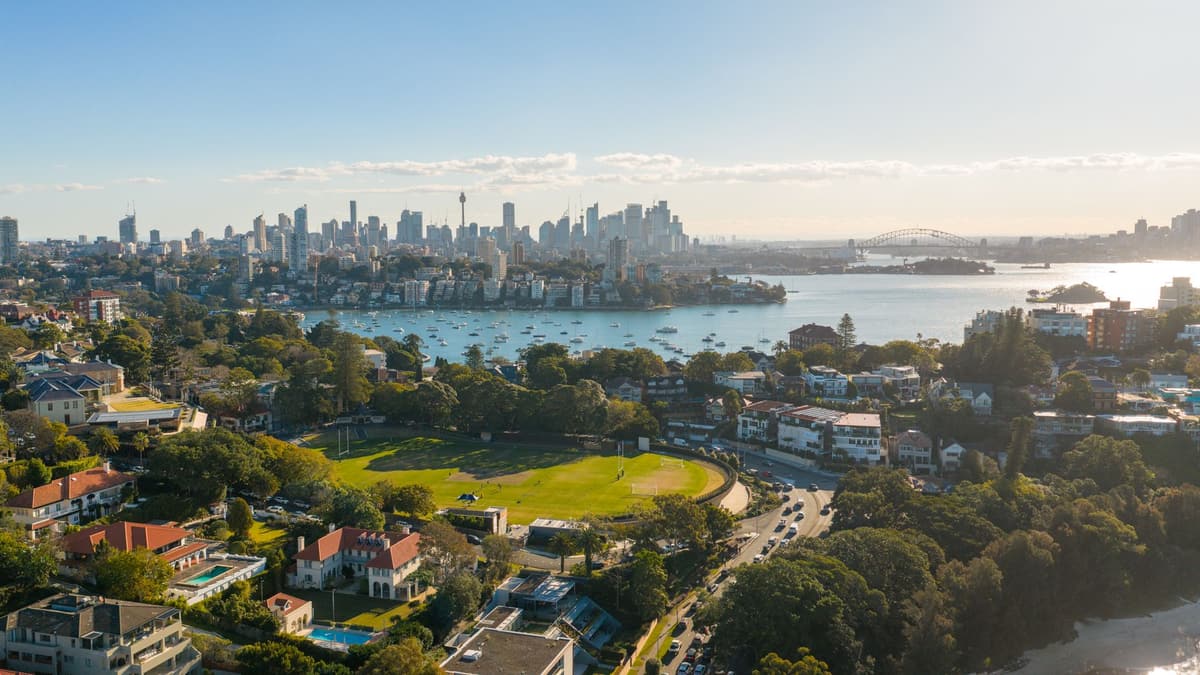 This modest sandstone cottage, sitting low on its patch of lawn, is the oldest surviving house in Sydney. It was built in 1816 as a barracks for the coxswains and crews of the government boats. In those years the harbor was the colony's main road, and boats carried officials, supplies and convict work gangs up and down the river to Parramatta and around the bays. When the cottage was new, the water came almost to its front door, and the reclaimed land between it and the harbor today only came later. Picture the lawn as a little beach with boats pulled up on the sand. The cottage takes its name from John Cadman, a convict transported to New South Wales for stealing a horse. He served his sentence, was pardoned, worked his way up as a boatman and in time became Superintendent of Government Boats, living here for many years with his wife Elizabeth, who had also arrived as a convict. Their story is a reminder that in early Sydney the line between prisoner and citizen could be crossed, slowly, by those who survived the system. The larger stone building beside the cottage was later a home for visiting sailors. Now climb the steps behind the cottage up to George Street and cross with care. Look for the narrow lanes opposite and a little to your right. The museum is in an old sandstone warehouse on Kendall Lane, about two minutes away.
You are inside one of the warehouses that served the old port, its thick sandstone walls built in the middle of the nineteenth century. The museum tells the story of this one small neighborhood across its whole life, and its first chapter belongs to the Gadigal. Look out for objects and stories about life on the harbor before 1788, and about what the arrival of the British meant. Within little more than a year, smallpox swept through the Aboriginal people around the harbor and killed a great many of them, a disaster that shaped everything that followed. The later rooms follow The Rocks as a rough, crowded maritime district of sailors, laborers, pubs and boarding houses. In 1900 bubonic plague reached Sydney, and the authorities blamed the old waterside streets. Whole blocks were quarantined, cleaned out and torn down, and the government took ownership of much of the area. In the 1920s hundreds more homes were demolished to make way for the Harbour Bridge approaches. Then, around 1970, a plan emerged to clear most of what was left for office towers. Residents fought back, and the Builders Labourers Federation, led by Jack Mundey, placed a green ban on the area and refused to work on the demolition. The standoff went on for years and ended with The Rocks preserved, which is why you can walk it today. Back outside, make your way to Argyle Street and walk uphill to the west. Just before the road dives into a deep rock cutting, turn left into Gloucester Street. Susannah Place is a short row of houses with a corner shop a couple of minutes along, about five minutes from the museum in all.
Yang termasuk
Tur kami dirancang agar terasa meditatif dan imersif: Anda terus bergerak dan cukup mendengarkan. Tur selalu lebih seru dinikmati bersama, dan aplikasi memutar narasi secara sinkron, sehingga Anda, pasangan, dan teman-teman mendengar setiap pemberhentian pada saat yang sama.
In front of you is a plain terrace of four brick houses with a little shop on the corner.
Lanjutan pemberhentian ini ada di tur audio lengkap.
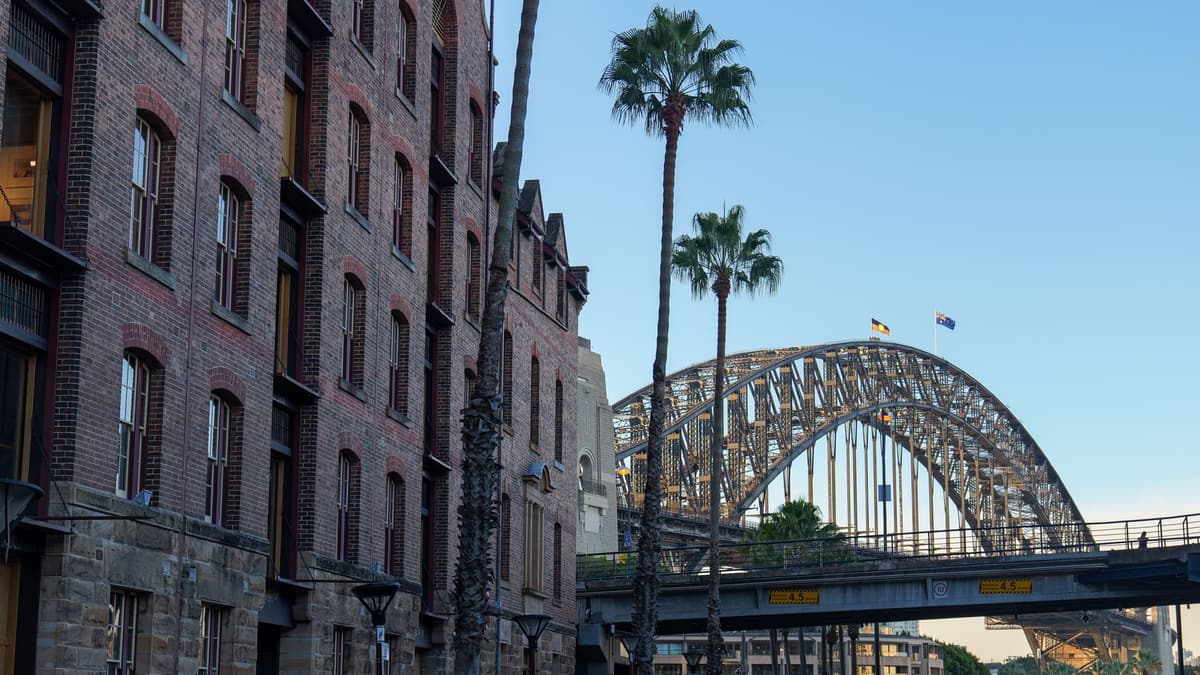
Stand at the mouth of the cut and look ahead. Argyle Street runs straight into the sandstone ridge between high, rough walls of rock, with a road bridge crossing far overhead.
Lanjutan pemberhentian ini ada di tur audio lengkap.
This is Holy Trinity Church, known to everyone as the Garrison Church, because the British soldiers stationed nearby at the Dawes Point battery and the barracks came here to worship.
Lanjutan pemberhentian ini ada di tur audio lengkap.
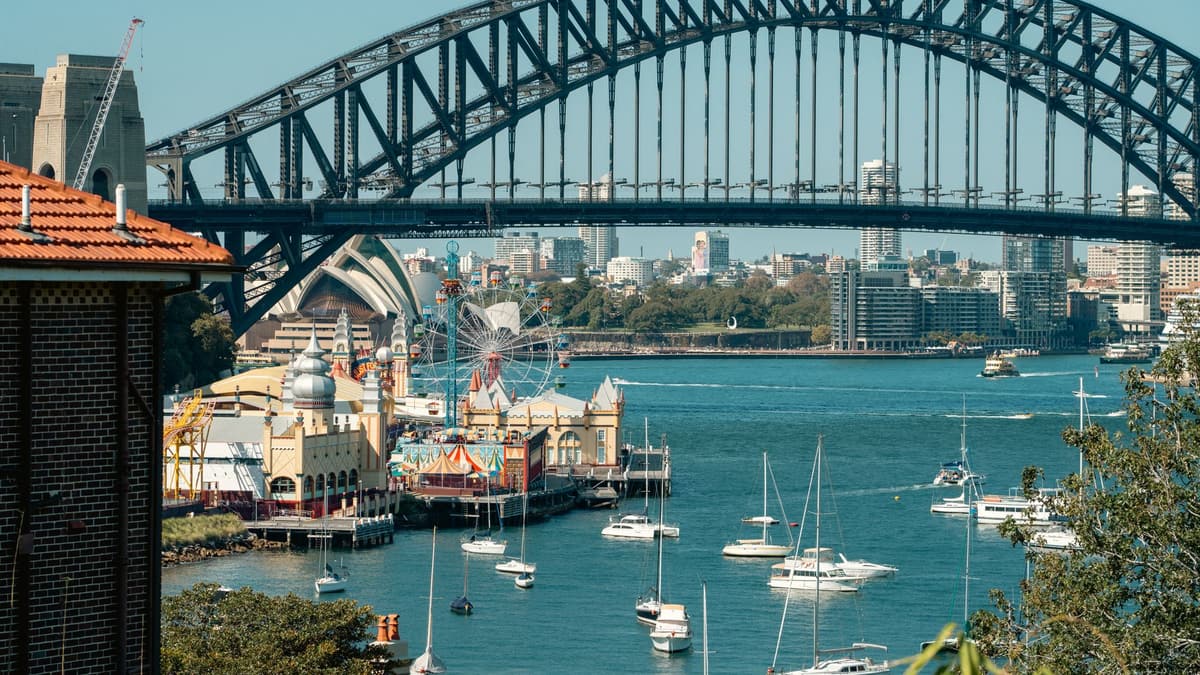
You are standing beneath the southern end of the Sydney Harbour Bridge, with its huge granite pylon above you and the Opera House straight across the water. Turn toward the harbor and take it in.
Lanjutan pemberhentian ini ada di tur audio lengkap.
Lakukan jalan-jalan ini bersama orang lain pada tur terjadwal berikutnya.
Sekitar 1,5 km, kira-kira 21 menit dengan ritme santai · 7 titik henti
Teman jalan gratisOctober 11, 2026 · 9 min read
From the Hollandsche Schouwburg through the old Jewish Quarter, past the Dockworker and the Dam, to the Anne Frank House on the Prinsengracht.
October 11, 2026 · 11 min read
From Van Houten's street by the Vondelpark past Leidseplein, the Rijksmuseum passage and the famous canal bench to the Anne Frank House.

October 11, 2026 · 10 min read
Follow the last days of April and May 1945 from the Anhalter Bahnhof ruin past the Gestapo site and Brandenburg Gate to the Moltke Bridge and the Reichstag.
