7 Oktober 2026 · 9 menit
Best Places and Surfaces for Dog Walks
Can dogs run on concrete? Does pavement wear their nails down? What each surface does to paws and joints, and the lead rules in parks and farmland.

Before you walk someone else's dog, meet the dog with its owner and ask about its health, its habits around other dogs, people and traffic, and whether it's ever allowed off the lead. Check that the collar carries an ID tag, that the harness or collar fits and the lead is sound, and save both the owner's number and the dog's vet in your phone. Then keep it on the lead unless the owner has said otherwise and you're sure it comes back when called, and always on the lead near roads. While you're holding the lead, you're responsible for the dog, and in the UK that's the law as well as common sense. If you're being paid to walk dogs, you'll also want liability insurance and, in some places, a licence. Here's what to ask, what to check, and what to do if something goes wrong.
A dog that's all wags at its own front door can be a different animal two streets away without its owner. That's why the first rule in Dogs Trust's tips for dog walkers is to meet the dog before you take it out, and why the professional dog walkers' guidelines produced with Dogs Trust and the RSPCA ask for a meeting beforehand so the walker can get to know the dog's needs and character. Use that meeting to see the dog on its lead, ideally on a short walk with the owner, so you can watch how it reacts to the street. The guidelines also say the dog's needs should be agreed with the owner and followed, covering when to walk, how long for, how the dog has been trained and the cues it knows. A dog that walks nicely to "heel" might ignore "come here", so learn its words, not yours.
Owners know their dogs, but they don't always volunteer the awkward parts, so ask directly. The guidelines want walkers to know about any medical problems, medication and allergies, and the details of the dog's vet, and Dogs Trust suggests the owner also shares their own contact details, the dog's training cues, whether it can go off lead, and what treats it's allowed. Here's a list worth running through before the first walk:
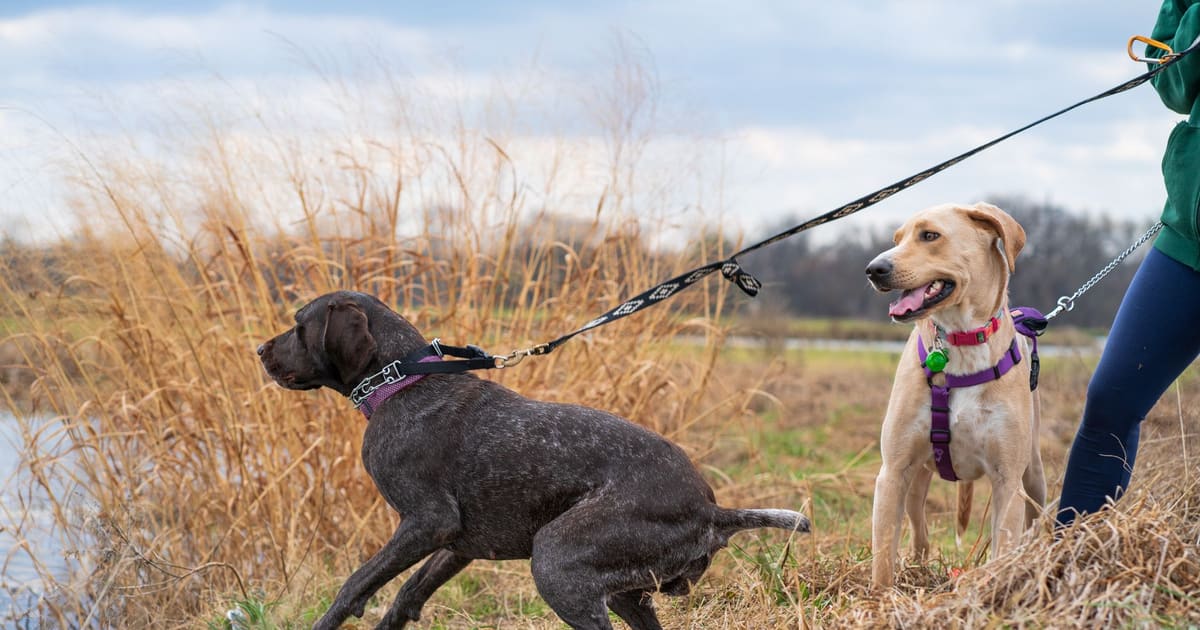
Every walk starts with a quick look at the equipment, which the professional guidelines ask walkers to do "at the start of each walk". Make sure the harness or collar is snug enough that the dog can't back out of it, the clip closes properly and the lead isn't frayed or chewed. In the UK, the dog's collar should carry a tag with the owner's name and address whenever it's in a public place: the Control of Dogs Order 1992 requires it, and the guidelines recommend adding the walker's contact details as well. Microchipping is compulsory too, but a chip only helps once someone scans the dog, while a tag lets whoever finds it reach the owner straight away. Leave behind any equipment that could cause fear or pain, which the guidelines name as electric shock, prong, spray and choke collars. If the owner hands you a retractable lead, keep it locked short on pavements: the American Kennel Club warns that the thin cords can burn if you grab them and are hard to see in the dark.
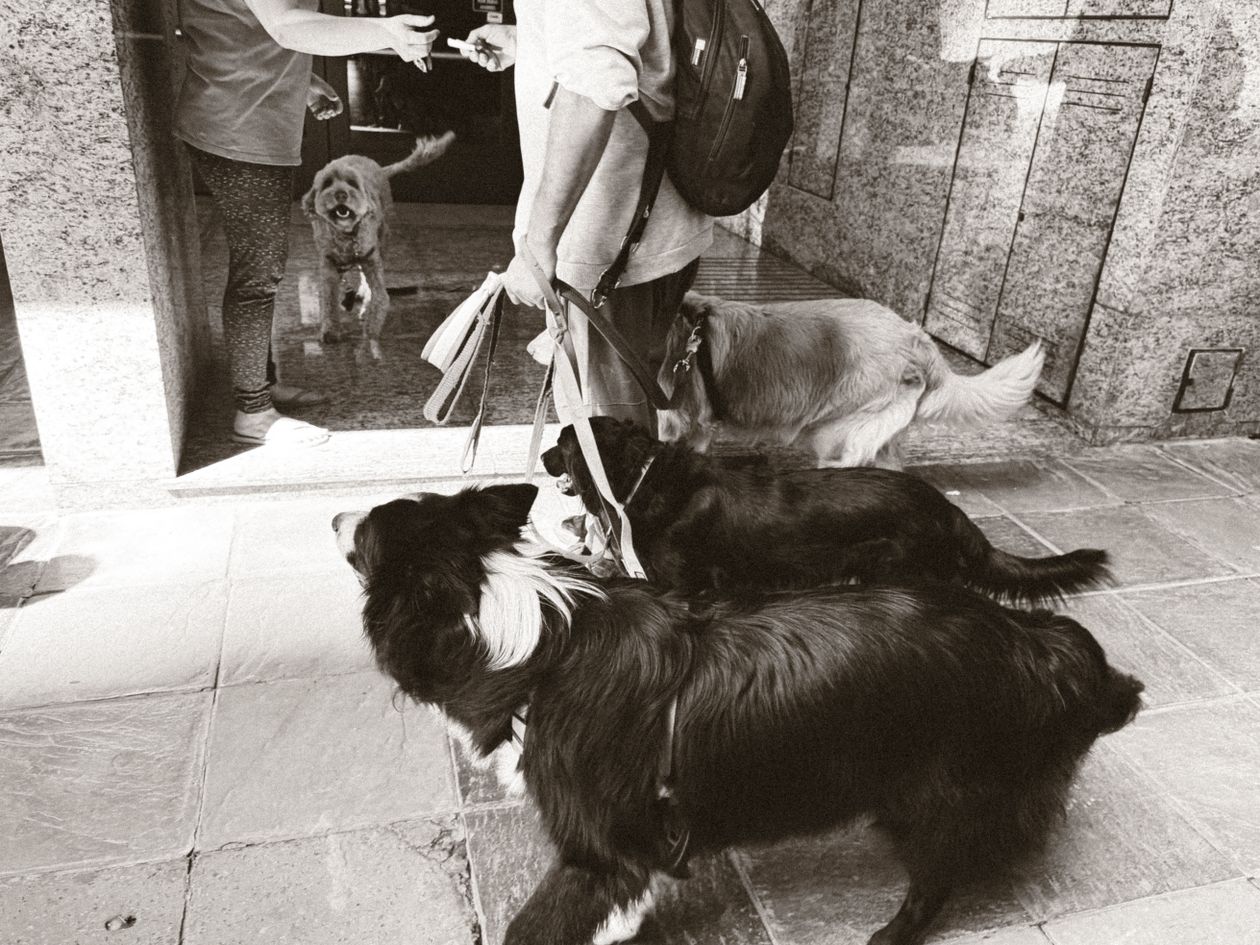 Photo: Marina Zvada, Pexels
In the UK, the law on dogs that are dangerously out of control applies to "the owner; and if different, the person for the time being in charge of the dog". That's you, for as long as you hold the lead. GOV.UK explains that a dog counts as dangerously out of control if it injures someone or even makes someone worried that it might, so a big dog bounding at a nervous stranger can be a problem for the walker, not only the owner. The professional guidelines draw the practical rules from this: dogs go off the lead only with the owner's written permission and only if they come back reliably and immediately, they stay on the lead on public roads even when the owner allows off-lead time, and they're never left unattended in a public place, such as tied up outside a shop. Give the dog your full attention, too. The AKC's advice for walking more than one dog is no earbuds, no phone and no distracting conversations, and the guidelines ask for full attention at all times.
Decide what you'll do before you need to, because you won't think clearly in the moment. If the dog is hurt or suddenly unwell, call its vet so they're ready when you arrive, and call the owner. If the dog gets loose, the guidelines say to contact the owner and the local dog warden straight away, and the Kennel Club's checklist for a missing dog adds the police, the microchip database, local vets and rescue centres. Take a clear photo of the dog on your phone before the first walk, so you have one ready to share. If the dog is involved in an incident with another dog, the guidelines ask walkers to write down what happened and tell the owner, which is fair to everyone even when nobody was hurt. Hot days need extra care, and if the weather looks risky, a shorter walk or none at all is a reasonable call to make with the owner.
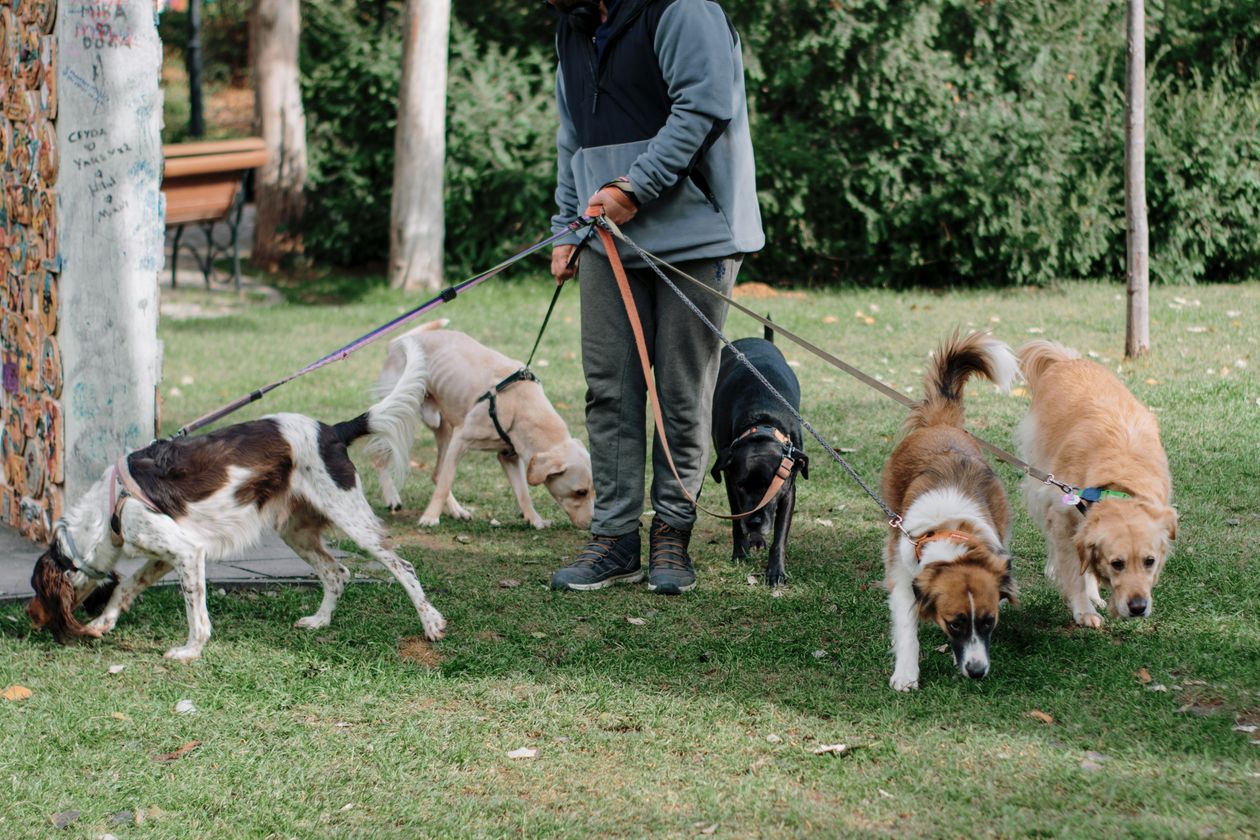 Photo: Berna, Pexels
Walking a neighbour's dog as a favour is one thing. Doing it for money brings more responsibility, and the rules depend on where you are. Dogs Trust says all professional dog walkers should have third-party liability insurance, that the policy should state how many dogs you can walk at once, and that you should check your local council's website for any licence or code of conduct. Some places do require one. London's Royal Parks need every commercial dog walker to hold a Commercial Dog Walking Licence, with evidence of at least £2 million of public liability insurance, at £300 a year (or £225 for Richmond and Bushy Parks only), and cap each walker at four dogs. Tower Hamlets requires its own professional dog walker's licence for anyone walking more than four dogs in a public place. The professional guidelines recommend no more than four dogs at a time. Outside the UK, check your city's rules: in New York City, for example, every dog in a public place has to be on a lead no longer than six feet.
If you walk a neighbour's dog regularly, the walk is easier and more fun with other owners around. Walk With Me is a dog walking app where dog-friendly walks show as pink markers on the map, so you can join one near you or set up your own at a time that suits the dog. It's free on the App Store and Google Play.
7 Oktober 2026 · 9 menit
Can dogs run on concrete? Does pavement wear their nails down? What each surface does to paws and joints, and the lead rules in parks and farmland.
30 Agustus 2026 · 8 menit
Train each dog alone first, give each one a side, and use two matching leads. When a coupler helps, when it doesn't, and when to walk them separately.
25 Agustus 2026 · 10 menit
Most dogs are comfortable between 15 and 25°C, but no vet body sets one safe cut-off. How to judge heat, cold, ice, grit and rain, and which dogs need care.