
September 27, 2026 · 8 min read
Finding Local Dog Pack Walks
Learn how to use a dog walking app to find local pack walks, coordinate safe parallel walks, and build a social routine for your pup.
750
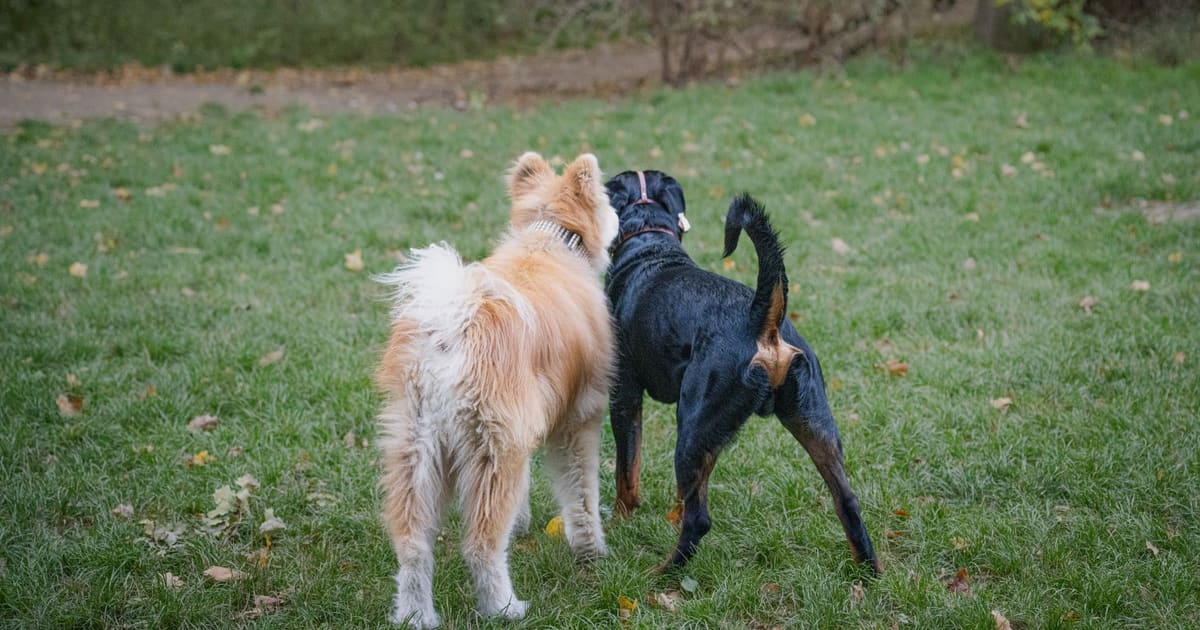
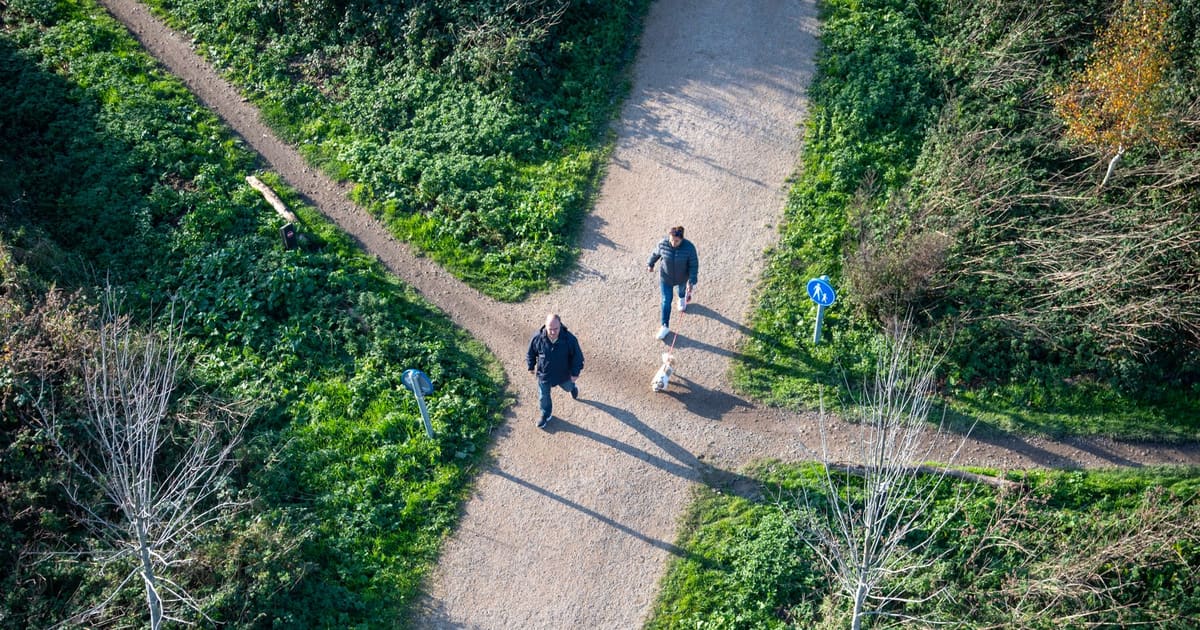
Most people assume a sidewalk is just fine for their dog as long as the weather is cool. But your dog does not wear cushioned rubber sneakers, and deciding where to walk your dog shapes their joint health, nail wear, and paw pads every single day. If you step out the front door and default to straight concrete out of convenience, you are trading long-term comfort for simple habit. Choosing the right surface matters just as much as tracking how many miles you cover together.
Hard concrete offers zero give. Every time your dog's paws slam into poured stone or asphalt, that kinetic force rebounds straight up through their digital bones, wrists, elbows, and hips. Over thousands of strides a week, that repetitive concussive force takes a quiet toll on cartilage.
Dirt trails and packed forest paths behave differently. Earth acts like a shock absorber. When a paw lands on dry soil or packed woodland compost, the ground yields slightly under the dog's weight. This minuscule displacement decelerates the foot strike, dispersing peak joint loads across a wider window of time. For young dogs whose growth plates are still setting, and for older dogs whose cartilage has thinned out over years of fetch, that yield keeps movement fluid instead of punishing.
Grass provides the softest landing of all. Deep, healthy turf distributes pressure across the entire paw pad, reducing localized strain on small toe ligaments. The only downside of tall grass is hidden terrain beneath it: tree roots, uneven ruts, and ankle-twisting divots that you cannot see from above. If the turf is level, grass wins the impact test by a mile.
Paw pads are made of tough, specialized fatty tissue covered in thick, keratinized skin. They need friction to stay resilient, but too much friction tears them apart, while too little leaves them delicate.
Concrete is effectively coarse sandpaper. If you walk entirely on dirt and grass, your dog's nails will grow long and curl over, requiring frequent clipping to avoid joint misalignment. Walking on concrete naturally files down nail tips through honest abrasion. That is a real benefit. But walking on dry, unsealed concrete for ninety minutes can also sand the rough protective layer off your dog's pads until they turn bright pink, raw, and tender to the touch.
Dirt produces a steady, moderate scrub. It buffs the pads without ripping off healthy tissue, letting the outer calluses build up gradually. Dirt also lets a dog dig their toes in for traction when climbing or turning, which strengthens their foot musculature.
Grass creates almost no friction. It offers zero nail filing. If your dog walks only on soft turf, their nails stay long, their foot posture tilts back onto their heels, and their pads stay soft. But if a dog already has a cut, a nick, or raw skin between their toes, grass is the gentlest refuge you can give them while they heal.
Asphalt and concrete are solar sponges. Dark bitumen soaks up thermal radiation from morning till dusk, often reaching temperatures twenty to forty degrees hotter than the ambient air. When the thermometer says 28 degrees Celsius, dark asphalt can hit blistering temperatures that burn tender pads in under a minute.
Dirt paths warm up in direct sun, but they rarely reach the skin-scalding temperatures of urban pavement because soil breathes moisture and reflects light differently. Shaded forest dirt stays cool even in mid-afternoon.
Grass actively cools the air around it through transpiration, releasing moisture into the immediate microclimate. Even on an intensely sunny afternoon, walking on a green lawn feels cool to the touch. When summer hits peak heat, grass is the safest ground you can pick.
Natural surfaces sound ideal on paper, but they bring their own sharp problems that neat city sidewalks avoid.
Tall grass hides parasites, foxtails, and burrs. Foxtails are vicious grass awns shaped like miniature arrows; once they hook between a dog's toes, their barbed design drives them deeper into the skin with every step, causing painful abscesses. Wet grass also breeds damp conditions between paws, which can lead to fungal flare-ups if toes are not dried after a walk.
Dirt has another nasty trick when it rains: it becomes heavy mud. Mud packs tightly into the crevices around paw pads, drying into cement-like plugs that yank at hair and distort foot mechanics. Dirt trails also hold sharp gravel, jagged limestone fragments, and broken glass hidden under fallen leaves.
Concrete, for all its hardness, is predictable. You can spot a discarded chicken bone, a rusted nail, or broken beer bottle five paces ahead. It cleans easily, dries quickly after rain, and carries zero ticks.
How do you pick where to walk your dog when every single surface brings an obvious tradeoff? The answer is never choosing just one.
Instead of hunting for an impossible paradise made entirely of clean dirt, use what I call the 70/30 Route Ratio. Build your everyday route so that roughly 70 percent of your steps happen on forgiving surfaces like packed dirt paths, park lawns, or gravel tracks, and 30 percent happen on paved sidewalks.
The 30 percent on pavement files down nails, keeps paw pads tough, and gets you from your front door to the park safely. The 70 percent on earth absorbs joint shock, cools their feet, and gives their foot tendons natural, dynamic movement. If you walk on pavement to get to the park, step off onto the grass verge beside the sidewalk whenever it is safe and clean.
| Surface | Joint Impact | Nail Filing | Heat Risk | Hidden Hazards |
|---|---|---|---|---|
| Concrete | High (zero give) | Excellent (natural file) | Severe in direct sun | Low (hazards are visible) |
| Dirt | Low (absorbs shock) | Moderate | Moderate to low | Medium (gravel, glass under dirt) |
| Grass | Very Low (cushioned) | None | Very low (cool) | High (foxtails, burrs, hidden holes) |
No single surface wins every walk. If you have an energetic puppy, a greyhound with thin pads, or a senior dog with stiff hips, prioritize packed dirt and flat grass to protect their joints. If you have a working breed with tough feet and long nails, a controlled loop with concrete will save you hours of nail trimming.
Adjust by the season, too. When midsummer sun beats down on the roads, stick entirely to shaded dirt trails and open lawns. When winter turns woodland dirt paths into ankle-deep mud slicks that trap grit between toe pads, migrate back to firm, clean concrete.
Balancing these surfaces makes everyday outings safer and more engaging. If you want to discover fresh neighbourhood routes, find nearby water fountains, or spot other dog lovers heading out at the same time, open Walk With Me. It makes building better daily walking routines simple, one step at a time.
September 27, 2026 · 8 min read
Learn how to use a dog walking app to find local pack walks, coordinate safe parallel walks, and build a social routine for your pup.
September 11, 2026 · 9 min read
Learn how walking someone elses dog requires specific safety steps, gear checks, and trust-building protocols to avoid common mistakes.

September 5, 2026 · 6 min read
When comparing puppies to walking senior dogs, the older dogs require far more precision, careful pacing, and specific surface choices to stay healthy.
