
October 11, 2026 · 9 min read
Amsterdam Anne Frank Walking Tour
From the Hollandsche Schouwburg through the old Jewish Quarter, past the Dockworker and the Dam, to the Anne Frank House on the Prinsengracht.
589

October 9, 2026 · 11 min read

 친구는 무료로 함께 걸어요
모든 투어는 앱에서 참여할 수 있는 정기 그룹 걷기 모임으로도 운영됩니다.
Bangkok의 오디오 투어 더 보기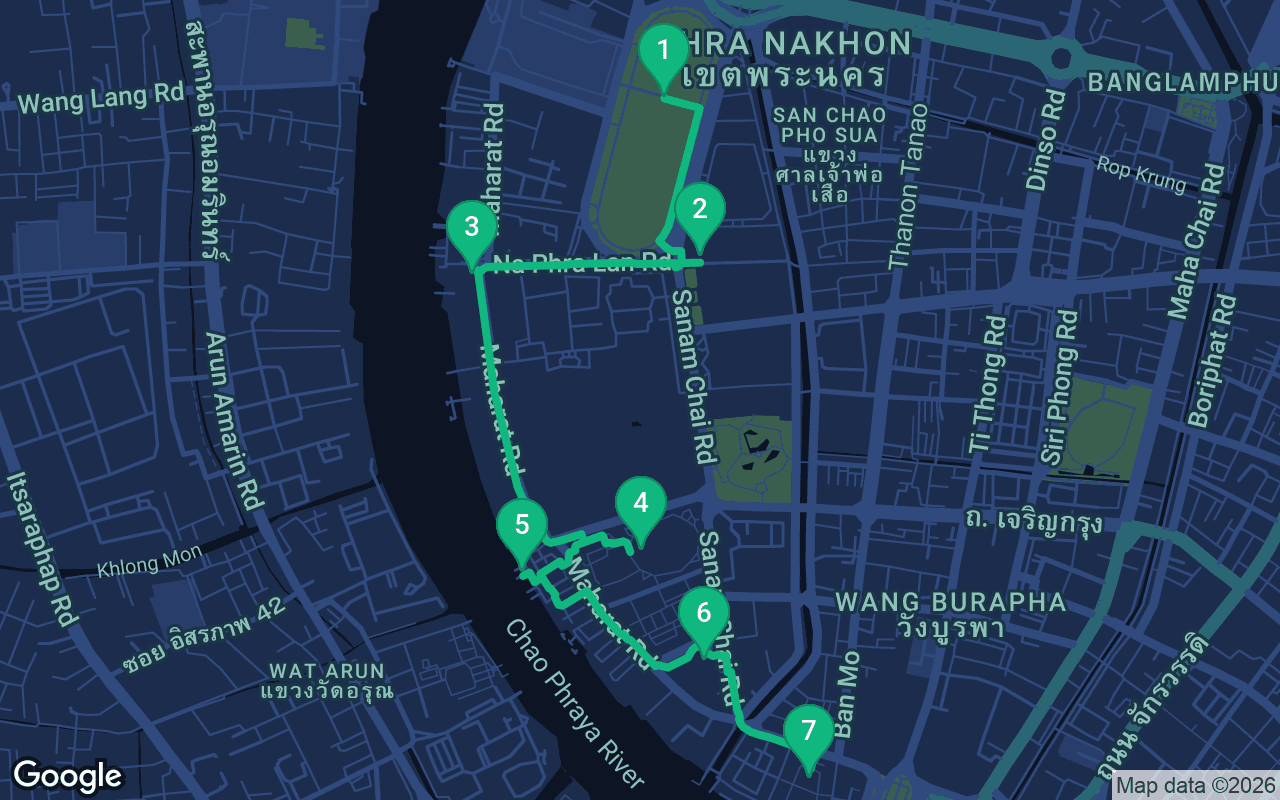
약 3.4km, 여유로운 페이스로 대략 48분 소요.
음성 가이드가 포함된 투어입니다
처음 3개 스톱에서 재생을 누르면 여기에서 나레이션을 30초 데모로 들을 수 있습니다. 앱에서는 인트로와 이 스톱들을 무료로 끝까지 들으실 수 있으며, 각 스톱에 도착하면 알림음이 울립니다. 전체 오디오 투어는 $8.99에 한 번만 구매하시면 평생 소장하실 수 있습니다.
Garmin, Komoot, Strava, OS Maps 및 모든 GPX 앱과 호환됩니다.
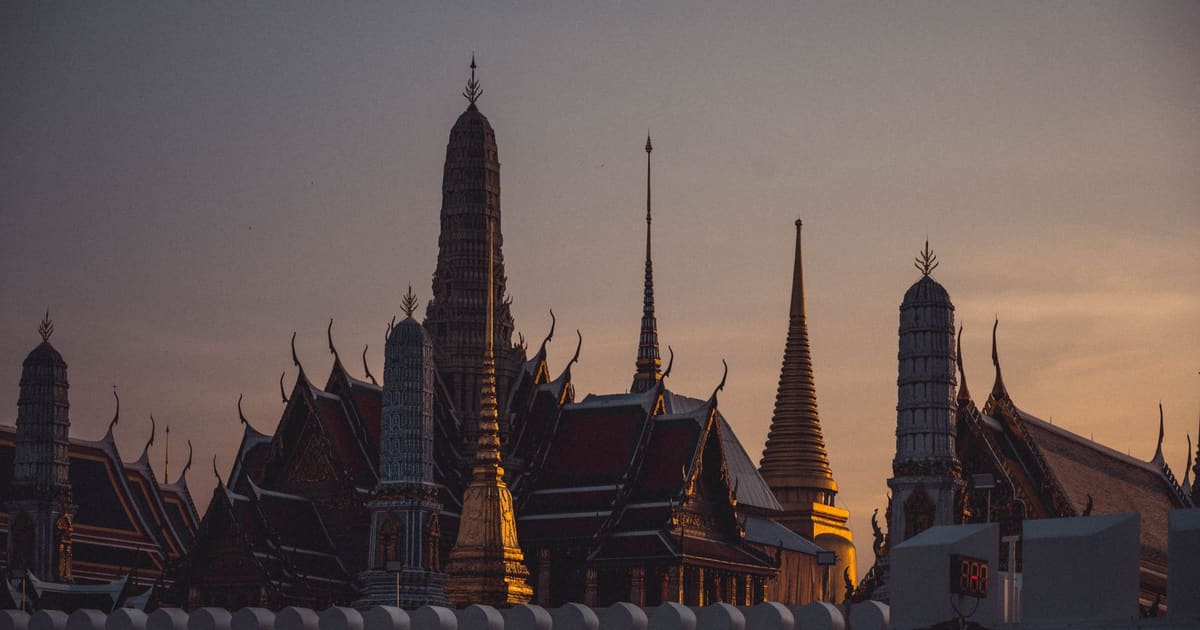
Bangkok began on a bend of the Chao Phraya River, on ground that the river and a ring of canals turned into an island. That island, Rattanakosin, still holds the grandest sights in the city, and this walk strings them together: the open lawns of Sanam Luang, the shrine that marks the birth of the city, the Grand Palace and the Emerald Buddha, the Reclining Buddha at Wat Pho, the river facing Wat Arun, a museum about being Thai and, at the finish, the flower market of Pak Khlong Talat. It is about three and a half kilometers and flat the whole way, one of the great self-guided walking tours in Asia if you start early.
The walking takes under an hour, but plan for a full morning, because the Grand Palace and Wat Pho each deserve at least an hour inside. Bangkok is hot and humid all year, and there is little shade on Sanam Luang or in the palace courtyards, so start as early as you can, carry water and wear a hat. Dress matters here more than anywhere else in the city. The Grand Palace strictly enforces its dress code: shoulders and knees covered, nothing see-through, and people who get it wrong are turned away. In temple halls, take your shoes off at the door, sit with your feet tucked behind you rather than pointing them at a Buddha image, and give monks room; women in particular should not touch a monk or hand him anything directly. Near the palace, a friendly stranger may tell you it is closed today and offer to arrange a tuk-tuk somewhere else. It is a long-running scam that tends to end in a gem or tailor shop, so smile, walk on and see the gate for yourself. The palace does close now and then for royal ceremonies, and fees and hours change, so check before you go.
Start on the wide oval of grass at Sanam Luang, the Royal Field. To the south, the white walls and gilded spires of the Grand Palace rise above the trees. This is the great open space of old Bangkok, the stage for the kingdom's biggest ceremonies. Royal cremations are held here, on towering, intricate pavilions built for the occasion and taken down afterward, and the field's old name referred to the cremation pyre until King Mongkut, Rama IV, gave it the gentler one it has today. Each year, usually in May, the ancient Royal Ploughing Ceremony opens the rice-planting season on this ground. Sacred oxen draw furrows and are then offered trays of rice, corn, beans, sesame, grass, water and liquor, and whatever they choose is read as a forecast for the harvest. In the hot, windy months, Bangkokians have long come here to fly kites. Until 1982 the city's famous weekend market was held on this grass, before it moved north to Chatuchak. Walk south along the eastern edge of the field, and at the southeast corner cross the road to a small white shrine crowned by a tall, pointed spire. About five minutes.
 This modest shrine is where Bangkok officially begins. In 1782, after the fall of King Taksin, the general Chao Phraya Chakri took the throne as King Rama I, first king of the Chakri dynasty. He moved the capital from Thonburi, on the west bank, across the river to this side, where the bend of the Chao Phraya and new canals made the ground easier to defend. Before a palace wall went up, the city needed its foundation pillar, the lak mueang, and on a day in April 1782 chosen by the court astrologers it was raised on this spot. A city pillar is an old Thai tradition, a home for the guardian spirit of the place, and Bangkok's is still treated exactly that way. There are two pillars inside today, because King Mongkut added a second. People come all day with incense, lotus buds and jasmine garlands, asking for luck with a job, a baby or a house, and when a wish comes true some pay a troupe of dancers to perform in thanks, so you may hear music from the pavilion beside the shrine. When you are ready, cross back to the palace side and follow the high white walls west along Na Phra Lan Road, the street between the palace and Sanam Luang, to the visitor entrance. About eight minutes.
Behind these white walls is not one palace but a small walled city of throne halls, courtyards, offices and temples, begun in 1782 and added to by king after king. The route begins with the Temple of the Emerald Buddha, Wat Phra Kaew, where fierce giant guardians stand at the gates and the courtyard is a crowd of gold and glittering glass mosaic. Walk the cloister around the edge to see the long mural of the Ramakien, the Thai telling of the Indian epic the Ramayana. The Emerald Buddha sits high on a golden altar in the main hall. It is small, about sixty-six centimeters tall, and carved from green stone, jade or jasper rather than emerald, yet it is the most sacred image in Thailand. Legend says it came to light in Chiang Rai in the fifteenth century, when lightning struck a chedi and the plaster around an image flaked away. It passed through Lampang, Chiang Mai, Luang Prabang and Vientiane before the future Rama I brought it back in 1779, and it was installed here in 1784. Shoes come off at the door, and photos are not allowed inside. Beyond it stands the Chakri Maha Prasat Throne Hall, finished in 1882 under King Chulalongkorn, Rama V, a European building wearing three Thai spired roofs. When you come out, walk to Maha Rat Road on the river side of the palace and turn south, palace walls on your left. Past the end of the palace, the long white wall of Wat Pho begins; follow it and the signs to the visitor entrance. About twelve minutes.
포함 사항
저희 투어는 명상하듯 몰입할 수 있도록 만들어졌습니다. 걸으며 그저 귀 기울이시면 됩니다. 함께하면 언제나 더 좋고, 앱이 나레이션을 동기화해 재생하므로 당신과 파트너, 친구들이 모든 스톱을 같은 순간에 들을 수 있습니다.
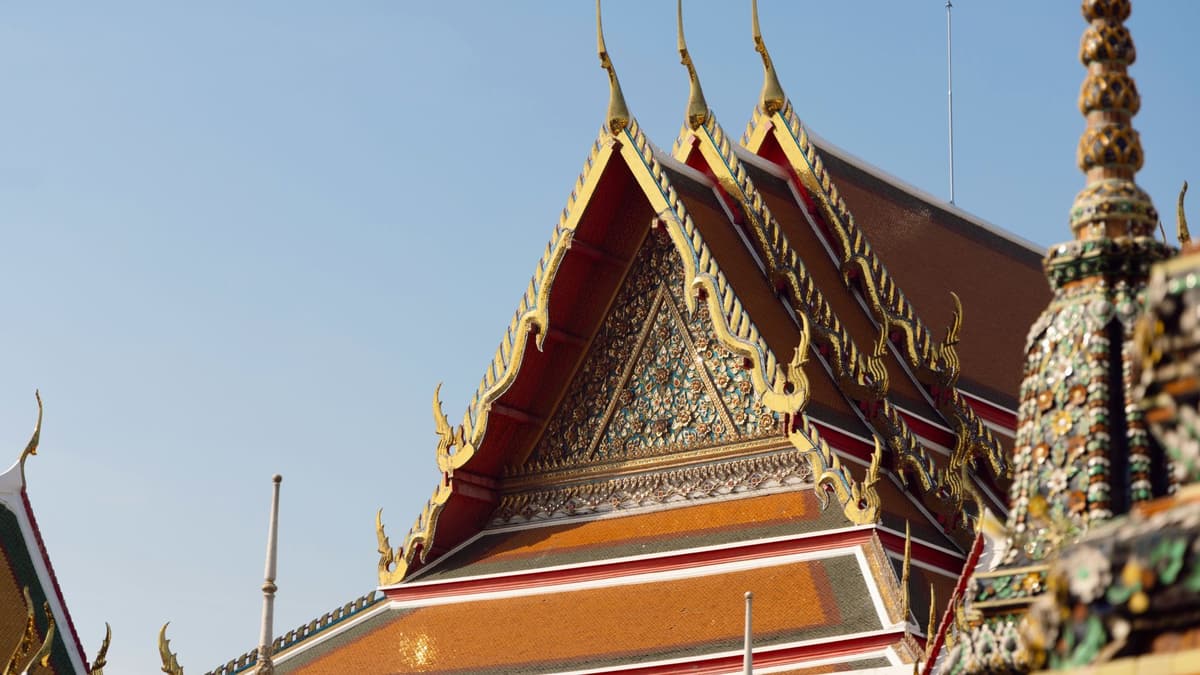
Wat Pho is older than Bangkok. A temple stood here before the city was founded, and Rama I rebuilt it as the royal temple beside his new palace.
이 스톱의 나머지 내용은 전체 오디오 투어에 있습니다.
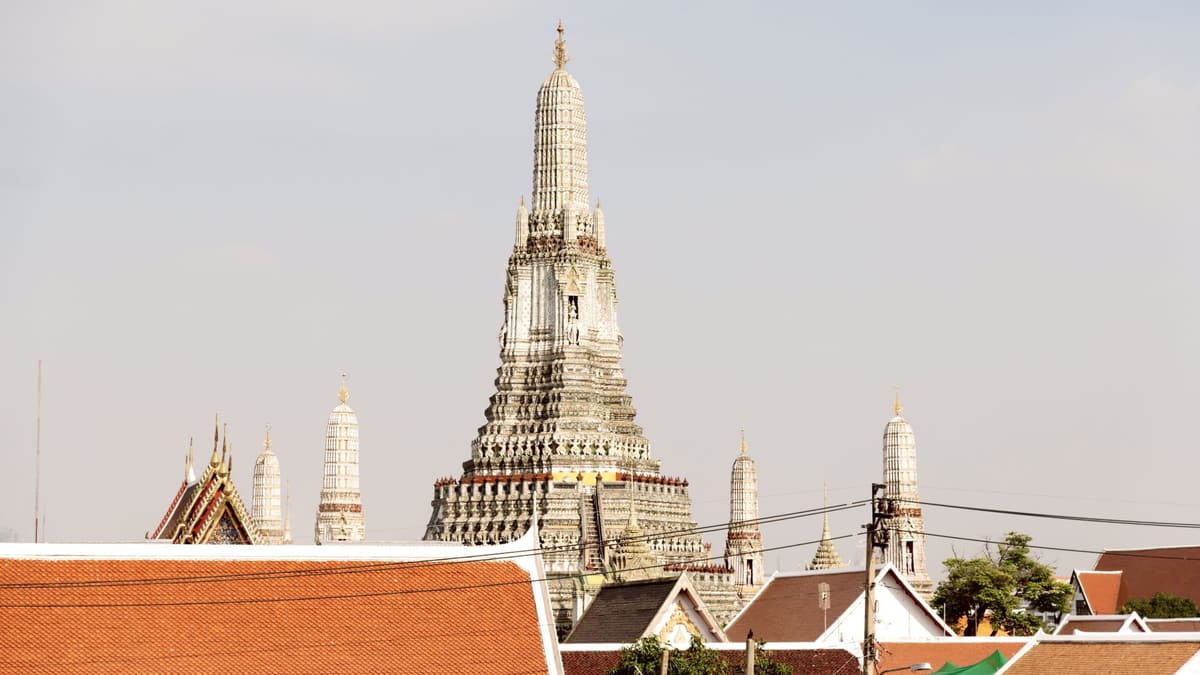
You come out on the riverbank at Tha Tien, and across the water rises the reason everyone stops here: Wat Arun, the Temple of Dawn.
이 스톱의 나머지 내용은 전체 오디오 투어에 있습니다.
This stately European-style building, set back behind its lawn, was built in the reign of King Vajiravudh, Rama VI, to house the Ministry of Commerce.
이 스톱의 나머지 내용은 전체 오디오 투어에 있습니다.
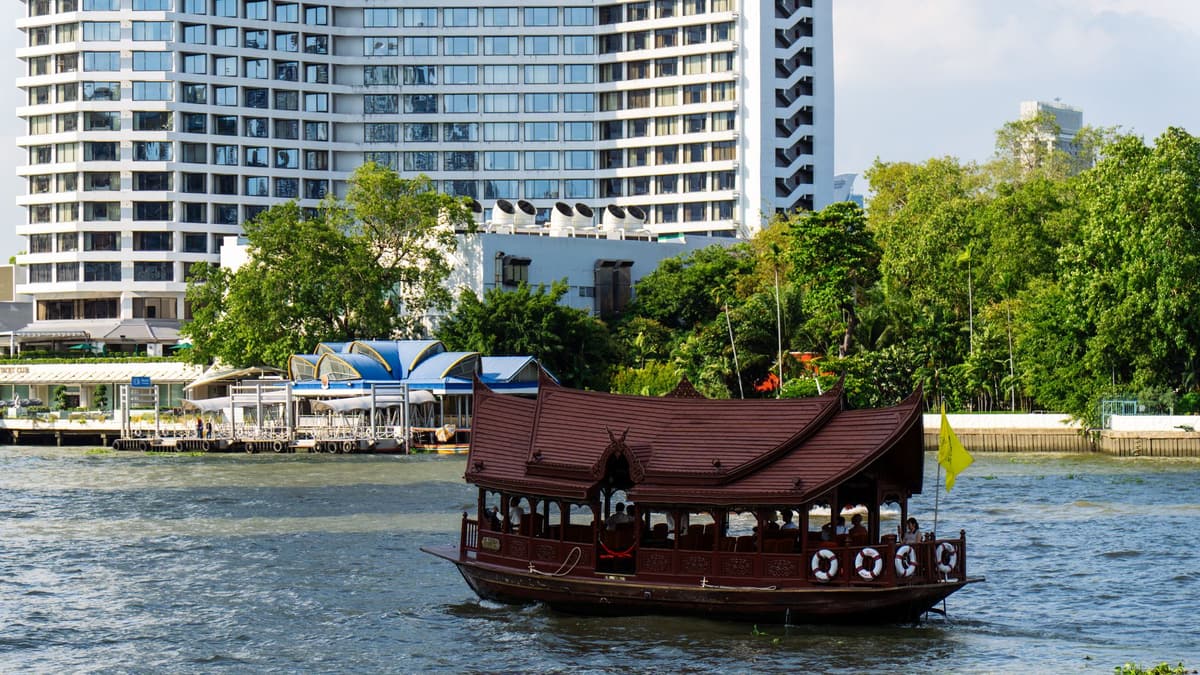
The name says it plainly: the market at the mouth of the canal.
이 스톱의 나머지 내용은 전체 오디오 투어에 있습니다.
다음 예정된 투어에서 다른 사람들과 함께 이 산책을 해보세요.
약 3.4km, 여유로운 페이스로 대략 48분 소요 · 7 정류장
친구는 무료로 함께 걸어요October 11, 2026 · 9 min read
From the Hollandsche Schouwburg through the old Jewish Quarter, past the Dockworker and the Dam, to the Anne Frank House on the Prinsengracht.
October 11, 2026 · 11 min read
From Van Houten's street by the Vondelpark past Leidseplein, the Rijksmuseum passage and the famous canal bench to the Anne Frank House.

October 11, 2026 · 10 min read
Follow the last days of April and May 1945 from the Anhalter Bahnhof ruin past the Gestapo site and Brandenburg Gate to the Moltke Bridge and the Reichstag.
