
October 11, 2026 · 9 min read
Amsterdam Anne Frank Walking Tour
From the Hollandsche Schouwburg through the old Jewish Quarter, past the Dockworker and the Dam, to the Anne Frank House on the Prinsengracht.
589

October 9, 2026 · 11 min read

 친구는 무료로 함께 걸어요
모든 투어는 앱에서 참여할 수 있는 정기 그룹 걷기 모임으로도 운영됩니다.
Dubai의 오디오 투어 더 보기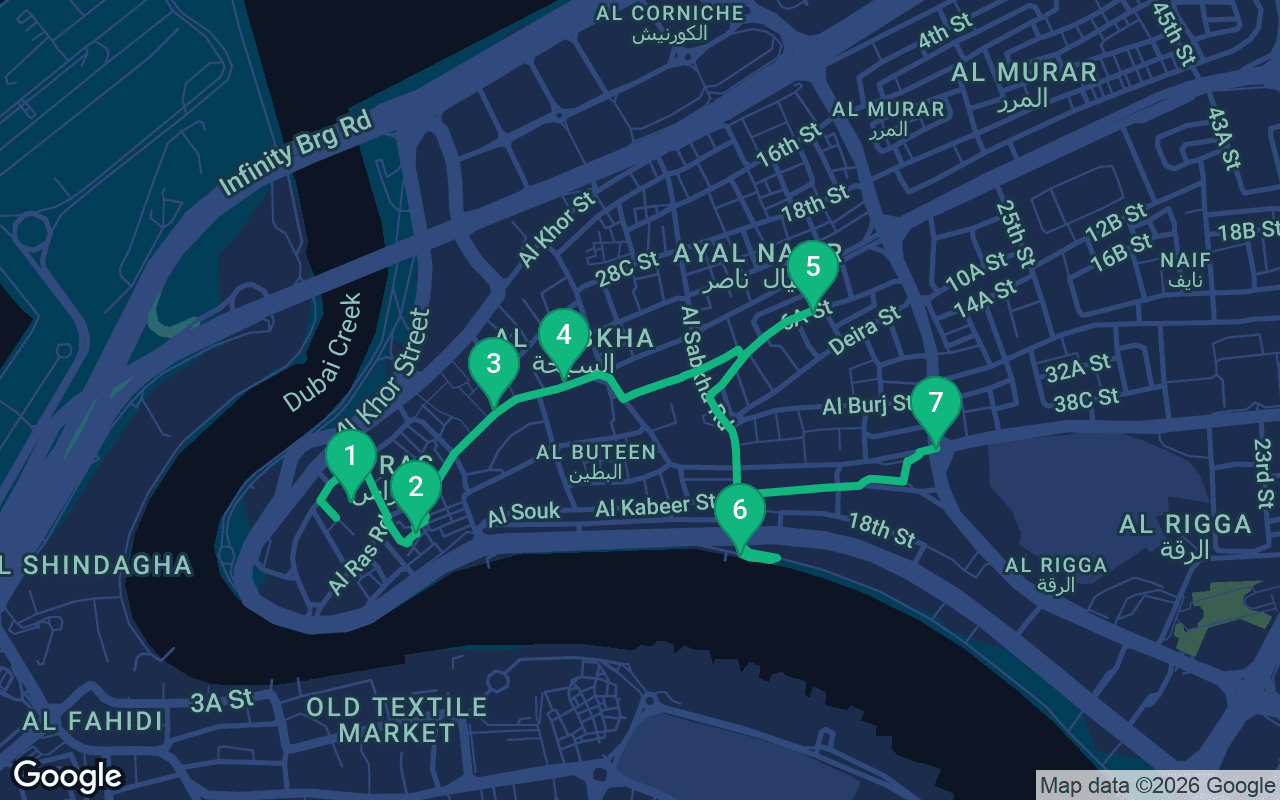
약 3.1km, 여유로운 페이스로 대략 43분 소요.
음성 가이드가 포함된 투어입니다
처음 3개 스톱에서 재생을 누르면 여기에서 나레이션을 30초 데모로 들을 수 있습니다. 앱에서는 인트로와 이 스톱들을 무료로 끝까지 들으실 수 있으며, 각 스톱에 도착하면 알림음이 울립니다. 전체 오디오 투어는 $8.99에 한 번만 구매하시면 평생 소장하실 수 있습니다.
Garmin, Komoot, Strava, OS Maps 및 모든 GPX 앱과 호환됩니다.
Deira is the Dubai of merchants, the crowded bank of the Creek where the city has bought and sold for well over a century, and it feels a world away from the glass towers down the coast. This walk starts at Al Ahmadiya School, the city's first school, in the old Al Ras quarter, then works through the Spice Souk, the Gold Souk and the Perfume Souk, on to Naif Souk, down to the wooden dhows moored along the Creek, and finishes at Baniyas Square. It covers about three kilometers, just under two miles, all of it flat, and of all the self-guided walking tours you can take in Dubai it is the one with the most to smell, taste and haggle over.
The walking takes about 45 minutes, but plan on two to three hours, because the souks are made for browsing and the bargaining takes time. The route is flat, on busy sidewalks and narrow covered lanes, and it gets crowded, so keep your bag in front of you and go with the flow. Heat is the thing to plan around. The best months are November to March, early in the morning or from late afternoon into the evening, when the souks are at their liveliest and the lights come on in the gold shops. In October and April go early or late. From May to September the midday heat climbs past 40 degrees Celsius, over 104 Fahrenheit, and the walk is not walkable at midday; in summer, go only in the late evening. Carry water. Dress modestly, with shoulders and knees covered, which is expected throughout these traditional markets. Many shops close for a break in the afternoon and for Friday midday prayers, and hours vary, so check before you go. Haggling is normal in the souks: greet the shopkeeper, ask the price, offer less with a smile, meet in the middle, and only start if you mean to buy. Ask before you photograph people, especially the crews on the dhows.
Begin in the lanes of Al Ras, in front of Al Ahmadiya School, a two-story building of coral stone and gypsum around a central courtyard. Look at the carved gypsum panels and the heavy wooden doors. This was the first school in Dubai, founded in 1912 by Sheikh Mohammed bin Ahmed bin Dalmouk, a wealthy pearl merchant. Before it opened, boys learned to read the Quran with a local teacher and little else; here they studied Arabic, arithmetic, handwriting and religion as well. It is now a museum of education, so check before you go whether it is open, and next door stands Heritage House, built in 1890 and later home to the same pearl merchant family. Their wealth, and the school's, came from the sea. Every summer the pearling fleet sailed out to the oyster banks for about four months. Divers wore a clip on the nose, held a stone weight to sink fast, and went down again and again on a single breath to fill a basket with shells, while a puller on deck hauled them up by rope. It was brutal work, and many crews lived in debt to the boat captains and merchants who fitted them out. Then in the 1920s and 1930s cultured pearls from Japan flooded the market, the Depression struck, and the Gulf pearl trade collapsed within a few years. The fortunes behind houses like these went with it. From the school, walk southeast through the lanes toward the Creek, following your nose. About five minutes.
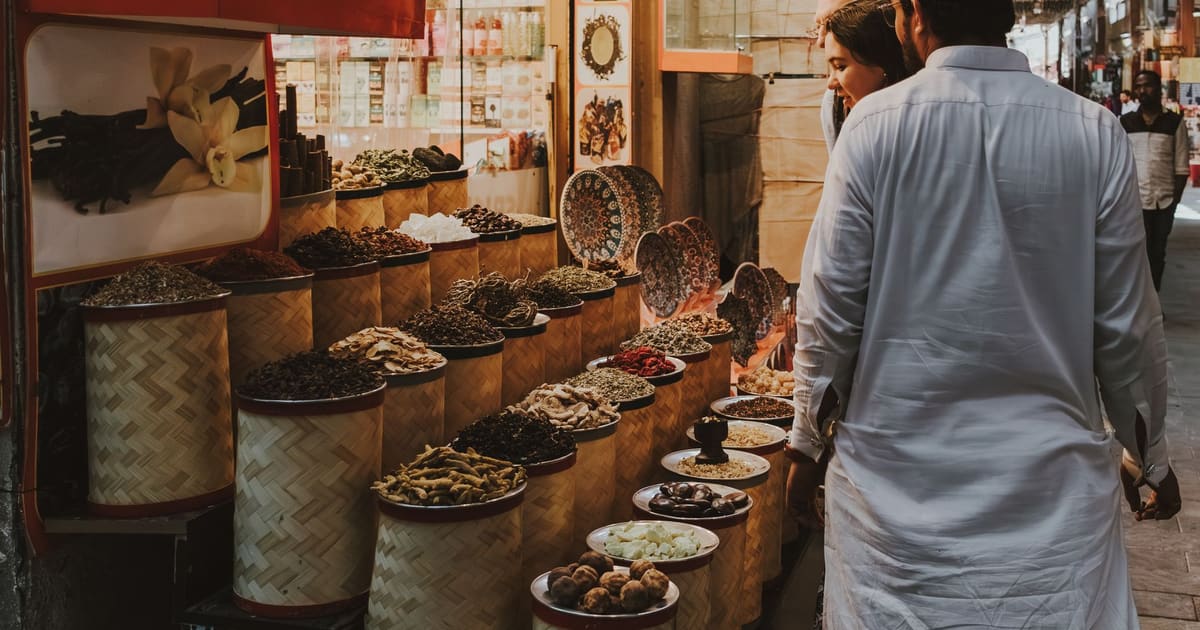
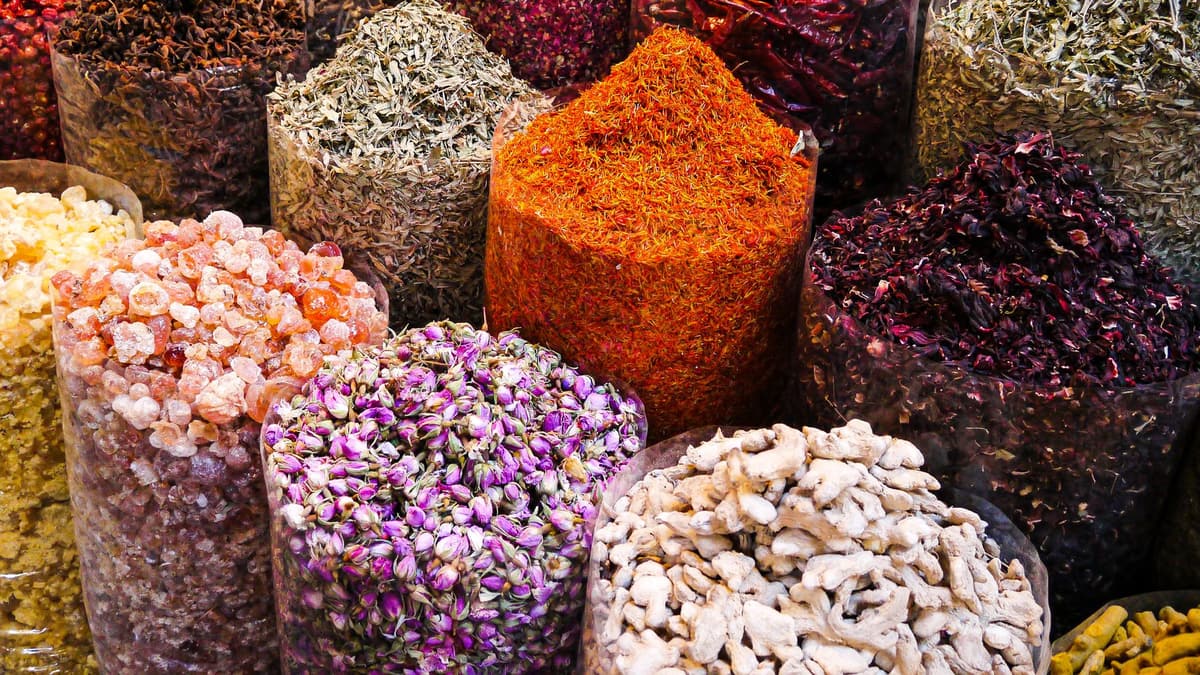 You will smell the Spice Souk before you see it. Step into the narrow covered lanes and take in the open sacks and baskets stacked along both sides: chilies, turmeric, cinnamon bark, cardamom pods, rose petals, hibiscus flowers and the little black dried limes called loomi, which Gulf cooks drop whole into rice and stews for a sharp, smoky sourness. Look for the lumps of pale, glassy resin in bowls. That is frankincense, the dried sap of a tree that grows in southern Arabia and the Horn of Africa, burned for its fragrant smoke since ancient times and still burned in homes here today. Saffron is sold in tiny boxes, and the shopkeepers will tell you theirs is the best; real saffron is never cheap, so be wary of a bargain. Cardamom is the heart of Arabic coffee, gahwa, the pale, spiced coffee poured in small cups as a sign of welcome all over the Emirates. Many of the traders here have family roots in Iran and India, and the souk has always been where those trades met. You are free to look, smell and ask questions. Shopkeepers will hold out a pinch of something for you to sniff, and a little friendly haggling is expected if you buy. When you are done, walk northeast up through the souk and across the street at its top end to the wooden gateway of the Gold Souk. About five minutes.
Stand under the gateway and look along the covered arcade of the Gold Souk, roofed in wooden lattice and lined with window after window of gold: necklaces, bangles, earrings and wedding sets heavy enough to make you wonder who wears them. There are hundreds of shops here, and Dubai has long called itself the City of Gold. The trade took off in the 1950s and 1960s, when Dubai merchants bought gold freely on the world market and shipped much of it onward, often by dhow, to India, where gold imports were tightly restricted. That trade built fortunes on this bank of the Creek, and Dubai remains one of the great gold trading centers of the world. Look at the designs and you can read the customers: delicate Italian chains, heavy yellow Indian bridal pieces, and bold Arabic styles. If you are thinking of buying, it helps to know how it works. Gold here is priced by weight at the day's rate, which many shops display, and then a making charge is added for the craftsmanship. The gold price itself is not up for negotiation; the making charge is where you bargain. Common purities are 18, 21, 22 and 24 karat. Take your time, compare a few shops, and always ask for a receipt showing the weight and the karat. Nobody minds if you simply look. To continue, walk east to the end of the main arcade, out onto Sikkat Al Khail Street, where the perfume shops begin. About two minutes.
포함 사항
저희 투어는 명상하듯 몰입할 수 있도록 만들어졌습니다. 걸으며 그저 귀 기울이시면 됩니다. 함께하면 언제나 더 좋고, 앱이 나레이션을 동기화해 재생하므로 당신과 파트너, 친구들이 모든 스톱을 같은 순간에 들을 수 있습니다.
You are now in the Perfume Souk, a stretch of small shops along Sikkat Al Khail Street with shelves of cut-glass bottles glittering in the windows and a cloud of scent drifting out of every door.
이 스톱의 나머지 내용은 전체 오디오 투어에 있습니다.
Naif Souk is the market where much of Deira shops for everyday things: abayas and scarves, fabric, perfume, toys, kitchenware, shoes and household goods, sold in a long, arcaded building.
이 스톱의 나머지 내용은 전체 오디오 투어에 있습니다.
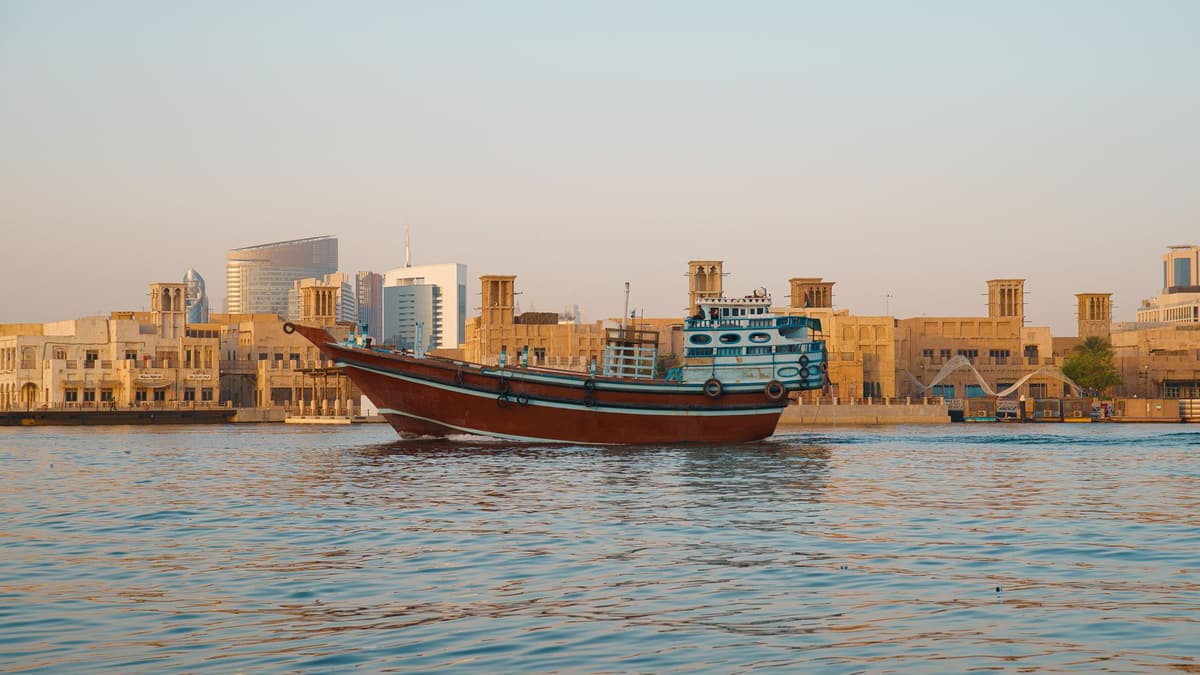
You are back on the Creek at Al Sabkha Abra Station, and along the waterfront here the wooden dhows are moored, sometimes several deep, their high curved bows and stern decks lined up against the quay. Look along the wharf.
이 스톱의 나머지 내용은 전체 오디오 투어에 있습니다.
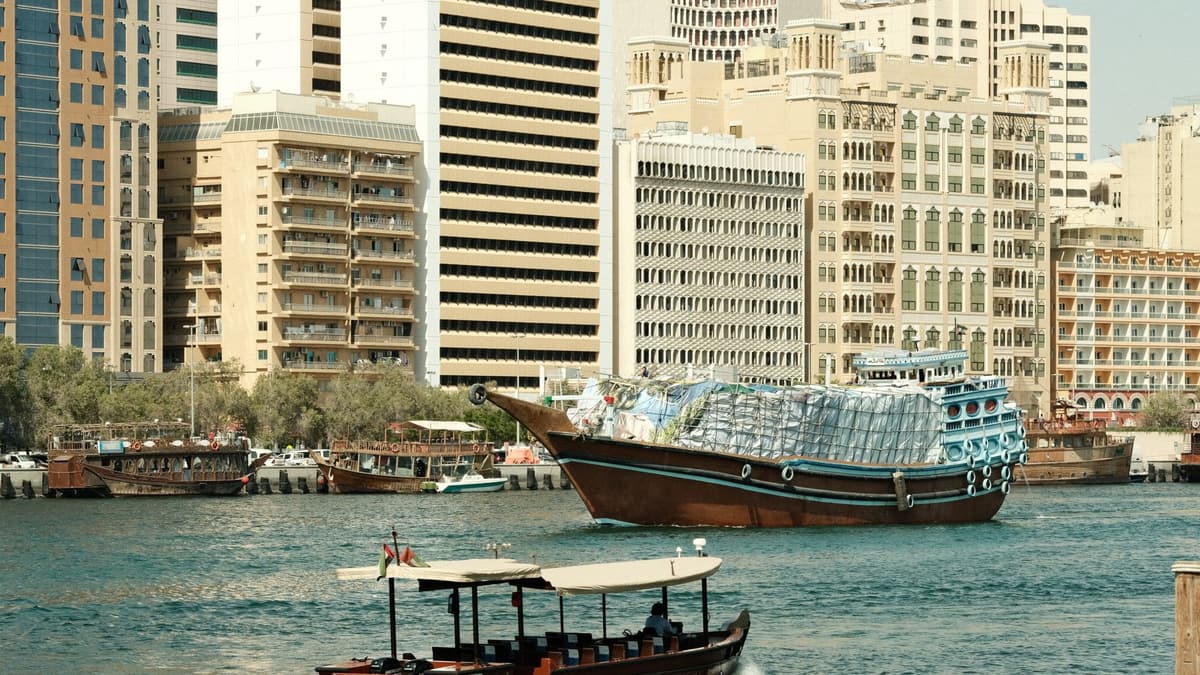
The walk ends at Baniyas Square, a long rectangle of trees, paving and benches surrounded by office blocks, hotels, banks and shops. Stand in the middle and look around.
이 스톱의 나머지 내용은 전체 오디오 투어에 있습니다.
다음 예정된 투어에서 다른 사람들과 함께 이 산책을 해보세요.
약 3.1km, 여유로운 페이스로 대략 43분 소요 · 7 정류장
친구는 무료로 함께 걸어요October 11, 2026 · 9 min read
From the Hollandsche Schouwburg through the old Jewish Quarter, past the Dockworker and the Dam, to the Anne Frank House on the Prinsengracht.
October 11, 2026 · 11 min read
From Van Houten's street by the Vondelpark past Leidseplein, the Rijksmuseum passage and the famous canal bench to the Anne Frank House.

October 11, 2026 · 10 min read
Follow the last days of April and May 1945 from the Anhalter Bahnhof ruin past the Gestapo site and Brandenburg Gate to the Moltke Bridge and the Reichstag.
