
October 11, 2026 · 9 min read
Amsterdam Anne Frank Walking Tour
From the Hollandsche Schouwburg through the old Jewish Quarter, past the Dockworker and the Dam, to the Anne Frank House on the Prinsengracht.
589

October 9, 2026 · 8 min read

 친구는 무료로 함께 걸어요
모든 투어는 앱에서 참여할 수 있는 정기 그룹 걷기 모임으로도 운영됩니다.
Heidelberg의 오디오 투어 더 보기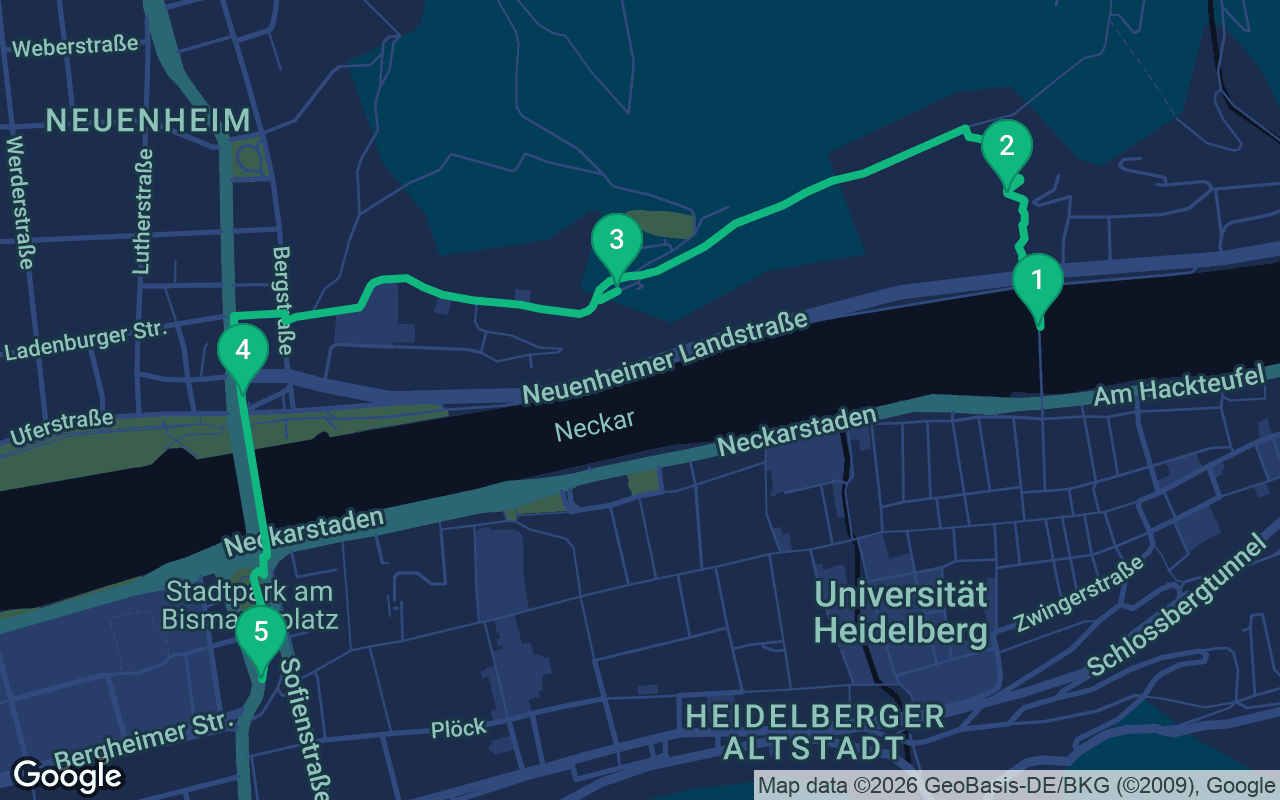
약 2.4km, 여유로운 페이스로 대략 40분 소요.
음성 가이드가 포함된 투어입니다
처음 3개 스톱에서 재생을 누르면 여기에서 나레이션을 30초 데모로 들을 수 있습니다. 앱에서는 인트로와 이 스톱들을 무료로 끝까지 들으실 수 있으며, 각 스톱에 도착하면 알림음이 울립니다. 전체 오디오 투어는 $8.99에 한 번만 구매하시면 평생 소장하실 수 있습니다.
Garmin, Komoot, Strava, OS Maps 및 모든 GPX 앱과 호환됩니다.
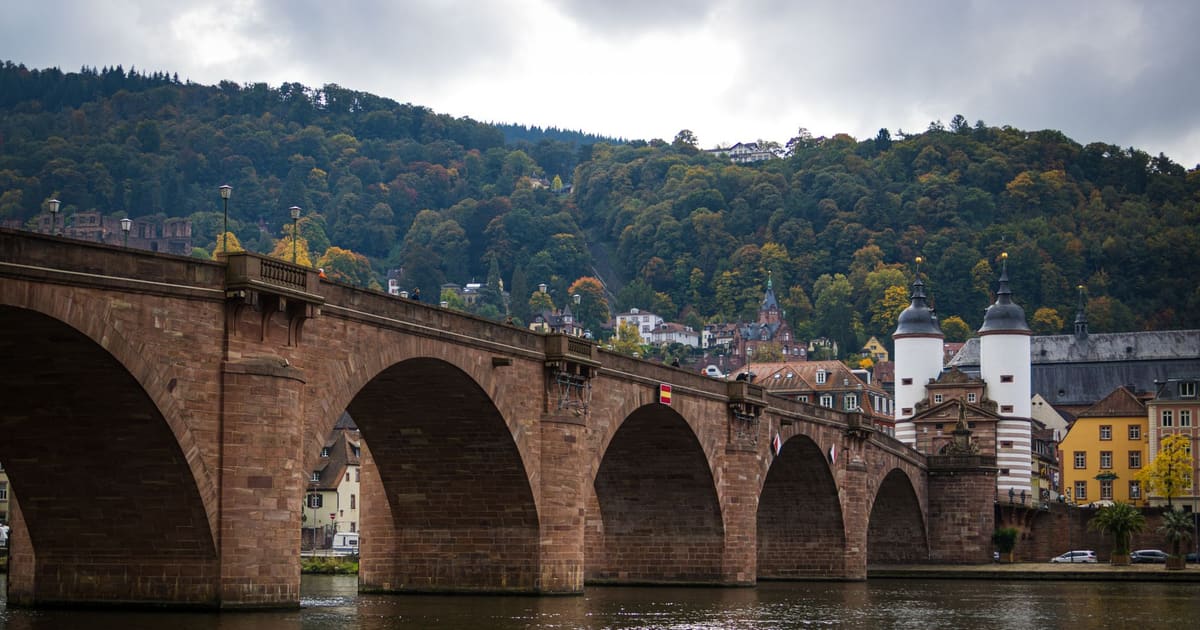
Most visitors see Heidelberg from below, looking up at the castle. This walk takes you to the other side of the river, where the whole town lays itself out in front of you like a stage set. It starts on the Old Bridge over the Neckar, climbs the steep stone stairway of the Snake Path to the Philosophers' Walk, a hillside path where professors, students and poets have come for two centuries to think and to stare, then drops through the quiet villa streets of Neuenheim and crosses back over the river to Bismarckplatz. It is about two and a half kilometers, roughly a mile and a half, and among the most scenic self-guided walking tours in Germany for the effort it asks.
Give yourself an hour and a half, longer if you linger at the viewpoints, and you will want to. Be honest with yourself about the climb. The Snake Path, the Schlangenweg, is a steep zigzag of stone steps and cobbled ramps that climbs hard for ten to fifteen minutes. The steps are uneven and can be slippery after rain or with fallen leaves, there is little to hold on to, and it is not suitable for strollers or wheelchairs. Go at your own pace and rest at the bends. If stairs are hard for you, you can reach the Philosophers' Walk on gentler lanes from Neuenheim, the way this walk comes down, and see the stops in reverse. Once you are up, the path is easy, mostly level and then gently downhill. The hillside faces south and has little shade, so on a hot day go early in the morning or in the late afternoon, which is also when the light on the old town and the castle is at its best. Carry water, since there is nowhere to buy any on the hill.
Stand in the middle of the Old Bridge, the Alte Brücke, and take a moment. Upstream, to the east, the river bends away between wooded hills. Back toward the old town, the castle sits on its ledge above the roofs. The bridge's proper name is the Karl Theodor Bridge, after the elector who had it built in stone in the 1780s, after earlier wooden bridges on this spot kept being wrecked by ice and floods. His statue stands on the bridge, and so does one of Minerva, the Roman goddess of wisdom, a nod to the university. At the old town end rises the bridge gate, two round towers with white Baroque caps, once part of the town walls. On its side, look for marks showing how high the Neckar has risen in great floods, some of them startlingly high. Beside the gate sits a bronze monkey holding up a mirror. A stone monkey stood on the old bridge tower in the Middle Ages, mocking passers by, and the bronze one recalls it. People say that touching the mirror brings wealth, touching his fingers means you will return to Heidelberg, and touching the mice beside him brings children. In March 1945 retreating German troops blew up the bridge to slow the advancing Americans. Townspeople raised money to rebuild it, and it reopened within a couple of years. Now walk north to the far end of the bridge, about three minutes, cross the busy riverside road at the lights, and look for the sign for the Schlangenweg straight ahead.
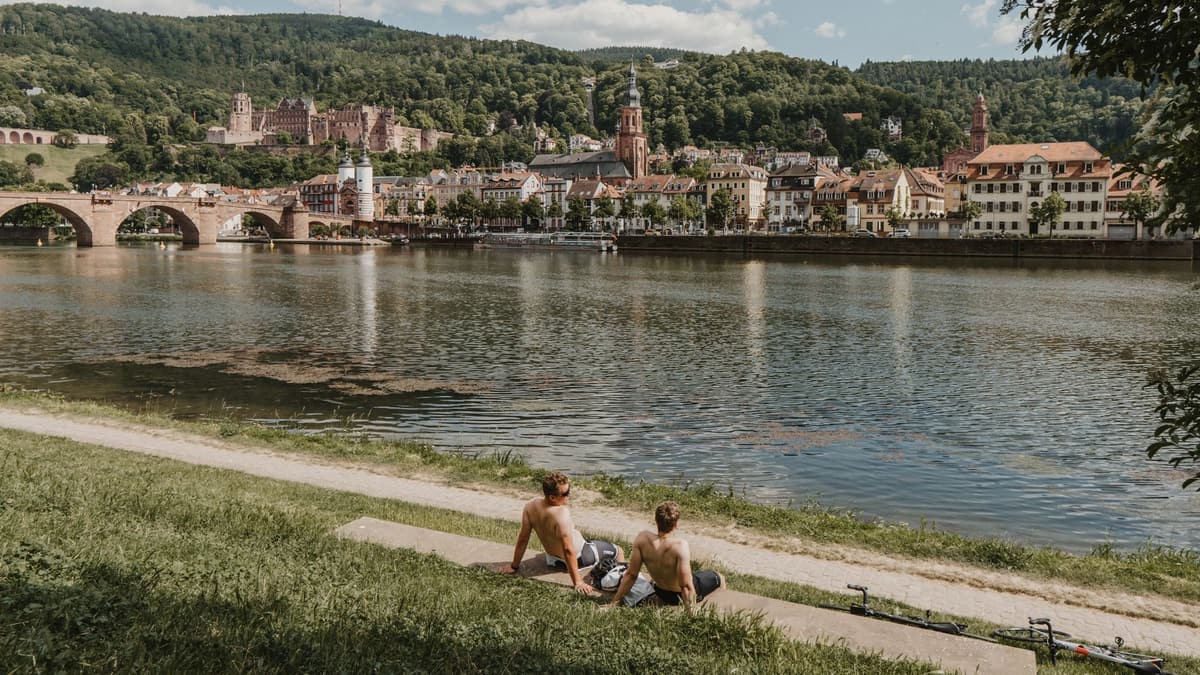 You are on the Snake Path, and its name explains itself. The stone stairs twist back and forth between high walls, turning sharply every few dozen steps as they work their way up the slope of the Heiligenberg, the Holy Mountain. Those walls once held up the terraces of vineyards. This side of the river faces south, and it catches the sun from morning to evening, while the castle side, facing north, gets far less sun. For centuries that warmth made the slope a place for growing grapes, and you can still see gardens, fruit trees and the odd vine poking over the walls. Take the climb slowly. Every bend gives you a slightly higher view back over the roofs of the old town, and it is worth pausing at each one, both for the view and for your legs. The village down at the bottom, Neuenheim, was its own place until the end of the nineteenth century, when Heidelberg absorbed it, and it is older than it looks: the Romans kept a fort on this bank long before there was a castle across the water. Up above you, the Heiligenberg holds traces of almost every age, from the earth ramparts of a Celtic hill fort to the ruins of two medieval monasteries and a stone open air theater built in the 1930s. When the steps finally end at a crossing path, turn left onto the Philosophenweg, the Philosophers' Walk, and follow it west for about eight minutes, past several viewpoints, to a small garden beside the path.
Find a spot at the railing, and look. The whole of old Heidelberg is in front of you: the river, the Old Bridge you crossed, the steeples of the old town, the castle against the dark green hill behind it, and the hills rolling away up the valley. This is the view that has been painted, engraved and photographed more than any other in the city. Along the way you may have passed a board showing an engraving by Matthäus Merian, made around 1620 from this hillside, when the castle was still whole. The path got its name, the usual story goes, from the university's teachers, who came up here to walk and think away from the noise of the town, though students and courting couples always used it at least as much. The Romantic poets loved it. Friedrich Hölderlin wrote an ode to Heidelberg around 1800, describing the bridge swinging over the river, and Joseph von Eichendorff, who studied law here as a young man, is remembered by a memorial stone close to this spot. The little garden beside you is the Philosophengärtchen, the Philosophers' Garden. Because this slope is so sunny and sheltered, plants grow here that you would expect much farther south, and in spring the blossom comes out early. Sit on a bench for a while. Then continue west along the path as it slopes gently down, and follow the lanes down through Neuenheim to the river and the big bridge, about fifteen minutes.
포함 사항
저희 투어는 명상하듯 몰입할 수 있도록 만들어졌습니다. 걸으며 그저 귀 기울이시면 됩니다. 함께하면 언제나 더 좋고, 앱이 나레이션을 동기화해 재생하므로 당신과 파트너, 친구들이 모든 스톱을 같은 순간에 들을 수 있습니다.
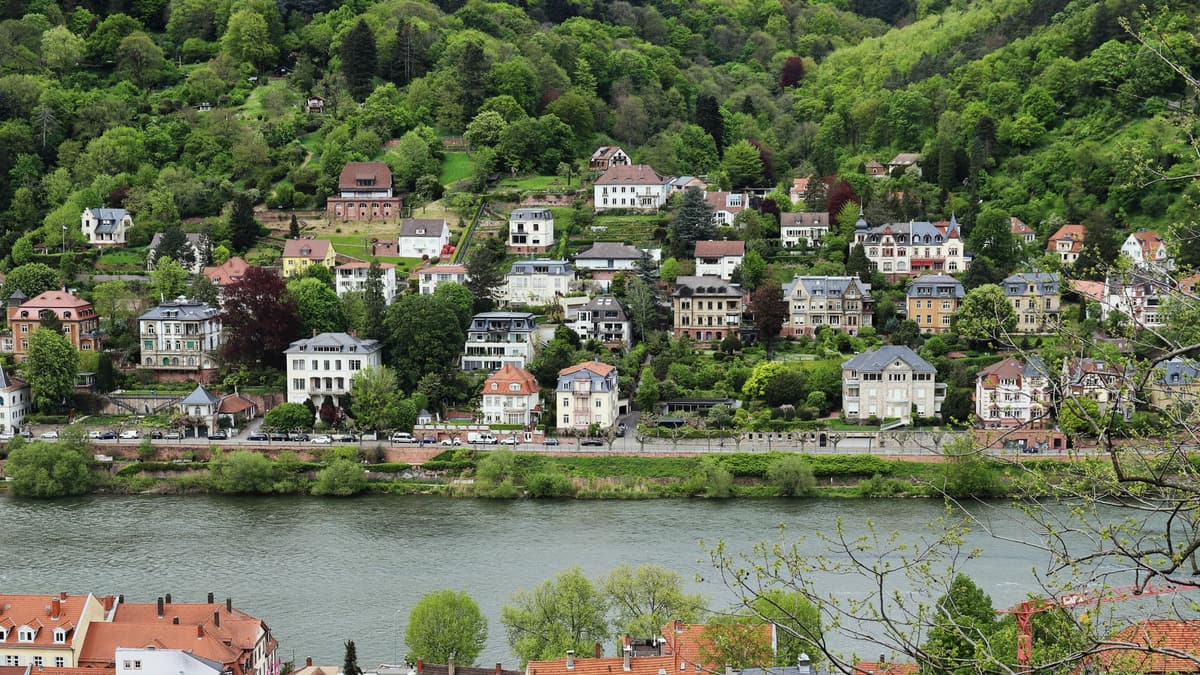
You have come down to the north end of the Theodor Heuss Bridge. Walk out a little way onto it and look upriver, to your left.
이 스톱의 나머지 내용은 전체 오디오 투어에 있습니다.
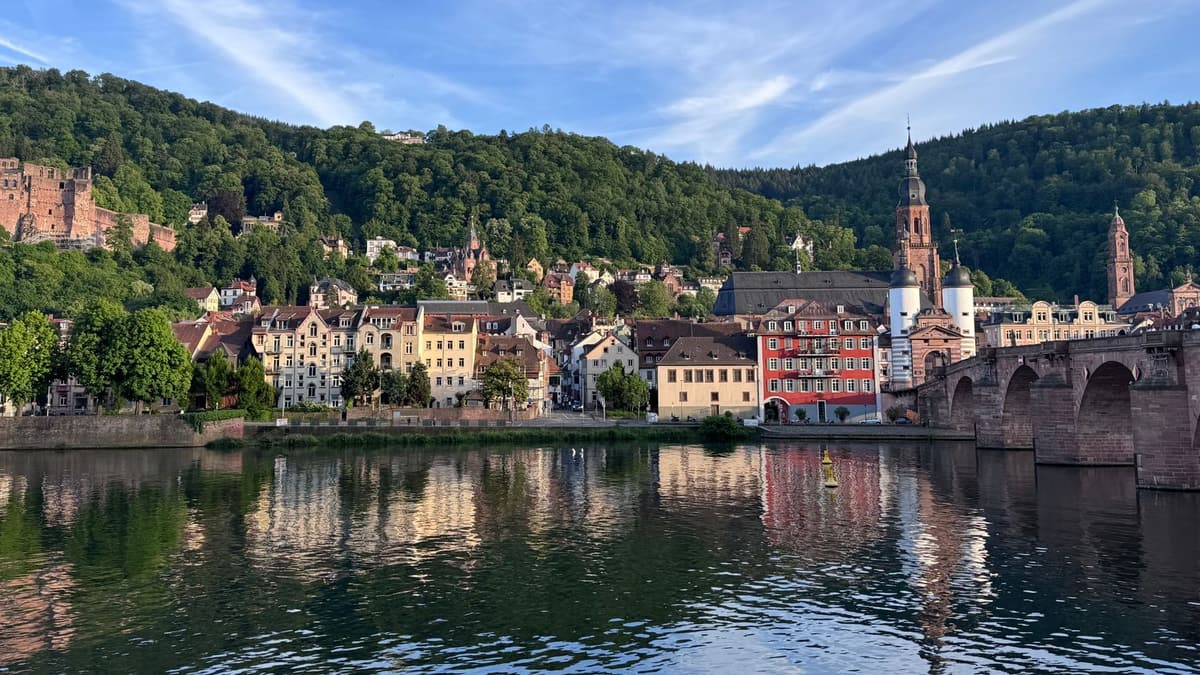
You end at Bismarckplatz, the busiest square in Heidelberg, where trams and buses from all over the city meet.
이 스톱의 나머지 내용은 전체 오디오 투어에 있습니다.
다음 예정된 투어에서 다른 사람들과 함께 이 산책을 해보세요.
약 2.4km, 여유로운 페이스로 대략 40분 소요 · 5 정류장
친구는 무료로 함께 걸어요October 11, 2026 · 9 min read
From the Hollandsche Schouwburg through the old Jewish Quarter, past the Dockworker and the Dam, to the Anne Frank House on the Prinsengracht.
October 11, 2026 · 11 min read
From Van Houten's street by the Vondelpark past Leidseplein, the Rijksmuseum passage and the famous canal bench to the Anne Frank House.

October 11, 2026 · 10 min read
Follow the last days of April and May 1945 from the Anhalter Bahnhof ruin past the Gestapo site and Brandenburg Gate to the Moltke Bridge and the Reichstag.
