
October 11, 2026 · 9 min read
Amsterdam Anne Frank Walking Tour
From the Hollandsche Schouwburg through the old Jewish Quarter, past the Dockworker and the Dam, to the Anne Frank House on the Prinsengracht.
589

October 9, 2026 · 10 min read

 친구는 무료로 함께 걸어요
모든 투어는 앱에서 참여할 수 있는 정기 그룹 걷기 모임으로도 운영됩니다.
Kilkenny의 오디오 투어 더 보기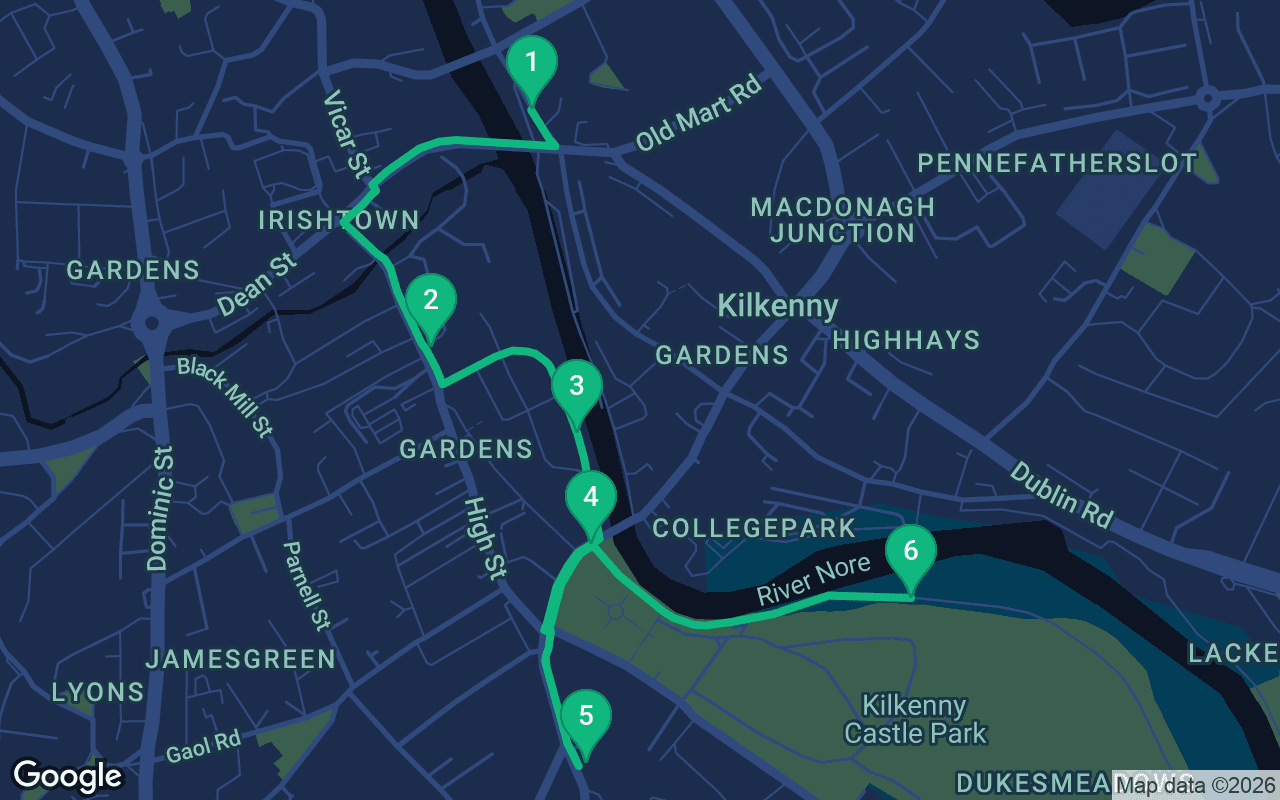
약 2.4km, 여유로운 페이스로 대략 33분 소요.
음성 가이드가 포함된 투어입니다
처음 3개 스톱에서 재생을 누르면 여기에서 나레이션을 30초 데모로 들을 수 있습니다. 앱에서는 인트로와 이 스톱들을 무료로 끝까지 들으실 수 있으며, 각 스톱에 도착하면 알림음이 울립니다. 전체 오디오 투어는 $7.99에 한 번만 구매하시면 평생 소장하실 수 있습니다.
Garmin, Komoot, Strava, OS Maps 및 모든 GPX 앱과 호환됩니다.
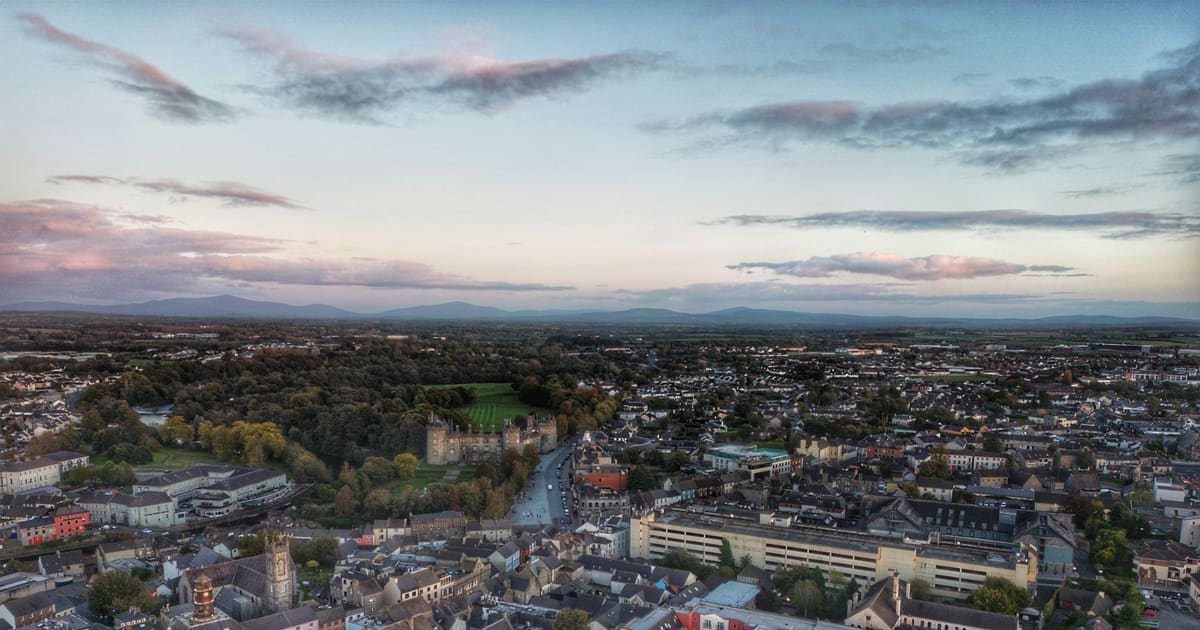
Kilkenny grew up on the River Nore. The river powered its mills, carried away its floods, gave the friars and brewers their water and set the castle on its rock, and yet most visitors cross it once and never look down. This walk follows the water through town instead. It starts at Green's Bridge at the northern edge of the old town, passes the brewery that grew up around a medieval friary, runs along the quay to John's Bridge, slips into a quiet Georgian garden, and ends on the Canal Walk, a tree-lined path along the river beneath the castle. It is about two and a half kilometers, mostly level, and one of the gentlest self-guided walking tours you can take in Ireland, with the medieval town always just above you.
Allow about an hour and a half at a stroll, longer if you take the tour at the Smithwick's Experience, which runs by ticket and keeps its own hours, so check before you go. Butler House Gardens are usually open to wander, but check opening times out of season. The route is flat apart from a short climb from the river into the streets and back, and the Canal Walk is a gravel and earth path that can be muddy after rain, so wear shoes that do not mind a puddle. The riverside is lovely early in the morning, when the water is still and the light is low, and in the evening, when people come out to walk. Much of the Canal Walk is under trees, which helps on a warm day and in a light shower. Bring a layer, because it is cooler by the water. This walk pairs well with the Medieval Mile walk, which covers the castle and the old streets above.
Stand by the river at Green's Bridge, the old stone bridge at the northern end of town, and look at its low, even arches. It is the oldest of the town's river bridges, and its story starts with a disaster. In October 1763 a great flood swept down the Nore and carried away bridges all along the river, including the one here and John's Bridge further down. Kilkenny needed both back, and quickly. The new Green's Bridge, finished a few years later, was designed by George Smith in the classical style then fashionable, and it is said to be based on a Roman bridge at Rimini in Italy, as drawn by the architect Palladio. Its elegant, flat lines look nothing like a medieval bridge, and that was the point. The river you are looking at rises in the hills of County Tipperary and flows on past Kilkenny to meet the Barrow above New Ross. Together with the Suir, they are known as the Three Sisters. Just across the river lies Irishtown, and it may have a part in the legend of the Kilkenny cats, two cats who fought so fiercely that nothing was left of them but their tails. Some say the story is about the old rivalry between Irishtown and the rest of the town, others that bored soldiers tied cats together for sport. Either way, the county's hurlers are still called the Cats. To continue, walk a short way south and cross the river on the modern St Francis Bridge, then follow the road on the far side to St Canice's Place, through Irishtown and down Parliament Street. The Smithwick's Experience is on your left, about nine minutes.
 Stop on Parliament Street outside the Smithwick's Experience, in the old buildings of the brewery that made this town's name in beer. The brewery stretched from here down to the river, around the ruins of St Francis Abbey, a Franciscan friary founded in the 1230s. Its stone bell tower and tall east window still stand among the old brewery yards, and the friars, it is often said, were brewing ale here long before the Smithwicks. One of them left behind one of the most haunting documents of medieval Ireland. Brother John Clyn kept a chronicle in this friary, and when the Black Death reached Kilkenny in 1348, he wrote down how the plague emptied the towns and killed whole families together. He knew he might not survive. He left spare parchment, he wrote, so the work could be carried on if anyone of the human race was left alive. Soon afterward his entries stop, and another hand added a note that the author seems to have died. In 1710 John Smithwick set up a brewery on the abbey land, and his family's red ale was brewed here for about three hundred years. In 2013 the owners moved production to Dublin, and the old site is now being redeveloped as a new quarter of the town, with the friary ruins kept at its heart. The visitor experience tells the brewery's story and usually ends with a taste of the beer. To continue, walk down past the Market Yard to the river and follow it south along Bateman Quay, about five minutes.
You are on Bateman Quay, a quiet stretch of riverbank between the brewery and John's Bridge, and a good place to stop and simply watch the Nore. Look for the wildlife. Herons stand motionless in the shallows, swans drift along the far bank, and if you are lucky you may see the blue flash of a kingfisher low over the water. The Nore is known for its salmon and trout, and you will often see fishermen along the banks. For centuries the river was Kilkenny's engine. Mills lined its banks, grinding corn, fulling cloth and cutting stone, and one of them gave the town its nickname. Around Kilkenny lies a dark limestone that takes a deep black polish, and it was sold far and wide as Kilkenny marble. In the eighteenth century a local man, William Colles, built water-powered machines downstream of the town to saw and polish it, and the stone went into fireplaces, floors and churches across Ireland and beyond. That is why Kilkenny is still called the Marble City. Look down at the steps and curbs as you walk around town and you will see the same black stone, worn smooth and shiny, with the fossils of tiny sea creatures sometimes showing in its surface. To continue, walk south along the quay and climb Horseleap Slip to the road at John's Bridge, about two minutes.
포함 사항
저희 투어는 명상하듯 몰입할 수 있도록 만들어졌습니다. 걸으며 그저 귀 기울이시면 됩니다. 함께하면 언제나 더 좋고, 앱이 나레이션을 동기화해 재생하므로 당신과 파트너, 친구들이 모든 스톱을 같은 순간에 들을 수 있습니다.
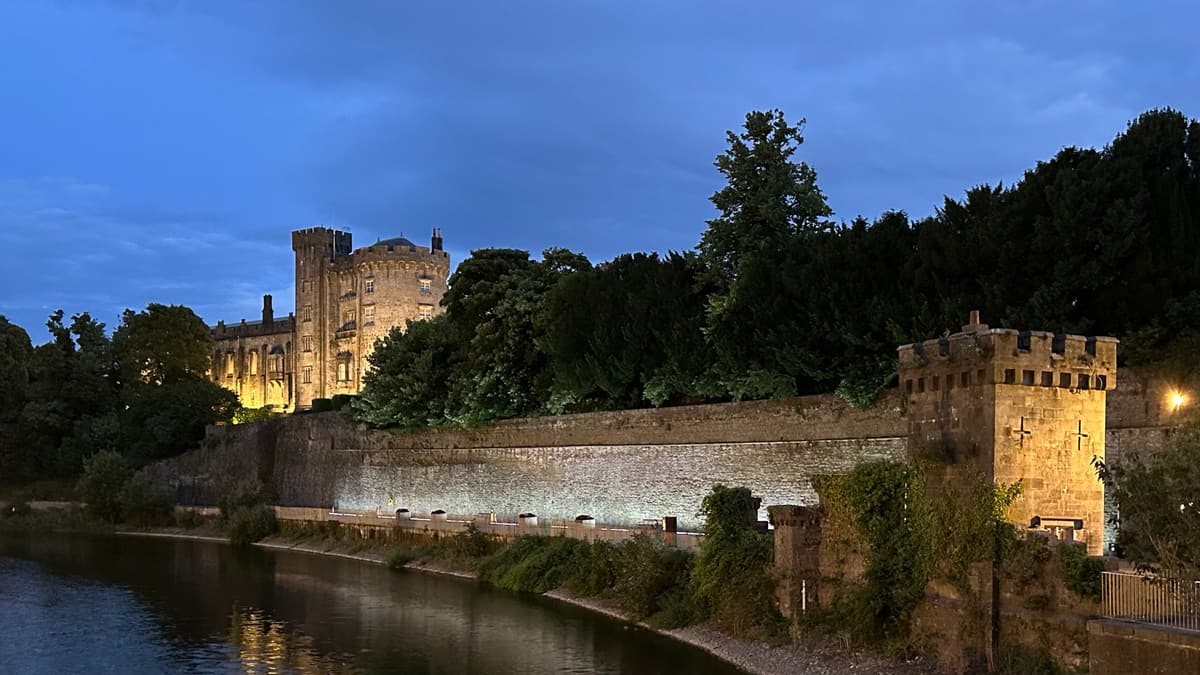
Walk out onto John's Bridge and look downstream. This is the view everyone in Kilkenny knows: the river curving away toward the castle, which rises over the water on its rock with its round towers and gray walls, and the trees of the park behind.
이 스톱의 나머지 내용은 전체 오디오 투어에 있습니다.
Behind Butler House lies a walled Georgian garden, an unexpectedly quiet green space in the middle of town.
이 스톱의 나머지 내용은 전체 오디오 투어에 있습니다.
You are now on the Canal Walk, and the town falls away behind you. On one side the Nore runs wide and shallow over its stones.
이 스톱의 나머지 내용은 전체 오디오 투어에 있습니다.
다음 예정된 투어에서 다른 사람들과 함께 이 산책을 해보세요.
약 2.4km, 여유로운 페이스로 대략 33분 소요 · 6 정류장
친구는 무료로 함께 걸어요October 11, 2026 · 9 min read
From the Hollandsche Schouwburg through the old Jewish Quarter, past the Dockworker and the Dam, to the Anne Frank House on the Prinsengracht.
October 11, 2026 · 11 min read
From Van Houten's street by the Vondelpark past Leidseplein, the Rijksmuseum passage and the famous canal bench to the Anne Frank House.

October 11, 2026 · 10 min read
Follow the last days of April and May 1945 from the Anhalter Bahnhof ruin past the Gestapo site and Brandenburg Gate to the Moltke Bridge and the Reichstag.
