
October 11, 2026 · 9 min read
Amsterdam Anne Frank Walking Tour
From the Hollandsche Schouwburg through the old Jewish Quarter, past the Dockworker and the Dam, to the Anne Frank House on the Prinsengracht.
589

October 9, 2026 · 11 min read

 친구는 무료로 함께 걸어요
모든 투어는 앱에서 참여할 수 있는 정기 그룹 걷기 모임으로도 운영됩니다.
Madrid의 오디오 투어 더 보기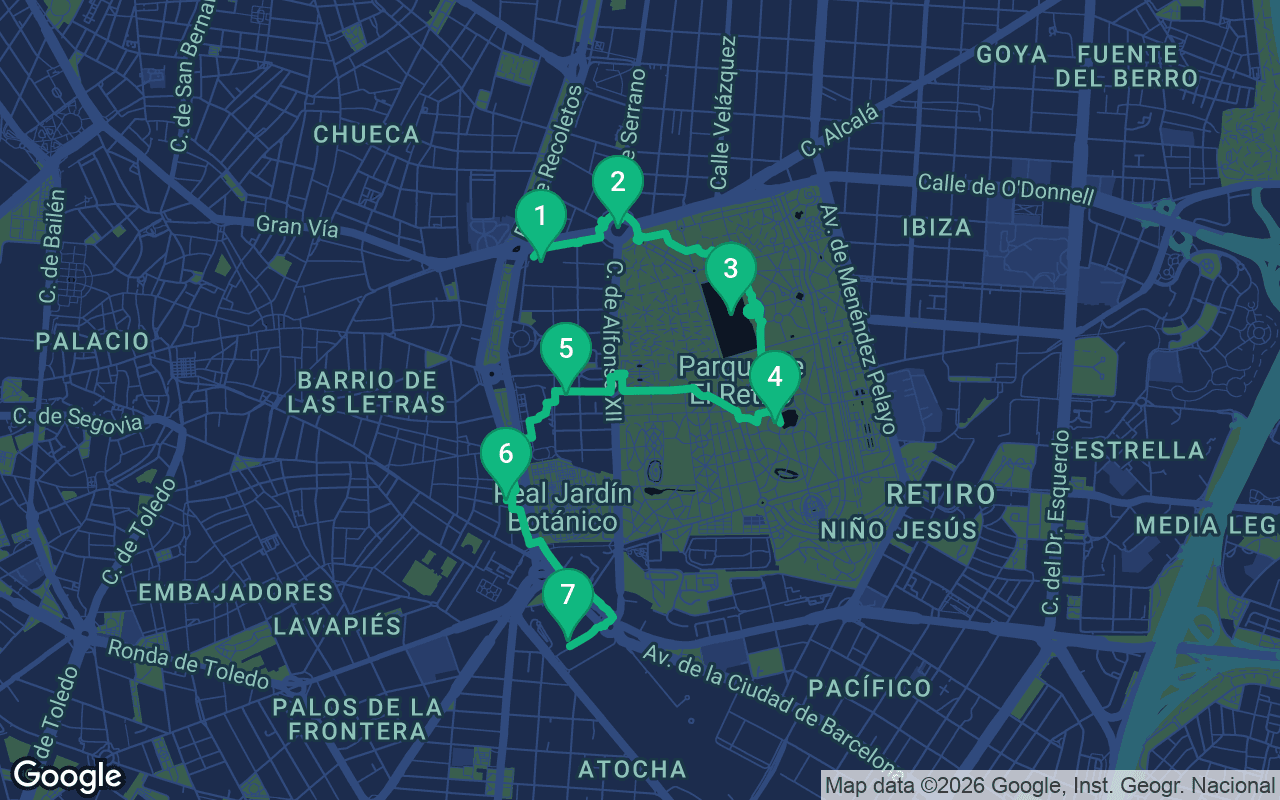
약 4.3km, 여유로운 페이스로 대략 60분 소요.
음성 가이드가 포함된 투어입니다
처음 3개 스톱에서 재생을 누르면 여기에서 나레이션을 30초 데모로 들을 수 있습니다. 앱에서는 인트로와 이 스톱들을 무료로 끝까지 들으실 수 있으며, 각 스톱에 도착하면 알림음이 울립니다. 전체 오디오 투어는 $10.99에 한 번만 구매하시면 평생 소장하실 수 있습니다.
Garmin, Komoot, Strava, OS Maps 및 모든 GPX 앱과 호환됩니다.
This is the Madrid of wide boulevards, fountains, great museums and shady gardens, the elegant eastern side of the city laid out by kings who wanted their capital to look the part. The walk starts at the Cibeles fountain, climbs to the triumphal Puerta de Alcalá, wanders through Retiro Park to its boating lake and its glass palace, and then comes down past the Prado museum along the Paseo del Prado to finish at Atocha, a railway station with a tropical garden inside. In 2021 UNESCO added the Paseo del Prado and the Retiro to the World Heritage list together, honored as a place where art, science and nature were planned side by side, and the site is often called the Paisaje de la Luz. The route is a little over three kilometers, about two miles, and among the most relaxed self-guided walking tours you can take in the city.
The walking takes about forty five minutes, but allow at least two to three hours, because the park invites you to slow down and the museums along the way could each swallow a day. The route is easy, with a gentle climb from Cibeles to the Puerta de Alcalá and a gentle slope back down from the park to the Paseo del Prado. Paths in the Retiro are mostly packed earth and gravel, and the boulevards are paved. Summer in Madrid is hot, and the open squares at either end have little shade, so start early in the morning or in the late afternoon and save the middle of the day for the trees of the park. Carry water. Weekends in the Retiro are lively, with families, musicians and rowers on the lake, while weekday mornings are calm. If you plan to visit the Prado, the CaixaForum or the Crystal Palace inside, hours change through the year and some close on certain days, so check before you go, and book the Prado ahead for busy periods. Rowing boats on the lake can be rented too.
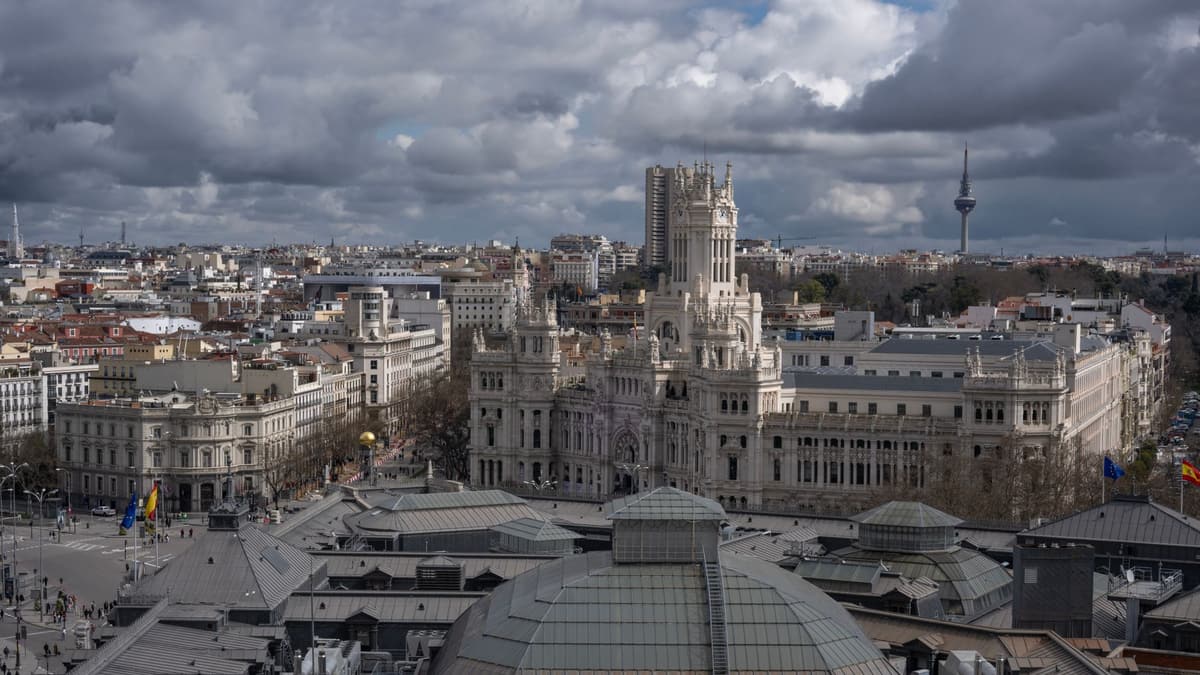
Stand on the wide pavement at the edge of the roundabout and look at the fountain in the middle. Cybele, the ancient goddess of the earth and fertility, sits in a chariot pulled by two lions, a white marble figure in the middle of some of Madrid's heaviest traffic. The fountain was one of three that King Charles III commissioned in the 1780s for his new promenade, the Salón del Prado, designed with the architect Ventura Rodríguez. Neptune stands further down the boulevard and Apollo between them. Cybele has become the city's living room for football. When Real Madrid wins a big title, fans and players gather here by the thousands to celebrate around the goddess, while fans of their rivals, Atlético, celebrate at Neptune. Now turn to the enormous white building with spires and pinnacles on the southeast corner. People call it the wedding cake. It is the Palacio de Cibeles, built as the city's main post office and opened in 1919, and since 2007 it has been Madrid's city hall, with a cultural center inside and a rooftop viewpoint. The square is ringed by grand buildings: the Bank of Spain on one corner, the Army headquarters behind its garden on another and the Palacio de Linares, now a center for Latin American culture, on the third. Walk east along Calle de Alcalá, gently uphill, for about four minutes to the stone gate standing in the middle of the next roundabout.
 You are standing at the Puerta de Alcalá, a granite gateway of three tall arches flanked by two square openings, alone in the middle of the Plaza de la Independencia. Look up at the inscription, which names King Charles III and the year 1778. For centuries this was the eastern entrance to Madrid, where the road from the university town of Alcalá de Henares came in, and the gate was built to impress travelers arriving from that side. Its designer, Francesco Sabatini, was one of the Italian architects Charles brought with him. Charles III is the king Madrid remembers most fondly. He had already ruled Naples for decades when he inherited the Spanish throne in 1759, and he found his new capital dark, dirty and smelly. He had streets paved and lit, sewers dug and trash collected, and he planned the boulevard you just left, with its fountains, gardens and a building for the natural sciences that would later become the Prado. Not everyone welcomed his reforms at first, but he is still known as the best mayor Madrid ever had, a title Madrileños mean with real affection. In 1986 the gate got a second life in a hugely popular song by Ana Belén and Víctor Manuel, simply called La Puerta de Alcalá, which Spaniards of a certain age will happily hum for you. Cross to the ornate iron gates of the Retiro on the southeast side of the roundabout, go in, and follow the broad avenue ahead for about seven minutes. It leads straight to the lake.
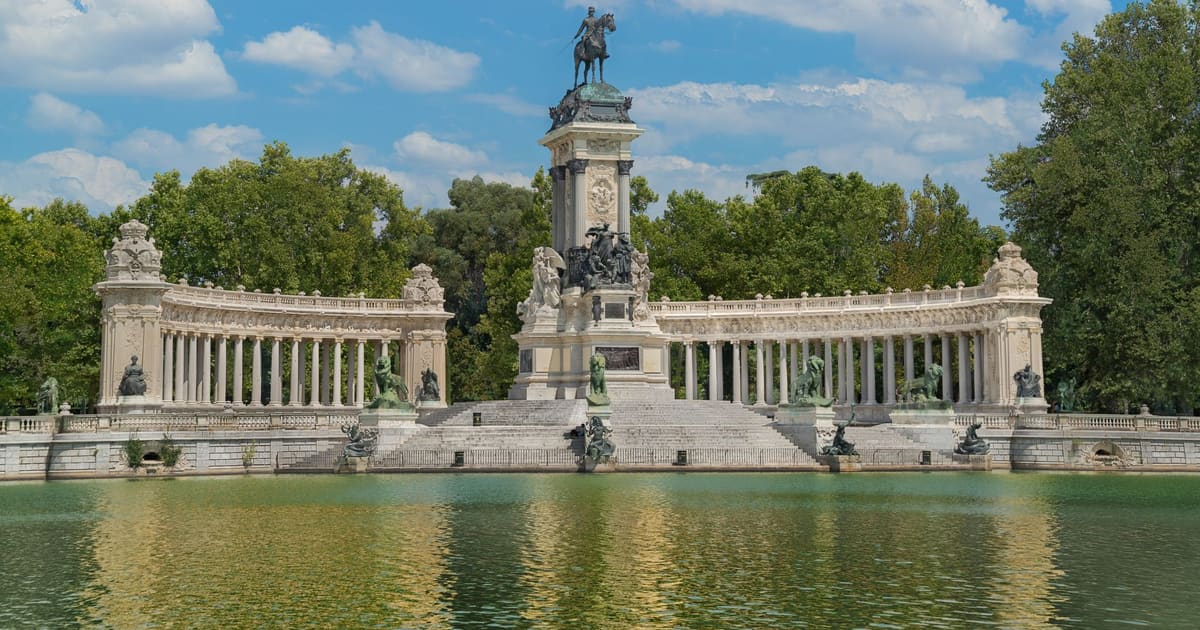
The avenue opens onto a long rectangle of water, crowded on a sunny day with little rowing boats. Find a spot on the steps along the edge and look across at the huge monument on the far side, a curved colonnade of columns around a tall pillar topped by King Alfonso XII on horseback. He died young in 1885, and the monument to him was finished in 1922, with the bronze rider by the sculptor Mariano Benlliure. Stone figures crowd the steps below, and people sit there all day to watch the boats. The park began as a royal retreat. In the 1630s Philip IV built a palace here, the Buen Retiro, on the edge of the town, and this pond was dug for the court's pleasure, a stage for boat parties and staged naval shows performed for the king. Most of the palace was wrecked in the war against Napoleon's armies in the early nineteenth century, when French troops used it as a fort, but the gardens survived. In 1868 the park passed to the city and opened to everyone, and Madrid has treated it as its back garden ever since. Around the pond you will find street musicians, puppet shows, ice cream sellers and fortune tellers, and the rowers are part of the scenery. Walk around the southern end of the pond and follow the shady paths heading south for about five minutes. Signs point the way, and the glass roof of the Palacio de Cristal soon appears through the trees on your left.
포함 사항
저희 투어는 명상하듯 몰입할 수 있도록 만들어졌습니다. 걸으며 그저 귀 기울이시면 됩니다. 함께하면 언제나 더 좋고, 앱이 나레이션을 동기화해 재생하므로 당신과 파트너, 친구들이 모든 스톱을 같은 순간에 들을 수 있습니다.
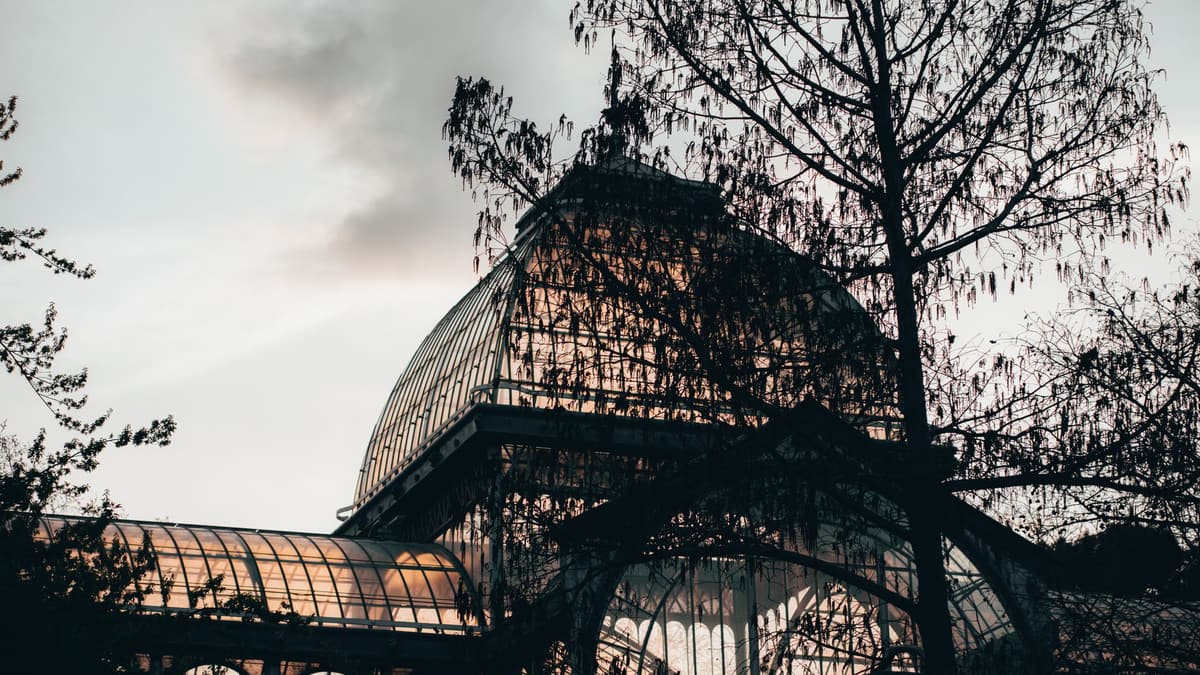
Come down the slope to the small lake and stand on its far bank, so the whole building is reflected in the water in front of you.
이 스톱의 나머지 내용은 전체 오디오 투어에 있습니다.
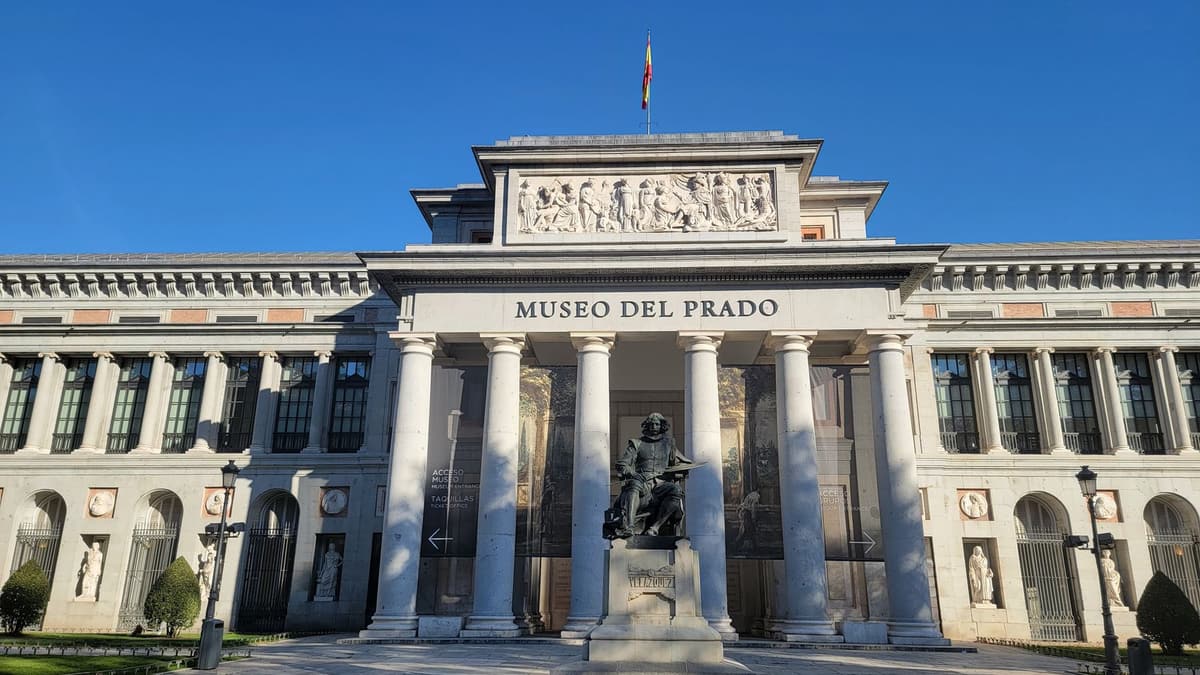
Stand at the top of the steps in front of the church and look up at the pale stone facade with its two slim spires.
이 스톱의 나머지 내용은 전체 오디오 투어에 있습니다.
Stop on the open square in front of the building and look first at the wall beside it, a vertical garden covering the side of the building next door.
이 스톱의 나머지 내용은 전체 오디오 투어에 있습니다.
The walk ends at Atocha, Madrid's oldest railway station and still its busiest. Stand on the roundabout side and look at the old brick and iron facade, then go inside the main entrance into the great hall.
이 스톱의 나머지 내용은 전체 오디오 투어에 있습니다.
다음 예정된 투어에서 다른 사람들과 함께 이 산책을 해보세요.
약 4.3km, 여유로운 페이스로 대략 60분 소요 · 7 정류장
친구는 무료로 함께 걸어요October 11, 2026 · 9 min read
From the Hollandsche Schouwburg through the old Jewish Quarter, past the Dockworker and the Dam, to the Anne Frank House on the Prinsengracht.
October 11, 2026 · 11 min read
From Van Houten's street by the Vondelpark past Leidseplein, the Rijksmuseum passage and the famous canal bench to the Anne Frank House.

October 11, 2026 · 10 min read
Follow the last days of April and May 1945 from the Anhalter Bahnhof ruin past the Gestapo site and Brandenburg Gate to the Moltke Bridge and the Reichstag.
