
October 11, 2026 · 9 min read
Amsterdam Anne Frank Walking Tour
From the Hollandsche Schouwburg through the old Jewish Quarter, past the Dockworker and the Dam, to the Anne Frank House on the Prinsengracht.
589

October 9, 2026 · 10 min read

 친구는 무료로 함께 걸어요
모든 투어는 앱에서 참여할 수 있는 정기 그룹 걷기 모임으로도 운영됩니다.
Yogyakarta의 오디오 투어 더 보기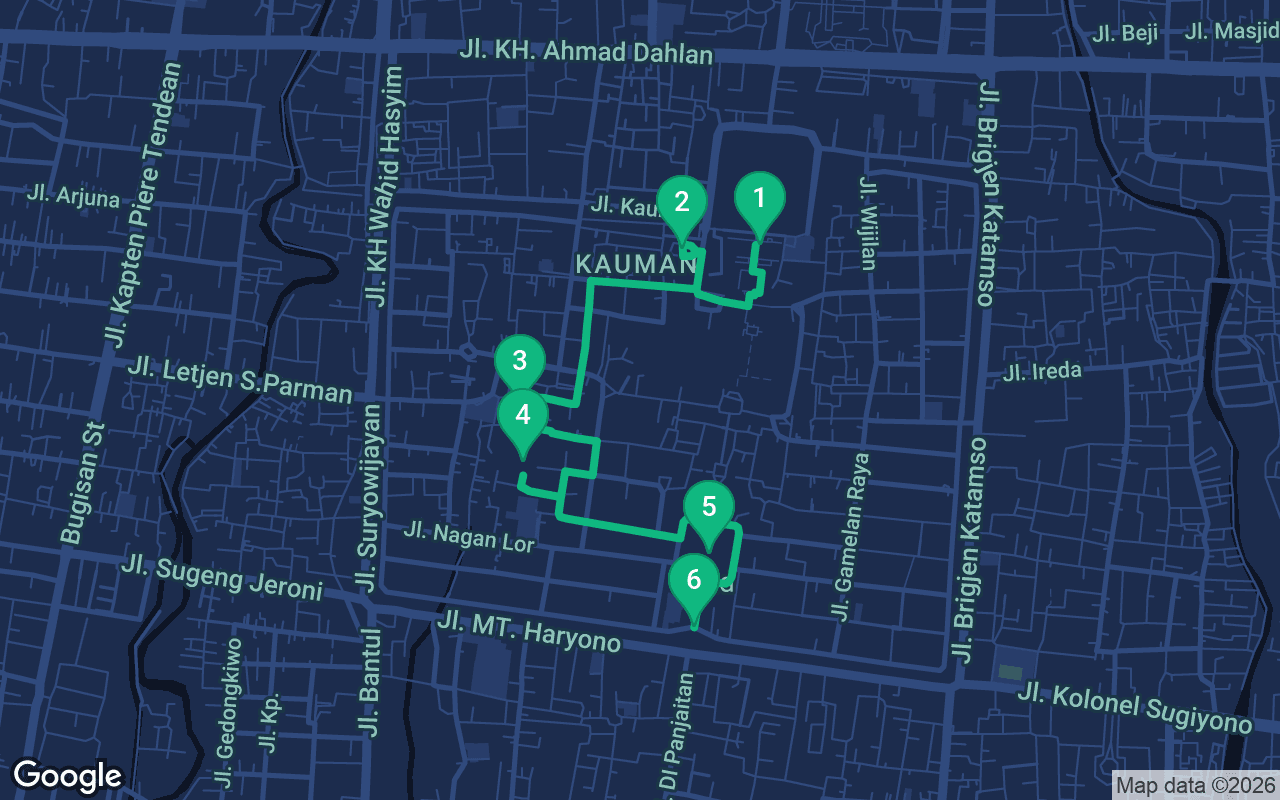
약 2.8km, 여유로운 페이스로 대략 38분 소요.
음성 가이드가 포함된 투어입니다
처음 3개 스톱에서 재생을 누르면 여기에서 나레이션을 30초 데모로 들을 수 있습니다. 앱에서는 인트로와 이 스톱들을 무료로 끝까지 들으실 수 있으며, 각 스톱에 도착하면 알림음이 울립니다. 전체 오디오 투어는 $7.99에 한 번만 구매하시면 평생 소장하실 수 있습니다.
Garmin, Komoot, Strava, OS Maps 및 모든 GPX 앱과 호환됩니다.
Inside the old walls of Yogyakarta lies a whole royal town, and the Sultan still lives at the heart of it. This walk starts at the Kraton, the palace itself, visits the hall of royal carriages next door, then slips through the lanes of the Taman neighborhood to the ruined pleasure gardens of Taman Sari, with their underground mosque and bathing pools. It crosses the south square, where locals try their luck between two banyan trees, and ends at Plengkung Gading, the ivory gate in the old city wall. The route is about 2.8 kilometers, under two miles, and flat, and it is one of the most rewarding self-guided walking tours in Java for anyone curious about the courts of the old kingdoms.
The walking takes about forty minutes, but plan on a whole morning with the palace and Taman Sari, which each deserve an hour. Start early. The Kraton opens in the morning and closes in the early afternoon, and it is closed on some days for ceremonies, so check before you go and make it your first stop. Taman Sari is ticketed too, and which parts a ticket covers has changed over the years, so check before you go for that as well. Dress modestly for the palace, with shoulders and knees covered, and be ready to take your shoes off wherever you see others do so. Between Taman Sari and the south square the route runs through narrow residential lanes where people live, cook and park their motorbikes, so keep your voice down and offer a smile and a hello as you pass. Jogja is hot and humid, and the middle of the day can be punishing, so carry water and a hat. Becak riders will offer you rides along the way. A polite, firm "no, thank you" works fine, and if you do want a ride, settle the price before you set off.
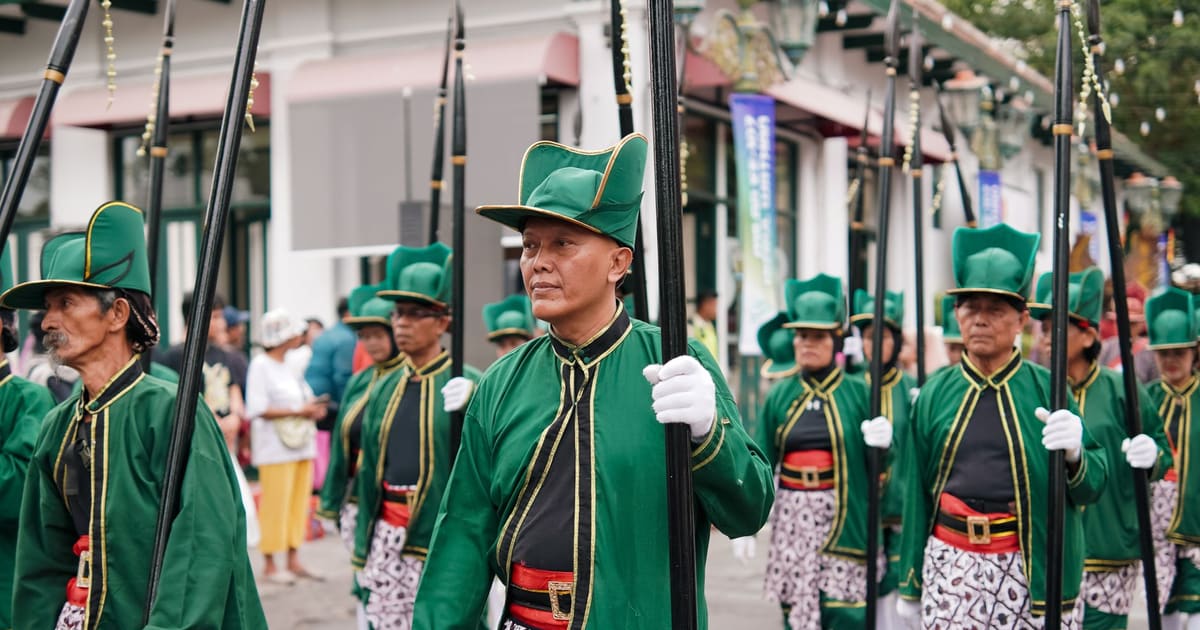
Stand at the southern edge of the north square and look ahead. The Kraton is not one building but a long sequence of walled courtyards running north to south, each one entered through its own gate, with open pavilions on carved and painted pillars and wide sandy yards shaded by trees. Its story begins with a split. In 1755 the Treaty of Giyanti divided the old Javanese kingdom of Mataram in two. One half stayed with the court at Surakarta. The other went to Prince Mangkubumi, who took the title Sultan Hamengkubuwono, often translated as the one who holds the world in his lap. He chose this ground between two rivers for his new capital and moved into the palace in 1756. The Kraton has been home to his line ever since. It is a living palace, not a museum: the family of the reigning Sultan lives in private quarters within the walls, and the courts you visit are still used for ceremonies. Watch for the abdi dalem, the palace retainers, in batik, a folded headcloth and a dagger tucked into the back of the waistband, who keep the place running as an honor as much as a job. On many mornings there is gamelan music, classical dance or shadow puppetry in one of the pavilions. The Sultan is also governor of the Special Region of Yogyakarta, the only Indonesian province led by a hereditary ruler, a status rooted in the palace's support for the Republic during the fight for independence. The main visitor entrance is on Jalan Rotowijayan, the street leading west from the palace. The carriage museum is a couple of minutes west along it.
 Here in long, open halls stand the carriages of the Sultans, lined up like sleeping horses, with gilded crowns on their roofs, lamps at their corners and coats of arms on their doors. To the court these are not just vehicles. Many are treated as pusaka, sacred heirlooms, and they carry honored names, with titles such as Kanjeng Nyai or Kyai, as if they were respected elders. Each year in Sura, the first month of the Javanese calendar, the palace carries out a ritual cleansing of its heirlooms, and the most important carriages are washed with care as part of it. Among the oldest is Kanjeng Nyai Jimat, which dates from the early years of the Sultanate. Look too for Kyai Garuda Yeksa, a gold-trimmed state coach made in the Netherlands in the nineteenth century and associated with coronation processions. Many of the carriages were built in Europe, a quiet reminder of how closely the court's fortunes were tied to its Dutch neighbors. Look at the details: the painted panels, the leather harnesses, the steps that fold away. Some carriages pulled kings, others carried queens or court officials, and a few were made for funerals. Imagine one rolling north across the square with a team of horses and an escort of palace guards. To move on, continue west to the end of Jalan Rotowijayan, turn left and walk south, then follow the signs right into the lanes for Sumur Gumuling. About eight minutes.
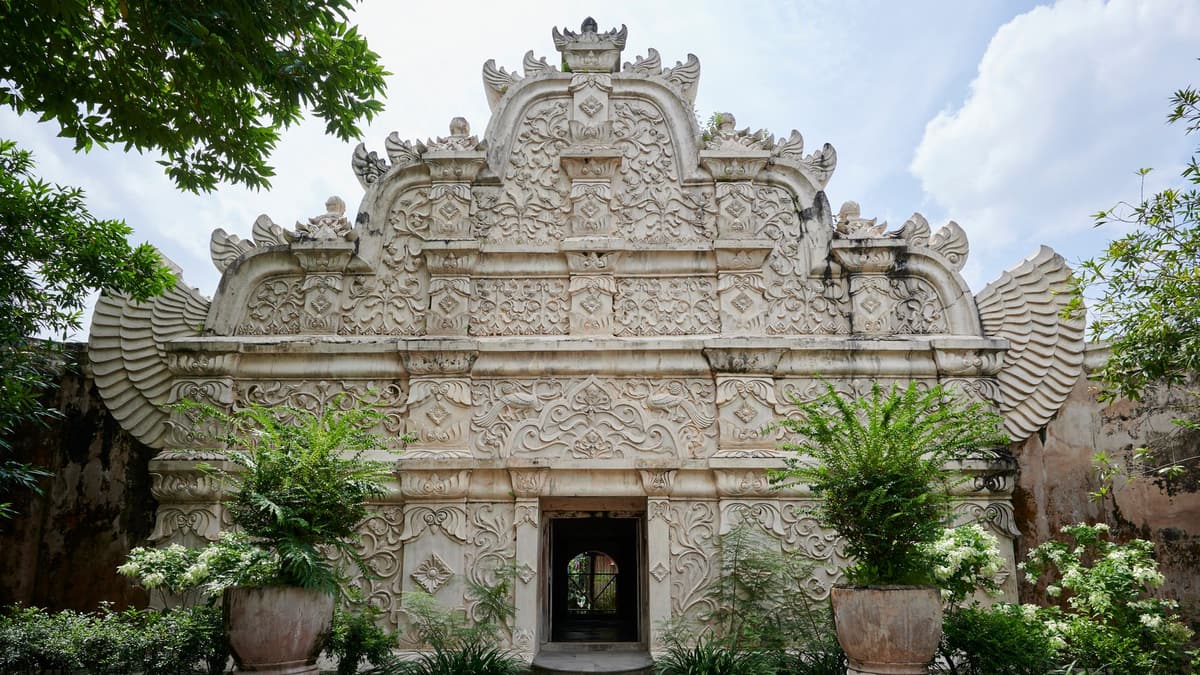
You are now in the old grounds of Taman Sari, the royal garden, and this is its strangest building. Sumur Gumuling was a mosque, built partly underground and reached through tunnels, at a time when much of this area was covered by an artificial lake. Walk down into it and you find a ring-shaped building on two levels, wrapped around an open central well of light. In the middle, five staircases meet at a small platform, four of them rising from the lower level and one leading up to the upper floor. The number five is often explained as a reference to the five pillars of Islam, though that reading is a tradition rather than a documented fact. Look for the niche in the wall that marks the direction of prayer. The building was designed so that the voice of the imam would carry around the ring, and if you stand quietly you can hear how sound moves through it. Today it is one of the most photographed spots in Jogja, and the central staircase often has a queue of people waiting for their picture in the shaft of light from above, so be patient or come early. Climb the steps carefully, as the stone is worn and can be slippery after rain. When you are ready, follow the lanes south through the neighborhood to the bathing complex, about four or five minutes away.
포함 사항
저희 투어는 명상하듯 몰입할 수 있도록 만들어졌습니다. 걸으며 그저 귀 기울이시면 됩니다. 함께하면 언제나 더 좋고, 앱이 나레이션을 동기화해 재생하므로 당신과 파트너, 친구들이 모든 스톱을 같은 순간에 들을 수 있습니다.
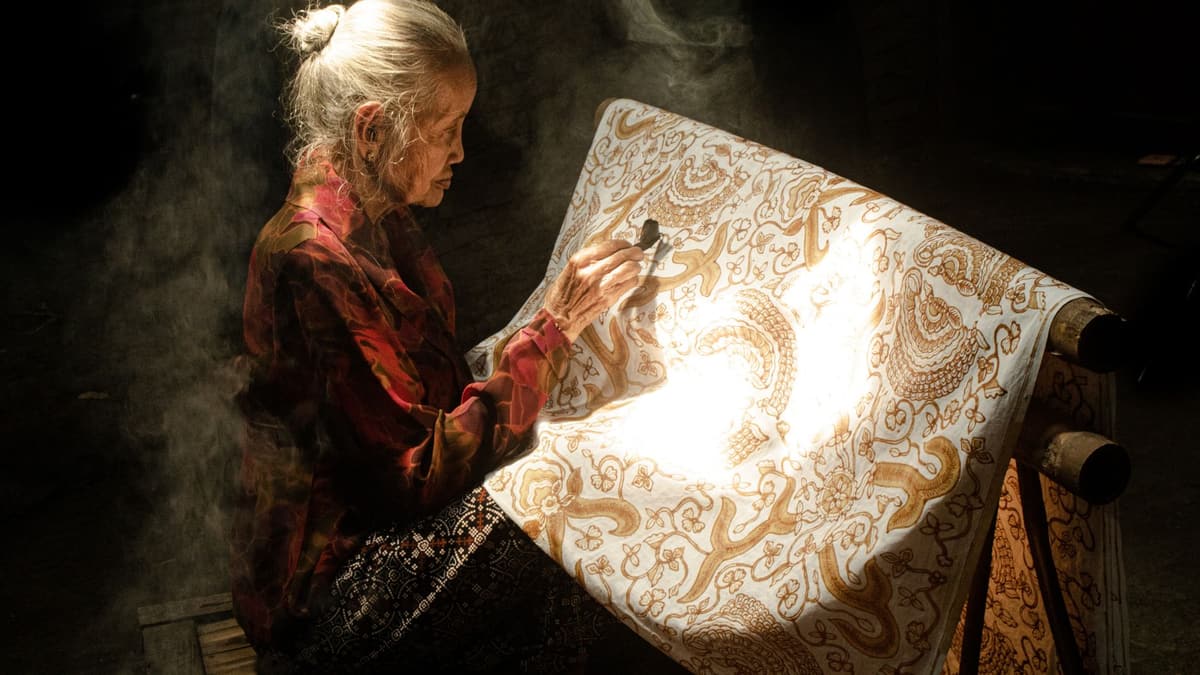
Step through the ornate gate into Umbul Pasiraman, the bathing courtyard, and you are at the heart of Taman Sari. The name means fragrant garden.
이 스톱의 나머지 내용은 전체 오디오 투어에 있습니다.
This is Alun-Alun Kidul, the south square, smaller and more relaxed than its northern twin, a neighborhood park as much as a royal ground. To the north rises the back of the palace.
이 스톱의 나머지 내용은 전체 오디오 투어에 있습니다.
Stand back from the arch and take in Plengkung Gading, the ivory gate, a broad white arch cut through the thick old wall that once ringed the royal town.
이 스톱의 나머지 내용은 전체 오디오 투어에 있습니다.
다음 예정된 투어에서 다른 사람들과 함께 이 산책을 해보세요.
약 2.8km, 여유로운 페이스로 대략 38분 소요 · 6 정류장
친구는 무료로 함께 걸어요October 11, 2026 · 9 min read
From the Hollandsche Schouwburg through the old Jewish Quarter, past the Dockworker and the Dam, to the Anne Frank House on the Prinsengracht.
October 11, 2026 · 11 min read
From Van Houten's street by the Vondelpark past Leidseplein, the Rijksmuseum passage and the famous canal bench to the Anne Frank House.

October 11, 2026 · 10 min read
Follow the last days of April and May 1945 from the Anhalter Bahnhof ruin past the Gestapo site and Brandenburg Gate to the Moltke Bridge and the Reichstag.
