
October 11, 2026 · 9 min read
Amsterdam Anne Frank Walking Tour
From the Hollandsche Schouwburg through the old Jewish Quarter, past the Dockworker and the Dam, to the Anne Frank House on the Prinsengracht.
589

October 9, 2026 · 10 min read

 Vrienden lopen gratis mee
Elke tour is ook beschikbaar als een geplande groepswandeling waar je in de app aan kunt deelnemen.
Meer audiotours in Thessaloniki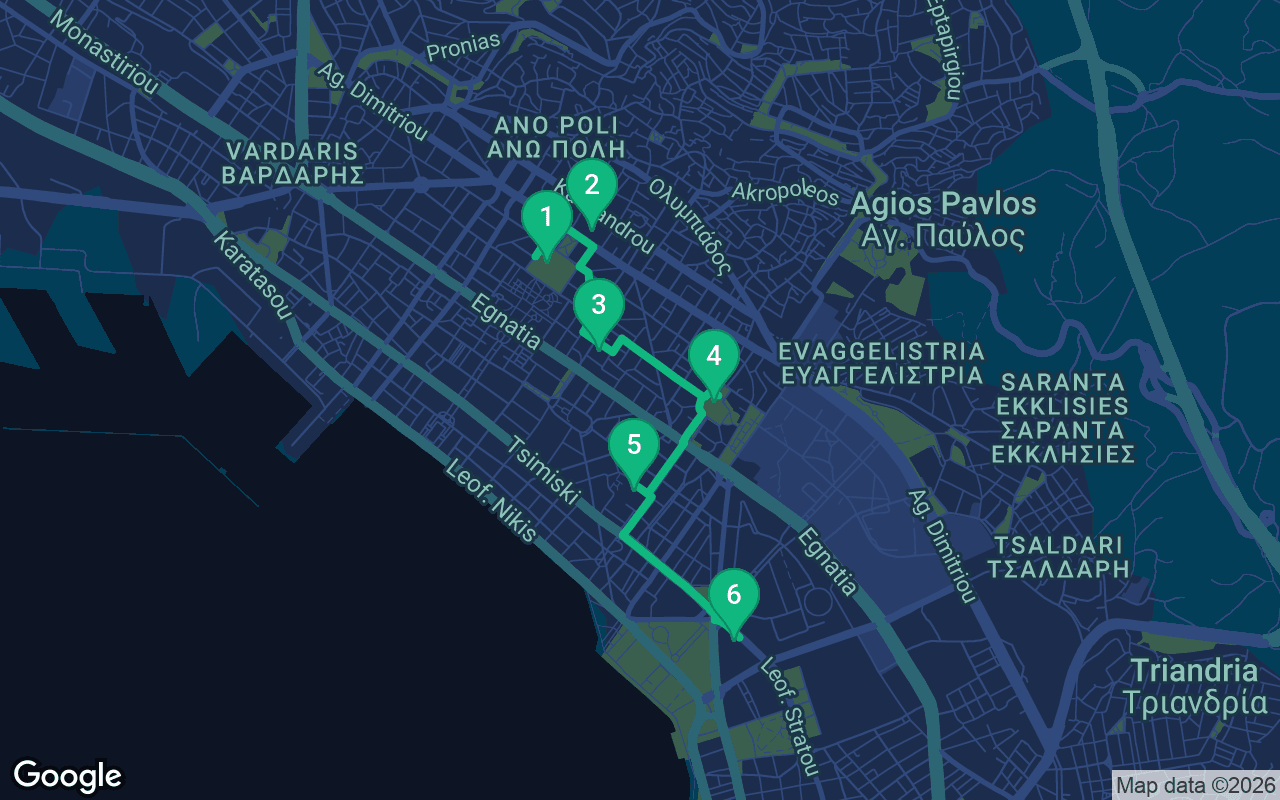
Ongeveer 2,6 km, zo'n 36 minuten op een rustig tempo.
Deze tour is ingesproken
Druk op afspelen bij de eerste 3 stops voor een demo van 30 seconden van de vertelling. In de app zijn de intro en die 3 stops volledig gratis te beluisteren, en bij elke stop klinkt een signaal zodra je aankomt. De hele tour met gids is van jou voor $7.99, een eenmalige aankoop die je voor altijd behoudt.
Werkt met Garmin, Komoot, Strava, OS Maps en elke GPX-app.
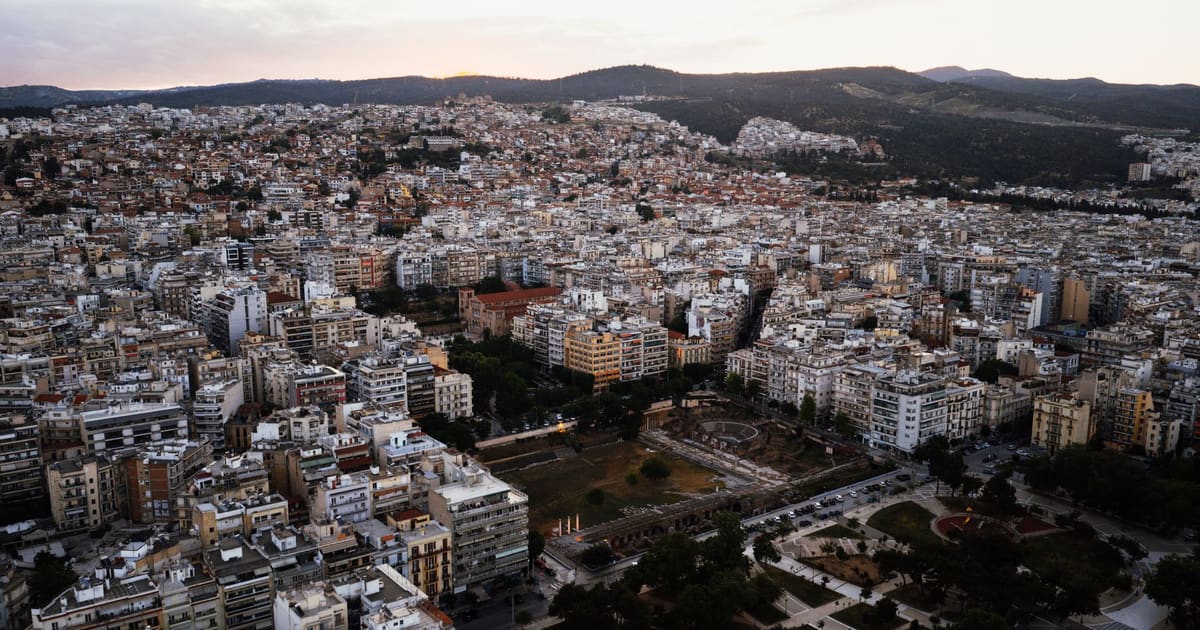
Few cities wear seventeen centuries as casually as Thessaloniki. Roman ruins sit below busy streets, a fifth-century church stands among apartment blocks, and a Roman emperor's palace is laid open in the middle of a square full of cafes. This walk climbs into that older city, a few blocks inland from the sea. It starts at the Roman Forum, visits the great church of Saint Demetrios, the city's patron, and two more of Thessaloniki's UNESCO-listed early Christian and Byzantine monuments, then passes the arch and palace of the emperor Galerius and ends at the Archaeological Museum. It is about two and a half kilometers, mostly gentle with one easy slope, and one of the richest self-guided walking tours in Greece for anyone who loves history. It pairs with the city's waterfront walk, which follows the seafront below.
Allow about two hours at a stroll, and much longer if you go inside the churches and the museum, which together could fill a day. The route is on city pavements, with a gentle climb to the first two stops and downhill most of the way after that. Shade comes and goes between buildings, and Thessaloniki summers are hot and humid, so carry water and go in the morning, which also suits the churches, many of which close for a few hours around midday. The Roman Forum, the Rotunda, the Palace of Galerius and the museum are archaeological sites or museums with tickets and their own hours, and the churches keep hours around their services, so check before you go. Dress modestly for the churches, covering shoulders and knees, and stay quiet if a service is going on. Look down as well as up as you walk: ruins turn up under glass floors and behind railings all over the old center.
Stand at the railings and look down into the sunken site in front of you. Below street level lies the forum of Roman Thessaloniki, its paved courtyard, the foundations of the colonnades that surrounded it, and at one corner a small theater, the odeon, its curved rows of stone seats still in place. Along one side runs the cryptoporticus, a long vaulted gallery that once held up a colonnade above. This was the civic heart of the city in the second and third centuries AD, when Thessaloniki was the capital of the Roman province of Macedonia and a key stop on the Via Egnatia, the great Roman road that crossed the Balkans from the Adriatic to Byzantium. The city's busy Egnatia Street follows roughly the same line today. The forum was found by chance in the 1960s, when the ground was being cleared to build a new courthouse; the courthouse was moved, and the ruins were kept. It was to this Roman city that the apostle Paul came preaching around AD 50, and his two letters to the Thessalonians are among the oldest writings in the New Testament. The city itself was already more than three centuries old by then, founded by one of Alexander's successors. When you are ready, walk up to Agiou Dimitriou Street on the uphill side of the forum and turn right. The great church is about four minutes along.
 In front of you stands the biggest and most beloved church in Thessaloniki, a long, tall basilica with five aisles, dedicated to Saint Demetrios, the city's patron. Tradition says Demetrios was a young Christian of the city, an officer by some accounts, who was imprisoned in the Roman baths on this spot and killed there in the early fourth century, during the persecution under the emperor Galerius. One story tells how his friend Nestor, with Demetrios's blessing, defeated the emperor's favorite gladiator, and the furious emperor had them both executed. A church rose over the site in the fifth century and has been rebuilt more than once since. For the people of Thessaloniki, Demetrios was never only a martyr but their protector: medieval accounts describe him appearing on the walls during sieges to defend the city. Go inside and look at the pillars near the altar for the surviving seventh-century mosaics, where the saint stands with his arms around the church's founders and with small children. Then find the steps down to the crypt, where you can see the remains of the Roman baths. The church has known every chapter of the city's story: it served as a mosque under Ottoman rule, and on the saint's own feast day in 1912 the Ottoman garrison surrendered the city to the Greek army. The church was gutted by the great fire of 1917 and rebuilt, reopening in the late 1940s. From the front of the church, walk south downhill along Agias Sofias Street. After about five minutes, just before you reach the wide avenue of Egnatia, the next church sits back from the street.
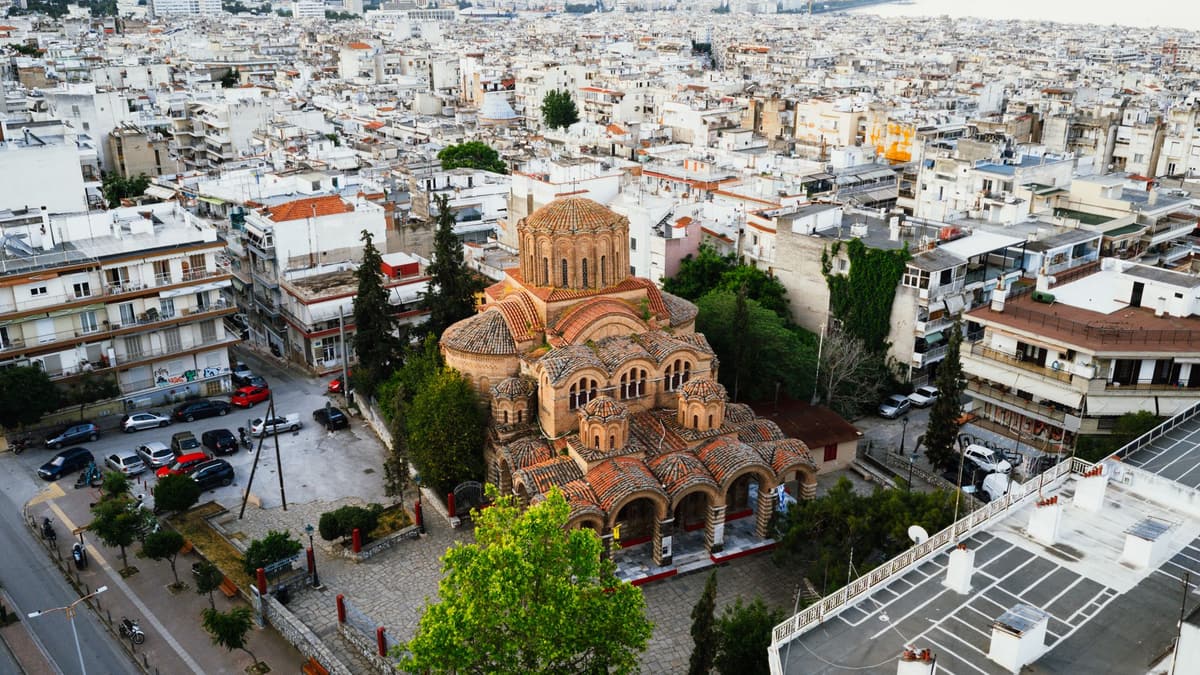
This plain brick building hides one of the oldest churches still standing anywhere in the world. Panagia Acheiropoietos was built in the fifth century, and its shape has barely changed since: a long, light-filled basilica with a wide central nave divided from the side aisles by two rows of marble columns. Step inside if it is open and look at the capitals on top of the columns, carved into crisp, wind-blown acanthus leaves. Then look up at the undersides of the arches. They are covered in fifth-century mosaics of vines, birds, fish, vases and crosses, glowing in gold and color, fragments of a decoration that once covered far more of the walls. The name means not made by human hands, after an icon of the Virgin that, it was believed, had appeared miraculously rather than being painted. This church also marks the end of Byzantine Thessaloniki. On 29 March 1430, after a short period under Venetian control, the city fell to the Ottoman sultan Murad II, and the Acheiropoietos was the first church turned into a mosque, known as the Old Friday Mosque. An inscription recording the conquest was carved into one of the columns; see if you can spot it. The Ottoman city that began that day would last almost five hundred years. Leave the church, turn left on Egnatia, and walk east along the avenue for about six minutes to the great stone arch standing beside it on your left. Walk through the arch and up the short pedestrian street to the round building at the top.
Wat er inbegrepen is
Onze tours zijn bedoeld om meditatief en meeslepend te zijn: je blijft in beweging en luistert gewoon. Samen zijn ze altijd beter, en de app speelt de vertelling synchroon af, zodat jij, je partner en je vrienden elke stop op hetzelfde moment horen.
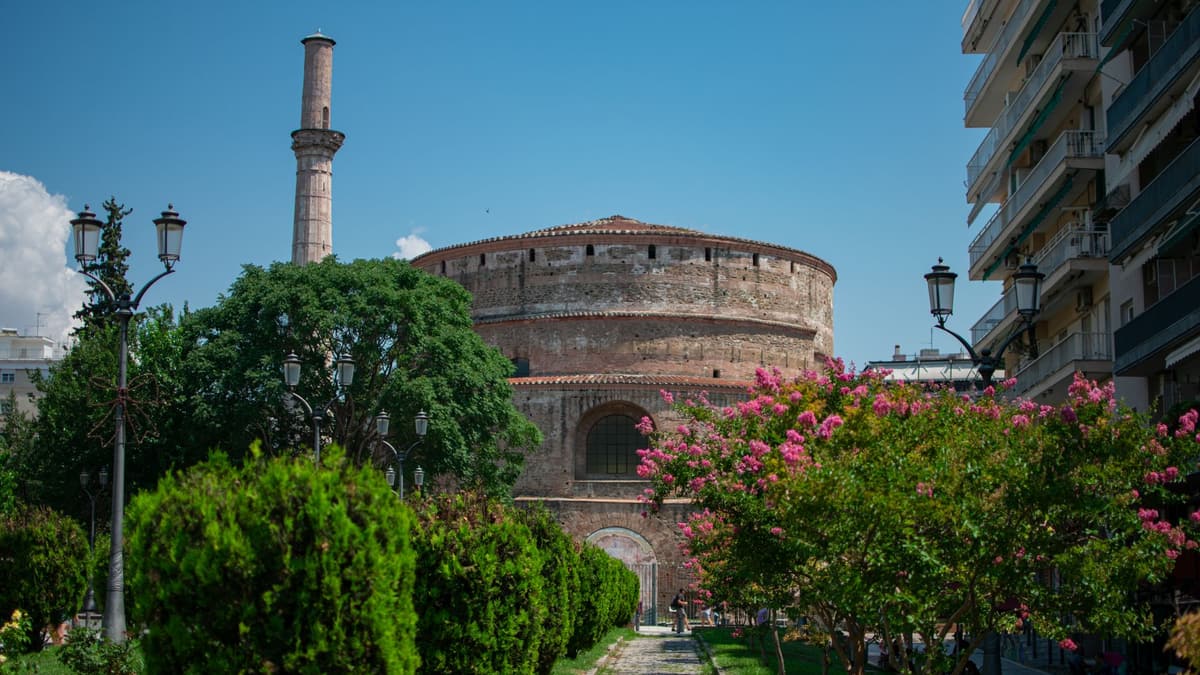
You have walked under the Arch of Galerius, the emperor's triumphal gateway, built around AD 300 to celebrate his victory over the Persians; look back at it to see soldiers, horses and the emperor in battle carved into its piers.
De rest van deze stop zit in de volledige audiotour.
In the middle of Navarinou Square, below street level, lie the remains of an imperial palace. Walk along the railings and look down at the foundations of grand halls and corridors, the stumps of columns, and patches of mosaic floor in colored geometric patterns.
De rest van deze stop zit in de volledige audiotour.
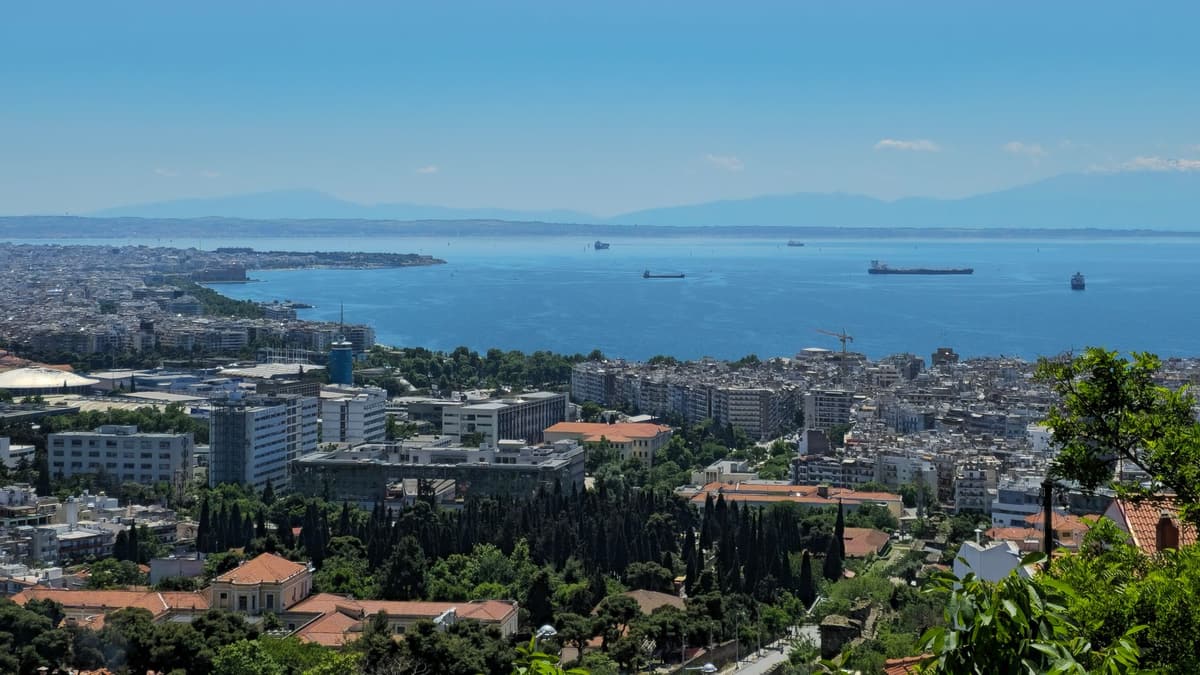
You end at the Archaeological Museum of Thessaloniki, a low, airy building from the early 1960s that holds the ancient story of Macedonia, from prehistoric villages to the Roman city you have just walked through. Two pieces make the visit unforgettable.
De rest van deze stop zit in de volledige audiotour.
Doe deze wandeling samen met anderen tijdens de eerstvolgende geplande tour.
Ongeveer 2,6 km, circa 36 minuten in een rustig tempo · 6 stops
Vrienden lopen gratis meeOctober 11, 2026 · 9 min read
From the Hollandsche Schouwburg through the old Jewish Quarter, past the Dockworker and the Dam, to the Anne Frank House on the Prinsengracht.
October 11, 2026 · 11 min read
From Van Houten's street by the Vondelpark past Leidseplein, the Rijksmuseum passage and the famous canal bench to the Anne Frank House.

October 11, 2026 · 10 min read
Follow the last days of April and May 1945 from the Anhalter Bahnhof ruin past the Gestapo site and Brandenburg Gate to the Moltke Bridge and the Reichstag.
