
October 11, 2026 · 9 min read
Amsterdam Anne Frank Walking Tour
From the Hollandsche Schouwburg through the old Jewish Quarter, past the Dockworker and the Dam, to the Anne Frank House on the Prinsengracht.
589

October 9, 2026 · 11 min read

 Vrienden lopen gratis mee
Elke tour is ook beschikbaar als een geplande groepswandeling waar je in de app aan kunt deelnemen.
Meer audiotours in Wellington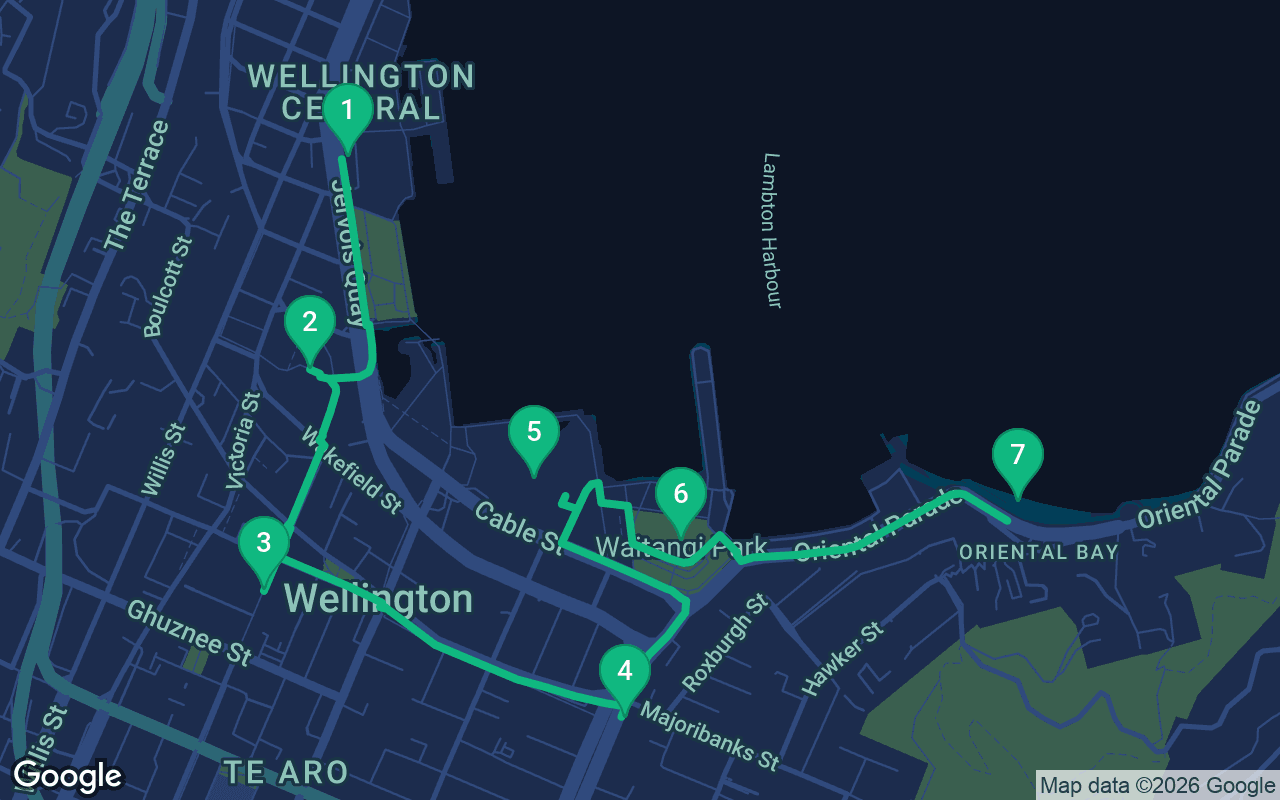
Ongeveer 3,4 km, zo'n 47 minuten op een rustig tempo.
Deze tour is ingesproken
Druk op afspelen bij de eerste 3 stops voor een demo van 30 seconden van de vertelling. In de app zijn de intro en die 3 stops volledig gratis te beluisteren, en bij elke stop klinkt een signaal zodra je aankomt. De hele tour met gids is van jou voor $8.99, een eenmalige aankoop die je voor altijd behoudt.
Werkt met Garmin, Komoot, Strava, OS Maps en elke GPX-app.
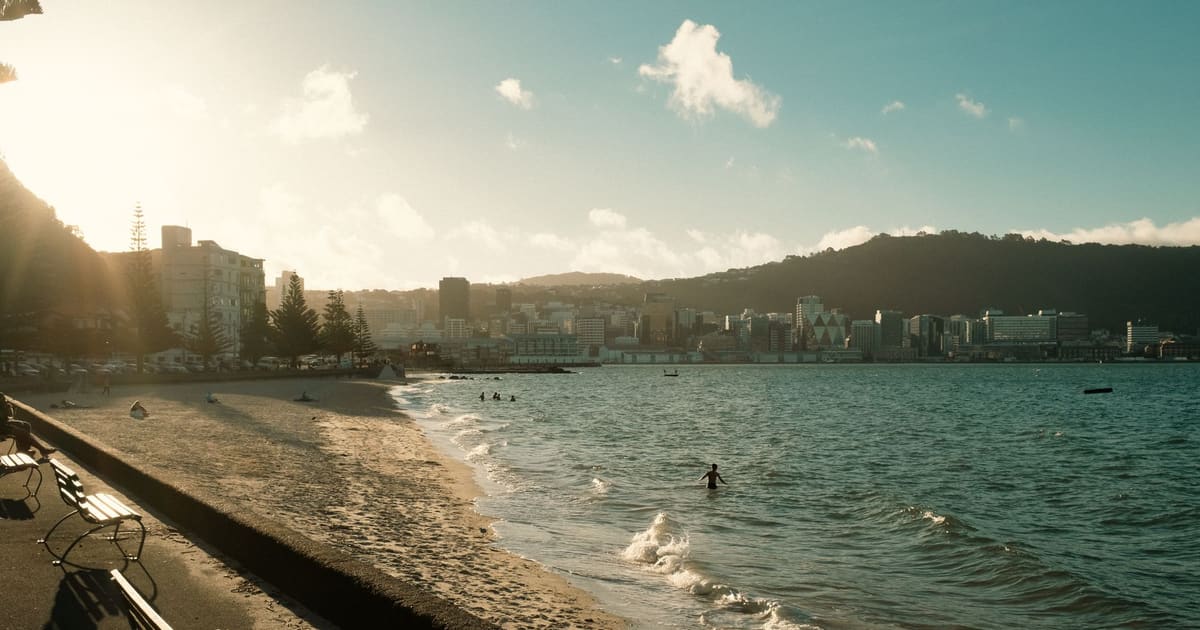
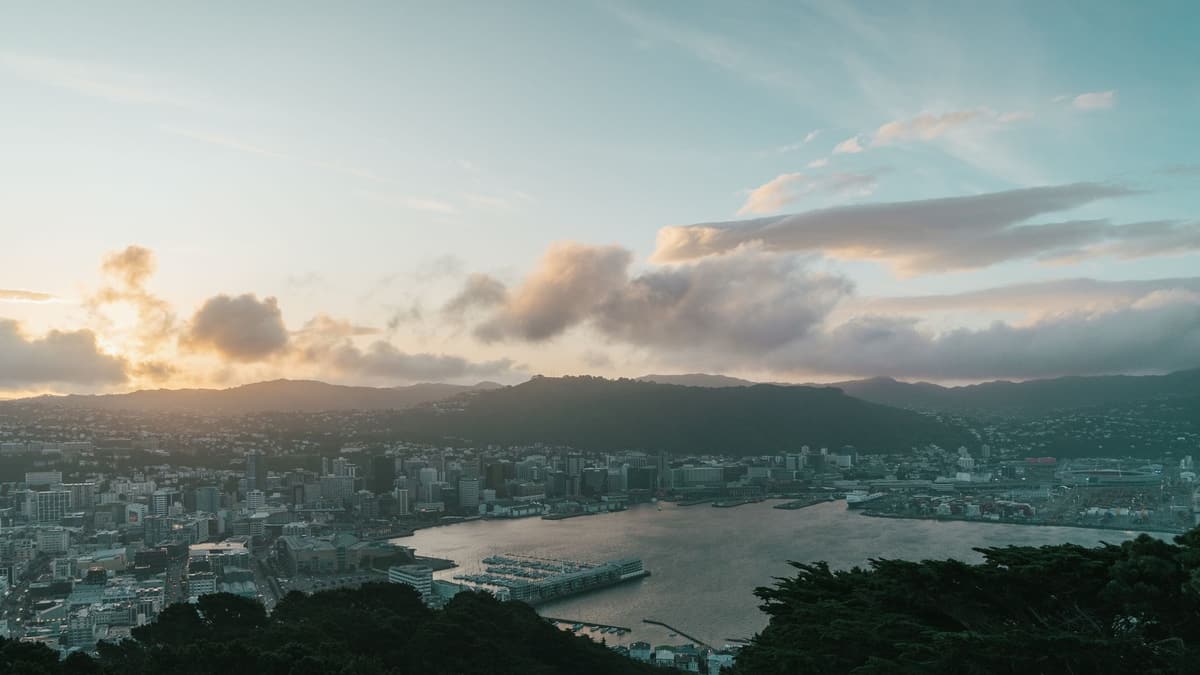
Wellington packs a capital city's worth of museums, theaters, cafes and bars into a narrow strip of flat land between steep green hills and one of the finest harbors in the world. Te Whanganui-a-Tara, the great harbor of Tara, is its name in te reo Māori, and the harbor shapes everything here, including the famous wind. This walk starts at the city museum on Queens Wharf, cuts inland through Civic Square to bohemian Cuba Street and the bright lights of Courtenay Place, then turns back to the water for Te Papa, the national museum, and a stroll along the promenade to the beach at Oriental Bay. It is about three and a half kilometers, a little over two miles, almost all of it flat, and it shows you the creative heart of the capital in one easy line, which makes it a natural first choice among self-guided walking tours of the city.
Allow about an hour and a half at a stroll, and a good half day if you plan to go properly into the museums, because Te Papa alone could fill an afternoon. The route is flat and paved, with a couple of road crossings in the city blocks. The real question is the weather. Wellington sits on Cook Strait, the gap between New Zealand's two main islands, and the wind funnels through it with real force, so the city has a fair claim to being the windiest in the world. On a calm, sunny day there is nowhere lovelier, but on a classic Wellington day you will be leaning into gusts on the waterfront, so bring a windproof jacket, tie down your hat and keep a firm grip on your coffee. Rain can arrive quickly too. Te Papa is free for New Zealanders and charges visitors from overseas, and the Wellington Museum keeps its own hours and entry rules, so check both before you go. Courtenay Place is lively at night and quiet in the morning, and Oriental Bay is at its best toward sunset, so an afternoon start works well.
Start on Queens Wharf in front of the Wellington Museum, the handsome building with the steep mansard roof. It was finished in 1892 as the head office and bond store of the Wellington Harbour Board, designed by the architect Frederick de Jersey Clere in the French Second Empire style that was fashionable in Britain at the time. A bond store was a strongroom for imported goods, which stayed locked up until the importer paid the duty. Unusually for the waterfront of its day, it was built of concrete, on land that had been reclaimed from the harbor only three years earlier. Since 1999 it has held the city's own museum, and it is a small gem. One of its most moving rooms tells the story of the Wahine, the inter-island ferry that struck Barrett Reef at the harbor mouth in a ferocious storm on 10 April 1968 and capsized within sight of the shore. Fifty-three people died. The museum also tells the far older story of how the harbor came to be. In Māori tradition, two taniwha, Ngake and Whātaitai, lived in what was then a lake. Ngake smashed his way out to the sea and made the harbor entrance, and Whātaitai, trying to follow, ran aground and became the high ground on the eastern side. Walk south along the waterfront promenade, with the water on your left, to the wooden footbridge decorated with carved figures, and cross it into the square, about seven minutes.
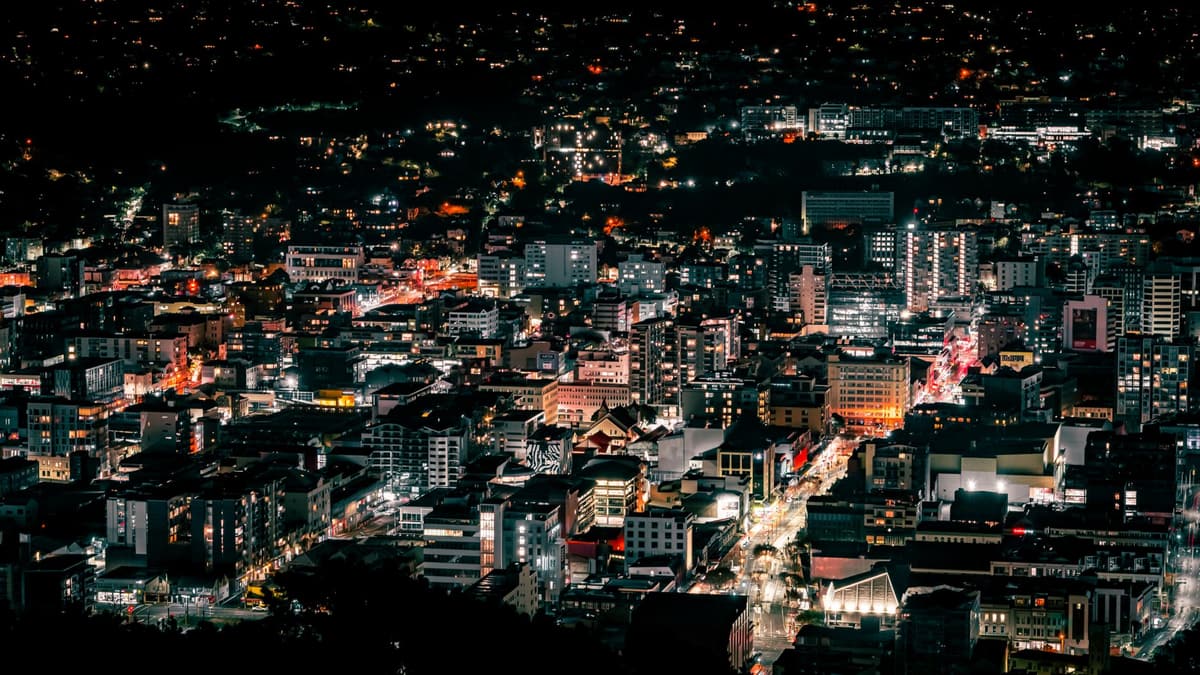 The bridge you just crossed is the City to Sea Bridge, opened in 1994 to reconnect the city with the harbor across the busy road below. Its carvings are by the Māori artist Paratene Matchitt, and among the figures you can find Ngake and Whātaitai, the two taniwha of the harbor story, along with birds, whales and fish. You are now in Te Ngākau Civic Square, the open plaza at the center of Wellington's civic life. Te ngākau means the heart. Around you stand some of the city's main public buildings. The Art Deco building is City Gallery, the city's art museum, housed in what was the public library when it opened in 1940. The new Central Library, Te Matapihi ki te Ao Nui, reopened in 2026 along with the square, after a long closure for earthquake strengthening. The Town Hall, from 1904, has been closed for the same reason, with work planned to finish in 2027. Wellington sits on active faults, and the city has spent years making its old buildings safe, so cranes and scaffolding are part of its scenery. For years a silver ball of sculpted fern leaves, Ferns by Neil Dawson, hung fourteen meters above the middle of the square. One of the buildings it hung from has been demolished, so the sculpture is in safe storage while the council looks for a new home for it. Leave the square at its southern end and walk a couple of blocks south, crossing Manners Street, into the pedestrian end of Cuba Street, about eight minutes.
Cuba Street is Wellington's bohemian heart, a long, slightly scruffy, endlessly lively street of secondhand shops, record stores, bars, cafes and buskers. It takes its name from the Cuba, a New Zealand Company survey ship that sailed into the harbor on 3 January 1840 to prepare for the settlers who would arrive later that month. Trams once ran down the middle of the street, and when the council pulled up the old tramlines, it closed this stretch to traffic. Cuba Mall opened in October 1969. That same year it gained its most famous resident, the Bucket Fountain, a stack of brightly colored buckets that fill, tip and pour water into one another before emptying into the pool below. It was designed by Graham Allardice of the planning firm Burren and Keen, and it is notoriously bad at keeping its water to itself. Stand too close on a breezy day and you will get splashed, which locals regard as a rite of passage. Watch it for a minute and you will see why Wellingtonians are so fond of it. Look up at the old shopfronts too, many of them Victorian and Edwardian, now painted in bright colors. This street is a center of the city's famous coffee culture, so it is a good place to stop for a flat white. Walk a few steps north to Dixon Street, turn right and follow it east to Taranaki Street, then carry on east along Courtenay Place to the cinema at its far end, about ten minutes.
Wat er inbegrepen is
Onze tours zijn bedoeld om meditatief en meeslepend te zijn: je blijft in beweging en luistert gewoon. Samen zijn ze altijd beter, en de app speelt de vertelling synchroon af, zodat jij, je partner en je vrienden elke stop op hetzelfde moment horen.
The grand old building facing you at the end of Courtenay Place is the Embassy Theatre.
De rest van deze stop zit in de volledige audiotour.
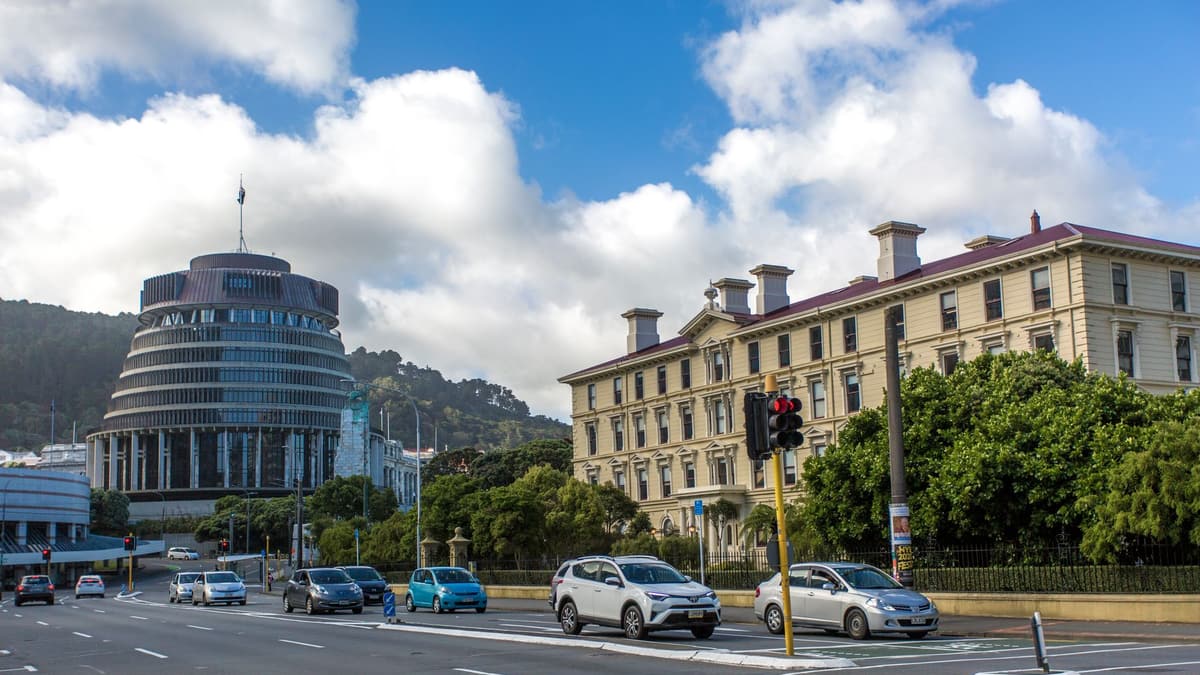
Te Papa is the Museum of New Zealand Te Papa Tongarewa, the national museum, and its name is usually translated as container of treasures.
De rest van deze stop zit in de volledige audiotour.
Waitangi Park is the open green space in front of you, with its playground, its skate park and, if you look closely, its reed beds and gravel wetlands.
De rest van deze stop zit in de volledige audiotour.
Oriental Bay is Wellington's city beach, a curve of golden sand along the promenade with Norfolk pines behind it and the wooden villas of Mount Victoria stacked up the hill above. The sand is not entirely local.
De rest van deze stop zit in de volledige audiotour.
Doe deze wandeling samen met anderen tijdens de eerstvolgende geplande tour.
Ongeveer 3,4 km, circa 47 minuten in een rustig tempo · 7 stops
Vrienden lopen gratis meeOctober 11, 2026 · 9 min read
From the Hollandsche Schouwburg through the old Jewish Quarter, past the Dockworker and the Dam, to the Anne Frank House on the Prinsengracht.
October 11, 2026 · 11 min read
From Van Houten's street by the Vondelpark past Leidseplein, the Rijksmuseum passage and the famous canal bench to the Anne Frank House.

October 11, 2026 · 10 min read
Follow the last days of April and May 1945 from the Anhalter Bahnhof ruin past the Gestapo site and Brandenburg Gate to the Moltke Bridge and the Reichstag.
