




 $15.99จุดเปลี่ยนประวัติศาสตร์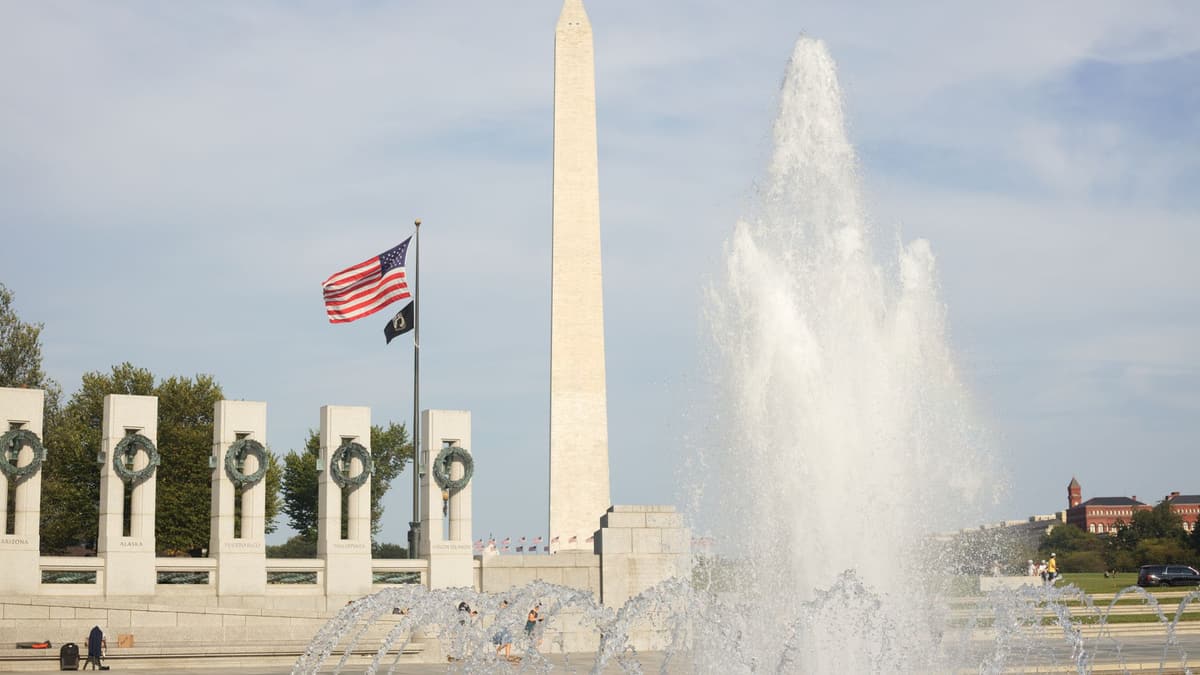
เสียงบรรยายนำเที่ยว Washington DC ทัวร์เดินชม
เดินเที่ยวชม Washington DC ด้วยตัวเองพร้อมเสียงบรรยาย ซื้อทัวร์เพียงครั้งเดียว ดาวน์โหลดเก็บไว้ แล้วปล่อยให้เรื่องราวบอกเล่าในแต่ละจุดแวะพักในขณะที่คุณเดินเที่ยวตามใจชอบ
ทัวร์เริ่มต้นที่ $8.99
เพื่อนเดินฟรี. การซื้อครั้งเดียวครอบคลุมทุกคนในการเดินของคุณ เริ่มทัวร์ ชวนเพื่อนเข้าร่วม แล้วมันจะเล่นบนโทรศัพท์ทุกเครื่องในกลุ่มของคุณ
5.0 บน Google Play
ทัวร์พร้อมเสียงบรรยายใน Washington DC
ทัวร์แต่ละเส้นทางจะมีแผนที่นำทางพร้อมเสียงบรรยายในทุกจุดแวะพัก ซื้อเพียงครั้งเดียวก็เก็บไว้ใช้งานได้ตลอดไป ไม่มีระบบสมัครสมาชิก
$15.99จุดเปลี่ยนประวัติศาสตร์ $8.99ไฮไลต์เมือง
 $9.99ไฮไลต์เมือง
สิ่งที่จะได้สัมผัสจากทัวร์เดินชมพร้อมเสียงบรรยายใน Washington DC
A Washington DC audio walk covers two very different lines through the capital, Capitol Hill's courts and free museums, and the long memorial axis from the Washington Monument to the Tidal Basin, with narration timed to each stop so you're not juggling a map at a security checkpoint.
The Capitol Hill Museums Walk starts on the steps of the Supreme Court, crosses to the Library of Congress, rounds the Capitol itself, then drops downhill through the jungle of the Botanic Garden into a run of free Smithsonian museums, the National Museum of the American Indian, Air and Space, the National Gallery of Art and Natural History. It covers 3.3 kilometers, about 46 minutes of walking, with a gentle slope down from the hill.
The National Mall Memorials Walk starts at the Washington Monument, heads west past the World War II and Vietnam Veterans memorials to the steps of the Lincoln Memorial, then swings south past the Korean War and Martin Luther King Jr. memorials to the Tidal Basin, where Franklin Roosevelt's garden rooms lead around the water to the Jefferson Memorial. It covers 3.8 kilometers, about 51 minutes, almost entirely without shade.
Together the two walks cover the two sides of the capital, the working government and its free museums on one axis, and the long outdoor memory of the country's wars and arguments about freedom on the other. Both stay flat and paved, though the open stretch along the Mall's Reflecting Pool has little shade, so plan for sun in summer either way.
จุดน่าเดินเที่ยวใน Washington DC
ตัวอย่างจุดแวะพักที่คุณจะได้เดินผ่าน และเหตุผลที่คุณควรเดินให้ช้าลงเพื่อซึมซับบรรยากาศ
The US Capitol
The Capitol's dome is painted cast iron rather than stone, and it went up in the middle of the Civil War, with Lincoln reportedly wanting the work to continue anyway as a sign that the Union itself would go on. On top stands the bronze Statue of Freedom, raised into place in 1863 with help from Philip Reid, an enslaved worker at the foundry who worked out how to separate the plaster model for casting and was a free man by the time the statue reached the top. George Washington laid the cornerstone in 1793, and the building has been added to ever since. The four quadrants of the city's whole address system, northwest to southeast, all meet at this one building.

The Library of Congress
Inside the Library of Congress, the Main Reading Room sits under a great dome ringed by a gallery, carved marble and painted ceilings all around it, the kind of space that stops most visitors in their tracks. The library began in 1800 as a reading collection for lawmakers, and after British troops burned it in 1814, Thomas Jefferson sold Congress his own personal library of more than six thousand books to start the collection over again. Today it holds more than 170 million items, from maps to comic books, which makes it the largest library in the world by most measures, and a tunnel even runs underground from here to the Capitol.
The National Gallery of Art
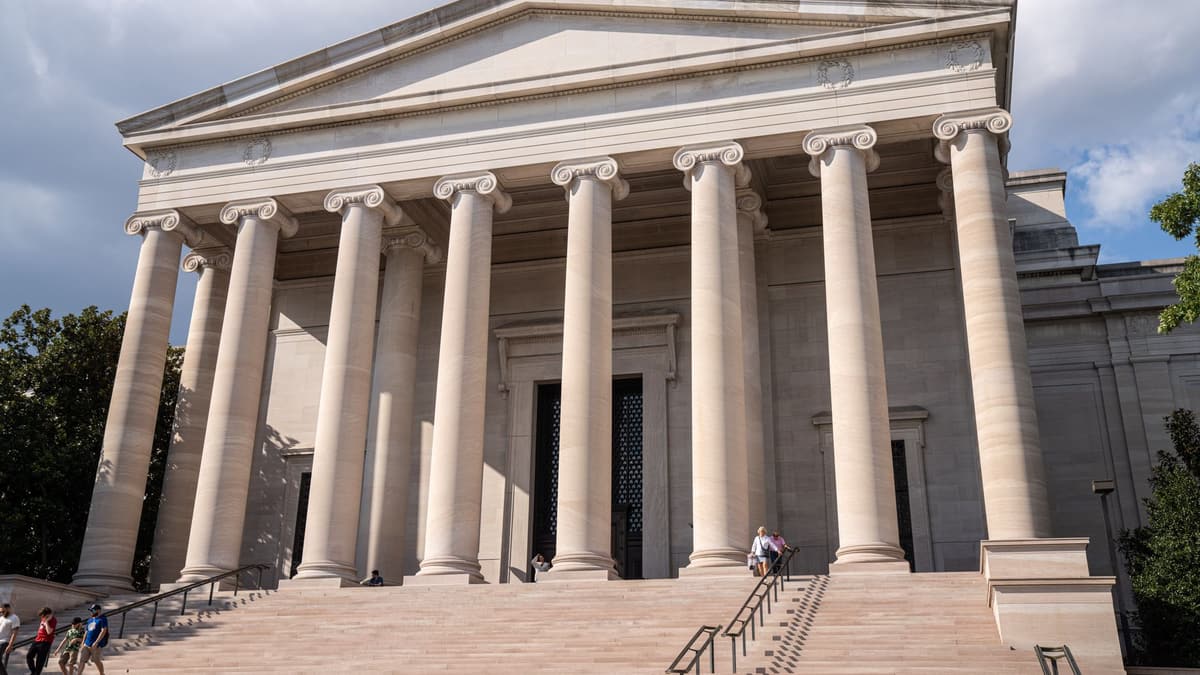
The National Gallery of Art's West Building stands behind a row of tall columns on the Mall, a gift to the nation from the banker Andrew Mellon, who paid for both the building and the start of its collection when it opened in 1941. Like its neighbors along this stretch of the Mall, it's free to walk in, and its prize is Ginevra de' Benci, a small portrait by Leonardo da Vinci and the only painting by him on public view anywhere in the Americas. Across the street, the sharp marble corner of I. M. Pei's East Building has been worn dark by decades of visitors who can't resist touching it on their way past.
The Lincoln Memorial
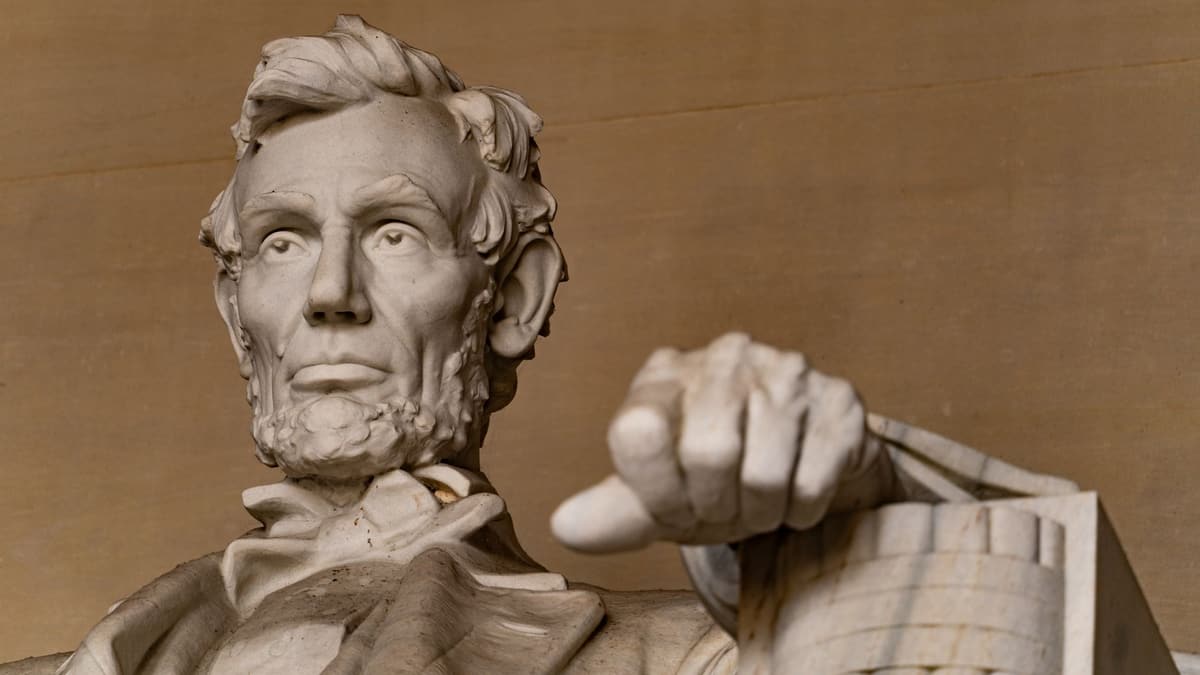
Lincoln sits nineteen feet tall inside his memorial, carved from white Georgia marble, with thirty six columns around him standing for the states of the Union at the time of his death. The words of the Gettysburg Address line the walls, and these steps have carried more weight than any other spot on the Mall: in 1939 the singer Marian Anderson performed here after being refused a concert hall because she was Black, and in 1963 Martin Luther King Jr. stood on this same spot to describe his dream to a quarter million people. A line carved into the landing below marks exactly where he stood that day.
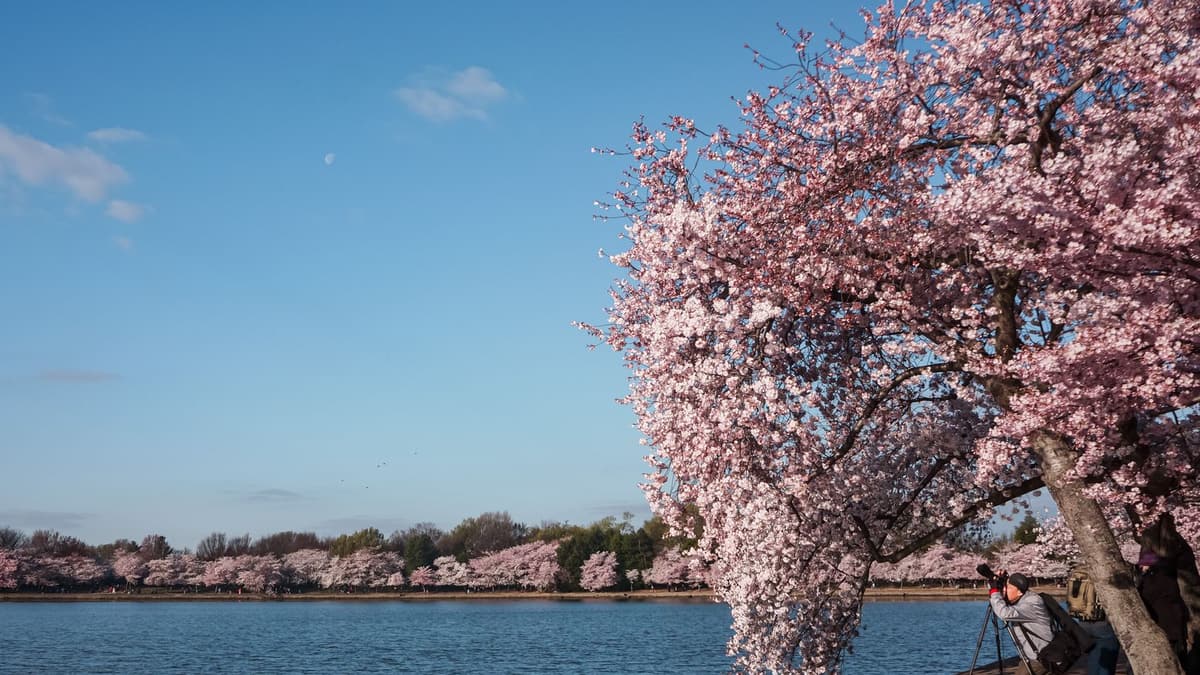
The Tidal Basin
The Tidal Basin is ringed with cherry trees gifted to the city by Tokyo in 1912, first planted by First Lady Helen Taft and the wife of the Japanese ambassador, and late March into early April brings them into bloom along with very large crowds. Franklin Roosevelt's memorial unfolds along one stretch of the water in four open air rooms, one for each of his terms as president, with water that changes from a calm sheet to a crashing, chaotic fall as the story moves through the Depression and the war. Across the basin, the Jefferson Memorial's dome looks back along a sightline built specifically so the two memorials would always face one another.
รับทัวร์เสียงใน 3 ขั้นตอนง่ายๆ
ทุกอย่างอยู่ในแอป Walk With Me ฟรี และจุดแวะแรกๆ ของทุกทัวร์ลองฟังได้ฟรี
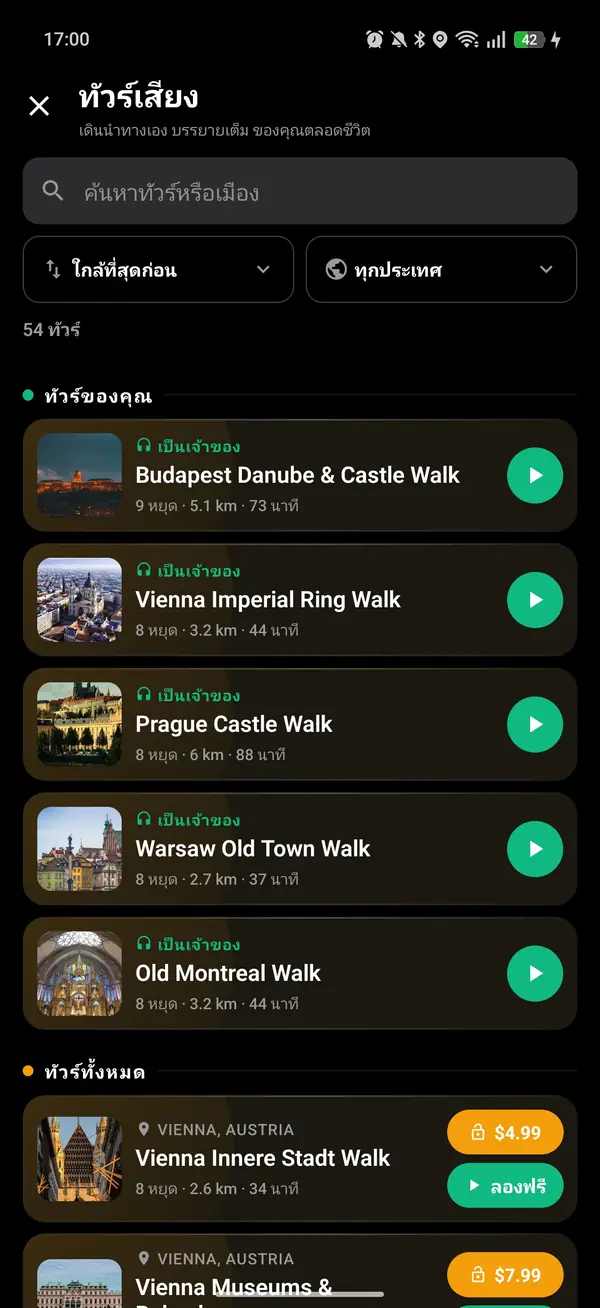
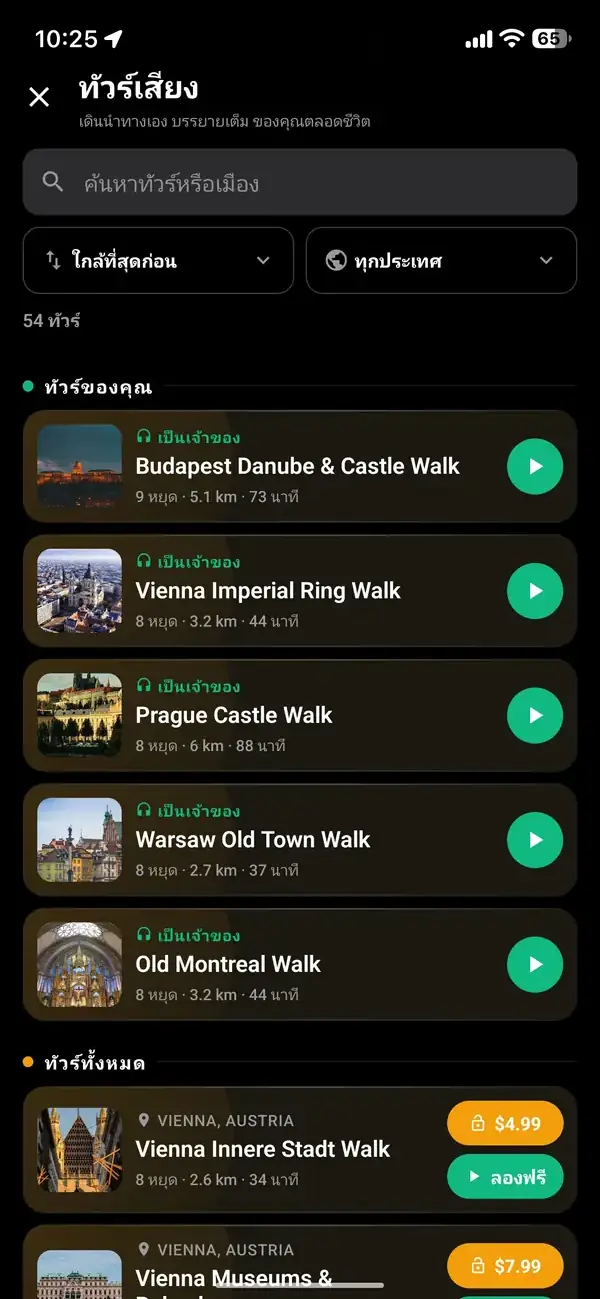
แตะหูฟังสีทองแล้วเลือกทัวร์
01
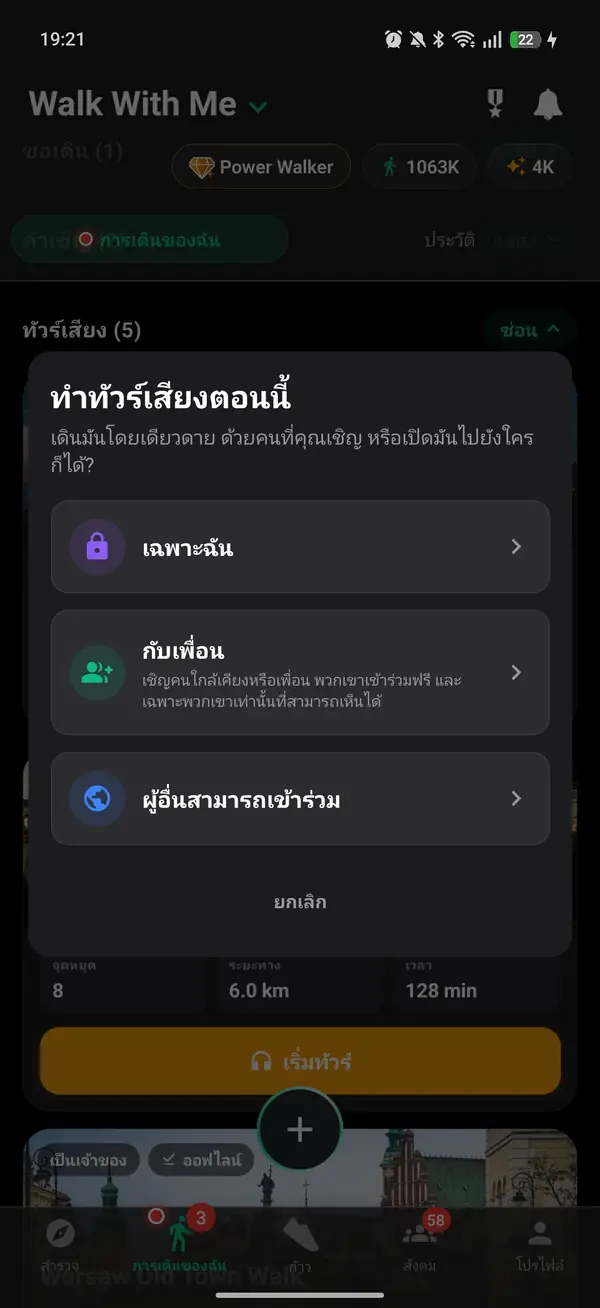
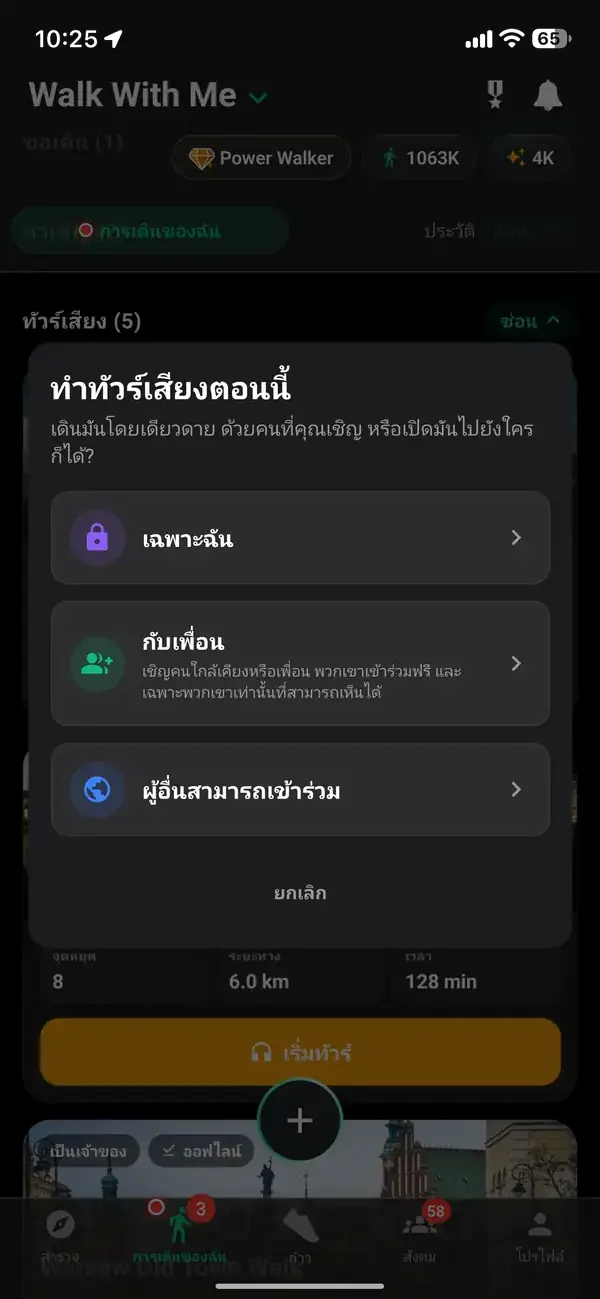
เดินคนเดียวหรือชวนใครสักคน
02
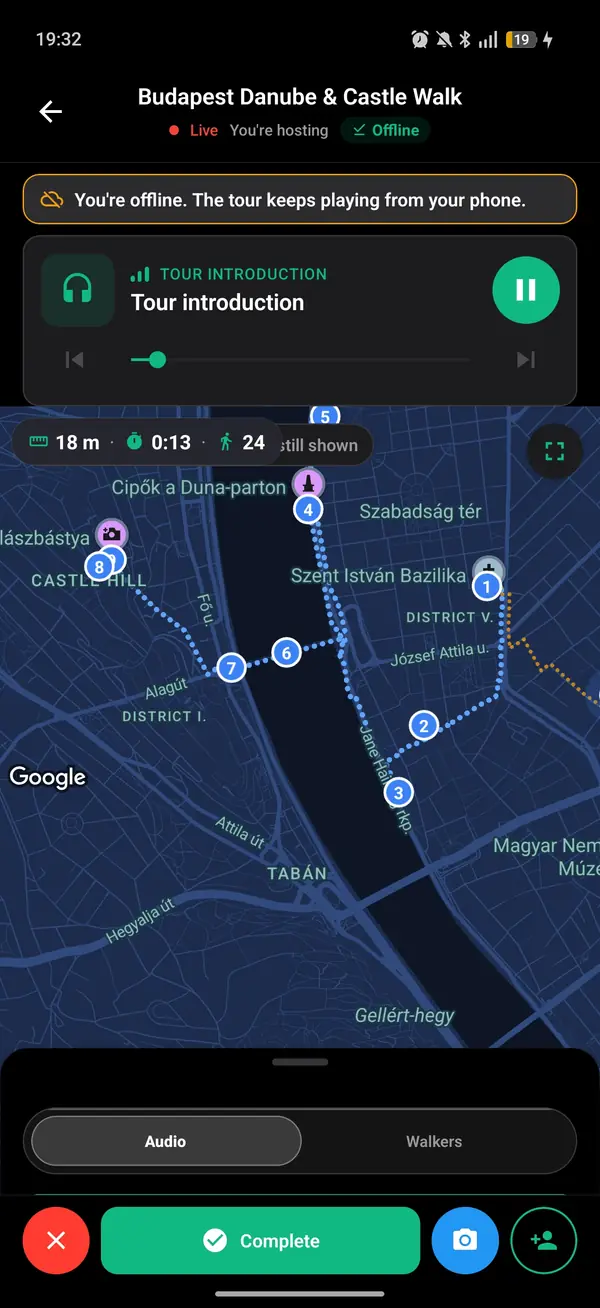
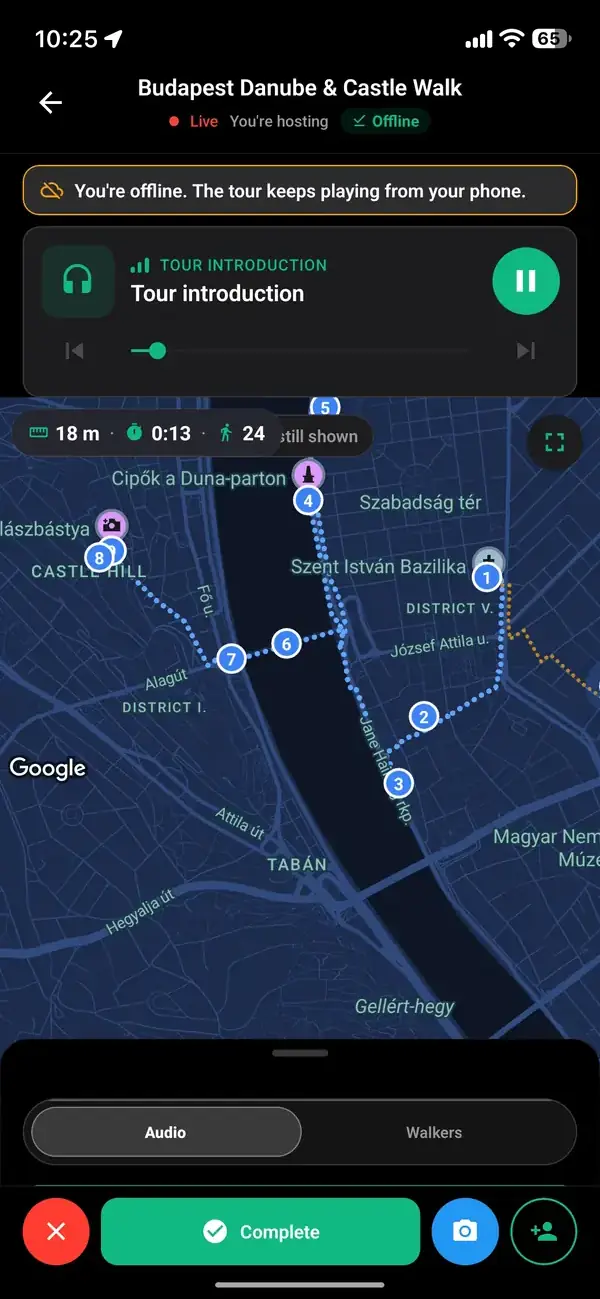
กดเล่นแล้วเริ่มเดิน
03
ตั้งใจสร้างสรรค์เพื่อ เวลาของคุณในเมือง
ทัวร์เหล่านี้ไม่ใช่รายการสถานที่ให้ติ๊กถูก แต่สร้างมาเพื่อให้เดินอย่างช้าๆ สวมหูฟัง แล้วมองเมืองรอบตัว
ผ่อนคลายและดื่มด่ำ
ทุกเรื่องราวเล่าขึ้น ณ สถานที่ที่มันเกิดขึ้นจริง แอปจะส่งเสียงเตือนเมื่อคุณถึงจุดแวะ แตะครั้งเดียวเรื่องราวก็เริ่ม และเส้นทางระหว่างจุดแวะเป็นของคุณตามจังหวะของคุณเอง
ใส่ใจทุกรายละเอียด
เราเลือกทุกเส้นทางและทุกจุดแวะด้วยตัวเอง และเรียบเรียงทุกเรื่องราวอย่างพิถีพิถัน เพื่อให้เวลาของคุณในเมืองได้ใช้กับสถานที่ที่คุ้มค่าที่สุด
เดินด้วยกันดีกว่า
ทุกการเดินจะดีขึ้นเมื่อมีใครสักคนอยู่ข้างๆ ถ้าคุณชวนเพื่อนมาได้ เราอยากให้คุณชวนจริงๆ นั่นคือเหตุผลที่การซื้อครั้งเดียวครอบคลุมทุกคนที่คุณเชิญ พวกเขาเข้าร่วมทัวร์ของคุณได้ฟรี