
October 11, 2026 · 9 min read
Amsterdam Anne Frank Walking Tour
From the Hollandsche Schouwburg through the old Jewish Quarter, past the Dockworker and the Dam, to the Anne Frank House on the Prinsengracht.
589

October 11, 2026 · 13 min read

 Friends walk free
Every tour also runs as a scheduled group walk you can join in the app.
More audio tours in Washington DC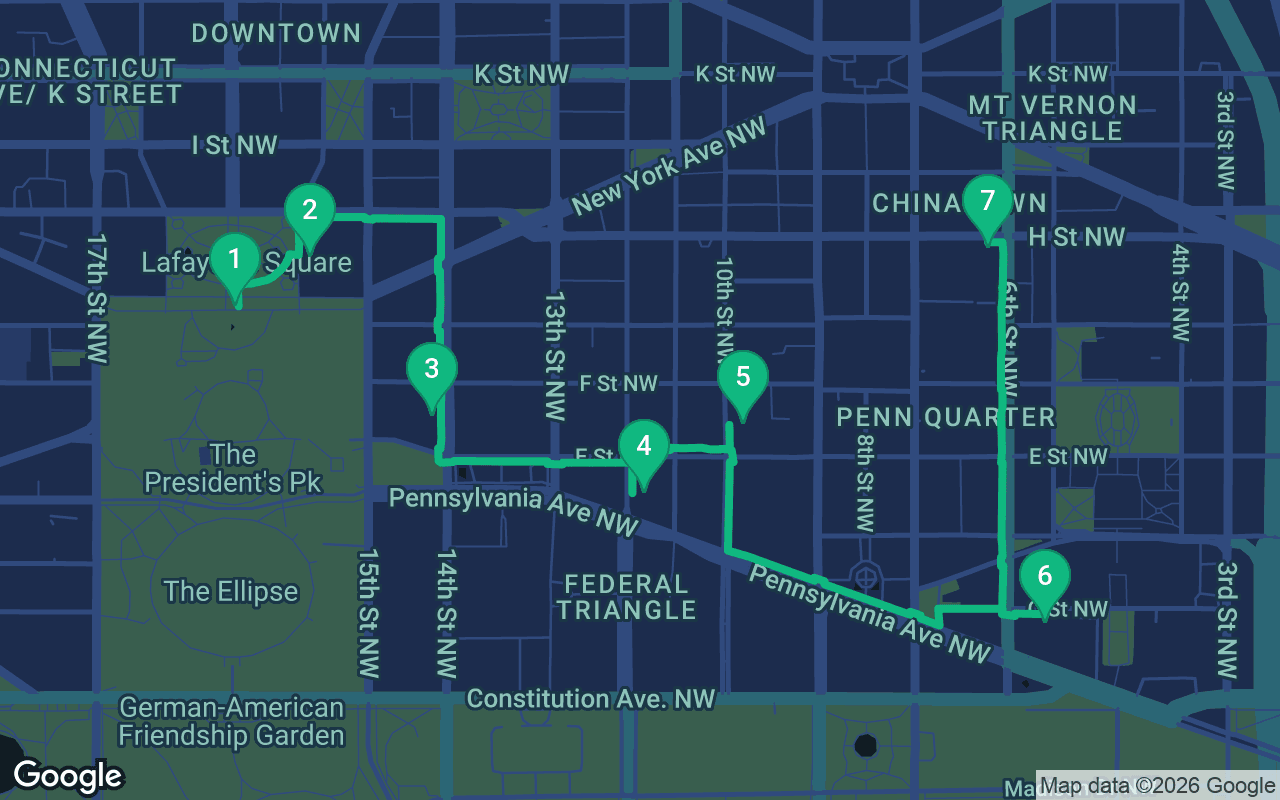
About 3.4 km, roughly 48 minutes at an easy pace.
This tour is narrated
Press play on the first 3 stops for a 30-second demo of the narration. In the app, the intro and those 3 stops play in full for free, each one chiming as you arrive. The whole narrated tour is yours for $15.99, a one-time purchase you keep for good.
Works with Garmin, Komoot, Strava, OS Maps and any GPX app.
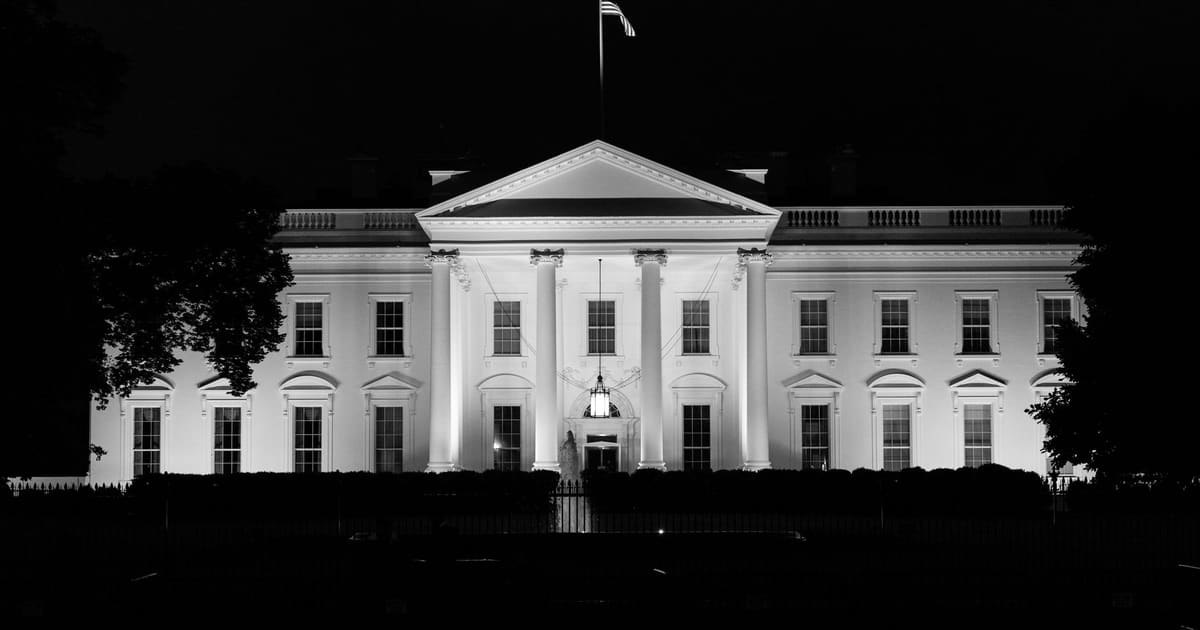
On April 9, 1865, Robert E. Lee surrendered, and the Civil War was nearly over. Five days later, on the night of April 14, a famous actor named John Wilkes Booth shot President Abraham Lincoln at Ford's Theatre. It was meant to be one of three killings that same night. This walk tells that story in order, on the streets where it happened: a speech that enraged Booth, a knife attack on the Secretary of State, a vice president who was never touched, the shot in the theatre, the bed across the street where Lincoln died, and the house where the plot was hatched. It's one of our self-guided walking tours, about 3.4 kilometers, starting in front of the White House and ending in Chinatown. It is the story of a murder, so the tone here is quiet and plain.
The walking takes about 48 minutes. With time at each stop, allow two to three hours, and more if you go inside Ford's Theatre. The route is flat and paved the whole way. Start on the pedestrian section of Pennsylvania Avenue in front of the White House north fence; McPherson Square and Farragut West are the nearest Metro stations. You finish at 604 H Street NW in Chinatown, about 100 meters from Gallery Place-Chinatown station. Ford's Theatre is a National Historic Site with free timed tickets; check hours and availability before you go. The Willard Hotel's lobby is open to the public. One note on order: the second stop happened late at night, after the afternoon scenes at stops three and four. The streets force that order, so you'll hear it as a look ahead, and then the story steps back to the afternoon.
Stand at the north fence and look at the North Portico, the columned porch facing you. Now look up, above the north door, to the window on the second floor. That is where this story begins.
On the evening of April 11, 1865, two days after Lee's surrender, a crowd gathered below that window. Lincoln spoke to them from it, standing at the hallway window between two upstairs bedrooms. It would be his last public speech.
In it he said something he had never said in public before. Some Black men, he said, should have the right to vote. His exact words were these: "I would myself prefer that it were now conferred on the very intelligent, and on those who serve our cause as soldiers."
Somewhere in that crowd stood John Wilkes Booth. He was a famous Shakespearean actor, a Confederate sympathizer and, in the National Park Service's plain words, a believer in "racism and white supremacy." The speech about voting rights enraged him. He reportedly said, "That is the last speech he will ever make." That line comes from later testimony, and its wording varies, so hold it loosely. What happened next is not in doubt.
Booth had plotted to kidnap the president. That plan had failed. By April 14 it had become a plan to kill three men on one night: the president, the Vice President, Andrew Johnson, and the Secretary of State, William Seward. General Ulysses S. Grant had been invited to the theatre with the Lincolns that evening.
On the evening of April 14, the Lincolns would leave this house for Ford's Theatre. The president would come back to it only for his funeral.
Now cross into Lafayette Square, the park behind you, and walk to its east side, Madison Place. It's about two or three minutes.
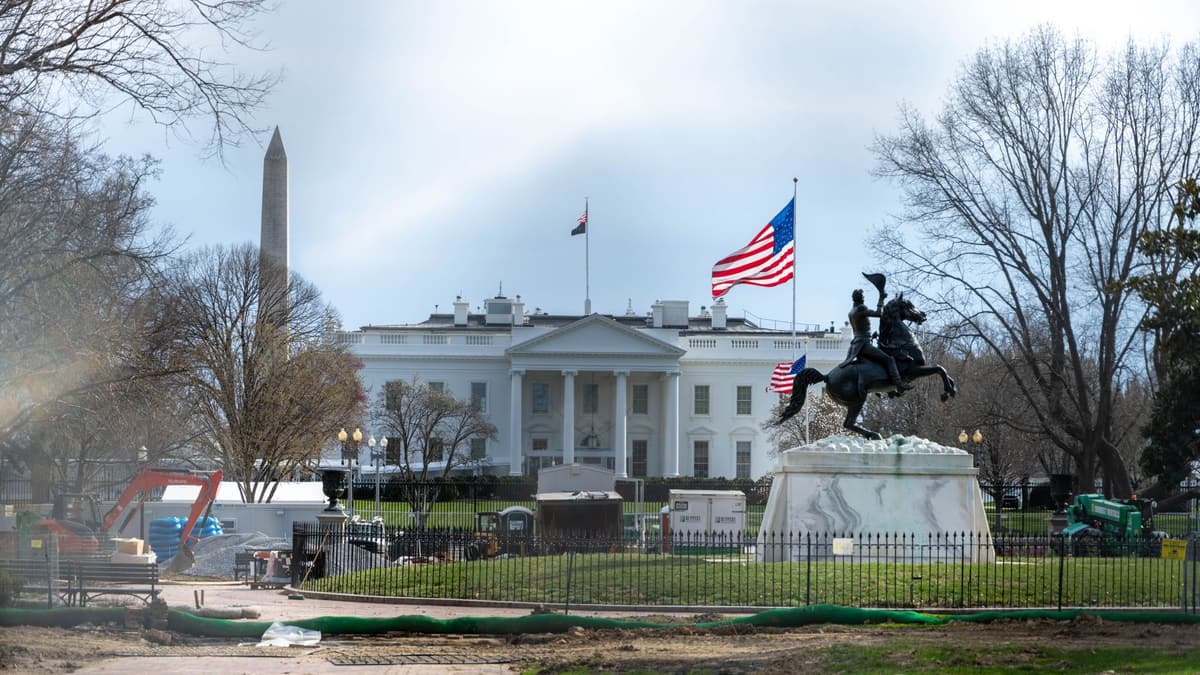
You're on Madison Place, on the east side of Lafayette Square. In 1865 a house called the Rodgers House stood here. Secretary of State William Seward lived in it. The house is gone, and the federal courts building stands on the site today.
Remember this spot, because tonight, late in the evening, it becomes the second scene of the plot.
Nine days before, Seward had been badly hurt in a carriage accident. He was in bed, held together by braces and bandages.
That night, a man named Lewis Powell came to the door. David Herold had guided him here. Powell said he was bringing medicine for the Secretary. It was a lie. He forced his way into the house and stabbed Seward in his bed. Then he attacked others in the house.
Seward's son Frederick, the Assistant Secretary of State, was nearly killed. Another son, Augustus, was injured fighting the attacker. The White House Historical Association says the braces and bandages from the carriage accident spared Seward worse injury. He survived.
A Black servant in the house, William H. Bell, saw the attacker. He would be key to identifying him later. His name belongs in this story.
A strip of the bedsheet slashed by the knife survives today in the collection of the Seward House Museum.
The attack came that same night, around the time Booth was climbing the stairs at Ford's Theatre, a few blocks east of here. But that's still hours away. Let's go back to the afternoon of April 14, and to a hotel where General Grant was getting ready to leave town.
Walk south down Madison Place to Pennsylvania Avenue and turn left to 15th Street. Turn right and follow 15th Street south alongside the Treasury, then turn left onto Pennsylvania Avenue. The Willard is on your left at the corner of 14th Street. About nine minutes.
The grand hotel in front of you is the Willard InterContinental, at 14th Street and Pennsylvania Avenue. The hotel stands on the same site it did in Lincoln's day, and you're welcome to step into the lobby.
Lincoln knew this hotel well. In 1861, before his first inauguration, he was warned that his life was in danger in Baltimore. So he slipped into Washington unnoticed at dawn and came here. He stayed at the Willard for about ten days. One small detail survives from that stay: Mrs. Willard lent him her grandfather's slippers. The secret arrival drew ridicule, and Lincoln later regretted it.
Now jump four years ahead, to April 14, 1865. According to the White House Historical Association, Booth unsettled Julia Grant, the general's wife, that day by glaring at her in the hotel dining room.
Grant himself told what happened next in his memoirs. The Lincolns had invited the Grants to the theatre that night. Grant replied that he was anxious to visit his children in Burlington, New Jersey. He finished his work, and in his own words, "started by the evening train on the 14th." He sent word that he would not be at the theatre.
So Grant was on a train, not in the presidential box. He heard the news of the attacks at the Philadelphia ferry after midnight.
You may hear that Grant had a premonition, or that the Grants were staying here at the Willard. Neither story is verified. His own account is the train and his children.
Now continue east along Pennsylvania Avenue for two blocks, to 12th Street, and cross it. Stop at the corner building on your left. About seven minutes.
What's included
Our tours are made to be meditative and immersive: you keep moving and simply listen. They're always better together, and the app plays the narration in sync, so you, your partner and your friends hear every stop at the same moment.
Look at the modern office building on this corner, 1111 Pennsylvania Avenue. Nothing here marks what stood on this spot.
The rest of this stop is in the full audio tour.
You're on 10th Street. The building in front of you is Ford's Theatre, restored.
The rest of this stop is in the full audio tour.
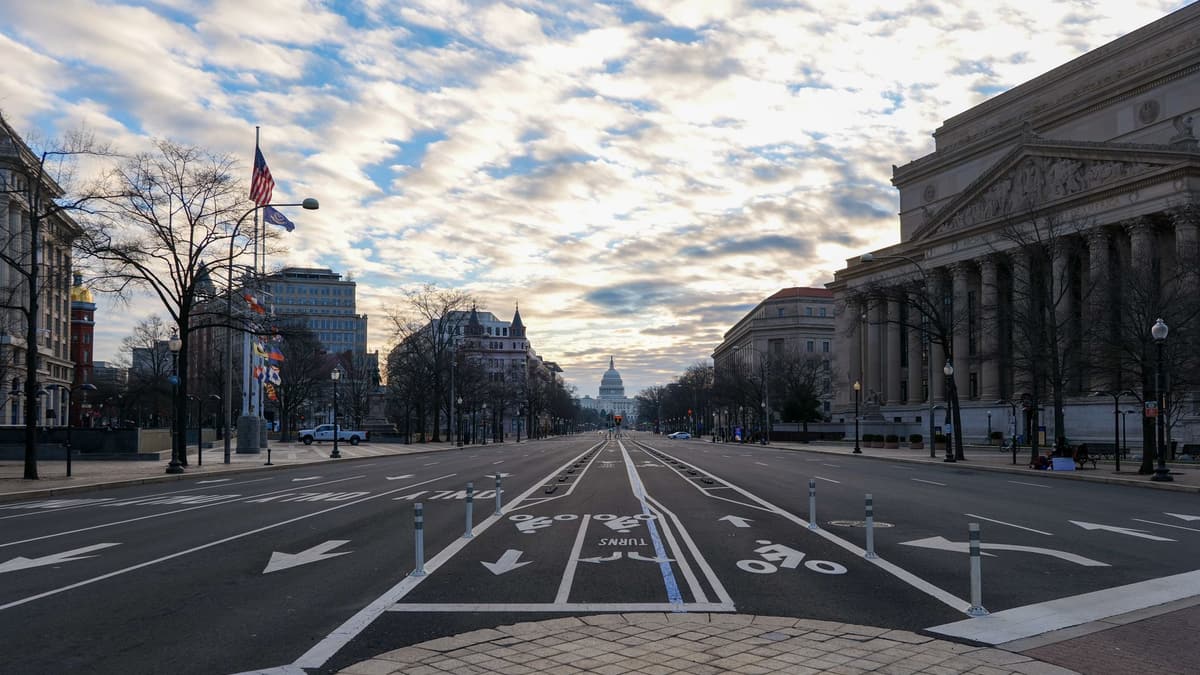
Stand at the corner of 6th Street and Pennsylvania Avenue and look at 555 Pennsylvania Avenue. It was the Newseum for some years, and today it's the Johns Hopkins University Bloomberg Center.
The rest of this stop is in the full audio tour.
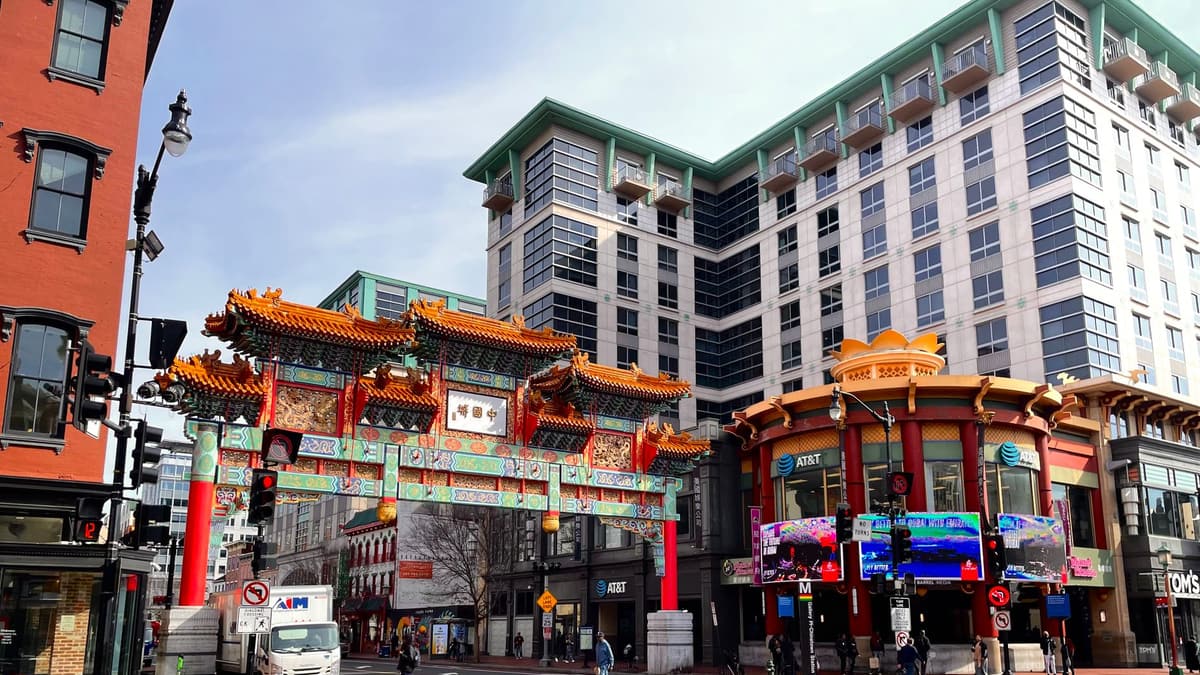
You're on H Street in Chinatown, in front of number 604. Look at the building.
The rest of this stop is in the full audio tour.
Do this walk with other people on the next scheduled tour.
About 3.4 km, roughly 48 minutes at an easy pace · 7 stops
Friends walk freeOctober 11, 2026 · 9 min read
From the Hollandsche Schouwburg through the old Jewish Quarter, past the Dockworker and the Dam, to the Anne Frank House on the Prinsengracht.
October 11, 2026 · 11 min read
From Van Houten's street by the Vondelpark past Leidseplein, the Rijksmuseum passage and the famous canal bench to the Anne Frank House.

October 11, 2026 · 10 min read
Follow the last days of April and May 1945 from the Anhalter Bahnhof ruin past the Gestapo site and Brandenburg Gate to the Moltke Bridge and the Reichstag.
