
5 ตุลาคม 2569 · 7 นาที
A Walking Buddy Schedule
Fix one or two days, a time and a meeting place, agree a bad-weather plan and what happens when one of you cancels, and start small.


The quickest way to find a walking buddy near you is to ask one person you already know, with a day and a time attached. If nobody you know is free, go to a local group walk two or three times and suggest an extra walk to whoever you keep ending up next to. Dog walkers in your nearest park, colleagues at lunchtime, neighbourhood online groups and walking apps are the other good places to look. Below is how each one works, what to say when you ask, and how to keep the first walk with a stranger safe and simple.
Most walking buddies are found closer to home than people expect: a neighbour, a friend who keeps saying they should move more, a colleague, a parent at the school gate. The mistake is the vague invitation. "We should go for a walk sometime" sounds friendly, and almost never turns into a walk, because nobody has to decide anything. A specific one is easier to say yes to: "I'm walking round the park on Tuesday at 7, about half an hour. Want to come?" It tells the other person exactly what they're agreeing to, it's short enough not to feel like a commitment, and it lets them say no without awkwardness. If they come and you both enjoy it, suggest the same time the next week. That repeat is what turns a walk into a walking buddy. Ask two or three people rather than waiting on one, because some will be keen and some won't, and none of that is personal.
If nobody you know can walk at your times, a free local group walk is the easiest way to meet people who already like walking. In England, Ramblers Wellbeing Walks run every week in many towns: they're free and led by volunteers, the shortest are only 10 minutes long, and you don't need to register. Walk with a Doc, a nonprofit that began in Ohio, runs free walks in communities around the world, led by local doctors, other healthcare workers or medical students. Your library, community centre or council website will often list what else is on locally. The group is rarely the buddy itself. Instead, you'll find yourself walking beside the same person on the second or third week, and that's the moment to ask whether they'd like to meet up between group walks as well.
 Photo: Dwi Rizqi F, Pexels
Some of the best buddy matches are people already walking at your time. Dog owners are the clearest case: they're out every day whatever the weather, often on the same route at the same hour, so if you walk a dog too, the owner you nod to every morning is a likely buddy, and the dogs give you something to talk about from the first minute. At work, a lunchtime walk is easy to suggest to a colleague, because it doesn't eat into anyone's evening, and two or three regular lunchtime walkers can grow into a small group. And for people without a dog or an office, a short post in a neighbourhood group on Facebook or Nextdoor works better than you might think. Say where you walk, when, roughly how far and how fast, and what kind of walk it is (a chatty stroll, a brisk one, or a quiet one). A precise post gets fewer replies, but they come from people who fit.
Social walking apps take the guesswork out of timing, because they show walks other people near you are planning, so you can join one at an hour that suits you rather than coordinating from scratch. They're most useful in the gaps the other options leave: you've just moved, you work odd hours, or nobody in your circle walks. Treat a walk you join through an app the way you'd treat a group walk. Go a couple of times, see whose pace and company suit you, and arrange more walks with that person.
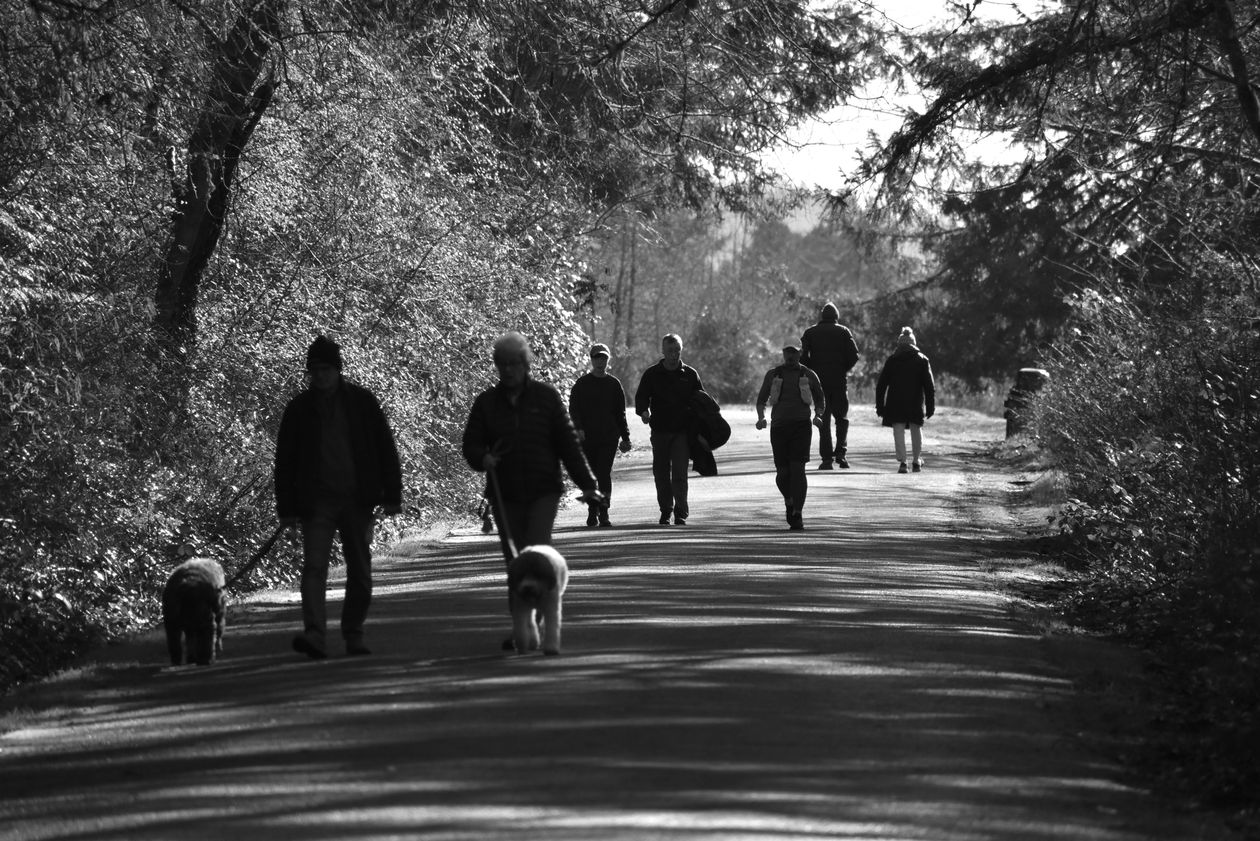 Photo: wr heustis, Pexels
Meeting a stranger for a walk is lower pressure than most first meetings, but a few habits make it safer and easier for both of you. For the first walk:
It also helps to be honest early about what kind of walk you want. If you're after a brisk hour and they want a gentle chat, it's better for both of you to know on the first walk than the fifth. Not every match works, and a polite "I don't think our paces suit each other" is a perfectly good reason to keep looking.
Walk With Me shows walks near you on a map: live walks in green and planned ones in blue. You can ask to join one (the host approves who comes, by default) or set up your own walk now or for later, open to everyone, to friends, or invite only, and there are Women Only, Men Only and LGBTQ+ Only walks too. You can also post "Find a buddy" on the Walk Feed for anyone to answer. Once you've found someone you like walking with, add them as a friend and make them your walking buddy, so you can see each other's steps and keep a streak going together. There's more on finding a walking buddy and on how the app keeps walks safe. It's free on the App Store and Google Play.
5 ตุลาคม 2569 · 7 นาที
Fix one or two days, a time and a meeting place, agree a bad-weather plan and what happens when one of you cancels, and start small.
21 สิงหาคม 2569 · 7 นาที
A regular walking partner keeps older adults walking and seeing people. How to pick one, walk safely, add balance work, and where to find a companion.

30 กรกฎาคม 2569 · 7 นาที
How to meet someone new for a walk, or join a walking group, safely: what to check first, how to plan the first walk, and what to do if something is off.
