
October 11, 2026 · 9 min read
Amsterdam Anne Frank Walking Tour
From the Hollandsche Schouwburg through the old Jewish Quarter, past the Dockworker and the Dam, to the Anne Frank House on the Prinsengracht.
589

October 8, 2026 · 11 min read

 Друзі гуляють безкоштовно
Кожен тур також доступний як запланована групова прогулянка, до якої можна приєднатися в додатку.
Більше аудіотурів у Charleston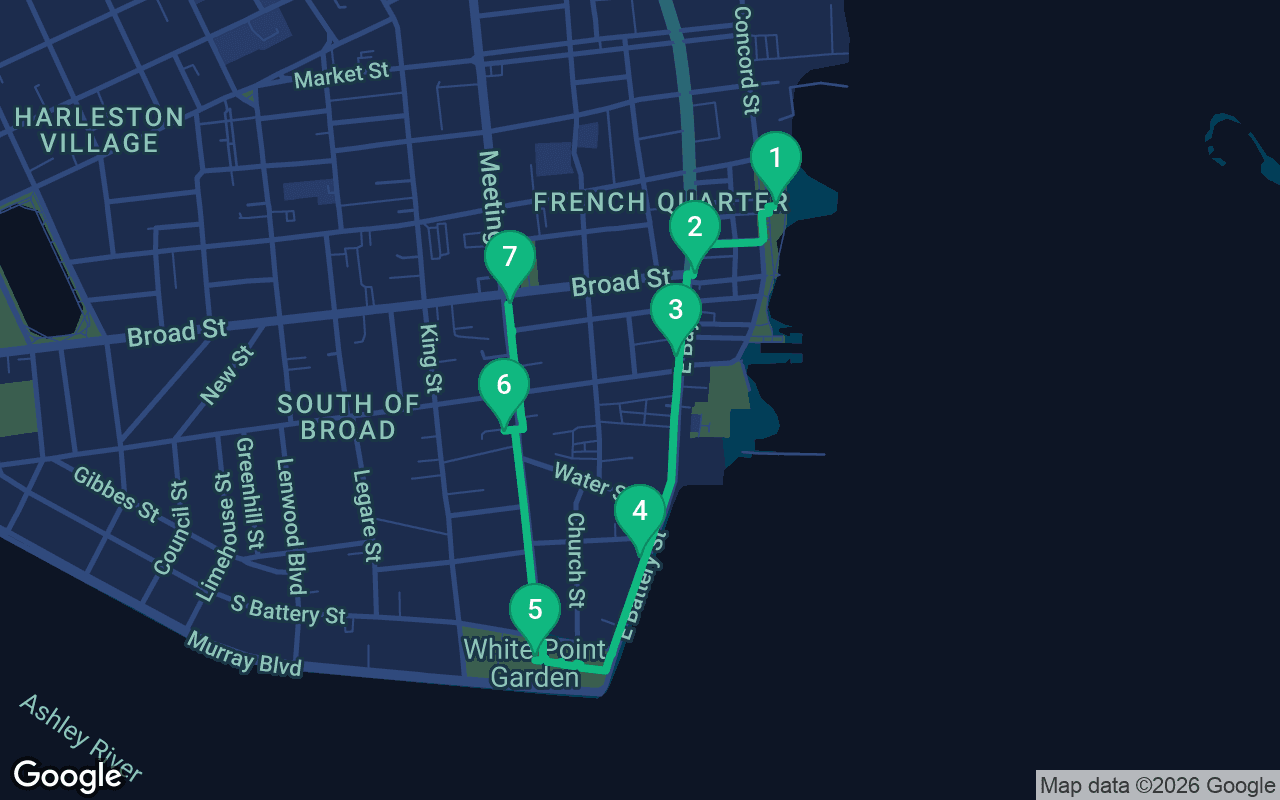
Приблизно 2,1 км, приблизно 29 хвилин у легкому темпі.
Цей тур озвучено
Натисніть відтворення на перших 3 зупинках, щоб послухати 30-секундний фрагмент розповіді. У додатку вступ і ці зупинки звучать повністю й безкоштовно, а про кожну з них вас сповістить звуковий сигнал, щойно ви прибудете. Весь тур із розповіддю буде вашим за $6.99, одноразова покупка назавжди.
Працює з Garmin, Komoot, Strava, OS Maps та будь-яким застосунком GPX.
Charleston grew up facing the water. The English settlers who moved onto this narrow peninsula in 1680 built their town around the harbor, made their fortunes on the ships that crossed it, and lined its southern tip with the grandest houses in the colonies. This walk starts on the harbor at the Pineapple Fountain, follows East Bay Street past the colonial Exchange and the pastel fronts of Rainbow Row, runs along the seawall of the Battery to the oaks of White Point Garden, and then turns up Meeting Street to finish beneath the white steeple of St Michael's Church. It is about 2.1 kilometers, a little over a mile and a quarter, and one of the easiest and most beautiful self-guided walking tours in the South. For most of the way, look out across the water and you will see a low, dark shape near the mouth of the harbor: Fort Sumter, where the Civil War began.
Allow an hour and a half at a gentle stroll, and half a day if you want to go inside the Old Exchange, the Edmondston-Alston House and the Nathaniel Russell House, which all offer tours. Check times and tickets before you go. The route is completely flat, but Charleston's old sidewalks are uneven, lifted by tree roots and patched with brick and flagstone, so wear comfortable shoes and watch your step. Summer here is hot and very humid from late May into September, so walk early in the morning or in the last hours of the afternoon, carry water, and use the shade of the oaks in White Point Garden for a rest. The seawall promenade along the Battery has no shade at all. Spring is the loveliest season, when the gardens behind the iron gates are in flower, and fall is a close second. Many of the houses you pass are private homes, so admire them from the sidewalk and leave the gates closed. Afternoon storms roll in quickly in summer, and very high tides can put water over the low streets near the Battery, so glance at the forecast before you start.
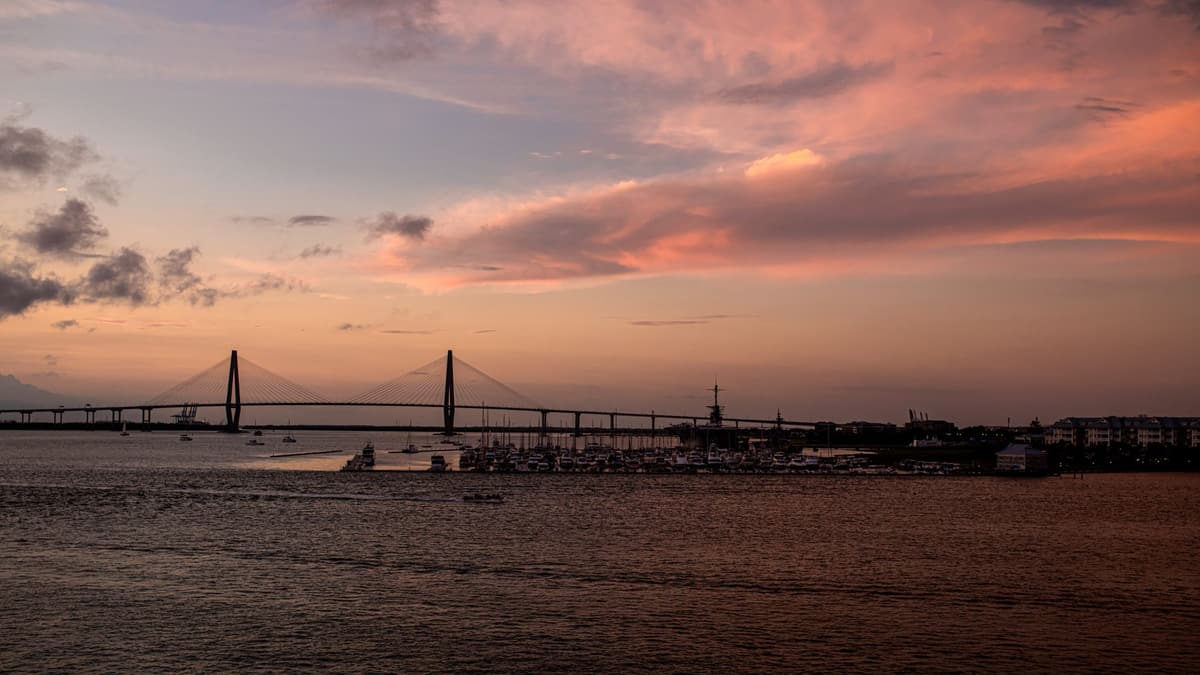
You are standing at the Pineapple Fountain, a tall sculpted pineapple rising out of a shallow pool on the edge of the harbor. On hot days you will often see children paddling in it, and nobody minds. The pineapple became a symbol of welcome in the colonial South, when the fruit was rare, costly and shipped in from the Caribbean, and a host who could set one on the table was making a point. The story goes that sea captains home from the islands would put a pineapple by the door to let neighbors know they were back and receiving visitors. This park is younger than it looks. For much of the twentieth century this stretch of shore was a jumble of decaying wharves and parking lots, and the city reclaimed it as a public park in 1990, under Mayor Joseph P. Riley Jr., whose name it now carries. Walk out on the long pier, with its wooden swings, and look north to the white cables of the Arthur Ravenel Jr. Bridge and the gray hulk of the aircraft carrier Yorktown, moored across the river as a museum. When you are ready, walk south through the park and turn inland to East Bay Street, where the Old Exchange stands at the end of Broad Street, about four minutes away.
 In front of you, at the point where Broad Street meets the harbor road, stands the most important building of colonial Charleston. The Exchange and Custom House was finished in 1771, a handsome Palladian block built by the British crown to collect duties on everything passing through one of the richest ports in North America. It did not stay loyal for long. Tea seized in 1773 is said to have been locked up here, and in the years that followed patriots met under this roof to choose delegates and debate independence. In May 1788, South Carolina's convention met here and voted to ratify the United States Constitution, and three years later George Washington was welcomed and entertained in the great hall upstairs during his tour of the South. The building also holds harder memories. When the British captured the city in 1780, they turned the cellar into a military prison, the Provost, and crowded it with captured patriots and others. Down there you can still see part of the brick seawall that ringed the earliest town. And for many years, enslaved people were auctioned in the open air beside this building. Take a slow look before moving on. Then walk south along East Bay Street for two minutes, and the colors start on your right.
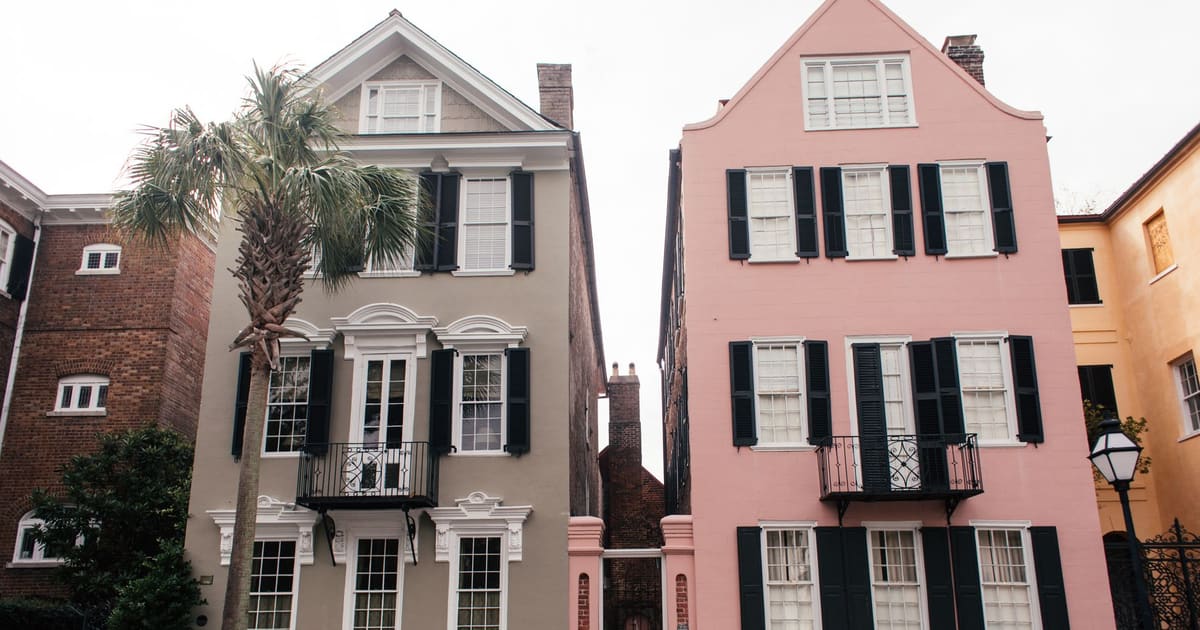
Here is the view on a thousand postcards: thirteen attached houses in pink, lemon, mint, lilac and sky blue, often called the longest run of Georgian row houses in the United States. Stand on the harbor side of the street to see the whole sweep at once. Most of these houses went up in the eighteenth century, when the water came almost to their doors and East Bay Street was a working waterfront. Merchants kept shops and counting rooms at street level and lived upstairs, a few steps from the wharves where their cargoes landed. After the Civil War the money left, and by the early twentieth century the row was close to a slum. Its rescue began in the 1930s, when Dorothy Porcher Legge bought a stretch of the row, restored it and painted it a pale Caribbean pink. Her neighbors followed with colors of their own. The story goes that the bright paint helped sailors find their way home after a night ashore, but the palette is younger than that legend. As you walk on, look for round or star-shaped iron plates on the walls of older houses nearby. They are the ends of earthquake bolts, iron rods threaded through buildings to brace them, many added after the great earthquake of 1886. Continue south on East Bay Street, which becomes East Battery, for about five minutes, until the harbor opens up on your left.
Що входить
Наші екскурсії задумані медитативними та захопливими: ви рухаєтеся й просто слухаєте. Разом завжди краще, і додаток відтворює розповідь синхронно, тож ви, ваш партнер і ваші друзі чуєте кожну зупинку одночасно.
You have reached the High Battery, the raised stone seawall that guards the tip of the peninsula, and the tall house facing the water with layered piazzas is the Edmondston-Alston House.
Продовження цієї зупинки є в повній аудіоекскурсії.
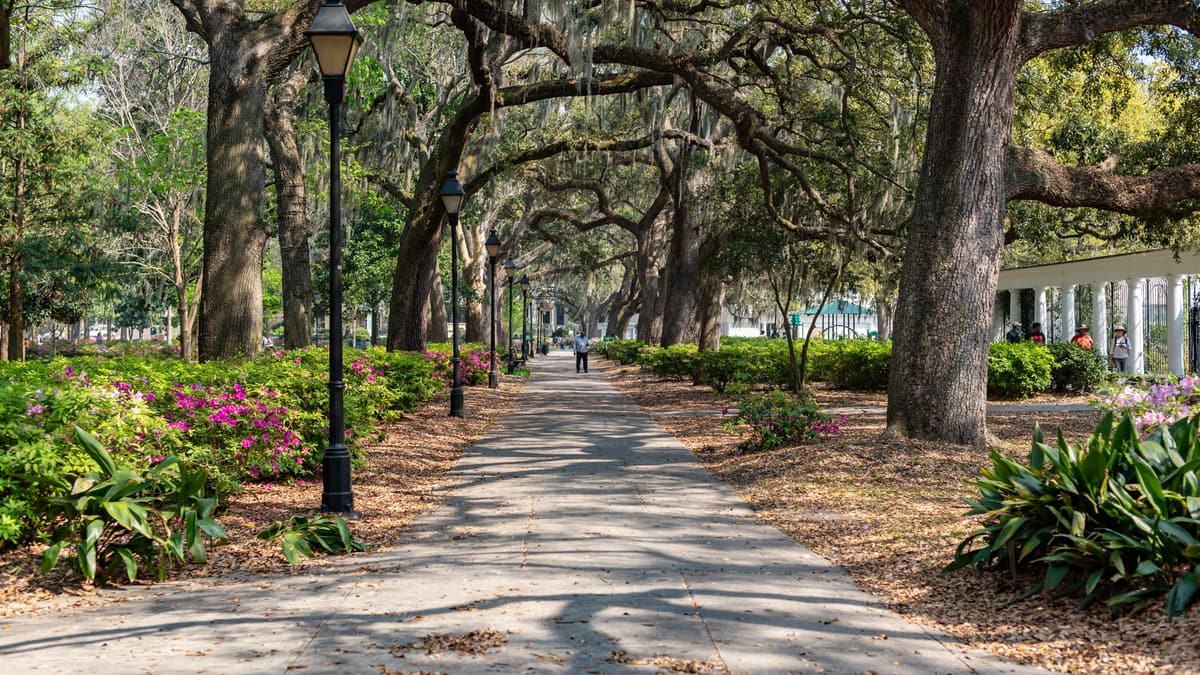
Find a spot under the live oaks near the water and look out to sea. Charlestonians like to tell visitors that this is where the Ashley and Cooper rivers meet to form the Atlantic Ocean, and they are only half joking.
Продовження цієї зупинки є в повній аудіоекскурсії.
On the walk up Meeting Street you will have noticed a very Charleston kind of house: narrow end to the street, one room wide, with long porches, called piazzas, running down the side to catch the breeze, and a front door that opens onto the…
Продовження цієї зупинки є в повній аудіоекскурсії.
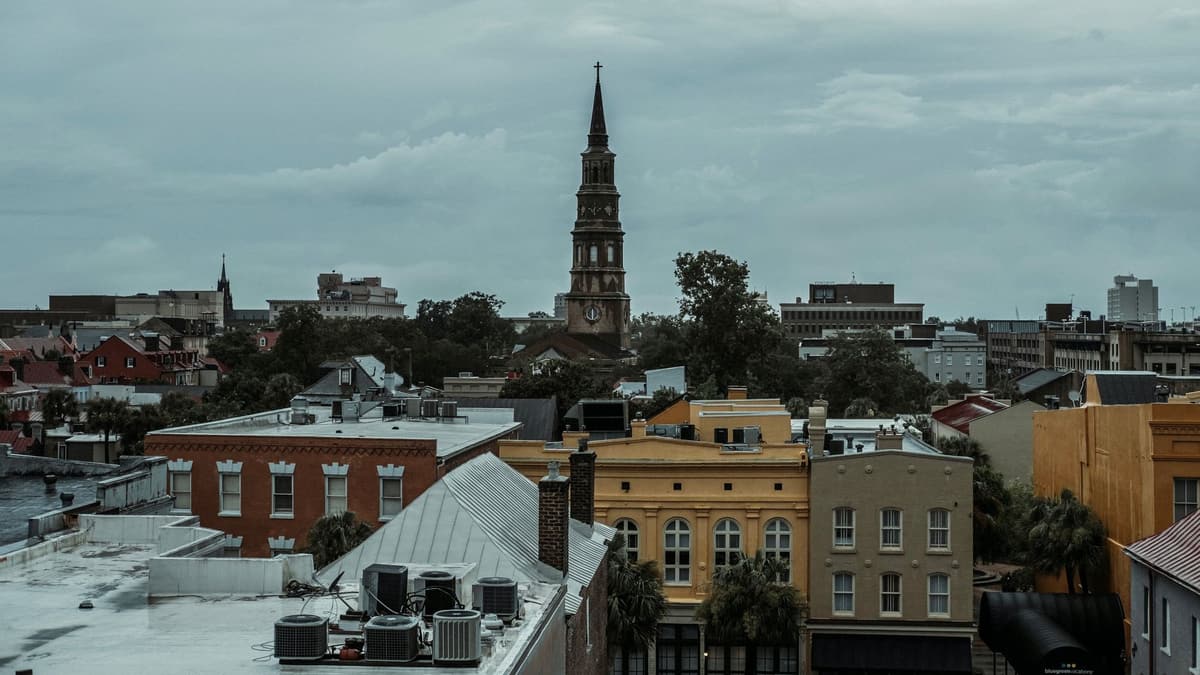
You finish at the corner of Meeting and Broad, a crossing known as the Four Corners of Law.
Продовження цієї зупинки є в повній аудіоекскурсії.
Зробіть цю прогулянку разом з іншими людьми на наступному запланованому турі.
Приблизно 2,1 км, приблизно 29 хвилин у легкому темпі · 7 зупинок
Друзі гуляють безкоштовноOctober 11, 2026 · 9 min read
From the Hollandsche Schouwburg through the old Jewish Quarter, past the Dockworker and the Dam, to the Anne Frank House on the Prinsengracht.
October 11, 2026 · 11 min read
From Van Houten's street by the Vondelpark past Leidseplein, the Rijksmuseum passage and the famous canal bench to the Anne Frank House.

October 11, 2026 · 10 min read
Follow the last days of April and May 1945 from the Anhalter Bahnhof ruin past the Gestapo site and Brandenburg Gate to the Moltke Bridge and the Reichstag.
