
October 11, 2026 · 9 min read
Amsterdam Anne Frank Walking Tour
From the Hollandsche Schouwburg through the old Jewish Quarter, past the Dockworker and the Dam, to the Anne Frank House on the Prinsengracht.
589

October 9, 2026 · 10 min read

 Друзі гуляють безкоштовно
Кожен тур також доступний як запланована групова прогулянка, до якої можна приєднатися в додатку.
Більше аудіотурів у Istanbul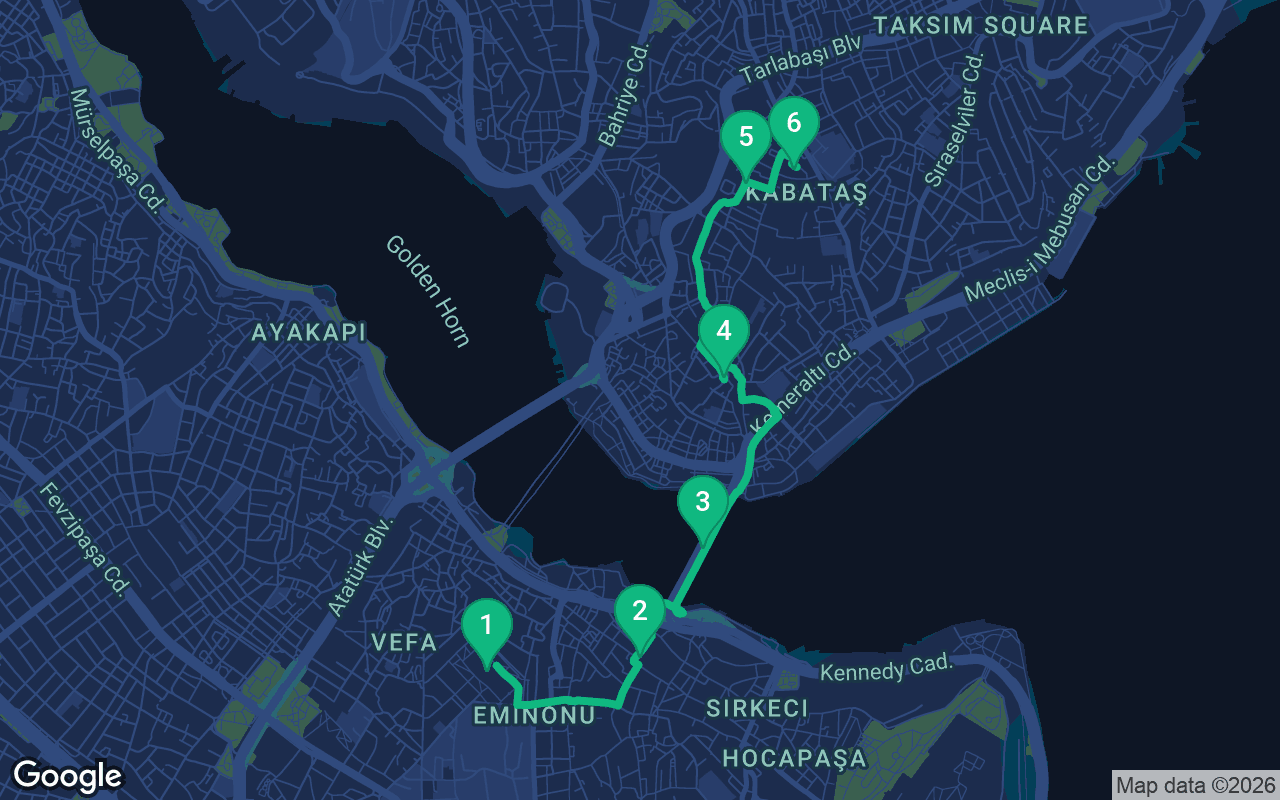
Приблизно 3,4 км, приблизно 52 хвилин у легкому темпі.
Цей тур озвучено
Натисніть відтворення на перших 3 зупинках, щоб послухати 30-секундний фрагмент розповіді. У додатку вступ і ці зупинки звучать повністю й безкоштовно, а про кожну з них вас сповістить звуковий сигнал, щойно ви прибудете. Весь тур із розповіддю буде вашим за $9.99, одноразова покупка назавжди.
Працює з Garmin, Komoot, Strava, OS Maps та будь-яким застосунком GPX.
This walk crosses the Golden Horn, the narrow inlet that has split Istanbul in two for as long as there has been a city here. On one bank stands the Ottoman old town, with its imperial mosques and markets. On the other rises Galata, the walled town of Genoese merchants, and above it Pera, the European-facing quarter of embassies, grand hotels and boulevards that grew up in the last century of the empire. You start at Süleymaniye Mosque on its hilltop, drop down through the scent of the Spice Bazaar, cross the Galata Bridge among the anglers and climb past Galata Tower to finish on İstiklal Avenue. It is one of the best self-guided walking tours for seeing how the two halves of the old city talk to each other, and it covers a little over three kilometers.
Allow about an hour for the walking itself and half a day with visits, coffee and some time to linger on the bridge. The route is hilly at both ends. You walk steeply downhill from Süleymaniye to the water, then climb an equally steep hill from Karaköy up to Galata Tower and on to Pera, partly on stairs and cobbles, so wear shoes with a good grip. The bridge is flat, open and breezy, often windy and cold in winter, and there is little shade in summer except in the market streets. Morning is a good time to start, while the Spice Bazaar is fresh and before the crowds build at the tower, and the light over the Golden Horn is lovely late in the day if you prefer to walk in reverse. Süleymaniye is a working mosque: it closes to visitors at prayer times, shoulders and knees should be covered, women cover their hair and everyone takes off their shoes. The Spice Bazaar is generally closed on Sundays, and the tower and the museum have their own opening days and ticketing, so check before you go.
Stand in the outer garden and look up at the great cascade of domes rising to the main dome, with a slim minaret at each corner of the courtyard. This is Süleymaniye Mosque, built between 1550 and 1557 for Sultan Süleyman, known in the West as the Magnificent, whose long reign marked the height of Ottoman power. Its architect was Mimar Sinan, the greatest builder in Ottoman history. He was recruited as a young man into the sultan's service, rose as a military engineer with the Janissaries, and served as chief imperial architect for about half a century, designing hundreds of mosques, bridges, schools and baths. Sinan is said to have called this mosque his journeyman work, saving the word masterpiece for the Selimiye in Edirne, but many people would argue the point once they step inside, where the light pours down from rows of windows into one vast, calm space. The mosque was the center of a whole complex, with colleges, a hospital, a public kitchen and a bathhouse arranged around it. In the garden behind the mosque, look for the tombs of Süleyman and of his wife Hürrem Sultan. Then walk to the terrace on the far side for one of the finest views in Istanbul, across the Golden Horn to Galata Tower, which is where you are heading. Sinan himself lies in a modest tomb just outside the complex walls, at the corner of the street. When you are ready, leave the complex and head downhill and east through the steep, crowded market lanes of Tahtakale toward the water. The Spice Bazaar is about ten minutes away.
 You come out among the stalls of the Spice Bazaar, and your nose will tell you before your eyes do. Inside the long vaulted hall, shops are piled with cones of red pepper flakes, sumac, saffron, dried apricots and figs, nuts, teas and slabs of Turkish delight dusted with powdered sugar. The building went up in the 1660s as part of the complex of the New Mosque, the great mosque that faces the waterfront square at the bazaar's end, and the rents from its shops helped pay for the mosque's upkeep. In Turkish it is the Mısır Çarşısı, the Egyptian Bazaar, a name usually linked to the goods and revenues that reached the city from Egypt. That fits the story of this spot. For centuries Eminönü was the busiest harbor front of the city, where ships unloaded cargo from the eastern Mediterranean and beyond, and spices, coffee, dyes and medicines passed through these streets on their way to kitchens and pharmacies across the empire. The traders were as much apothecaries as grocers, and some shops still sell herbal remedies alongside the cooking spices. Walk the full length of the hall, taste what you are offered and buy a little of something, and step out into the side streets too, where the coffee roasters and cheese sellers trade. If you have time, the small Rüstem Pasha Mosque, just to the west and famous for its tiles, is a short detour. Then leave by the main gate toward the waterfront, cross to the shore by the underpass and walk onto the Galata Bridge, about five minutes away.
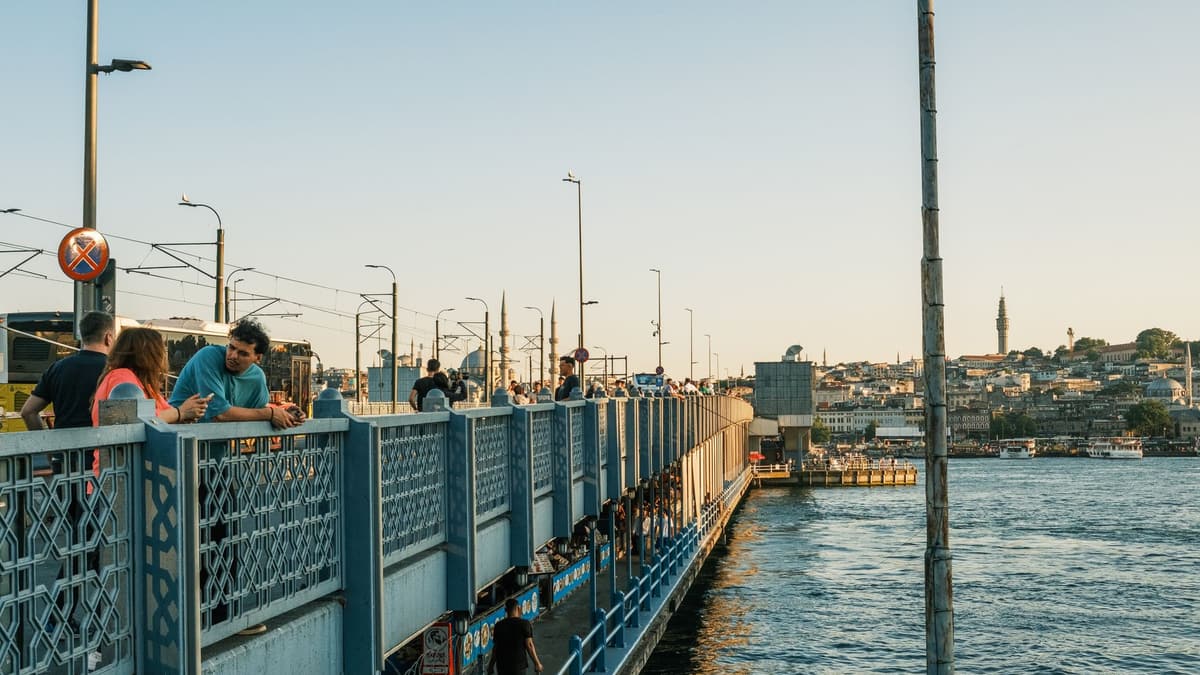
Stop halfway across the Galata Bridge and look both ways. Behind you is the old city, its skyline of domes and minarets running along the ridge, with Süleymaniye standing out on its hilltop. Ahead, the houses of Galata climb the hillside to the tower. Under your feet is the Golden Horn, a deep, sheltered inlet that made this one of the great natural harbors of the world, and the reason so many empires wanted the city. In Byzantine times a great chain could be stretched across its mouth to keep enemy ships out, and in 1453 the Ottomans famously got around it by hauling ships overland behind Galata. The idea of bridging the water is old. The sultan Bayezid II asked for designs around 1500, and Leonardo da Vinci sketched a single bold arch that was never built. The first bridge here opened in the 1840s, and several have followed. The bridge before this one was a floating bridge that served the city for most of the twentieth century until it was damaged by fire in 1992 and towed up the Golden Horn. The bridge you are on opened in the 1990s. Look along the railings at the anglers, who stand here shoulder to shoulder in all weathers, dangling long lines into the current, with buckets of small fish at their feet. On the lower deck there is a row of fish restaurants. Carry on across to Karaköy and use the underpass to cross the busy road. Then climb the steep streets uphill to the tower, about twelve minutes, or turn right along Bankalar Caddesi, the old street of banks, and take the curving Kamondo Steps for a prettier climb.
Що входить
Наші екскурсії задумані медитативними та захопливими: ви рухаєтеся й просто слухаєте. Разом завжди краще, і додаток відтворює розповідь синхронно, тож ви, ваш партнер і ваші друзі чуєте кожну зупинку одночасно.
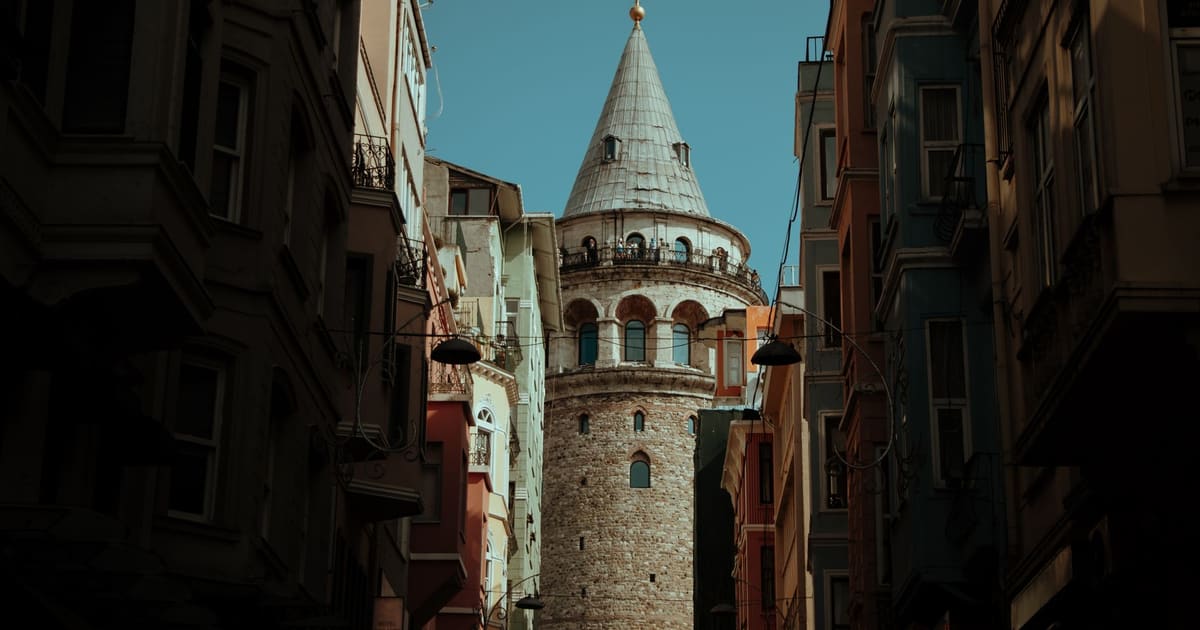
The round stone tower in front of you, with its conical cap, is Galata Tower, and it is a reminder that this side of the Golden Horn was once a separate town with its own walls and its own rulers.
Продовження цієї зупинки є в повній аудіоекскурсії.
The grand building in front of you was built in the 1890s as the Bristol Hotel, and since 2005 it has been the Pera Museum. Its setting is the story of this neighborhood.
Продовження цієї зупинки є в повній аудіоекскурсії.
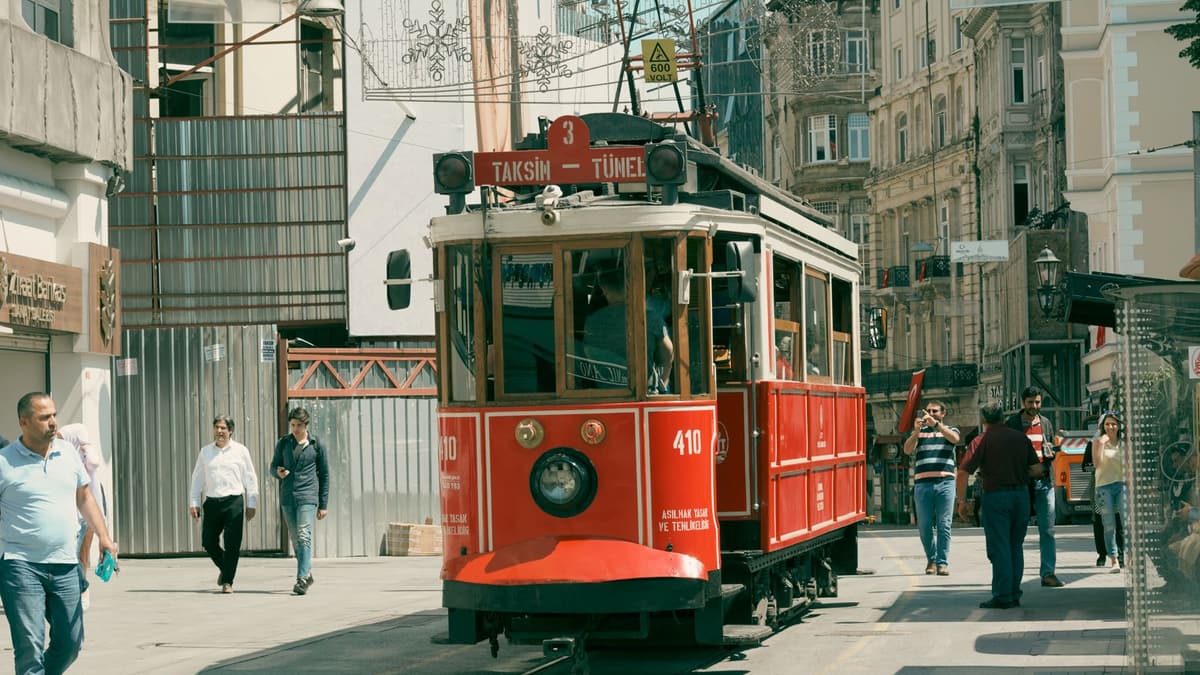
You are on İstiklal Avenue, once the Grande Rue de Péra, the most fashionable street of the late Ottoman city and still the busiest pedestrian street in Istanbul.
Продовження цієї зупинки є в повній аудіоекскурсії.
Зробіть цю прогулянку разом з іншими людьми на наступному запланованому турі.
Приблизно 3,4 км, приблизно 52 хвилин у легкому темпі · 6 зупинок
Друзі гуляють безкоштовноOctober 11, 2026 · 9 min read
From the Hollandsche Schouwburg through the old Jewish Quarter, past the Dockworker and the Dam, to the Anne Frank House on the Prinsengracht.
October 11, 2026 · 11 min read
From Van Houten's street by the Vondelpark past Leidseplein, the Rijksmuseum passage and the famous canal bench to the Anne Frank House.

October 11, 2026 · 10 min read
Follow the last days of April and May 1945 from the Anhalter Bahnhof ruin past the Gestapo site and Brandenburg Gate to the Moltke Bridge and the Reichstag.
