
October 11, 2026 · 9 min read
Amsterdam Anne Frank Walking Tour
From the Hollandsche Schouwburg through the old Jewish Quarter, past the Dockworker and the Dam, to the Anne Frank House on the Prinsengracht.
589

October 9, 2026 · 11 min read

 Bạn bè đi bộ miễn phí
Mỗi tour cũng được tổ chức như một chuyến đi bộ nhóm theo lịch trình mà bạn có thể tham gia trong ứng dụng.
Thêm tour âm thanh tại Cebu City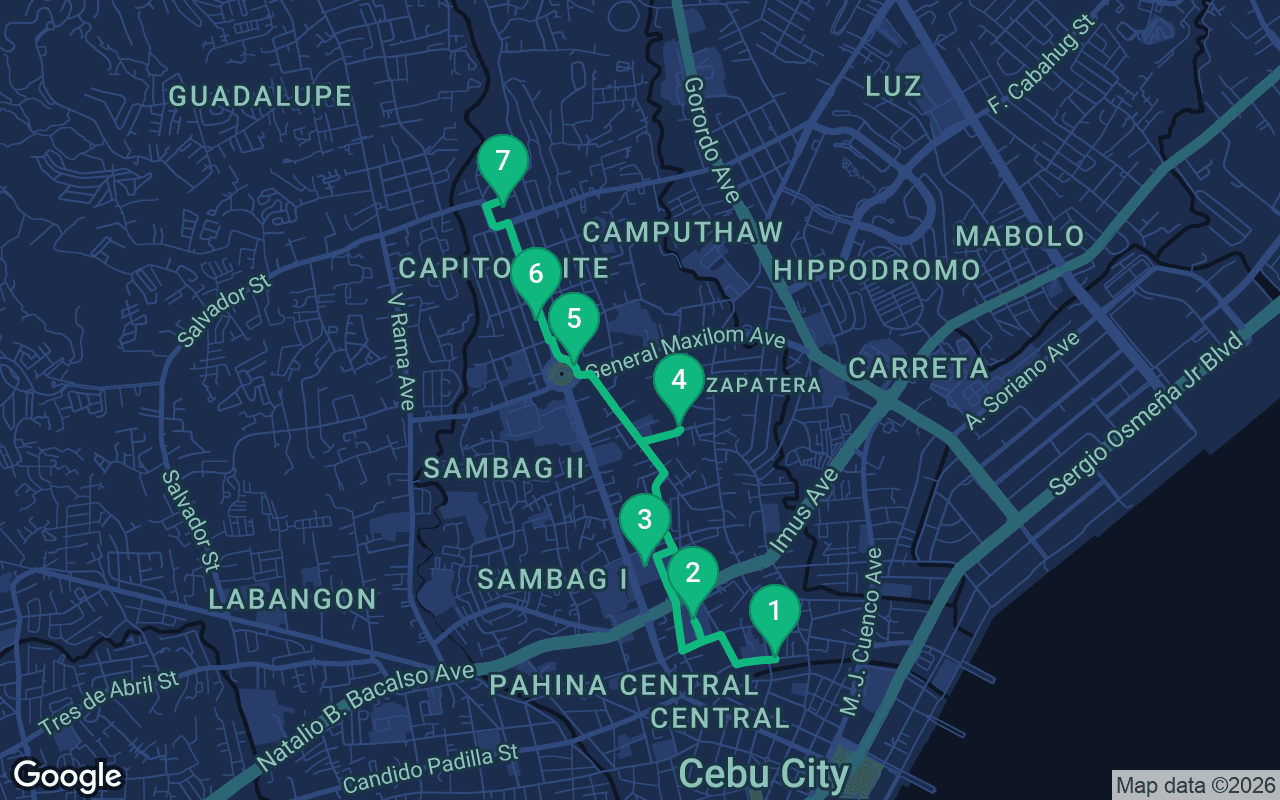
Khoảng 3,8km, mất khoảng 55 phút với nhịp độ thoải mái.
Tour này có thuyết minh âm thanh
Nhấn phát tại 3 điểm dừng đầu tiên để nghe thử 30 giây phần thuyết minh ngay tại đây. Trong ứng dụng, phần giới thiệu và các điểm dừng này được nghe trọn vẹn miễn phí, và mỗi điểm dừng sẽ phát âm báo khi bạn đến nơi. Toàn bộ chuyến tham quan có thuyết minh sẽ là của bạn chỉ với $9.99, mua một lần và sở hữu mãi mãi.
Hoạt động với Garmin, Komoot, Strava, OS Maps và mọi ứng dụng GPX.
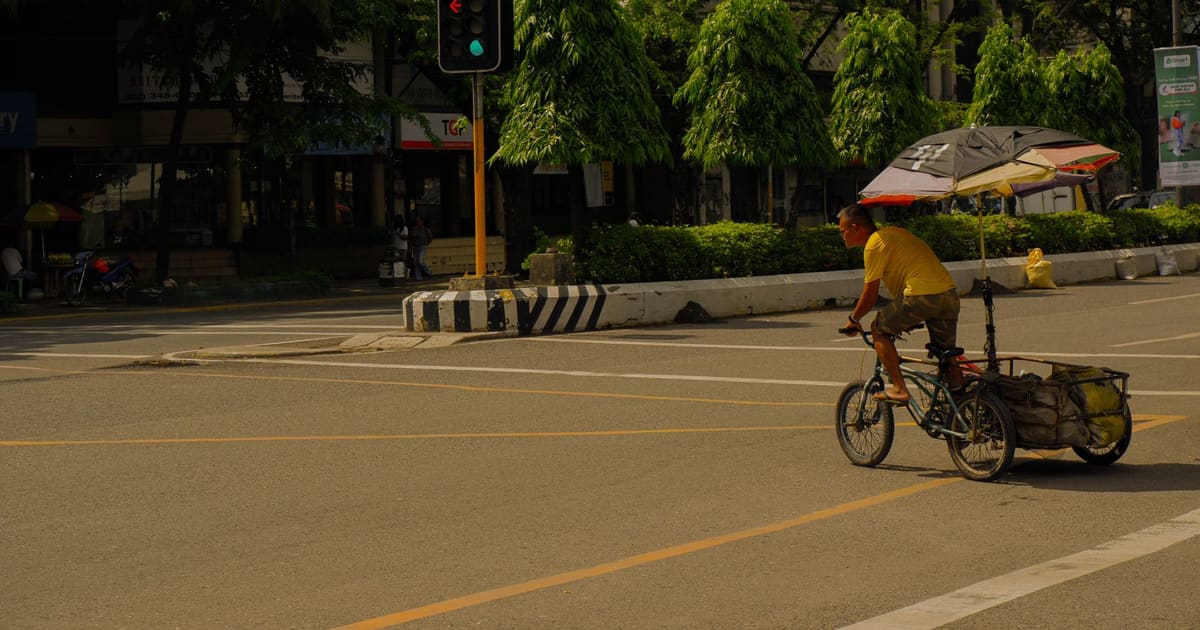
Cebu grew up by the harbor and then moved inland, and this walk follows it. It sets off from the obelisk on Colon Street, the oldest street in the Philippines, and heads uptown past two of the city's oldest schools and the clubhouse of its Spanish community to the great fountain circle of Fuente Osmeña, then along a broad boulevard to the domed Provincial Capitol. Along the way it tells the story of Cebu's twentieth century: American schools, Filipino politicians and a city that rebuilt itself after the war. The route is about four kilometers and close to flat, one of the best self-guided walking tours for seeing how modern Cebu came to be.
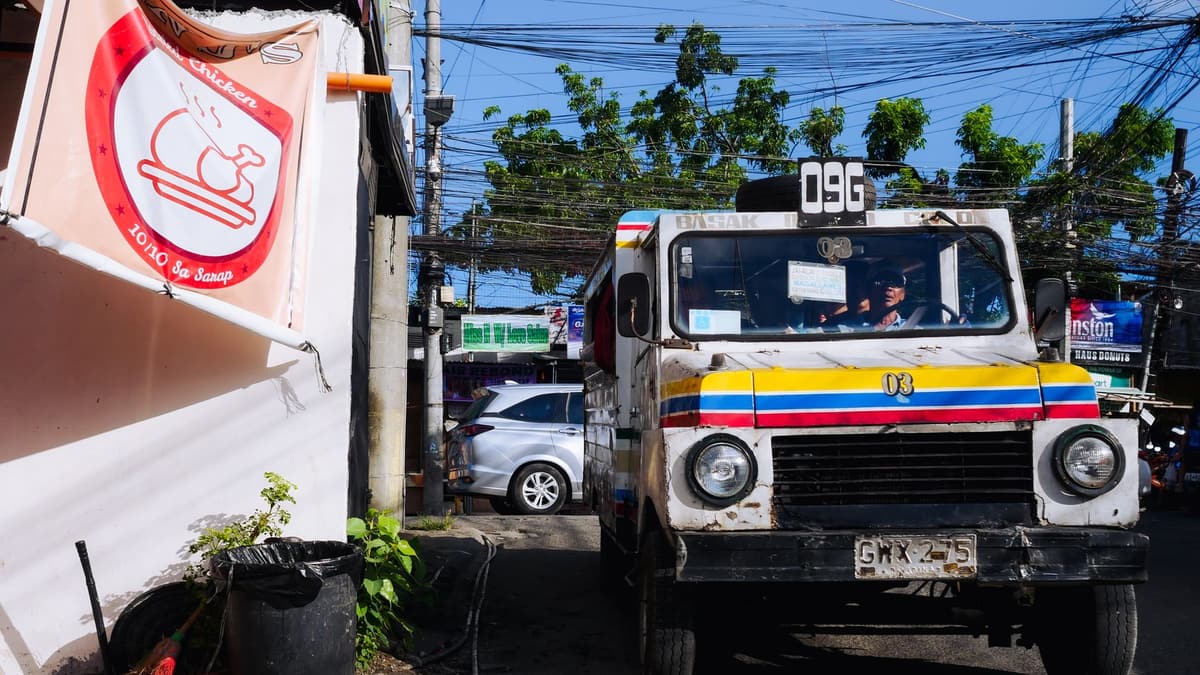
Allow two to two and a half hours with stops, a little under an hour of steady walking without them. The route is close to flat, but downtown pavements are narrow, crowded and uneven, and you will cross several wide, fast roads, so use the crossings and lights and take your time. Colon Street and the blocks around it are among the busiest in the city, full of shoppers, vendors and jeepneys. They are lively and fine by day, and as on any crowded market street, keep your phone and bag close. Cebu is hot and humid all year, with heavy rain in the wet months, roughly June to November, so start early in the morning, carry water and a hat or an umbrella, and plan to rest in the shade of the trees along the boulevard and around the Capitol. Several stops are working institutions, a university, a teachers' college, a private club and the seat of the provincial government, so be polite to the guards at the gates and ask before wandering in. Often a look from the gate is enough. The library and the Capitol may have rooms open to visitors, but arrangements change, so check before you go.
Start at the obelisk on Colon Street, a slim stone marker that makes a big claim: this is the oldest street in the Philippines. The tradition is that it was laid out in 1565, when the first Spanish settlers built their town beside the fort by the harbor, and it took its present name later from Cristóbal Colón, the Spanish name for Christopher Columbus. Look along the street and you will not see much that is old. Colon is a working street, crammed with shops selling phones, clothes, shoes and fabric, its pavements spilling over with vendors and its traffic a slow river of jeepneys. That is its history too. For much of the twentieth century this was the city's main shopping and entertainment street, lined with department stores, restaurants and movie houses, the place where Cebuanos came to buy school shoes, meet friends and watch the latest films. As the city spread uptown and air-conditioned malls opened, the money moved away and Colon grew shabbier, but it never grew quiet, and it still feels like the pulse of downtown. Stand by the obelisk for a minute and watch it work: the barkers calling out jeepney routes, the street food on the corners, the crowds moving with purpose. Then walk west along Colon for about three minutes, turn right, and work your way a couple of blocks north and west to the gates of the University of San Carlos, five minutes in all.
The University of San Carlos fills a city block here, and its gates open onto a campus busy with students in uniform. The university traces its beginning to 1595, when Jesuit missionaries opened the Colegio de San Ildefonso in Cebu, which would make it older than any other school in the country and one of the oldest in Asia. The line from that college to this university is long and has some breaks in it. The Jesuits were expelled from the Spanish empire in 1768, and their school passed to the church in Cebu, which later reopened it as a seminary named after Saint Charles Borromeo, San Carlos. In 1935 the Society of the Divine Word, a missionary order, took it over, and in 1948 it became a university. The University of Santo Tomas in Manila, founded in 1611, has its own claim to be the oldest, and historians argue over whether the chain from 1595 is unbroken. Cebuanos, unsurprisingly, tend to settle the question in their own favor. Whatever the date, the school has educated generations of the city's lawyers, doctors, engineers and politicians, and it is still one of the largest universities in the Visayas. Look in through the gate and, if visitors are allowed, take a turn round the grounds. The university also keeps a museum; check before you go if you want to see it. From here, walk back to the main road and head north on Osmeña Boulevard, the long avenue that carries you most of the rest of the way. Cebu Normal University is about five minutes up, on your left.
Cebu Normal University is a child of the American period. The United States took the Philippines from Spain in 1898 and then fought a hard war against the Filipino republic that had declared independence that same year. Once in control, the new government set out to build a public school system, with teaching in English at its center. In 1901 a ship called the Thomas brought some five hundred American teachers to the islands, and the Thomasites, as they came to be called, fanned out across the provinces. Schools like this one were set up to train Filipino teachers to take their place. It opened in 1902 as a provincial branch of the Philippine Normal School in Manila, a normal school being a teachers' college, and it became a university in 1998. Look at the main building, a pale classical block with columns, the American idea of what a public institution should look like and a style you will see again along this boulevard. The school system left a deep mark. It spread literacy and made English one of the country's two official languages, and critics point out that it also taught generations of Filipino children more about America than about their own past. Both are part of the story. Carry on north along Osmeña Boulevard for about eight minutes, then turn right into a side street, where the Casino Español de Cebu is a two-minute walk along.
Bao gồm những gì
Các tour của chúng tôi được thiết kế để mang tính thiền định và đắm chìm: bạn vừa đi vừa lắng nghe. Đi cùng nhau luôn tuyệt hơn, và ứng dụng phát thuyết minh đồng bộ để bạn, người thương và bạn bè nghe mỗi điểm dừng cùng một lúc.
The Casino Español de Cebu is a social club, and casino here means a club in the old Spanish sense, a place for meals, dances and conversation, not gambling.
Phần còn lại của điểm dừng này có trong tour âm thanh đầy đủ.
Fuente Osmeña is the great roundabout of uptown Cebu, a wide circle of grass and trees around a fountain, with traffic spinning around it and avenues heading off in every direction.
Phần còn lại của điểm dừng này có trong tour âm thanh đầy đủ.
The Rizal Memorial Library and Museum is one of the dignified public buildings that went up along this boulevard in the decades of American rule, a classical front of columns meant to make learning look as important as government.
Phần còn lại của điểm dừng này có trong tour âm thanh đầy đủ.
The walk ends in front of the Cebu Provincial Capitol, and the whole boulevard has been building up to this view: a broad, pale neoclassical building with columns along its front and a dome at its center, set back behind lawns at the head of…
Phần còn lại của điểm dừng này có trong tour âm thanh đầy đủ.
Thực hiện buổi đi bộ này cùng người khác vào tour đã lên lịch tiếp theo.
Khoảng 3,8km, mất khoảng 55 phút với nhịp độ thoải mái · 7 điểm dừng
Bạn bè đi bộ miễn phíOctober 11, 2026 · 9 min read
From the Hollandsche Schouwburg through the old Jewish Quarter, past the Dockworker and the Dam, to the Anne Frank House on the Prinsengracht.
October 11, 2026 · 11 min read
From Van Houten's street by the Vondelpark past Leidseplein, the Rijksmuseum passage and the famous canal bench to the Anne Frank House.

October 11, 2026 · 10 min read
Follow the last days of April and May 1945 from the Anhalter Bahnhof ruin past the Gestapo site and Brandenburg Gate to the Moltke Bridge and the Reichstag.
