
October 11, 2026 · 9 min read
Amsterdam Anne Frank Walking Tour
From the Hollandsche Schouwburg through the old Jewish Quarter, past the Dockworker and the Dam, to the Anne Frank House on the Prinsengracht.
589

October 9, 2026 · 11 min read

 Bạn bè đi bộ miễn phí
Mỗi tour cũng được tổ chức như một chuyến đi bộ nhóm theo lịch trình mà bạn có thể tham gia trong ứng dụng.
Thêm tour âm thanh tại Mexico City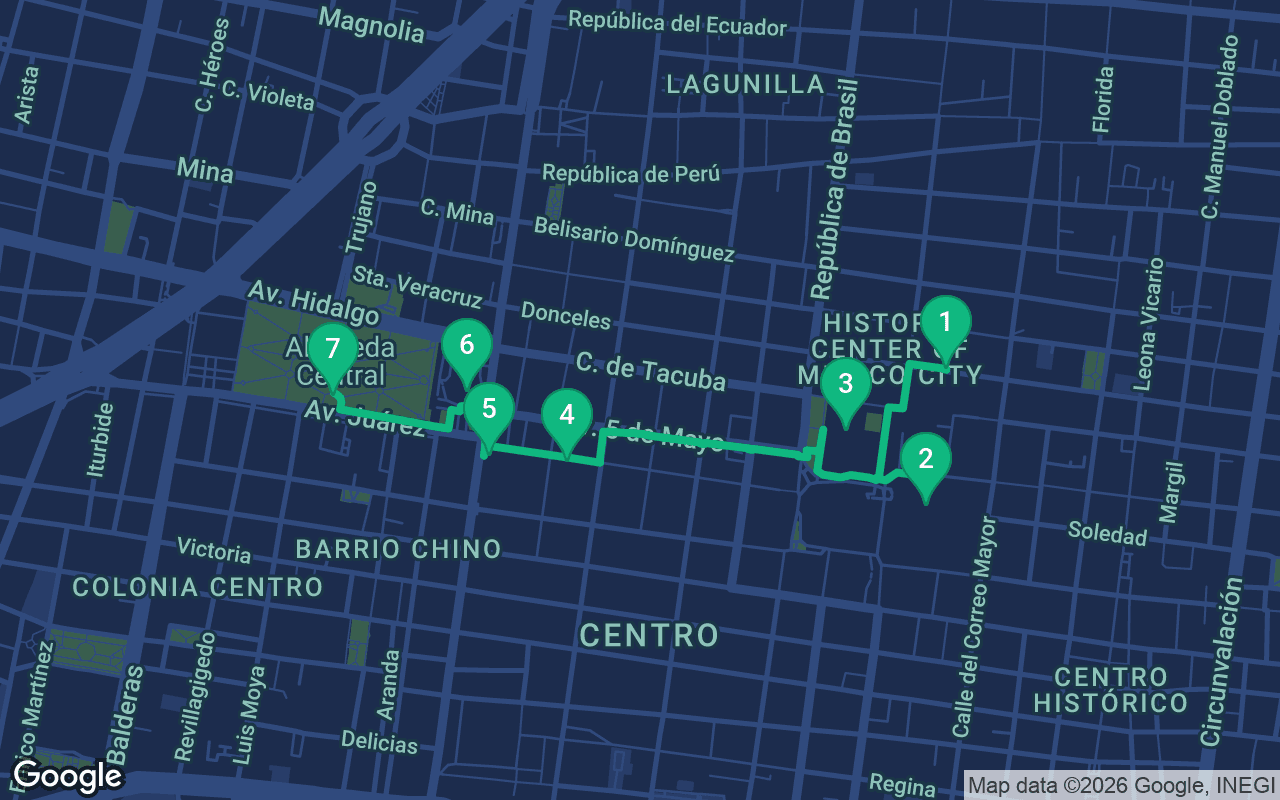
Khoảng 2,4km, mất khoảng 33 phút với nhịp độ thoải mái.
Tour này có thuyết minh âm thanh
Nhấn phát tại 3 điểm dừng đầu tiên để nghe thử 30 giây phần thuyết minh ngay tại đây. Trong ứng dụng, phần giới thiệu và các điểm dừng này được nghe trọn vẹn miễn phí, và mỗi điểm dừng sẽ phát âm báo khi bạn đến nơi. Toàn bộ chuyến tham quan có thuyết minh sẽ là của bạn chỉ với $7.99, mua một lần và sở hữu mãi mãi.
Hoạt động với Garmin, Komoot, Strava, OS Maps và mọi ứng dụng GPX.
Mexico City's historic center is a city standing on top of another city. Five hundred years ago this ground was Tenochtitlan, the island capital of the Mexica, and when the Spanish took it they built their own capital directly over the ruins, using its stones. This walk starts at an old Jesuit college where Mexican muralism was born, passes the excavated Templo Mayor, crosses the vast Zócalo between the National Palace and the cathedral, and then follows pedestrian Madero street west to the white marble Palacio de Bellas Artes and the green shade of the Alameda. It is about two and a half kilometers, roughly a mile and a half, flat all the way, and one of the most rewarding self-guided walking tours anywhere for the sheer depth of history under your feet.
Allow two to three hours at a stroll, more if you go inside the murals, the cathedral or the Torre Latinoamericana's viewing deck, which all deserve time. The route is completely flat, mostly on wide pedestrian streets and plazas, but remember that Mexico City sits at about 2,240 meters, some 7,300 feet. If you have just arrived, you may feel short of breath or tired sooner than usual, so take it easy on your first day, drink plenty of water and go slowly. The sun is strong at this altitude even when the air feels cool, and the Zócalo has almost no shade, so bring a hat and sunscreen. From roughly June to September, afternoon downpours are common, which makes morning the best time to walk. Weekends, and Sundays in particular, fill Madero and the Alameda with families, street performers and vendors, which is lively and fun but slow going. The Zócalo is regularly fenced off for concerts, festivals and demonstrations, so be ready to walk around its edge. Opening times and access for the Palacio Nacional's murals change often, so check before you go. As in any busy city center, keep an eye on your phone in the crowds.
Stand in front of the long baroque facade of the Antiguo Colegio de San Ildefonso and look up at the heavy carved stone around the doorway. The Jesuits founded a college here in the late sixteenth century, and most of what you see was rebuilt in grand style in the eighteenth, just before the order was expelled from the Spanish empire in 1767. In the nineteenth century the building became the National Preparatory School, the most important high school in the country, and that is where its real fame begins. After the Mexican Revolution, the education minister José Vasconcelos handed the walls of public buildings to young painters and asked them to tell the nation its own story, in a way anyone could read. Here, in the early 1920s, José Clemente Orozco covered the main courtyard with powerful, grieving scenes of war and revolution, and Diego Rivera painted his first major mural in the school's amphitheater. It was the start of Mexican muralism, one of the great art movements of the twentieth century, and it began on the walls of a school full of teenagers. If it is open, step into the courtyard and look at the Orozcos on the arcades. Then walk one block west along Justo Sierra, turn left onto República de Argentina and follow it south for about six minutes. The excavated ruins of the Templo Mayor open up on your left just before you come out onto the Zócalo, and the National Palace fills its eastern side.
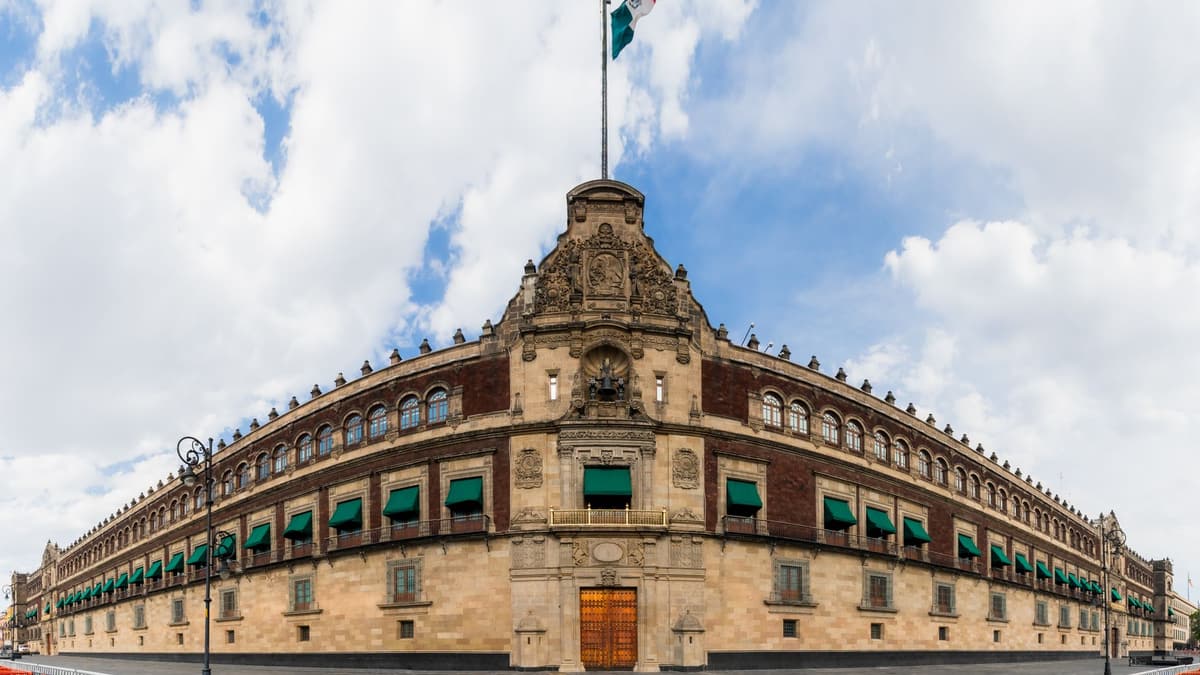
 You have just passed the heart of the Aztec world. The Templo Mayor, the great twin pyramid of Tenochtitlan, stood behind you, and the ruins lay buried until 1978, when electricity workers digging nearby struck a huge carved stone disc of the moon goddess Coyolxauhqui. The long, dark red stone facade in front of you is the Palacio Nacional, and it stands on the site of the palace of Moctezuma II, the Mexica ruler who received Hernán Cortés in 1519. Within two years the alliance between the Spanish and the Mexica's many enemies had laid siege to Tenochtitlan, and the city fell in August 1521 after months of fighting, hunger and smallpox. Cortés built his own residence on the ruins of Moctezuma's, and it later became the palace of the viceroys and then of independent Mexico's governments. Look up at the central balcony: the bell hanging above it is the one Miguel Hidalgo rang in 1810 to call for independence, and every year on the night of September 15 the president rings it again before a packed Zócalo. Inside, if you can get in, Diego Rivera's murals cover the main staircase and the upper corridors, a crowded epic of Mexican history from the pre-Hispanic world through the conquest to the twentieth century. Rivera worked on them on and off for more than twenty years. When you are ready, walk northwest across the Zócalo, about four minutes, to the cathedral.
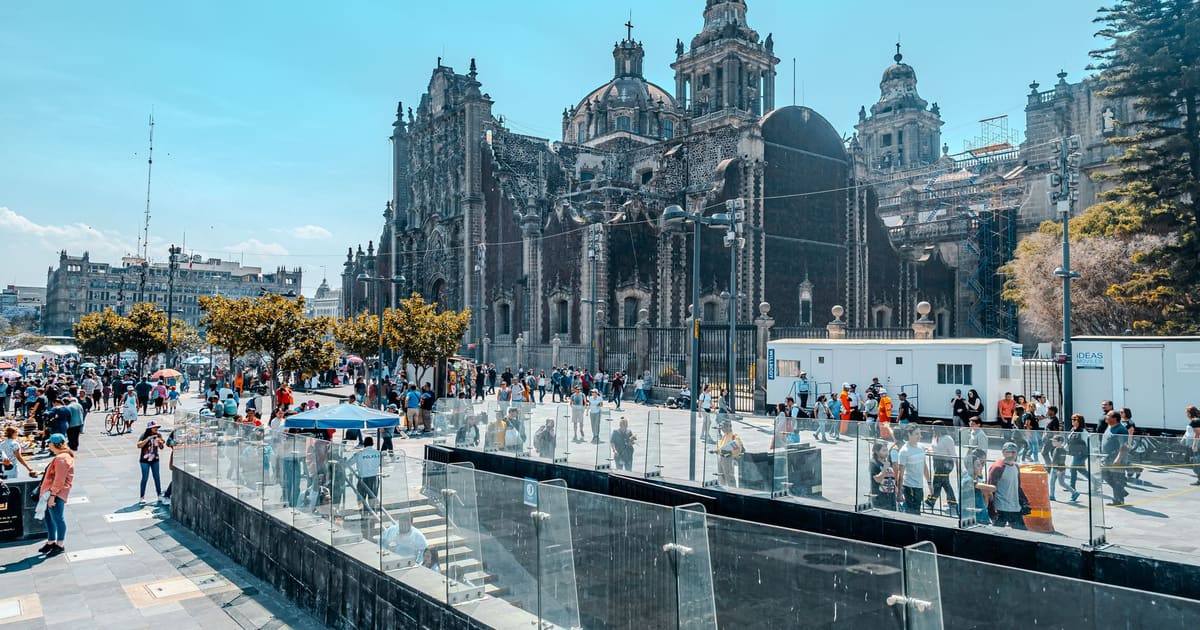
The Zócalo's official name is the Plaza de la Constitución, and its nickname comes from a plinth, a zócalo, laid in the nineteenth century for an independence monument that was never built. The name stuck to the whole square. Now face the Catedral Metropolitana, the largest cathedral in Latin America, which took around two and a half centuries to finish. That is why it looks like several buildings at once: a Renaissance plan, baroque portals, and towers and a dome finished around the turn of the nineteenth century. Beside it on the right, the Sagrario has an even more exuberant facade, carved so densely it seems to move. Look closely at the whole building and you may notice it does not sit quite level. The city stands on the soft clay of a drained lake, and the cathedral has been sinking unevenly into it for centuries. In the 1990s engineers carefully removed soil from beneath its higher parts to let them settle and level the building, and inside a plumb line hangs from the ceiling over the floor so you can see how far it still leans. Inside, the gilded Altar of the Kings rises behind the main altar, glowing in the half dark. It is a working church, so go quietly. From the front of the cathedral, cross to the southwest corner of the Zócalo and walk west along Madero, the pedestrian street, for about eight minutes.
Bao gồm những gì
Các tour của chúng tôi được thiết kế để mang tính thiền định và đắm chìm: bạn vừa đi vừa lắng nghe. Đi cùng nhau luôn tuyệt hơn, và ứng dụng phát thuyết minh đồng bộ để bạn, người thương và bạn bè nghe mỗi điểm dừng cùng một lúc.
You are now on Madero, one of the oldest streets of the colonial city and today a busy pedestrian promenade lined with churches, mansions, shops and street musicians.
Phần còn lại của điểm dừng này có trong tour âm thanh đầy đủ.
On your way you pass the Casa de los Azulejos, the House of Tiles, its whole facade covered in blue and white tiles, and the old church of San Francisco. Now stand at the foot of the Torre Latinoamericana and look straight up.
Phần còn lại của điểm dừng này có trong tour âm thanh đầy đủ.
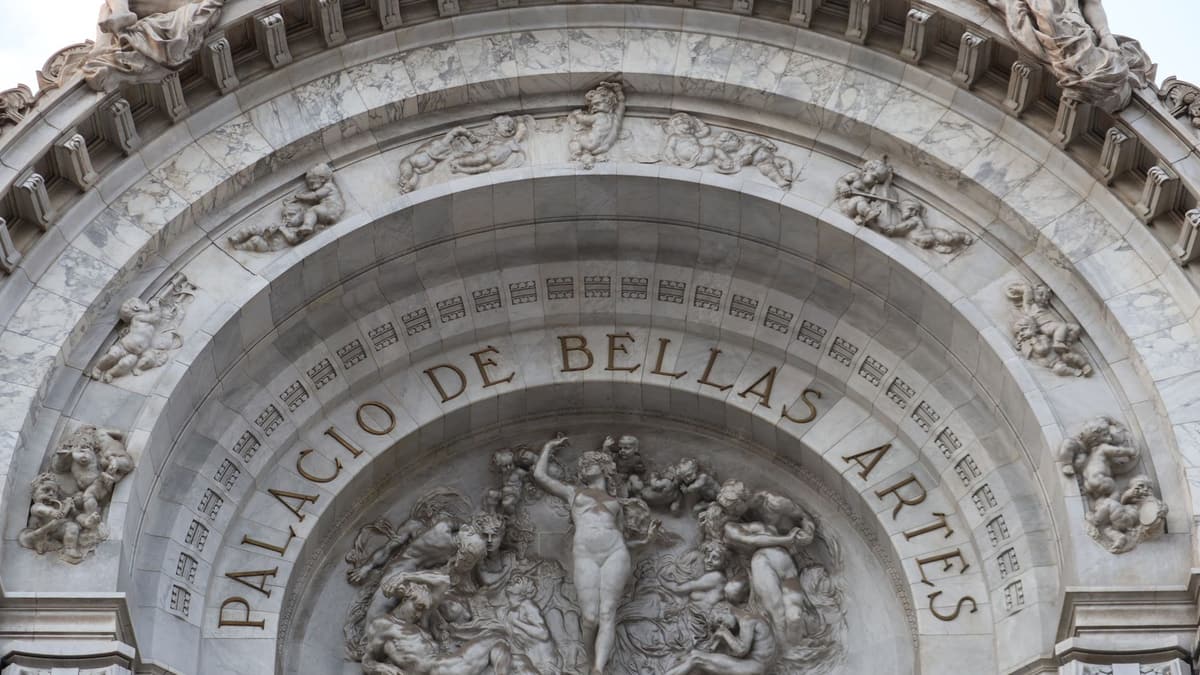
In front of you is the Palacio de Bellas Artes, a white marble palace topped with domes of orange and gold tiles. It was begun in 1904 under President Porfirio Díaz, who wanted a European style opera house for the centenary of independence.
Phần còn lại của điểm dừng này có trong tour âm thanh đầy đủ.
The walk ends in the Alameda Central, laid out in 1592 under the viceroy Luis de Velasco and often called the oldest public park in the Americas.
Phần còn lại của điểm dừng này có trong tour âm thanh đầy đủ.
Thực hiện buổi đi bộ này cùng người khác vào tour đã lên lịch tiếp theo.
Khoảng 2,4km, mất khoảng 33 phút với nhịp độ thoải mái · 7 điểm dừng
Bạn bè đi bộ miễn phíOctober 11, 2026 · 9 min read
From the Hollandsche Schouwburg through the old Jewish Quarter, past the Dockworker and the Dam, to the Anne Frank House on the Prinsengracht.
October 11, 2026 · 11 min read
From Van Houten's street by the Vondelpark past Leidseplein, the Rijksmuseum passage and the famous canal bench to the Anne Frank House.

October 11, 2026 · 10 min read
Follow the last days of April and May 1945 from the Anhalter Bahnhof ruin past the Gestapo site and Brandenburg Gate to the Moltke Bridge and the Reichstag.
